
Category: Recommended Reading
jaime davidovich (1936 – 2016)
A Different Kind of Safe Space
Ted Gup in The Chronicle of Higher Education:

Anything.
If they want to say the F-word, they are free to do so. (Frankly, I prefer it to an endless barrage of “likes” and “you knows.”) They can say or write the N-word, and any other term of racial, gender, or ethnic disparagement. Now I have their attention. I may or may not be in violation of a college rule, but I am clearly outside the “safe zone.” And that’s fine, because outside of it is where I want to be, and where I want them to be.This is, after all, a class in writing, and words are not to be trifled with. They have consequences. You want to use a word — any word — fine by me, but be prepared to accept what happens next. No, I will not reprimand you, but neither will I rush in to save you. It is a lesson not only in the power of words, but in democracy, free speech, and responsibility.
Words are dangerous, but not as dangerous as efforts to suppress them, be it by government or dean — and certainly not as insidious as self-censorship. I know my views are not shared by some colleagues and students (although not a one has ever complained), particularly in this age of safe spaces, trigger warnings, microaggressions, and speech codes. And no, I am not a reactionary conservative but an old-school liberal, a devotee of John Stuart Mill and Bertrand Russell, who, in a joyful display of defiance, titled one of his collections Unpopular Essays. But on one point Russell and I part company. He said that “all movements go too far.” He is mostly right, but not with regard to free speech. Here, there is no too far. The very idea of capping speech suffocates the imagination. Another of my favorite writers, E.B. White, wrote that “in a free country it is the duty of writers to pay no attention to duty.” I’ve always loved that quote, but I think it craves an asterisk. There is a duty: to be true to oneself.
More here.
Saturday, September 3, 2016
Attica, Attica: The Story of the Legendary Prison Uprising
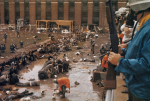
Attica. The name itself has long signified resistance to prison abuse and state violence. In the 1975 film “Dog Day Afternoon,” Al Pacino, playing a bank robber, leads a crowd confronting the police in a chant of “Attica, Attica.” The rapper Nas, in his classic “If I Ruled the World,” promises to “open every cell in Attica, send ’em to Africa.” And Attica posters were once commonplace in the homes of black nationalists. The one in my family’s apartment in the 1970s featured a grainy black-and-white picture of Attica’s protesting prisoners, underneath the words “We are not beasts.”
But memories of the 1971 uprising at Attica prison have grown hazy. I recently mentioned the word to a politically active Yale College student, who responded: “I know it’s a prison where something important happened. But I’m not sure of the details.”
Heather Ann Thompson, a professor of history at the University of Michigan, has the details. Thompson spent more than a decade poring over trial transcripts, issuing countless requests for hidden government documents, and interviewing dozens of survivors and witnesses.
more here.
‘I Contain Multitudes’ by Ed Yong

We are not alone. We have never been alone. We are possessed. Our inner demons cannot be cast out, because they did not move in and take possession: they were here before us, and will live on after us. They are invisible, insidious and exist in overwhelming numbers. They manage us in myriad ways: deliver our minerals and vitamins, help digest our lunch, and provide in different ways all our cheese, yoghurt, beer, wine, bread, bacon and beef. Microbes can affect our mood, take charge of our immune system, protect us from disease, make us ill, kill us and then decompose us.
As complex, multicellular lifeforms, we are their sock puppets. We spread them, introduce variety into their brief lives and provide them with all they need to replicate and colonise new habitats. We are perambulating tower blocks, each occupied by maybe 40tn tiny tenants. Our skins are smeared with a thin film of microbial life, with ever greater numbers occupying every orifice and employed in colossal numbers in our guts.
Yet, until late in human history, we didn’t know they were there at all. We still do not know who they all are, or what they do. We discover new things almost every day.
more here.
‘Horses, Horses, in the End the Light Remains Pure’
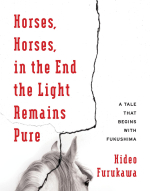
The Japanese novelist Hideo Furukawa is interested in the “blank spaces,” as he puts it, what’s not said in official histories and school textbooks. He reminds his countrymen that violence has always been central to Japanese history. In his newly translated novel, Horses, Horses, in the End the Light Remains Pure: A Tale that Begins with Fukushima (translated by Doug Slaymaker with Akiko Takenaka), the narrator Hideo Furukawa tells us:
I’m about to touch on Japanese History. This is unbearably uncomfortable, to me anyway, all this history stuff. Our history, the history of the Japanese, is nothing more than the history of killing people.
Furukawa (born in 1966) is well-regarded in Japan as a literary novelist: in addition to receiving the Mishima Yukio Prize in 2006 for his novel Love, he has also won Japanese science fiction and mystery awards. His only other work in English is the novel Belka, Why Don’t You Bark? published by Haikasoru in 2012 (translated by Michael Emmerich). Belka is a rather curious work, at times told from the point of view of various dogs and often employing prose that reads like a poor imitation of hard-boiled fiction. It is not the best introduction to Furukawa and his considerable talents.
Furukawa is a native of Fukushima prefecture, the so-called ground zero of 3.11, and he found himself in Kyoto and Tokyo during 3.11 and its immediate aftermath. Feeling the call to go home, he convinced Shincho Publishing to underwrite a trip to Fukushima and the surrounding prefectures.
more here.
Revealing the Whole Truth About Mother Teresa
Kai Schultz in the New York Times:
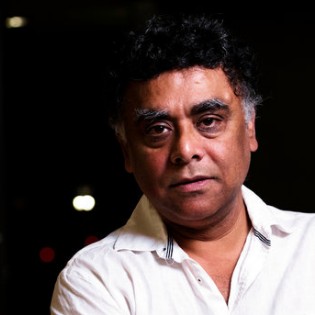
Dr. Chatterjee, a 58-year-old physician, acknowledged that it was a mostly solitary pursuit. “I’m the lone Indian,” he said in an interview recently. “I had to devote so much time to her. I would have paid to do that. Well, I did pay to do that.”
His task is about to become that much tougher, of course, when Mother Teresa is declared a saint next month.
In truth, Dr. Chatterjee’s critique is as much or more about how the West perceives Mother Teresa as it is about her actual work. As the canonization approaches, Dr. Chatterjee hopes to renew a dialogue about her legacy in Kolkata, formerly Calcutta, where she began her services with the “poorest of the poor” in 1950.
More here.
For first time, carbon nanotube transistors outperform silicon
Adam Malecek in Phys.org:
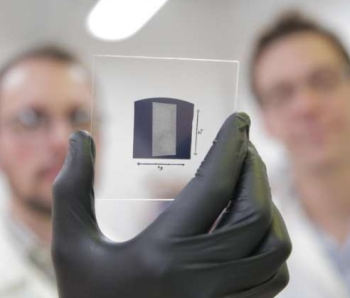
But a number of challenges have impeded the development of high-performance transistors made of carbon nanotubes, tiny cylinders made of carbon just one atom thick. Consequently, their performance has lagged far behind semiconductors such as silicon and gallium arsenide used in computer chips and personal electronics.
Now, for the first time, University of Wisconsin-Madison materials engineers have created carbon nanotube transistors that outperform state-of-the-art silicon transistors.
Led by Michael Arnold and Padma Gopalan, UW-Madison professors of materials science and engineering, the team's carbon nanotube transistors achieved current that's 1.9 times higher than silicon transistors. The researchers reported their advance in a paper published Friday (Sept. 2) in the journal Science Advances.
“This achievement has been a dream of nanotechnology for the last 20 years,” says Arnold. “Making carbon nanotube transistors that are better than silicon transistors is a big milestone. This breakthrough in carbon nanotube transistor performance is a critical advance toward exploiting carbon nanotubes in logic, high-speed communications, and other semiconductor electronics technologies.”
More here. [Thanks to Farrukh Azfar.]
Saami Brothers Qawwali
WOULD ANYONE PUBLISH THE SATANIC VERSES TODAY?
Patrick West in Spiked:
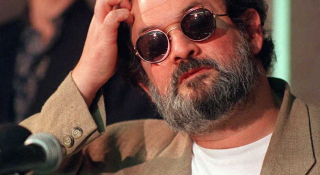
Three decades on, furious rage at the behest of the religiously righteous and the easily offended is all too commonplace. Were The Satanic Verses published today, we wouldn’t be surprised at the outrage it would generate. Not in the slightest. Rather, we’d be astonished that anyone would dare write it at all, or that any publisher would release it. In our post-Charlie Hebdo times, every publishing house and editorial office is haunted by the spectre of aggrieved fanatics bursting through the doors with machine guns.
Would Rushdie himself do the same again, given the chance? Even he’s not sure. In an interview with the French magazine Le Point last week, he said he probably wouldn’t have received the same support from his peers today as he did in 1989, and might even face censure and denunciation from them. ‘Today, they would accuse me of Islamophobia and racism’, he said. ‘They would charge me with crimes against a cultural minority.’
More here.
Saturday Poem
At Least 47 Shades
The goldfinch in its full spring molt.
The bee pollen of sticky and thick.
The quince to perfume a new bride’s kiss.
The ocher yellow in Vermeer’s pearl-necklaced woman.
The opal cream floral on a kimonoed sleeve.
The zest yellow of a Nike Quickstrike in limited numbers.
The imperial yellow embroided robes.
The Aztec gold send by Cortés to Spain.
The Zinnia gold favored by butterflies.
The iguana who keeps watch on Mayan ruins.
The straw hat a cone woven with young bamboo.
The rising sun of Japan’s Amaterasu leaving her cave.
The sand dune that swallows the film’s lovers but keeps them alive.
The coastlight of sun lost in fog.
The chilled lemonade from the fruit of bitterness.
The Manila tint to sunny the laundry room.
The blond and boring heartthrob.
The yellow flash before the grin gets too tight.
The lemon tart with a mouth to match.
The star fruit which can mean two-faced in Tagalog.
The fool’s gold of sojourners and farmers.
The golden promise that still lures us here.
The sunshower which turns my tawny skin brown.
The banana split of Asian outside white underneath.
The Chinese mustard stirred with a dribble of soy sauce.
The yellowtail tuna father cleaned and sliced thin.
The yolk we ate raw with sukiyaki and rice.
The pear ice cream we licked that Tohoku summer.
The moonscape suffusing a rice paper screen.
The theater lights which make the audience vanish.
The electric yellow called Lake Malawi’s yellow prince.
The daffodil that doesn’t match these mean streets.
The marigold for night sweats and contusions.
The summer haze which splits open the sky.
The slicker yellow bands on those 9/11 jackets.
The dandelion that bursts through sidewalks.
The blazing star we still can’t see rushing toward us.
The yellow rose legend of a Texas slave woman.
The atomic tangerine of Los Alamos, New Mexico.
The Jasper yellow of gemstone and James Byrd.
The flame yellow as bone turns to ash.
The wick moving in time with my measured breath.
The first light an eye latches on to.
The whisper yellow as a pale strand of moon.
The yellow lotus that’s nourished by mud.
The poppy spring returns to the Antelope Valley.
The wonderstruck even in those old eyes.
The Chinese lantern riding a night sky.
The sparkler a child waves in the dark.
.
by Amy Uyematsu
from The Yellow Door
Red Hen Press, 2015
Why Do I Love Bollywood?
Aatish Taseer in The New York Times:

More here.
Immigration and Crime
Eyal Press in The New Yorker:

One reason for this may be that immigrants have helped revitalize formerly desolate urban neighborhoods, starting businesses and lowering the prevalence of vacant buildings, where violence can take root. Another possible factor is that, contrary to Trump’s bigoted rhetoric, many immigrants are ambitious strivers, who are highly motivated to support their families and make a better life for their children. Undocumented immigrants may also be more fearful than legal residents of attracting police attention, which could get them deported. Whatever the answer, the research helps make sense of the fact that, during the nineteen-nineties, the foreign-born population in the U.S. grew by more than fifty per cent, and cities such as New York, El Paso, and San Diego, where many of these newcomers settled, did not become cauldrons of violence. They became safer. While numerous factors may have contributed to this—most notably, a stronger economy—it is now widely agreed that immigration played a role, too.
More here.
Friday, September 2, 2016
How to Think Like Shakespeare
Scott L. Newstok in the Chronicle of Higher Education:
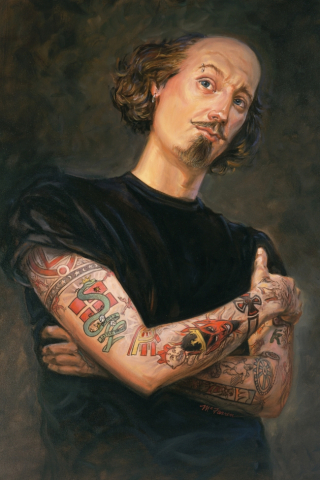
Yet this system somehow managed to nurture world-shifting thinkers, including those who launched the Scientific Revolution. This education fostered some of the very habits of mind endorsed by both the National Education Association and the Partnership for 21st Century Learning: critical thinking; clear communication; collaboration; and creativity. (To these “4Cs,” I would add “curiosity.”) Given that your own education has fallen far short of those laudable goals, I urge you to reconsider Shakespeare’s intellectual formation: that is, not what he purportedly thought — about law or love or leadership — but how he thought. An apparently rigid educational system could, paradoxically, induce liberated thinking.
More here.
Why One Neuroscientist Started Blasting His Core
James Hamblin in The Atlantic:

Peter Strick is not a professional tennis player. He’s a distinguished professor and chair of the department of neurobiology at the University of Pittsburgh Brain Institute. He’s the sort of person to dwell on mistakes, however small.
“My kids would tell me, dad, you ought to take up pilates. Do some yoga,” he said. “But I’d say, as far as I’m concerned, there's no scientific evidence that this is going to help me.”
Still, the meticulous skeptic espoused more of a tennis approach to dealing with stressful situations: Just teach yourself to move on. Of course there is evidence that ties practicing yoga to good health, but not the sort that convinced Strick. Studies show correlations between the two, but he needed a physiological mechanism to explain the relationship. Vague conjecture that yoga “decreases stress” wasn’t sufficient. How? Simply by distracting the mind?
More here.
Thousands to receive basic income in Finland: a trial that could lead to the greatest societal transformation of our time
Mikko Annala in Demos Helsinki:

The Finnish government introduced its legislative bill for the experiment on 25 August. Originally, the scope of the basic income experiment was much more ambitious. Many experts have criticized the government’s experiment for its small sample size and for the setup of the trial, which will be performed within just one experimental condition. This implies that the experiment can provide insights on only one issue, namely whether the removal of the disincentives embedded in social security will encourage those now unemployed to return to the workforce or not.
Still, the world’s largest national basic income experiment represents a big leap towards experimental governance, a transformation that has been given strong emphasis in the current government program of the Finnish state. Additionally, the Finnish trial sets the agenda for the future of universal basic income at large. Its results will be closely followed by governments worldwide. The basic income experiment may thus well lead to the greatest societal transformation of our time.
More here.
Are We Beating the Islamic State?
Meetings with Remarkable Manuscripts
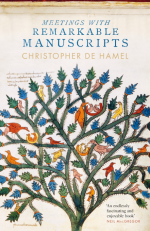
When, in 1963, G I Gurdjieff called the middle volume of his All and Everything trilogy Meetings with Remarkable Men, he must have thought he had come up with a pretty nifty title. He could hardly have imagined that it would one day be followed by the likes of Thomas Pakenham’s Meetings with Remarkable Trees (1996) and the present volume. However, even if this is only the beginning and hundreds ofMeetings with… are just around the corner, it seems reasonable to assume that Christopher de Hamel’s remarkable – to fail to coin an alternative adjective – book will effortlessly make it into the top ten.
De Hamel singles out a dozen manuscripts for scrutiny, while at the same time alluding to a host of near misses that might have made the grade. It should be explained at the outset that here ‘manuscripts’ means medieval illuminated manuscripts, which combine art and calligraphy. It is perhaps telling that the final chapter is devoted to the Spinola Hours from the early 16th century (now in the Getty Museum in Los Angeles), a near last gasp of the great tradition, and not to an even later work such as Giulio Clovio’s Michelangelo-inspired Farnese Hours of 1546 (Clovio received a glowing write-up in Vasari’s Lives of the Artists, and his portrait holding the Hours was painted around 1571–2 by El Greco, no less). De Hamel confesses that he regards the third quarter of the 12th century as ‘the greatest period in Western European book production’.
more here.
post-internet art

In his pictures of places where technological research is done, Struth seems to be implicitly refuting Bertolt Brecht’s famous criticism of objectivist photography: “Things have become so complex that a ‘reproduction of reality’ has less than ever to say about reality itself. A photo of the Krupp factory or the AEG tells us almost nothing about these institutions.” For Walter Benjamin, this implied that “photography is unable to convey anything about a power station or a cable factory other than, ‘What a beautiful world!’” At one level, of course, Brecht’s observation is a truism: There is always so much that escapes any photograph—but, I could also add, there is so much that escapes any book, or even a whole shelf of them. A full understanding of any complex social phenomenon will always be a chimera. But Struth proves that there is much that can be told about such institutions by way of a photograph—provided that the person creating it is as much the master of his technique as those whose work he is studying. Struth’s photographs have something very different to say than “What a beautiful world!”
Viewers acquainted with his best-known images, his museum photographs of the late 1980s/early ’90s and the late ’90s/early ’00s—altogether, a supremely empathetic study of how the great painting of the past functions as a social nexus in the present, a direct comparison of art and life through art—may be surprised that the more recent pictures in “Nature & Politics” are unpeopled (with just a couple of exceptions).
more here.
Ostend: Stefan Zweig, Joseph Roth, and the Summer Before the Dark
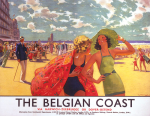
The Belgian resort town of Ostend began serving up a beguiling mix of social pageantry and dreamy ocean reveries to cosmopolitan vacationers early in the 19thcentury. Elegant hotels and cafés sprang up to accommodate the many thousands of visitors who traveled there each year, primarily from Germany and other landlocked nations of Europe’s interior. Horse racing, casino gambling, splendid displays of fashion on the promenade, and a busy schedule of colorful festivals heightened the resort’s appeal. The sea itself gained renown for its mesmerizing luminosity, which some attributed to the presence of innumerable mollusks.
In 1902, when the Viennese author Stefan Zweig was only 21 years old, he wrote one of his first travel pieces about “the season” at Ostend. This affectionate caricature observes that while people typically visit watering places for “harmonious relaxation in the calm contemplation of nature,” Ostend’s clientele was different. Rather than an opportunity to switch off, its visitors sought “another shining link in the endless chain of society’s distractions.” The city had become
the unofficial rendezvous-location for the real and bogus aristocracy that one sees floating like a spume above the waves of capitals, everywhere encountering and recognizing itself, and for whom a home-town is merely a station in transit.
At season’s end, the town was returned to the fishermen and fell into a deep slumber until the “unique, unforgettable game of human fallibility, passions and distractions” began again.
more here.