
by Brooks Riley
Category: Recommended Reading
Sunday, October 23, 2016
Now it’s time to prepare for the Machinocene
Huw Price in Aeon:

Well, two big things have changed in recent decades. First, there’s been a lot of real progress – theoretical, practical and technological – in understanding the mechanisms of intelligence, biological as well as non-biological. Second, AI has now reached a point where it’s immensely useful for many tasks. So it has huge commercial value, and this is driving huge investment – a process that seems bound to continue, and probably accelerate.
One way or another, then, we are going to be sharing the planet with a lot of non-biological intelligence. Whatever it brings, we humans face this future together. We have an obvious common interest in getting it right. And we need to nail it the first time round. Barring some calamity that ends our technological civilisation without entirely finishing us off, we’re not going to be coming this way again.
There have been encouraging signs of a growing awareness of these issues. Many thousands of AI researchers and others have now signed an open letter calling for research to ensure that AI is safe and beneficial. Most recently, there is a welcome new Partnership on AI to Benefit People and Society by Google, Amazon, Facebook, IBM and Microsoft.
For the moment, much of the focus is on safety, and on the relatively short-term benefits and impacts of AI (on jobs, for example). But as important as these questions are, they are not the only things we should be thinking about.
More here.
Siddharth Varadarajan: The confessions of an Indian editor
Siddharth Varadarajan in The Wire:
Emile Zola was a great man and an even greater writer. His 1898 article, ‘J’accuse…’, in which he indicted the French establishment of his day for its anti-semitism, is a classic of journalism. I am a journalist but I have neither the skill nor the courage of Zola. There is probably plenty that the establishment of my day can and should be indicted for but I will leave that to better and braver women and men. Where Zola said ‘I Accuse’, I am saying, ‘I Confess’.
Until this morning, I was angry and upset with the pro-establishment television anchors and actors who were bullying the whole of Bollywood into declaring they would not work with Pakistanis any more. It alarmed me when thugs in Mumbai said they will not allow the screening of any film featuring Pakistani actors. I thought it was mean-spirited for the Mumbai film festival to scrap the screening of a 1959 Pakistani classic. I was saddened when my alma mater, Mayo College, canceled a friendly cricket match with Lahore’s Aitchison College. How would this closing of the Indian mind help protect India’s borders, I wondered.
It is only when I read the stirring words of our information and broadcasting minister that I realised the error of my ways.
“It is very simple to say art has no boundaries,” Venkaiah Naidu ji said, “but countries have boundaries … I’m not building a case for a boycott of anyone but … the people’s sentiments should be respected. When a war is taking place, you have someone doing a drama with that country, that is not expected.”
Following Venkaiah ji’s advice of what is expected of people like me, and in keeping with the nationalist sentiments of our times, I am, therefore, choosing to make a full confession.
More here. [And watch Siddharth read his very touching confessions below.]
MARLON JAMES: WHY I’M DONE TALKING ABOUT DIVERSITY
Marlon James in Literary Hub:
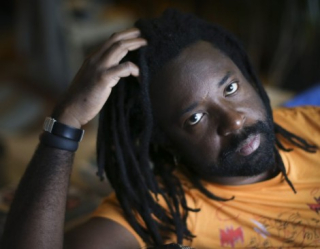
It’s not just that diversity, like tolerance is an outcome treated as a goal. It is that we too often mistake discussing diversity with doing anything constructive about it. This might be something we picked up from academia, the idea that discussing an issue is somehow on par with solving it, or at least beginning the process. A panel on diversity is like a panel on world peace. It should be seeking a time when we no longer need such panels. It should be a panel actively working towards its own irrelevance. The fact that we’re still having them not only means that we continue to fail, but the false sense of accomplishment in simply having one is deceiving us into thinking that something was tried.
More here.
Scientists think the common cold may at last be beatable
Carl Zimmer in Stat:

The experience is maddening for Moore — especially because he’s a virologist. For everything that virologists have learned about rhinoviruses — the cause of the majority of colds — they have not invented a vaccine for them.
In 2013, Moore wondered if he could make one. He consulted a rhinovirus expert for some advice. Instead, the expert told him, “Oh, there will never be a vaccine for rhinovirus — it’s just not possible.”
“I thought, ‘Well, let’s look into that,’” recalled Moore, an associate professor at Emory University and a research scholar at Children’s Healthcare of Atlanta.
Three years later, Moore and his colleagues now have a vaccine that has shown promising results in trials on macaques. The monkeys were able to produce antibodies against many types of rhinoviruses. Moore and his colleagues are now following up on those results with more research and hope to move soon to human trials.
More here.
The election may be over soon, but Trump’s far-right supporters are here to stay
Anis Shivani in AlterNet:

In one sense—having been up against the entire political and intellectual establishment—Trump has already come out the winner, because he has put into radical doubt (as did Bernie Sanders on the other side) the neoliberal consensus around which both major parties and their institutional supporters cohere in Washington. His is a renegade candidacy that will have a lasting impact on world politics, though it is easy to overlook this amid the din of moral righteousness currently trumped up by the establishment.
More here.
dario fo (1926 – 2016)
yvette Chauviré (1917 – 2016)
The Cunning of Destruction: Elizabeth Hardwick’s exquisite diffidence
Brian Dillon in Cabinet:
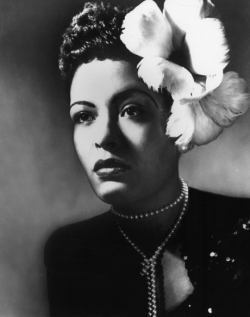
And then there is this sentence—here it is again: “In her presence on these tranquil nights it was possible to experience the depths of her disbelief, to feel sometimes the mean, horrible freedom of a thorough suspicion of destiny.” It is one of those Hardwickian moments when the figural falls away and we’re faced, she and we, with the calamitous, gnomic essence of her subject: a woman who has never been a Christian, who cannot believe in family—Holiday’s mother fusses at the edges of the essay—and still less in the men she meets. A person whose sole commitments are to her “felonious narcotism” and perhaps to her art. The realization is stark, and unadorned by simile. But it is also not simple: it was “possible,” merely, to apprehend (or is it to inhabit?) Holiday’s absence of faith, and then only “sometimes.” Why?
More here.
Robert Crumb and Robert Hughes
Sunday Poem
Dear Melissa
a curve billed thrasher
is cleaning its beak on the ground—
we are closer now than ever—sitting
in shadow—I never want to scare
anyone—not really—I have a friend
who loves people who come out
suddenly—in the dark—
pleasure
is the same distance as pain from here—
that’s my skin on your sweater—both hands
stripped now—I know I am someone
to you I am entirely—practicing
Spanish on the computer—gesturing to
the neighbor instead of speaking—
to sharpen
the body is never an accident—someone
I know I am not—letters are inseparable
from loss—moving what can be still
moved—one is sweeping the mouth—
what ever isn’t skin—take it off—
by TC Tolbert
from Poem-a-Day
Academy of American Poets
Saturday, October 22, 2016
10 BOOKS THAT DON’T EXIST, BUT SHOULD
Scott Esposito in Literary Hub:
The Missing Books is a living document. As Esposito discovers more missing books (and as circumstances demand changes to this list) Esposito will update The Missing Books and release new editions. Anyone who purchases The Missing Books is entitled to all future versions of it, for free.
The Passenger by Cormac McCarthy (Reputed manuscript-in-progress by Cormac McCarthy.)
McCarthy’s most recent novel, The Road, was published in 2006, ten years prior to the time of this writing; at no other point in McCarthy’s 50-year career has the author let such a span pass without publishing a new novel. He has reportedly filled this time with two major projects, The Passenger being the one about which the most is known. Some light was shed on The Passenger in August 2015 (creating a small media firestorm) when McCarthy appeared at a Lannan Foundation event where he reportedly read excerpts from the book. The Passenger is said to be a very long book set in New Orleans, and there is conjecture that it engages theoretical physics and tropes of science fiction to a large degree. Additionally, there are reports that the book has been continually pushed back and may at one time have had a 2016 release date.
More here.
What a Legless Mouse Tells Us About Snake Evolution
Ed Yong in The Atlantic:

ZRS is not a gene itself. Rather, it’s an enhancer—a stretch of DNA that controls the activity of genes. These sequences have long been thought to drive the wide variety of body shapes found in back-boned animals. By influencing when and where genes are activated, they can produce astonishing variety from the same basic toolkit, changing everything from the length of limbs to the number of toes.
“But it’s been difficult identifying concrete examples of this,” says Visel. Enhancers are hard to identify. You can’t just eyeball a stretch of DNA and work out where the enhancers are. They also tend to sit far away from the genes that they control—they’re like a sentence in a book that changes the meaning of a paragraph several chapters away.
More here.
Noam Chomsky Has ‘Never Seen Anything Like This’
Chris Hedges in Films For Action:
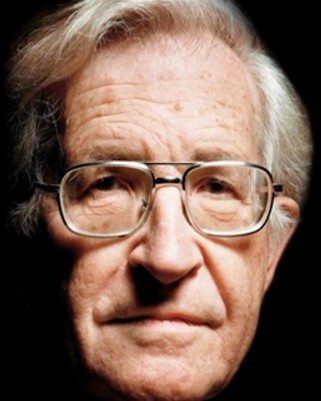
“It is very similar to late Weimar Germany,” Chomsky told me when I called him at his office in Cambridge, Mass. “The parallels are striking. There was also tremendous disillusionment with the parliamentary system. The most striking fact about Weimar was not that the Nazis managed to destroy the Social Democrats and the Communists but that the traditional parties, the Conservative and Liberal parties, were hated and disappeared. It left a vacuum which the Nazis very cleverly and intelligently managed to take over.”
More here.
Benedict Cumberbatch Reads Sol LeWitt’s letter to Eva Hesse
For Morgan Meis. Video length: 6:09
Albert Murray’s Symphonic Elegance Sings in a New Anthology

“It is always open season on the truth,” the great cultural critic Albert Murray wrote in his first and probably best book, “The Omni-Americans” (1970), “and there never was a time when one had to be white to take a shot at it.”
Murray (1916-2013) took his share of shots in “The Omni-Americans.” He skewered social scientists for pathologizing black life in what he called “this great hit-and-miss republic.” He poured scorn upon black protest writers and certain novelists, including Richard Wright, for insisting on narratives of victimhood and marginalization. Not for him were novels that “read like interim research reports.”
Part of Murray’s genius was for sounding so cheerful in the midst of battle. He’d pause during an extended and elegant argument to toss off a riff like this one (the dated word “meriny” refers to a light skin and hair tone): “If U.S. Negroes don’t already have self-pride and didn’t know black, brown, beige and freckles, and sometimes even m’riny is beautiful, why do they always sound so good, so warm, and even cuss better than everyone else?” Murray, it should be said, was an imaginative swearer himself. Henry Louis Gates Jr. said of his conversation, “Imagine Redd Foxx with a graduate degree in literature.”
more here.
AFTER SZYMBORSKA, AND POLISH POETRY TODAY

During the Polish poet Wisława Szymborska’s lifetime, it was commonly said that in Poland each of her new volumes was greeted with a rush to the bookshops, with enthusiastic readers even memorizing and reciting her verses. After winning the Nobel Prize for Literature in 1996, her fame spread worldwide. Modest and private, Szymborska found the experience mortifying—she reportedly referred to her Nobel Prize as “the Stockholm tragedy” and kept the medal itself in a drawer.
Szymborska and her fellow Nobel Prize–winner Czesław Miłosz formed two opposite poles (if you’ll pardon the expression) of the postwar generation of Polish poets. Miłosz’s intellectual seriousness and grandiose ego contrasted with Szymborska’s accessible wit and self-effacing charm. But much united them—both survived the Second World War, both embraced and then abandoned Communism, and both endeavored to express their country’s suffering through their work. Though chafing against the idea of political poetry, they shared with their fellow postwar poets a conviction that poetry should tackle the big questions—life and death, freedom and slavery.
By the time Szymborska passed away in 2012, she was one of the last exemplars of that school: Polish poetry had been blown wide open by the collapse of Communism two decades before, and, reconnected with the Western world, younger poets looked abroad for inspiration.
more here.
Why Claudio Magris’s Danube is a timely elegy for lost Europe
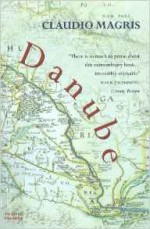
Danube was originally published in Italian in 1986, the same year Mikhail Gorbachev introduced the Soviet Union to two new concepts: glasnost andperestroika. Written during the final efflorescence of the cold war – when, as we now know, the world came the closest it has ever been to a nuclear war – the countries of what was then called eastern Europe had become, after four decades of isolating Soviet rule, terra incognita to many in the west.
Ignorance always summons greater ignorance in its defence. When Danube was published in English, in 1989, the influential American Kirkus Reviews called the book “heavy-going” in its description of what it termed “this little-known (at least to most Americans) corner of Europe”. The New York Times reviewer tellingly declared his preference for the Rhine as the river of civilisation, “closer to our western world and to our history … It only sends its Nibelungen to the east to get them massacred by the hordes of Attila.”
more here.
Saturday Poem
Persian Letters
Dear Aleph,
Like Ovid: I’ll have no last words.
This is what it means to die among barbarians. Bar bar bar
was how the Greeks heard our speech —
sheep, beasts — and so we became
barbarians. We make them reveal
the brutes they are, Aleph, by the things
we make them name. David,
they tell me, is the one
one should aspire to, but ever since
I first heard them say Philistine
I’ve known I am Goliath
if I am anything.
by Solmaz Sharif
from Poetry, 12/2014
.
A Welcome Change: Radical Hospitality
Matthew Browne in Harvard Magazine:

…All of the scenes spoke to Smith’s notion of Radical Hospitality, which was only loosely defined, to the point of being difficult to pin down. At different times, she presented it as the virtue of patience, laboring to empathize with others, and giving the exiled a home, just to name a few. Radical Hospitality, in its elasticity, ran the risk of not seeming radical at all, and just becoming a stand-in for the warm nicety du jour. But there seemed to be a stable core that held it together: people around the world ought to do a better job of treating each other as welcomed guests. Like the maxim “Love thy neighbor,” the principle is apparent, simple, and unsurprising—but to insist on its importance, and to hold oneself and others to its standards, is radical. A lot of what seemed novel about Smith’s concept was in language: the focus on the very word hospitality, and the attempt to trace its political import. We are familiar to the point of callousing with the idea that we should love strangers or that we should empathize with others, but we rarely hear that we should be more hospitable. The word feels new in our mouths. Focusing on hospitality reinvigorates the vitality of a word that’s retreated to the hotel and dining room. And these common associations strengthen Smith’s political usage, rendering otherwise abstract debates in terms of warm, ground-level personal relations. Offering amnesty to refugees, for example, can be thought of as a matter of hospitality; should we not feel the same careful responsibility to those around the world that we do to those in our homes? The idea suggests that there is an ethics to our etiquette and an etiquette to our ethics.
More here.