The Myth of Thumbprints: Reading John Berger in Berlin

Seventh-Man

Alexis Zanghi in the LA Review of Books:

“THEY TRAVELED in groups of 100. Mostly at night. In lorries. And on foot.”

During the 1970s, migrants leaving Portugal in search of opportunity developed a system to ensure their safe arrival at their destination, and to deter fleecing by people smugglers. Before departing, each man would take his own picture. Then, he would rip the picture in two, keeping one half of his face for himself and giving the other half to the smuggler. Once over the border, the man would mail his half back to his family, to indicate that he had arrived safely in France, Germany, or Switzerland, or any of the other northern European countries reliant on cheap labor from the depressed and volatile countries ringing the Mediterranean. Then, the smuggler would come to collect payment from the migrant’s family, bearing his half of the man’s face as evidence.

These pictures stare up at the reader of A Seventh Man like eerie passport photos. Written by John Berger in collaboration with Swiss photographer Jean Mohr in the 1970s, the book sought to document the daily lives of migrant workers in the industrial north of Europe. In one, ripped in half on a diagonal, a man’s forehead drifts apart from his chin, eyes obscured by the tear, suspended on the page. The effect is one of facelessness and anonymity. This is perhaps the intention of Berger and Mohr: to highlight, and in doing so, hopefully negate the erasure inherent in migration. Berger sought to facilitate “working class solidarity”: to promote empathy among workers, across linguistic and cultural borders. Then, one in every seven workers in Europe was a migrant.

Today, as well, one in every seven people in the world is a migrant, refugee, or otherwise displaced individual.

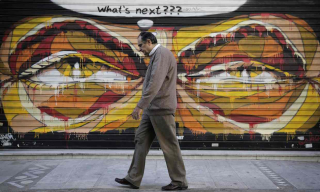
At the Museum Europäischer Kulturen in Berlin, a collective of migrant artists called KUNSTASYL (literally “art asylum”) are at work on a “peaceful takeover” of the museum’s east wing. On the ground floor, one artist, Dachil Sado, has painted a large Hokusai wave washing over a giant, oversized thumbprint.

More here.

Martha Nussbaum thinks we shouldn’t lose our tempers

Julian Baggini in Prospect:

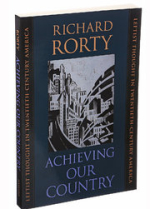
RTRGIQS_web-1When a philosopher writes a book with five abstract nouns in a six-word title, you might justly fear a laboured tome of desiccating logical analysis. When the author is Martha Nussbaum, however, you can be reassured. Nussbaum is one of the most productive and insightful thinkers of her generation, though strangely undervalued in the UK. She combines a philosopher’s demand for conceptual clarity and rigorous thinking with a novelist’s interest in narrative, art and literature. The result is an impressive body of work spanning the overlapping territories of politics, ethics and the emotions.

Her latest work examines the significance of anger and forgiveness in the intimate and political spheres, as well as in the “middle realm” between them in which we interact with each other as colleagues, acquaintances and fellow citizens. It belongs to a genre entirely of its own, a kind of highbrow political-, social- and self-improvement.

Its core thesis is summed up in her opening discussion of Aeschylus’ Oresteia trilogy. In its final part, The Eumenides, Athena brings the bloody cycle of vengeance to an end by establishing a court, judge and jury. This allows reasoned law to take the place of the Furies, the ancient goddesses of revenge, who are nonetheless invited to take their place in the city. Nussbaum says that many understand the play “to be a recognition that the legal system must incorporate the dark vindictive passions and honour them.” However, when the Furies accept Athena’s offer they do so with “a gentle temper” and change their name to the “Kindly Ones” (Eumenides). Anger and revenge are not reintegrated, they are transformed.

More here.

He may have invented one of neuroscience’s biggest advances. But you’ve never heard of him

Anna Vlasits in Stat:

160812_pan_027a-1600x900The next revolution in medicine just might come from a new lab technique that makes neurons sensitive to light. The technique, called optogenetics, is one of the biggest breakthroughs in neuroscience in decades. It has the potential to cure blindness, treat Parkinson’s disease, and relieve chronic pain. Moreover, it’s become widely used to probe the workings of animals’ brains in the lab, leading to breakthroughs in scientists’ understanding of things like sleep, addiction, and sensation.

So it’s not surprising that the two Americans hailed as inventors of optogenetics are rock stars in the science world. Karl Deisseroth at Stanford University and Ed Boyden at the Massachusetts Institute of Technology have collected tens of millions in grants and won millions in prize money in recent years. They’ve stocked their labs with the best equipment and the brightest minds. They’ve been lauded in the media and celebrated at conferences around the world. They’re considered all but certain to win a Nobel Prize.

There’s only one problem with this story:

It just may be that Zhuo-Hua Pan invented optogenetics first.Section break

Even many neuroscientists have never heard of Pan.

More here.

The Dark Undone

D R Haney in The Nervous Breakdown:

MacbethThe thought came to me when I was fifteen and trying to sleep on New Year’s Eve. Nothing I recall had happened to incite it. I’d spent the night babysitting my younger siblings while my mother attended a party, and she returned home around one in the morning and everyone went to bed. (My parents had divorced, though they continued to quarrel as if married.) My brother was sleeping in the bunk below mine, and as I stared at the ceiling and listened to the house settle, I thought: Why don’t you go into the kitchen and get a knife and stab your family to death? It wasn’t an impulse; it was a kind of philosophical question that I found myself pursuing. I thought of true-crime cases and wondered at the difference between, say, Charles Manson and me. Why was he capable of killing? Why was I not? Was it a matter of morality? But for me morality was tied to religion, and I’d declared myself an atheist a year or so before. Nor did man’s law amount to an automatic deterrent; some killings — those sanctioned or even performed by the state — were viewed as “right.” But wasn’t a life a life? So, if I wanted to get a knife and stab my family to death, as I knew I didn’t, why would that be any more “wrong” than a soldier killing in combat? Because my family was “innocent”? But weren’t many victims of war also innocent? And why was I wondering in the first place? Didn’t serial killers similarly brood before acting? I knew some did. I’d read the letters they sent to the press and police: Stop me before I kill again. I don’t want to do it, but I must. Maybe I was one of them. Maybe there was no difference between me and Charles Manson. You can’t choose what you are; you simply are.

I tossed and turned. The quiet of the sleeping house was loud — how loud was the quiet that followed murder? Maybe I was destined to know. I desperately wanted proof — irrefutable proof — that I would never hurt anyone as, more by the minute, seemed inevitable.

More here.

A Different Kind of Safe Space

Ted Gup in The Chronicle of Higher Education:

Photo_78205_landscape_850x566This is a sanctuary for free speech,” I will tell my students next week at their first class in nonfiction writing. With this manifesto I begin each semester and have for 30-plus years. What does it mean? It means that in here, you can say anything. “Anything?” a student will inevitably ask, signaling both mischief and anxiety.

Anything.

If they want to say the F-word, they are free to do so. (Frankly, I prefer it to an endless barrage of “likes” and “you knows.”) They can say or write the N-word, and any other term of racial, gender, or ethnic disparagement. Now I have their attention. I may or may not be in violation of a college rule, but I am clearly outside the “safe zone.” And that’s fine, because outside of it is where I want to be, and where I want them to be.This is, after all, a class in writing, and words are not to be trifled with. They have consequences. You want to use a word — any word — fine by me, but be prepared to accept what happens next. No, I will not reprimand you, but neither will I rush in to save you. It is a lesson not only in the power of words, but in democracy, free speech, and responsibility.

Words are dangerous, but not as dangerous as efforts to suppress them, be it by government or dean — and certainly not as insidious as self-censorship. I know my views are not shared by some colleagues and students (although not a one has ever complained), particularly in this age of safe spaces, trigger warnings, microaggressions, and speech codes. And no, I am not a reactionary conservative but an old-school liberal, a devotee of John Stuart Mill and Bertrand Russell, who, in a joyful display of defiance, titled one of his collections Unpopular Essays. But on one point Russell and I part company. He said that “all movements go too far.” He is mostly right, but not with regard to free speech. Here, there is no too far. The very idea of capping speech suffocates the imagination. Another of my favorite writers, E.B. White, wrote that “in a free country it is the duty of writers to pay no attention to duty.” I’ve always loved that quote, but I think it craves an asterisk. There is a duty: to be true to oneself.

More here.

Saturday, September 3, 2016

Attica, Attica: The Story of the Legendary Prison Uprising

04FOREMAN-master768James Forman Jr. at the NY Times:

Attica. The name itself has long signified resistance to prison abuse and state violence. In the 1975 film “Dog Day Afternoon,” Al Pacino, playing a bank robber, leads a crowd confronting the police in a chant of “Attica, Attica.” The rapper Nas, in his classic “If I Ruled the World,” promises to “open every cell in Attica, send ’em to Africa.” And Attica posters were once commonplace in the homes of black nationalists. The one in my family’s apartment in the 1970s featured a grainy black-and-white picture of Attica’s protesting prisoners, underneath the words “We are not beasts.”

But memories of the 1971 uprising at Attica prison have grown hazy. I recently mentioned the word to a politically active Yale College student, who responded: “I know it’s a prison where something important happened. But I’m not sure of the details.”

Heather Ann Thompson, a professor of history at the University of Michigan, has the details. Thompson spent more than a decade poring over trial transcripts, issuing countless requests for hidden government documents, and interviewing dozens of survivors and witnesses.

more here.

‘I Contain Multitudes’ by Ed Yong

X500Tim Radford at The Guardian:

We are not alone. We have never been alone. We are possessed. Our inner demons cannot be cast out, because they did not move in and take possession: they were here before us, and will live on after us. They are invisible, insidious and exist in overwhelming numbers. They manage us in myriad ways: deliver our minerals and vitamins, help digest our lunch, and provide in different ways all our cheese, yoghurt, beer, wine, bread, bacon and beef. Microbes can affect our mood, take charge of our immune system, protect us from disease, make us ill, kill us and then decompose us.

As complex, multicellular lifeforms, we are their sock puppets. We spread them, introduce variety into their brief lives and provide them with all they need to replicate and colonise new habitats. We are perambulating tower blocks, each occupied by maybe 40tn tiny tenants. Our skins are smeared with a thin film of microbial life, with ever greater numbers occupying every orifice and employed in colossal numbers in our guts.

Yet, until late in human history, we didn’t know they were there at all. We still do not know who they all are, or what they do. We discover new things almost every day.

more here.

‘Horses, Horses, in the End the Light Remains Pure’

Horses-horsesRobert Fay at The Quarterly Conversation:

The Japanese novelist Hideo Furukawa is interested in the “blank spaces,” as he puts it, what’s not said in official histories and school textbooks. He reminds his countrymen that violence has always been central to Japanese history. In his newly translated novel, Horses, Horses, in the End the Light Remains Pure: A Tale that Begins with Fukushima (translated by Doug Slaymaker with Akiko Takenaka), the narrator Hideo Furukawa tells us:

I’m about to touch on Japanese History. This is unbearably uncomfortable, to me anyway, all this history stuff. Our history, the history of the Japanese, is nothing more than the history of killing people.

Furukawa (born in 1966) is well-regarded in Japan as a literary novelist: in addition to receiving the Mishima Yukio Prize in 2006 for his novel Love, he has also won Japanese science fiction and mystery awards. His only other work in English is the novel Belka, Why Don’t You Bark? published by Haikasoru in 2012 (translated by Michael Emmerich). Belka is a rather curious work, at times told from the point of view of various dogs and often employing prose that reads like a poor imitation of hard-boiled fiction. It is not the best introduction to Furukawa and his considerable talents.

Furukawa is a native of Fukushima prefecture, the so-called ground zero of 3.11, and he found himself in Kyoto and Tokyo during 3.11 and its immediate aftermath. Feeling the call to go home, he convinced Shincho Publishing to underwrite a trip to Fukushima and the surrounding prefectures.

more here.

Revealing the Whole Truth About Mother Teresa

Kai Schultz in the New York Times:

ScreenHunter_2189 Sep. 03 20.59Taking on a global icon of peace, faith and charity is not a task for everyone, or, really, hardly anyone at all. But that is what Dr. Aroup Chatterjee has spent a good part of his life doing as one of the most vocal critics of Mother Teresa.

Dr. Chatterjee, a 58-year-old physician, acknowledged that it was a mostly solitary pursuit. “I’m the lone Indian,” he said in an interview recently. “I had to devote so much time to her. I would have paid to do that. Well, I did pay to do that.”

His task is about to become that much tougher, of course, when Mother Teresa is declared a saint next month.

In truth, Dr. Chatterjee’s critique is as much or more about how the West perceives Mother Teresa as it is about her actual work. As the canonization approaches, Dr. Chatterjee hopes to renew a dialogue about her legacy in Kolkata, formerly Calcutta, where she began her services with the “poorest of the poor” in 1950.

More here.

For first time, carbon nanotube transistors outperform silicon

Adam Malecek in Phys.org:

ScreenHunter_2188 Sep. 03 20.53For decades, scientists have tried to harness the unique properties of carbon nanotubes to create high-performance electronics that are faster or consume less power—resulting in longer battery life, faster wireless communication and faster processing speeds for devices like smartphones and laptops.

But a number of challenges have impeded the development of high-performance transistors made of carbon nanotubes, tiny cylinders made of carbon just one atom thick. Consequently, their performance has lagged far behind semiconductors such as silicon and gallium arsenide used in computer chips and personal electronics.

Now, for the first time, University of Wisconsin-Madison materials engineers have created carbon nanotube transistors that outperform state-of-the-art silicon transistors.

Led by Michael Arnold and Padma Gopalan, UW-Madison professors of materials science and engineering, the team's carbon nanotube transistors achieved current that's 1.9 times higher than silicon transistors. The researchers reported their advance in a paper published Friday (Sept. 2) in the journal Science Advances.

“This achievement has been a dream of nanotechnology for the last 20 years,” says Arnold. “Making carbon nanotube transistors that are better than silicon transistors is a big milestone. This breakthrough in carbon nanotube transistor performance is a critical advance toward exploiting carbon nanotubes in logic, high-speed communications, and other semiconductor electronics technologies.”

More here. [Thanks to Farrukh Azfar.]

WOULD ANYONE PUBLISH THE SATANIC VERSES TODAY?

Patrick West in Spiked:

Salman_rushdie_1In 1989, the Western world got its first real taste of Islamic extremism when the Indian-born British writer Salman Rushdie was sentenced to death. It was the Ayatollah Khomeini of Iran who issued the fatwa ordering Muslims to kill Rushdie on account of his book, The Satanic Verses. Most people were horrified, not merely because of the effrontery of the Ayatollah, but because it seemed so anachronistic. Here we were, still in the midst of the Cold War, and up had popped some religious throwback exhorting murder on account of what someone had written. The concept of death for blasphemy, we assumed, belonged to different times.

Three decades on, furious rage at the behest of the religiously righteous and the easily offended is all too commonplace. Were The Satanic Verses published today, we wouldn’t be surprised at the outrage it would generate. Not in the slightest. Rather, we’d be astonished that anyone would dare write it at all, or that any publisher would release it. In our post-Charlie Hebdo times, every publishing house and editorial office is haunted by the spectre of aggrieved fanatics bursting through the doors with machine guns.

Would Rushdie himself do the same again, given the chance? Even he’s not sure. In an interview with the French magazine Le Point last week, he said he probably wouldn’t have received the same support from his peers today as he did in 1989, and might even face censure and denunciation from them. ‘Today, they would accuse me of Islamophobia and racism’, he said. ‘They would charge me with crimes against a cultural minority.’

More here.

Saturday Poem

At Least 47 Shades

The goldfinch in its full spring molt.
The bee pollen of sticky and thick.
The quince to perfume a new bride’s kiss.
The ocher yellow in Vermeer’s pearl-necklaced woman.
The opal cream floral on a kimonoed sleeve.
The zest yellow of a Nike Quickstrike in limited numbers.
The imperial yellow embroided robes.
The Aztec gold send by Cortés to Spain.
The Zinnia gold favored by butterflies.
The iguana who keeps watch on Mayan ruins.
The straw hat a cone woven with young bamboo.
The rising sun of Japan’s Amaterasu leaving her cave.
The sand dune that swallows the film’s lovers but keeps them alive.
The coastlight of sun lost in fog.
The chilled lemonade from the fruit of bitterness.
The Manila tint to sunny the laundry room.
The blond and boring heartthrob.
The yellow flash before the grin gets too tight.
The lemon tart with a mouth to match.
The star fruit which can mean two-faced in Tagalog.
The fool’s gold of sojourners and farmers.
The golden promise that still lures us here.
The sunshower which turns my tawny skin brown.
The banana split of Asian outside white underneath.
The Chinese mustard stirred with a dribble of soy sauce.
The yellowtail tuna father cleaned and sliced thin.
The yolk we ate raw with sukiyaki and rice.
The pear ice cream we licked that Tohoku summer.
The moonscape suffusing a rice paper screen.
The theater lights which make the audience vanish.
The electric yellow called Lake Malawi’s yellow prince.
The daffodil that doesn’t match these mean streets.
The marigold for night sweats and contusions.
The summer haze which splits open the sky.
The slicker yellow bands on those 9/11 jackets.
The dandelion that bursts through sidewalks.
The blazing star we still can’t see rushing toward us.
The yellow rose legend of a Texas slave woman.
The atomic tangerine of Los Alamos, New Mexico.
The Jasper yellow of gemstone and James Byrd.
The flame yellow as bone turns to ash.
The wick moving in time with my measured breath.
The first light an eye latches on to.
The whisper yellow as a pale strand of moon.
The yellow lotus that’s nourished by mud.
The poppy spring returns to the Antelope Valley.
The wonderstruck even in those old eyes.
The Chinese lantern riding a night sky.
The sparkler a child waves in the dark.

.
by Amy Uyematsu
from The Yellow Door
Red Hen Press, 2015

Why Do I Love Bollywood?

Aatish Taseer in The New York Times:

BollyThere is something about a big, popular art form that dramatizes a society’s deepest tensions that I find desperately moving. In the West, this is the kind of heavy lifting that was once the preserve of the novel — think of Dickens and Balzac. But in India, Bollywood alone deals with our society’s inner tension, its fault lines and frictions.

More here.

Immigration and Crime

Eyal Press in The New Yorker:

TRUMP_TRUTHWhen Trump kicked off his campaign, last year, he accused Mexico of sending “rapists” and criminals to America. This was a patently outrageous claim, and there was no evidence behind it. According to Robert Sampson, a sociologist at Harvard and the former scientific director of the Project on Human Development in Chicago Neighborhoods, communities with high concentrations of immigrants do not suffer from outsized levels of violence. The opposite is the case. In his exhaustively researched 2012 book, “Great American City,” Sampson noted that, in Chicago, “increases in immigration and language diversity over the decade of the 1990s predicted decreases in neighborhood homicide rates.” Other scholars have turned up similar findings. In 2013, a team of researchers published a paper on Los Angeles that found that “concentrations of immigrants in neighborhoods are linked to significant reductions in crime.” A 2014 study examining a hundred and fifty-seven metropolitan areas in the United States found that violent crime tended to decrease when the population of foreign-born residents rose.

One reason for this may be that immigrants have helped revitalize formerly desolate urban neighborhoods, starting businesses and lowering the prevalence of vacant buildings, where violence can take root. Another possible factor is that, contrary to Trump’s bigoted rhetoric, many immigrants are ambitious strivers, who are highly motivated to support their families and make a better life for their children. Undocumented immigrants may also be more fearful than legal residents of attracting police attention, which could get them deported. Whatever the answer, the research helps make sense of the fact that, during the nineteen-nineties, the foreign-born population in the U.S. grew by more than fifty per cent, and cities such as New York, El Paso, and San Diego, where many of these newcomers settled, did not become cauldrons of violence. They became safer. While numerous factors may have contributed to this—most notably, a stronger economy—it is now widely agreed that immigration played a role, too.

More here.

Friday, September 2, 2016

How to Think Like Shakespeare

Scott L. Newstok in the Chronicle of Higher Education:

Photo_78177_portrait_650x975Building a bridge to the 16th century must seem like a perverse prescription for today’s ills. I’m the first to admit that English Renaissance pedagogy was rigid and rightly mocked for its domineering pedants. Few of you would be eager to wake up before 6 a.m. to say mandatory prayers, or to be lashed for tardiness, much less translate Latin for hours on end every day of the week. Could there be a system more antithetical to our own contemporary ideals of student-centered, present-focused, and career-oriented education?

Yet this system somehow managed to nurture world-shifting thinkers, including those who launched the Scientific Revolution. This education fostered some of the very habits of mind endorsed by both the National Education Association and the Partnership for 21st Century Learning: critical thinking; clear communication; collaboration; and creativity. (To these “4Cs,” I would add “curiosity.”) Given that your own education has fallen far short of those laudable goals, I urge you to reconsider Shakespeare’s intellectual formation: that is, not what he purportedly thought — about law or love or leadership — but how he thought. An apparently rigid educational system could, paradoxically, induce liberated thinking.

More here.

Why One Neuroscientist Started Blasting His Core

James Hamblin in The Atlantic:

ScreenHunter_2187 Sep. 02 15.55Elite tennis players have an uncanny ability to clear their heads after making errors. They constantly move on and start fresh for the next point. They can’t afford to dwell on mistakes.

Peter Strick is not a professional tennis player. He’s a distinguished professor and chair of the department of neurobiology at the University of Pittsburgh Brain Institute. He’s the sort of person to dwell on mistakes, however small.

“My kids would tell me, dad, you ought to take up pilates. Do some yoga,” he said. “But I’d say, as far as I’m concerned, there's no scientific evidence that this is going to help me.”

Still, the meticulous skeptic espoused more of a tennis approach to dealing with stressful situations: Just teach yourself to move on. Of course there is evidence that ties practicing yoga to good health, but not the sort that convinced Strick. Studies show correlations between the two, but he needed a physiological mechanism to explain the relationship. Vague conjecture that yoga “decreases stress” wasn’t sufficient. How? Simply by distracting the mind?

More here.