
Category: Recommended Reading
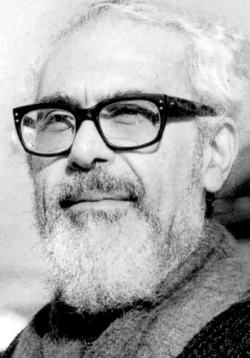
buddy greco (1926 – 2017)
Sunday Poem
The depth of value of a thing
is in how much its missed.
………………………. —Roshi Bob
The Executive’s Death
Merchants have multiplied more than the stars of heaven
Half the population are like the long grasshoppers
That sleep in the bushes in the cool of the day;
The sound of their wings is heard at noon, muffled, near the earth.
The crane handler dies; the taxi driver dies, slumped over
In his taxi. Meanwhile high in the air an executive
Walks on cool floors, and suddenly falls.
Dying, he dreams he is lost in a snowbound mountain
On which he crashed, carried at night by great machines.
As he lies on the wintry slope, cut off and dying,
A pine stump talks to him of Goethe and Jesus.
Commuters arrive in Hartford at dusk like moles
Or hares flying from a fire behind them,
And the dusk in Hartford is full of their sighs.
Their trains come through the air like a dark music,
Like the sound of horns, the sound of thousands of small wings.
by Robert Bly
from The Light Around the Body
HarperCollins Publishers, 1967
.
Saturday, January 21, 2017
An inaugural poem of protest by Robert Pinsky
Robert Pinsky at CNN:
'Exile and Lightning'
You choose your ancestors our
Ancestor Ralph Ellison wrote.Now, fellow-descendants, we endure a
Moment of charismatic indecency
And sanctimonious greed. Falsehood
Beyond shame. Our Polish Grandfather
Milosz and African American Grandmother Brooks
Endured worse than this.
Fight first, then fiddle she wrote.
Our great-grandmother Emma Lazarus
Wrote that the flame of the lamp of the
Mother of Exiles is "Imprisoned lightning."
My fellow children of exile
And lightning, the indecency
Constructs its own statuary.
But our uncle Ernesto Cardenal
Says, sabemos que el pueblo
la derribará un día. The peopleWill tear it down. Milosz says,
Beautiful and very young, meaning recent,
Are poetry and philo-sophia, meaning science,
Her ally in the service of the good . …
Their enemies, he wrote, have delivered
Themselves to destruction."Un dia," and "very young" — that long
Ancestral view of time:
Inheritors, el pueblo, fellow-exiles:
All the quicker our need to
Fight and make music. As Gwendolyn
Brooks wrote, To civilize a space.
From here.
J.M. Coetzee: Antonio Di Benedetto is a Great Writer We Should Know
J.M. Coetzee in the New York Review of Books:
Doctor Don Diego de Zama!… The forceful executive, the pacifier of Indians, the warrior who rendered justice without recourse to the sword…, who put down the native rebellion without wasting a drop of Spanish blood.
Now, under a new, centralized system of government meant to tighten Spain’s control over its colonies, chief administrators have to be Spanish-born. Zama serves as second-in-command to a Spanish gobernador: as a Creole, an americano born in the New World, he can aspire no higher. He is in his mid-thirties; his career is stagnating. He has applied for a transfer; he dreams of the letter from the viceroy that will whisk him away to Buenos Aires, but it does not come.
Strolling around the docks, he notices a corpse floating in the water, the corpse of a monkey that had dared to quit the jungle and dive into the flux. Yet even in death the monkey is trapped amid the piles of the wharf, unable to escape downriver. Is it an omen?
More here.
No sign of seasonal dark matter after four years of searching
Jennifer Oullette in New Scientist:
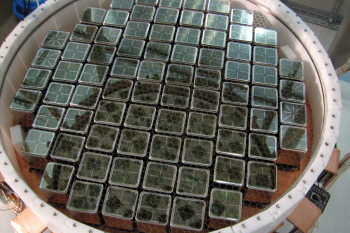
Dark matter is a mysterious substance that makes up roughly 23 per cent of our universe. We know it’s there because of the gravitational force it exerts on normal matter, but it’s devilishly difficult to detect.
Myriad experiments have been trying to do just that, most buried deep underground to block out troublesome cosmic rays. But while there have been a few tantalising hints here and there, nothing has reached the threshold required to count as detection – with one exception.
In 1998, scientists at the DAMA experiment buried deep in Italy’s Gran Sasso mountain claimed to have detected dark matter in the form of a weakly interacting massive particle (WIMP) weighing around 10 gigaelectronvolts (GeV). The rate of recorded blips as particles collide with the nuclei of the detector material varied with the seasons. The DAMA scientists attributed this to the Earth moving through a “wind” of dark matter as it orbits the sun.
DAMA’s signal was unmistakable, but many physicists argued that other factors besides dark matter could explain it. It didn’t help that the DAMA team refused to share their data publicly or collaborate with other researchers, making it more difficult to test those claims.
More here.
Joel Whitney’s “Finks” explores how the CIA used writers to fight the Cold War
John Semley in The Globe and Mail:
I desire nothing more than getting an exorbitant, unturndownable job offer at a media company in the Russian capital, moving there and working diligently at spreading Kremlin propaganda and misinformation. My motivations – beyond the rather obvious allure of “being evil” – are simple. Pomerantsev, a Russian-born Brit who made a similar move, makes the idea seem so bizarrely enticing. As described in his book, Putin’s post-post-perestroika Russia is a place of astonishing intellectual fertility. It’s a place where TV producers, film directors and journalists engage with high-level philosophy and critical theory, all in the aim of serving the authoritarian interests of the state.
It sounds awful (or indeed, straight-up evil) but it offers a certain kind of clarity: In Putin’s Russia, no matter how slippery the ground may seem, you always know where you stand. Sure, everything may be a sham. But at least everyone knows it’s a sham.
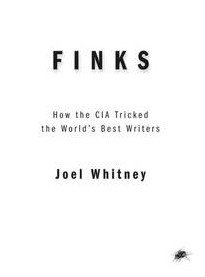
It may all seem reprehensible. Certainly, such media operations constitute an ostensible affront to what Joel Whitney, in his new book about America’s own insidious control of domestic and foreign journalism, identifies as “the traditional adversarial role of media, a role that at least theoretically checked government power and guarded against overreach.” But what Whitney’s Finks makes astonishingly, harrowingly clear is that such affronts are a matter of course in the United States as well, where intellectuals, editors and self-styled belletrists were employed as CIA stooges during the Cold War. Sometimes they have had plausible deniability. But in many more cases, they collaborated all too willingly.
More here.
The Greatest Innovations from Formula One Racing
Video length: 11:59
‘True South’ Illuminates the Man Behind ‘Eyes on the Prize’
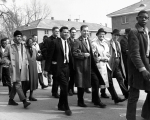
By all accounts, the documentary filmmaker Henry Hampton (1940-1998), the force behind the pathbreaking civil rights series “Eyes on the Prize,” was larger than life. He was athletic, easy on the eyes, a public intellectual, a sharp dresser and a mensch. He was possessed of a big-bearded bonhomie.
As a child, he’d had polio and mostly lost the use of his left leg. Soon he was playing on championship wheelchair basketball teams. In his 20s, as lay director of information for the Unitarian Universalist church, he marched with the Rev. Dr. Martin Luther King Jr. in Selma, Ala., while wearing a steel leg brace.
He opened his film company, Blackside, in Boston in 1968. He slowly gathered around him an assortment of young people who would become many of America’s leading documentarians. They loved him like a father, Jon Else suggests in his new book, “True South: Henry Hampton and ‘Eyes on the Prize,’ the Landmark Television Series That Reframed the Civil Rights Movement.” He also drove them insane.
more here.
MARTUTENE BY RAMÓN SAIZARBITORIA
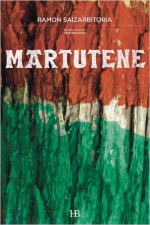
The 2013 publication of Martutene earned Ramón Saizarbitoria his second Euskadi Literature Prize and helped to cement his status as one of the patriarchs of Basque literature. A grand and audacious novel, Martutene is just over 800 pages and presents a nuanced perspective of the contemporary Basque experience. History, politics, language, and culture ripple through the characters’ daily interactions. Saizarbitoria dramatizes the best and worst of the contemporary Basque experience—national pride and cultural intolerance, as well as gastronomy and terrorism.
It is important to recognize the cultural significance surrounding the English publication of this novel. Saizarbitoria has published twelve books, yet he is most likely unfamiliar to most American readers of translated literature because only one of his books has appeared in English: Rossetti’s Obsession, published through the Center for Basque Studies at the University of Nevada, Reno. Yet he is worthy of much greater renown. One of the impetuses for the publication of Martutene in English was the book’s energetic reception in Spain; among other commendations, the jury of the Euskadi Literature Prize (2014) declared it “the most important novel of Basque-language literature and the top one in terms of quality too, destined to be the core of the Basque canon.”
more here.
‘Reality Is Not What It Seems’ by Carlo Rovelli
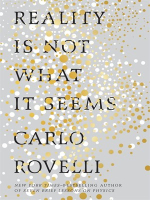
In a superb chapter on Dante and his conception of paradise and the cosmos, Rovelli writes: “Our culture is foolish to keep science and poetry separated,” adding: “they are two tools to open our eyes to the complexity and beauty of the world.” Like the Italian scientist-writer Primo Levi, Rovelli sees no incompatibility between the two cultures, only mutual attraction. In Lucretius’s long philosophical poem, On the Nature of Things, he finds a luminous celebration of the mysteries of the natural world that anticipated a large part of contemporary physics. Atoms are the sole “building blocks” of the universe, Lucretius observed. Lucretius did not know it, but he was writing about the quintessential atom of life – carbon – at a time when atomic theory did not exist. On the Nature of Things only became “modern” in 1417, however, when the papal scribe and humanist Poggio Bracciolini chanced on the last surviving manuscript of the poem in a German monastery. Subsequently, the poem was translated and disseminated widely. Shakespeare struck a Lucretian note in Romeo and Juliet, Rovelli writes, where the phantasmagoric Queen Mab is believed to have a “team of little atomies” at her command.
Certainly Lucretius was ahead of his time. Girolamo Savonarola, the firebrand church reformer of Renaissance Florence, fulminated against his pagan-era theory of atoms, which seemed to militate against Christian absolutism. Throughout, Rovelli repudiates religious fundamentalists of any denomination – but also rejects the idea that science is ever settled.
more here.
Saturday Poem
Discovery
I believe in the great discovery.
I believe in the man who will make the discovery.
I believe in the fear of the man who will make the discovery.
I believe in his face going white,
His queasiness, his upper lip drenched in cold sweat.
I believe in the burning of his notes,
burning them into ashes,
burning them to the last scrap.
I believe in the scattering of numbers,
scattering them without regret.
I believe in the man’s haste,
in the precision of his movements,
in his free will.
I believe in the shattering of tablets,
the pouring out of liquids,
the extinguishing of rays.
I am convinced this will end well,
that it will not be too late,
that it will take place without witnesses.
I’m sure no one will find out what happened,
not the wife, not the wall,
not even the bird that might squeal in its song.
I believe in the refusal to take part.
I believe in the ruined career.
I believe in the wasted years of work.
I believe in the secret taken to the grave.
These words soar for me beyond all rules
without seeking support from actual examples.
My faith is strong, blind, and without foundation.
.
by Wislawa Szymborska
from Poems New and Collected
Harvest Book, Harcourt
Reading the Classic Novel That Predicted Trump
Beverly Gage in The New York Times:
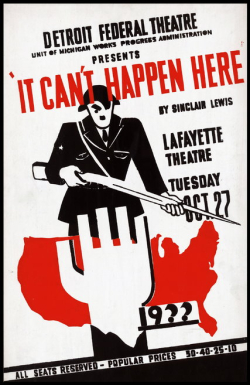
“It Can’t Happen Here” is a work of dystopian fantasy, one man’s effort in the 1930s to imagine what it might look like if fascism came to America. At the time, the obvious specter was Adolf Hitler, whose rise to power in Germany provoked fears that men like the Louisiana senator Huey Long or the radio priest Charles Coughlin might accomplish a similar feat in the United States. Today, Lewis’s novel is making a comeback as an analogy for the Age of Trump. Within a week of the 2016 election, the book was reportedly sold out on Amazon.com.
More here
Trump’s forbidden city
David Rennie in The Economist:
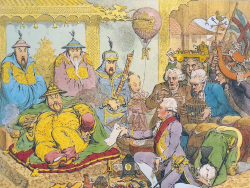
For foreign envoys, Trump’s victory was as disruptive and confusing as a coup behind imperial palace walls. Diplomats and news outlets found themselves tracking down anyone with a sense of the new ruler’s thinking, from business partners to old friends to anyone in the small band of advisers who accompanied him on his journey from insurgent to president-elect. Even arranging phone calls of congratulation to Trump from heads of state and government was a source of angst. Foreign diplomats have spent days swapping wry tales of repeat-dialling the Trump Tower in Manhattan, the brass and pink-marble temple to 1980s style that has become the hard-to-access centre of American power, like a vertical Forbidden City. Some heads of government were offered calls with the president-elect at such short notice that they ended up talking to Trump on their mobile phones.
More here.
Friday, January 20, 2017
How to Be Civil in an Uncivil World
James Ryerson in the New York Times:
One response to these complexities is to abandon the quest for civility, deeming it a historically fanciful, hopelessly imprecise ideal. Another response, exemplified by the political scientist Keith J. Bybee’s slim and artful treatise HOW CIVILITY WORKS (Stanford Briefs/Stanford University, paper, $12.99), is to suggest we continue to fight for civility but learn to think of it less romantically.
More here.
Talking Heads front man David Byrne wants to put you in a neuroscience experiment
Rebecca Robbins in Stat:

So when I showed up at a warehouse on a rainy Sunday morning earlier this month, I wasn’t sure what to expect.
What I experienced was light on science but heavy on amusing novelty. I trekked with a group of nine fellow visitors through four rooms, each the site of a quasi-scientific experiment. After an hour, I’d navigated moral dilemmas, got tricked into believing a moving object was standing still, predicted (with limited success) the winners of an election, and found myself experiencing life as though I’d been turned into a doll.
The vibe could hardly get more surreal.
At a point, one of our guides, cloaked in a lime-green lab coat, capped off a discussion about the unreliability of our gut instinct and our vision by musing: “Is it possible that we’re surrogate avatars walking around interacting with and processing data in our virtual reality? Do you think that I’m real? Do you think that you’re real? And what is reality?”
The installation, dubbed “The Institute Presents: Neurosociety,” was co-created by Byrne, a science enthusiast. For this project, Byrne and his collaborator, the technology investor Mala Gaonkar, went on something of a listening tour of research labs around the world to gather ideas, advice, and source material.
More here.
A Nobel Prize winner’s guide to living longer
Adriana Barton in The Globe and Mail:
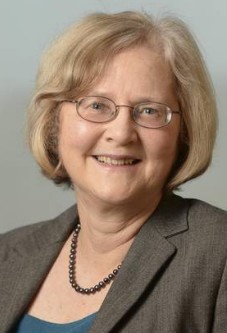
Elizabeth Blackburn, a Nobel Prize-winning scientist who peers deep into human cells, insists that we have some control over how fast we decline.
How we eat, move, think and feel can either help keep our cells healthy or put them into early retirement, according to a growing body of research cited in her new book, The Telomere Effect: A Revolutionary Approach to Living Younger, Healthier, Longer, published earlier this month.
How our cells age, it turns out, largely depends on the length of our telomeres, the protective caps at the ends of our chromosomes.
Tucked inside every cell, chromosomes carry our genetic information and help ensure DNA is accurately copied every time a cell divides. If chromosomes were shoelaces, telomeres would be the plastic tips that keep them from fraying.
But telomeres shorten with each cell division. And when they get too short, cells lose their ability to divide and renew the body tissues that depend on them. A lack of new cells in the walls of our blood vessels, for instance, could lead to hardening arteries, increasing the risk of heart attack.
The good news is that telomeres can lengthen, too.
More here.
Lars von Trier “Melancholia” – Ending scene
Video length: 3:26
Friday Poem
The Errand
‘On you go now! Run, son, like the devil
And tell your mother to try
To find me a bubble for the spirit level
And a new knot for this tie.’
But still he was glad, I know, When I stood my ground,
Putting it up to him
With a smile that trumped his smile and his fool’s
errand,
Waiting for the next move in the game.
.
by Seamus Heaney
from The Spirit Level
Farrar Straus Giroux, NY
.
David Hockney and the joy of looking
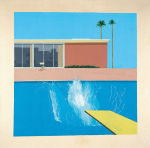
As the Tate’s Andrew Wilson suggests, overfamiliarity with a handful of images has inured us to the radicalism of Hockney’s work, and obscured the consistency that runs through it. “Is the Hockney of popular imagination—of A Bigger Splash and the double portraits—the real Hockney? Or is he more extended than that?” Wilson asked me. The opportunity to see works from private collections, some of which have not been on display for 30 or 40 years, will enable a more thoroughgoing exploration of the oeuvre. There will be recognisable icons such as Mr and Mrs Clark and Percy, from 1970-71, which features the “it” couple of their day, textile designer Celia Birtwell and fashion designer Ossie Clark, the latter ruffling a fur rug with his toes as light streams into their elegantly under-furnished Notting Hill flat.
But there will be much more: exuberant cubist interiors and scroll-like landscapes from the 1980s; the Very New Paintings of the 1990s; etchings, drawings and photo collages; iPad drawings and the immersive landscapes of the 2000s; group portraits of card players from 2014 and the latest massive video works. “What I hope comes through,” Wilson says, “is this idea of Hockney as a quintessentially postmodern artist, incredibly virtuosic, marrying styles, moving between media, playful, mercurial. But also incredibly traditional, in a very radical, very contemporary way.” Wilson continues: “What has been absorbing him since he was a student in Bradford is this conundrum which preoccupies all painters: How do you represent the world of three or four dimensions, plus emotion, in two dimensions? This is the bedrock of his work.”
more here.