Mesmerising: How hypnosis works is a partnership

Erik Vance in Aeon:

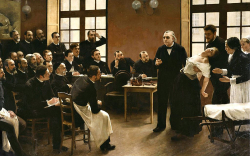
Inline-Charcot-152232752Some trace the first hypnotists back more than 4,000 years to the sleep temple of the Egyptian priest Imhotep; others to ancient Greece. The original source of the induction techniques familiar today is probably the Roma, or Gypsies, who would have brought hypnosis from India to Europe 1,000 years ago. The modern incarnation of hypnosis can be traced to the 18th-century German priest and exorcist Johann Joseph Gassner, who believed he had the power to channel God’s word through his own voice. By speaking in a calm and commanding tone to his patients, he could reportedly rid them of all sorts of demons that today we might call epilepsy or muscle spasm. In one case, he is said to have commanded a patient to slow down his pulse in one arm while speeding it up in the other. Gassner’s work was spotted by Franz Mesmer, a German gentleman scientist who theorised that magnetism controlled the tides (it doesn’t), planetary movement (it doesn’t) and even health (it really doesn’t). He wore a striking silk coat with a silk liner to keep his magnetic power in, and would often carry an iron rod to wave over people, or treat them using small magnets.

…Mesmer’s most famous client was Marie Antoinette. Her husband Louis XVI at first welcomed Mesmer to Paris but soon became suspicious and formed a panel of eminent scientists – including Antoine Lavoisier, the father of modern chemistry, and Benjamin Franklin, one of the founding fathers of the United States – to evaluate Mesmer’s techniques. The result was a wonderfully entertaining scientific treatise that discredited Mesmer’s magnets and foretold the era of placebo-controlled trials. But the team also sent a secret memo to the king, pointing out that a person under the power of hypnosis would be easy to sexually assault.

More here.

Sunday Poem

Refugee Blues
.
Say this city has ten million souls,
Some are living in mansions, some are living in holes:
Yet there's no place for us, my dear, yet there's no place for us.

Once we had a country and we thought it fair,
Look in the atlas and you'll find it there:
We cannot go there now, my dear, we cannot go there now.

In the village churchyard there grows an old yew,
Every spring it blossoms anew:
Old passports can't do that, my dear, old passports can't do that.

The consul banged the table and said,
“If you've got no passport you're officially dead”:
But we are still alive, my dear, but we are still alive.

Went to a committee; they offered me a chair;
Asked me politely to return next year:
But where shall we go to-day, my dear, but where shall we go to-day?

Came to a public meeting; the speaker got up and said;
“If we let them in, they will steal our daily bread”:
He was talking of you and me, my dear, he was talking of you and me.

Thought I heard the thunder rumbling in the sky;
It was Hitler over Europe, saying, “They must die”:
O we were in his mind, my dear, O we were in his mind.

Saw a poodle in a jacket fastened with a pin,
Saw a door opened and a cat let in:
But they weren't German Jews, my dear, but they weren't German Jews.

Went down the harbour and stood upon the quay,
Saw the fish swimming as if they were free:
Only ten feet away, my dear, only ten feet away.

Walked through a wood, saw the birds in the trees;
They had no politicians and sang at their ease:
They weren't the human race, my dear, they weren't the human race.

Dreamed I saw a building with a thousand floors,
A thousand windows and a thousand doors:
Not one of them was ours, my dear, not one of them was ours.

Stood on a great plain in the falling snow;
Ten thousand soldiers marched to and fro:
Looking for you and me, my dear, looking for you and me.
.

by W.H. Auden
from Selected Poems
Vintage Books, 1974
.

Saturday, November 19, 2016

Theda Skocpol Responds to John Judis

13-skocpol

Theda Skocpol in Talking Points Memo:

We on the center left seem to treat these presidential machines as organization, and they are, but they are not as effective as longstanding natural organized networks. To get some of those working for him, Trump made deals to get the NRA , Christian right and GOP federated operations on his side. They have real, extensive reach into nonmetro areas. But off the coasts, Democrats no longer have such reach beyond what a presidential campaign does on its own. Public sector and private sector unions have been decimated. And most of the rest of the Democratic-aligned infrastructure is metro based and focused. That infrastructure is also fragmented into hundreds of little issue and identity organizations run by professionals.

HRC’s narrow loss was grounded in this absent non-metro infrastructure – and Dem Party losses in elections overall even more so. Obama overcame that deficit. But he is a once in half century figure. How can anyone blame the HRC campaign for failing to equal Obama’s margins among minorities? No Democrat would have done so. For sure, Bernie would not have done so.

Why do these different analytical approaches (aggregate attitudinal vs. organizational) matter? Because they lead to very different prescriptions for what should be done next. Mine says Democrats have to create sustained organizational reach, not just at election time, stretching beyond metropolitan communities and states. Yours, however, is the conventional wisdom: This type of argument is used to argue that Democrats must “message” better and move left on policy issues to attract an imaginary factory-based white working class. How would that have worked in an election where the media never conveyed any policy substance at all?

More here.

How the lawyerly discourse of drone warfare misses the point

Cover00Chase Madar at Bookforum:

How quickly talk of war turns into talk of law! When a hospital is bombed in a military action, whether by the United States in Afghanistan, Russia in Syria, or Israel in Gaza, what typically draws outrage is the “war crime”—the violation of the laws of armed conflict—while the choice to wage war itself evades condemnation or analysis. Opposition to the Iraq War was commonly voiced as a matter of respect for international law. And now that Washington is helping a Saudi-led coalition bomb Yemen, one common apologia is that American targeting assistance saves lives by bringing air strikes into compliance with “international humanitarian law,” the euphemistic term for the laws of war.

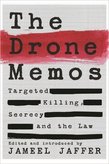
Such opposition as exists to US drone strikes in Afghanistan, Pakistan, Syria, Iraq, Libya, and Somalia is also frequently expressed as concern about inadequate legal procedure. But as Jameel Jaffer points out in the introduction to his new anthology, The Drone Memos, the problems with these strikes are hardly limited to questions of legality. Dennis Blair, a former director of National Intelligence under Obama, has worried that drone strikes might be harming the “national interest”—presumably, the security of the domestic United States—in the long run. Even perfectly executed tactics can undermine larger strategy: Not mentioned in Jaffer's introductory essay is this past May's drone assassination of Mullah Akhtar Muhammad Mansour, the leader of the Afghan Taliban. Instead of causing the Taliban to disintegrate or surrender, it merely brought forward new leaders, who have turned out to be even more hostile to negotiations for peace and power-sharing deals with the Kabul government and its American patrons. At this point, reaching such a deal is Washington's aim in the Afghan war, but because of the successful drone assassination of a high-value target, this goal has been set back at least a year.

more here.

The man who brought ‘Civilisation’ to a mass market

Article-2611748-0001349600000258-119_634x512Michael Dirda at The Washington Post:

In 1969 the BBC aired a 13-part documentary entitled “Civilisation: A Personal View.” Hosted by an upper-class Englishman with crooked teeth and a penchant for tweed, it traced the history of European art, music and literature from the Middle Ages to the 20th century, ending on a note of slightly qualified despair. The humanist values celebrated in the series were being lost or forgotten. More and more, we worshiped the machine and the computer, and instead of living with joy, confidence and energy, we dwelt gloomily in the valley of the shadow of global destruction. Still, there had been Dark Ages in the past, and humankind just might squeak through, by — as the very first episode declared — “the skin of our teeth.”

Not surprisingly, no American TV network wanted to pick up an artsy-fartsy program highlighting a talking head who might be discoursing in front of Chartres Cathedral one week and discussing the sculptures of Bernini the next. Oh, ye of little faith! When Washington’s National Gallery of Art arranged a special screening of “Civilisation” in the fall of 1969, the queue to see the first episode stretched down the Mall and numbered in the thousands. The gallery quickly took to running each weekly installment multiple times. Finally picked up by PBS, “Civilisation” was a television blockbuster in 1970, its companion booksold a million and a half copies in its first decade and Sir Kenneth Clark — the subject of the superb biography “Kenneth Clark: Life, Art and ‘Civilisation’  ” by James Stourton — emerged as high culture’s classiest superstar.

more here.

Günter Grass’ last book

Günter_Grass_(1982)Günter Grass at The Guardian:

At long last, having discussed our joint project many times, testing and rejecting various ideas at the kitchen table, we had reached a decision; the master carpenter Ernst Adomait sat across from us. The conversation began over tea and cakes, hesitantly at first, but soon underway.

Adomait has worked for us for years. He’s built standing desks and bookcases, and various smaller items for my wife. We told him what we wanted, never defining it as our last will and testament. After looking through the French window into the summery, windless garden, he agreed to take the job and make the boxes. He suggested they be measured separately for length and width, and we agreed. He had no objection to our request for two different woods: pine for my wife, birch for me. The boxes would be of equal depth, but hers would be two metres 10 long and mine two metres. My box would be five centimetres wider, to match my shoulders.

When I said “not tapered toward the foot,” which was once standard and may still be customary, he nodded in agreement.

I mentioned Wild West films in the course of which this sort of plain carpentry grew in demand. My sketch on a paper napkin proved unnecessary; the idea was clear enough. The boxes would be finished by autumn. We assured him we were in no hurry, but laced the conversation with hints about our combined age.

more here.

‘None of the old rules apply’: Dave Eggers travels through post-election America

Dave Eggers in The Guardian:

UntitledBack in April, I had been in the Gaza Strip and had met a married couple, Mahmoud and Miriam, journalists and activists who badly wanted to leave Gaza. I had e-introduced them to an asylum lawyer in San Francisco, but from 7,000 miles away, she couldn’t do much to help. The impossible thing was that they actually had a visa. A real visa issued by the American state department. All they had to do was get out of Gaza. But permissions were needed from the Israelis or Egyptians, and they were having no luck with either. Finally, one day in October, an email arrived. Mahmoud and Miriam were in Brooklyn. They’d bribed an Egyptian guard at the Rafah gate and had made their way on a 14‑hour journey through Sinai.

…“I’m so sorry,” I said. I was apologising for what we’d done the day before. Electing the man who wanted to ban all Muslims from entering the country. The man who might bring Giuliani into a seat of unspeakable power. This could mean terrible things for Palestinians. There was already talk of the end of the two-state solution. Netanyahu, it was assumed, had danced all night. “It’s OK,” they said.

…The Gazan asylum seekers were telling me not to worry. But I was worried. Worried enough to change their names in this piece. They aren’t Mahmoud and Miriam. We are entering an era where uniquely vindictive men will have uniquely awesome power. Dark forces have already been unleashed and terrible plans are being made. On 3 December, the Ku Klux Klan are holding their largest public rally in years, to celebrate Trump’s victory, which they claim as their own. I also changed Steven McManus’s name. I worried for him, as well. You should be worried, too. George W Bush, a man of comparative calm and measured intellect, started two foreign wars and cratered the world economy. Trump is far more reckless.

We are speeding toward a dark corridor, my friends. Keep your eyes open, your hearts stout and be ready for the fight.

More here.

Saturday Poem

Map to the Stars

A Schwinn-ride away: Eagledale Plaza. Shopping strip of busted
walkways, crooked parking spaces nicked like the lines
on the sides of somebody’s mom-barbered head. Anchored
by the Piccadilly disco, where a shootout was guaranteed every
weekend, those gun claps: coughing stars shot from sideways
guns shiny enough to light the way for anyone willing to keep
a head up long enough to see. Not me. I bought the Star Map
Shirt for 15¢ at the Value Village next to the Piccadilly during
the daytime. The shirt was polyester with flyaway collars,
outlined in the forgotten astronomies of disco. The shirt’s
washed-out points of light: arranged in horse & hero shapes
& I rocked it in places neither horse nor hero hung out.
Polyester is made from polyethylene & catches fire easily
like wings near a thrift store sun. Polyethylene, used in shampoo
bottles, gun cases, & those grocery sacks skidding like upended
stars across the parking lot. There are more kinds of stars
in this universe than salt granules on drive-thru fries. Too many
stars, lessening & swelling with each pedal pump away from
the Value Village as the electric billboard above flashes first
one dui attorney, then another who speaks Spanish so the sky
above is constantly chattering, like the biggest disco ball ever.

by Adrian Matejka
from Poetry, Vol. 200, No. 4,
July/August, 2012

Amos Oz on His Novel ‘Judas,’ Which Challenges Views of a Traitor

Gal Beckerman in The New York Times:

AmosIn the interview, Mr. Oz himself was a quiet presence in his Upper West Side hotel, speaking barely above a whisper and wrapped in a wool sweater, his blue eyes shining through thick glasses. Asked for his views on the recent American election, he swatted away the question: “I’m an old man, and I’ve seen a lot and I know that even when you think history is over, it’s not over.” Instead, Mr. Oz wanted to talk about his enchantment with the New Testament, which began when he was a 16-year-old, living on a kibbutz and spending his evenings in the library, reading the gospels. He fell “in love” with Jesus, he said: “I disagreed with him on many things, but I liked him, his poetry, his warmth, his wonderful sense of humor.” At the same time, he became “infuriated” with the Judas story, and not for the usual reasons a Jew might find it disturbing.

It was because he saw some glaring inconsistencies. Judas was a wealthy landowner, so why did he need those 30 pieces of silver, equivalent, Mr. Oz said, to no more than $600 today? And what of that infamous kiss? Jesus was well known in Jerusalem. He was not disguised or hidden. Why pay Judas to identify him with a kiss? None of this added up for Mr. Oz. “A good editor should have edited this story out and saved the world a lot of trouble,” he said. “It’s not an innocent story. It is responsible for more bloodshed than any single story in history. This story is the Chernobyl of European anti-Semitism: pogroms, persecutions, inquisitions, massacres, Holocaust.”

Mr. Oz came up with an alternative theory. Judas was not a traitor but, in fact, the truest believer in Jesus’ divinity, more so than even Jesus himself. So pure was Judas’ faith that he persuaded Jesus to provoke the Roman authorities into crucifying him. Only through the miracle of descending from the cross — “the equivalent of prime time on television, just on the eve of Passover,” Mr. Oz said excitedly — could the world be redeemed. When this failed to happen, and Judas instead witnessed Jesus’ suffering, he hanged himself.

More here.

Friday, November 18, 2016

The Stars Are a Comforting Constant: A poet blends the personal with the cosmic

Christine Klocek-Lim in Nautilus:

ScreenHunter_2380 Nov. 18 19.15The first time I saw a meteor, I’d slipped outside to lie in the grass after everyone else had gone to sleep. The daytime commotion of my cousins’ and siblings’ games and my Poppop’s blaring polka music often drove me to tears. As an introvert, I wanted nothing more than to escape the chaos of my childhood and let the quiet of the night sky comfort me.

I grew up in an economically depressed Pennsylvania coal town as the middle kid in a poor blue-collar family. My parents never read to me or talked about the stars; they were too busy working, my dad as a painter in a factory, and my mother as a short order cook. I spent most of my childhood reading anything I could get my hands on, which wasn’t much—tattered and incomplete set of encyclopedias, the odd science book from my school library, and ragged novels stuffed haphazardly on a shelf in the basement (the best ones were the science-fiction stories). For as long as I could remember, I wanted to leave home to explore strange new worlds and capture them in writing. A high school essay won me a scholarship, which allowed me to go to college and study poetry.

I’m not a physicist. I never studied astronomy in school. For me, the stars are a comforting constant: They are always above me whenever I take the time to look up. In college, I hung out with engineers. My husband is an embedded firmware developer. My older son interned at NASA the past two summers doing robotics research. My younger son is studying environmental science. I’m a nerdy poet surrounded by geeks, so it feels natural to blend poems with stars.

More here.

Scientists Stink at Reverse-Engineering Smells

Ed Yong in The Atlantic:

Lead_960Light and sound are predictable. Smells are not.

If you knew the wavelength of a beam of light, you could tell me what most people would see when they looked at it: 480 nanometers looks blue, and 650 nanometers looks red. If you knew the frequency of a musical note, you could name that note: 261 Hertz is middle C.

But if you saw the chemical structure of a molecule, you wouldn’t know what it smelled like—or even if it smelled of anything at all. Unless you actually stick your nose over some benzaldehyde, you wouldn’t be able to predict that it smelled like almonds. If you saw dimethyl sulfide drawn on a page, you couldn’t foresee that it carried the scent of the sea.

This is a longstanding problem, but one that a team of scientists—and a horde of volunteers and citizen scientists—have come a little closer to cracking. Through a crowdsourced competition, Andreas Keller and Leslie Vosshall at Rockefeller University and Pablo Meyer at IBM have developed algorithms that can reverse-engineer the smell of a molecule—to predict what it smellslike from what it is.

More here.

OBAMA RECKONS WITH A TRUMP PRESIDENCY

David Remnick in The New Yorker:

ScreenHunter_2379 Nov. 18 18.24The morning after Donald Trump was elected President of the United States, Barack Obama summoned staff members to the Oval Office. Some were fairly junior and had never been in the room before. They were sombre, hollowed out, some fighting tears, humiliated by the defeat, fearful of autocracy’s moving vans pulling up to the door. Although Obama and his people admit that the election results caught them completely by surprise—“We had no plan for this,” one told me—the President sought to be reassuring.

“This is not the apocalypse,” Obama said. History does not move in straight lines; sometimes it goes sideways, sometimes it goes backward. A couple of days later, when I asked the President about that consolation, he offered this: “I don’t believe in apocalyptic—until the apocalypse comes. I think nothing is the end of the world until the end of the world.”

Obama’s insistence on hope felt more willed than audacious. It spoke to the civic duty he felt to prevent despair not only among the young people in the West Wing but also among countless Americans across the country. At the White House, as elsewhere, dread and dejection were compounded by shock. Administration officials recalled the collective sense of confidence about the election that had persisted for many months, the sense of balloons and confetti waiting to be released. Last January, on the eve of his final State of the Union address, Obama submitted to a breezy walk-and-talk interview in the White House with the “Today” show. Wry and self-possessed, he told Matt Lauer that no matter what happened in the election he was sure that “the overwhelming majority” of Americans would never submit to Donald Trump’s appeals to their fears, that they would see through his “simplistic solutions and scapegoating.”

More here.

How can Rowan Williams reconcile his Christianity with the Greek tragic vision?

2201747-2_webEdith Hall at Prospect:

Can there be a Christian reading of tragedy? Can a pre-Christian, pagan, literary genre, which confronts the gross unfairness of human pain, be reconciled with the idea of a loving deity? Expectations must be high of a book about tragedy professing to explore these questions by Rowan Williams. He is the most intellectually renowned British churchman alive, a former Archbishop of Canterbury and now Master of Magdalene College, Cambridge. He has always enriched his prolific theological and church-historical studies with intense reflections on philosophy and literature; in addition to his more than 30 volumes on Christianity, he has published on Fydor Dostoyevsky and WH Auden and even volumes of his own poetry. The Tragic Imagination is a short monograph, a little over 40,000 words, arguing for the past and continuing importance of tragic drama and its compatibility—indeed affinity—with a philosophically inflected Christian outlook.

As Archbishop, Williams elicited criticism from Anglicans who regarded him as too scholarly to be an effective leader, and too interested in analytical complexities to be an effective interpreter of the Gospel. On the other hand, he disappointed the political left, who felt he failed to deliver on the hopes inspired by his sensitivity to interfaith issues, apparent preparedness to embrace a degree of cultural relativism, and well-known sympathy with the poor.

The overall effect of The Tragic Imagination will do nothing to alter the public perception that Williams instinctively rejects clarity in favour of sitting on intellectual fences to ponder arcane points of metaphysics and excavate the views of obscure thinkers.

more here.

On Patrick Modiano’s ‘Little Jewel’ and ‘The Black Notebook’

FotorCreated1J.P. Smith at The Millions:

As in so many of his novels, Modiano’s obsession with places, names, phone numbers, and those mysterious telephonic zones of intermediacy where people can dial a number and exchange information in a kind of background haze, frail voices trying to connect, reappear in the author’s 2012 novel, L’Herbe des nuits, translated by Mark Polizzotti as The Black Notebook and published by Houghton Mifflin Harcourt. The narrator, Jean, populates the streets of Paris with those who have walked it long before: the 19th-century writers Gérard de Nerval, Tristan Corbière, and Charles Baudelaire, whose mistress, Jeanne Duval, floats wraithlike through the pages, as though saying that the past never truly leaves its roots, that the ghosts of the people who once walked these streets linger on forever. Unlike in his other novels, the events here come much later than the dark years of the Occupation which have provided him with his richest harvest: the ’60s, with l’Affaire Ben Barka.

Mehdi Ben Barka was a Moroccan politician, leader of the left-wing National Union of Popular Forces, active in various anti-colonial movements, and considered dangerous both by France and the United States. After being exiled, he settled in Paris, vanishing in 1965. It was said that he had been kidnapped by, variously, French officers, the CIA or by a Moroccan government minister, interrogated, tortured, his body dissolved in a vat of acid. His remains have never been found.

more here.

What role can the critic play in today’s uncertain times?

Lionel_TrillingNicholas Dames at The Nation:

But where can one find a good enough teller these days? What venues can play host to a critical sensibility that is both distinctive and imitable? What institutions can afford to supply the cultural critic with a steady income and a stable intellectual home? These are embarrassing questions to ask. It is unlikely that such a figure would emerge today from print journalism, as the walls close in on the handful of venues that still bother with criticism at all. It is even less likely that the Internet, each corner of which is constantly undergoing mitosis, can nurture a voice with the necessary kind of consistency and economic stability. Least likely of all is the university, which is presently too engaged in a struggle for legitimacy to speak for a public. Suggest any one of these sites and you can hear the laughter in advance. Too commercial, too hurried, too rarefied—and all of it too partial: Any setting that might give the critic a connection to genuine, generalizable experience is virtually out of reach.

Or so it seems. But the fact is that, in one sense, criticism is doing better than ever, appearing with great frequency in the pages of high-circulation magazines like The New Yorker, online in publications like the Los Angeles Review of Books, and in the single columns of little magazines like n+1, The Baffler, and Dissent. Unlike in previous eras, however, criticism’s renewed vitality has come with a disturbing new register of anxiety and self-consciousness. Once, critics like Trilling, Sontag, and Kael commanded the attention of a large audience and were expected to shape and challenge a still roughly homogenous public opinion. Today, many critics struggle to find a unified culture to interpret and criticize and a public to address.

more here.

Aging mice given blood plasma from young humans regain youthful attributes

From Phys.Org:

MiceA team of researchers working at a company called Alkahest has reported at this year's Society for Neuroscience annual meeting that injections of blood plasma from young human beings caused aging mice to regain some youthful attributes. Company representative Sakura Minami claimed that testing with mice given youthful human plasma led to improved cognition in middle-aged mice. She has also spoken to the media regarding the experiments and results conducted by the company.

Prior research has shown that if an older mouse physically shared a blood system with a younger, that the older mouse would become rejuvenated while the younger mouse would take on symptoms of aging. Other studies have shown that simply injecting older mice with younger mouse plasma also had rejuvenating effects. Now, in this new study, the researchers claim the same to be true for blood plasma from young humans. The study consisted of injecting year old (middle-aged) mice with plasma from human teenagers. The mice were injected with the plasma twice a week for three weeks and were then subjected to tests (including a Barnes maze) that have been designed to test their mental abilities. Minami claims that the treated older mice scored close to young mice on the tests, suggesting they had undergone mental rejuvenation. She reported that the company had also studied portions of the brains of the treated mice—specifically the hippocampus, which is known to be involved in learning and memory—and found signs of neurogenesis.

More here.

Untangling Alice

Gillian Beer in Nature:

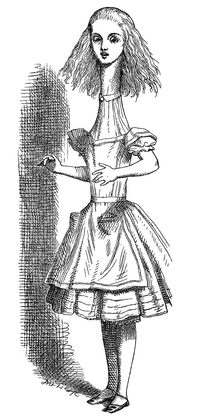
AliceLewis Carroll's lucid dreams draw in endless fresh contexts for interpretation as they continue to delight and disturb. How did Charles Dodgson — Carroll's real name — do it? The story used to be that this 'mediocre' English mathematician, isolated at Christ Church College, Oxford, somehow miraculously produced Alice's Adventures in Wonderland (1865) and Through the Looking-Glass, and What Alice Found There (1871). The unlikely tale persisted, perhaps because so little evidence seemed to have survived of Dodgson's reading; at his death, most of his books were hastily sold off.

…Carroll's taste for games and play was shared by many of his contemporaries, and understood as essential intellectual stimulus. For instance, Sylvester's 1869 address to the British Association for the Advancement of Science emphasized the need to quicken the mind of students “with the doctrine of the imaginary and the inconceivable”. The logician Augustus de Morgan wrote in 1859 “All that is thinkable is possible; all that is impossible is unthinkable: that is, so far as our knowledge can go.” Carroll, who knew both men, put it this way in an encounter between Alice and the White Queen in Looking-Glass:

 Alice laughed. “There's no use trying,” she said: “one can't believe impossible things.”

 “I daresay you haven't had much practice,” said the Queen. “When I was your age, I always
  did it for half-an-hour a day. Why, sometimes I've believed as many as six impossible
  things before breakfast.”

The idea of rigorous training in believing the impossible nicely tilts at Victorian learning rituals in the style of Gradgrind, Charles Dickens's rigid pedagogue in Hard Times (1854). Nonsense was also valued by the physicist James Clerk Maxwell, who appreciated both the Alice books. His 1873 poem 'Molecular evolution' declared:

 What combination of ideas,
 Nonsense alone can wisely form!
 What sage has half the power that she has,
 To take the towers of truth by storm?

Carroll put several systems in motion at once in his scenes, to produce new absurdities and insights.

More here.

Thursday, November 17, 2016

Robert Pinsky: Four Poems for the Election

Robert Pinsky in Slate:

ScreenHunter_2378 Nov. 18 11.59Often, the best works of art about an historic event come from long before. Here are four poems from the past, in response to the 2016 presidential election.

First, Walt Whitman’s “Election Day, 1884” written about the nasty Cleveland–Blaine election of that year. Whitman says that the heart of the election is “not in the chosen” but with “the act itself the main, the quadrennial choosing.” He speaks of voting day not as sacred but as “powerful,” comparing it not to forest glades or solemn cathedrals but to the fluid, dynamic energy of Niagara Falls.

Nicaraguan poet Ernesto Cardenal’s “Somoza Unveils Somoza’s Statue of Somoza at the Somoza Stadium” imagines the voice of egomania in power. The poem’s concluding insight about hate, a terrific final chord in Donald Walsh’s translation, hisses even more effectively in the second person plural familiar of the Spanish: “la odiáis.”

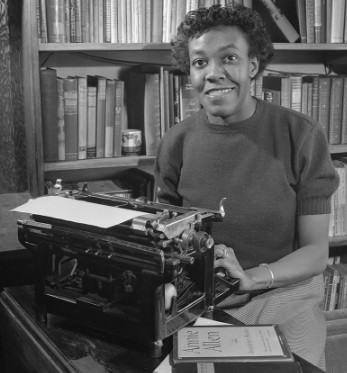
Gwendolyn Brooks’ sonnet from her sequence The Womanhood uses that form to present the relation between art and battle, with their related priorities and demands: a practical, urgent struggle for a black woman poet of Brooks’ lifetime. “To arms, to armor,” she writes, with her fluent mastery of the sonnet form enacting a victory.

More here.