
Video length: 25:43
Category: Recommended Reading
HOPELESS VOTES FOR TRUMP IN WEST VIRGINIA

Mount Lookout, West Virginia is a blip on the radar, little more than a collection of families, a few modest doublewide trailers, and a post office. To get to my parents’ house, you have to break off from US Route 19 and take East Mount Lookout Road, driving through a collection of trailers scattered through the hills, past big-ass trucks resting in driveways like content, fattened grizzly bears. That night, I sat in the living room with my mom and dad, watching the nation break down over Trump on live TV. My dad sat to my left, slightly in front of me, my new nephew, Joshua, bouncing on his knee. Every once in a while my dad turned around and looked at me, to make sure I was still there and that I was having a good time. He said he’d like to go kill a deer. I said I’d like that, too. Understand this about me: I’ve done this for most of my life. It’s simply part of who I am. It’s part of who you are, too. Pull back the curtain of civilization and what you see is the quasi-medieval zombie world, or a Lord of the Flies, in all of us. It’s just the modern world that keeps a lid on it. I’m tempted to indict it, but my complicity makes such a critique feel self-righteous and hypocritical.
On TV, they were debating whether Trump is a total climate-change denier or if he merely denies that human activity has contributed to climate change.
“Don’t ever be one of them environmentalists, Joey,” my dad said. His gaze turned elsewhere when he added, “First they take your job, then they take everything you got.”
more here.
Paradise Lost: A Life of F Scott Fitzgerald
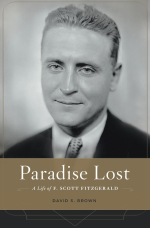
The problem with Fitzgerald has never been the work; it’s been the writing about him. The standard biography for some time has been Some Sort of Epic Grandeur, a 1981 study by Matthew J Bruccoli. It’s a reliable and boring compilation of facts, not as well written as the first major assessment of the life and work, The Far Side of Paradiseby Arthur Mizener (1951). Any number of lives of Fitzgerald have appeared over the decades, but I’ve not found them satisfying, in large part because they tend to portray the author as a spokesman for the so-called Jazz Age, a drunken playboy with unresolved aspirations who embodies the empty morality of the Lost Generation. One got more by reading memoirs of the period, such as Malcolm Cowley’s haunting Exile’s Return (1934), which recalls well-known American authors in Paris in the 1920s, a kind of golden age that continues to inspire young American writers to travel abroad to seek their imaginative fortunes. Fitzgerald was hardly celebrating the lifestyles of the rich and famous. Instead, he offered a rueful and remorseless critique of that world, however much he adored it.
Fitzgerald was a good Catholic boy by training, a young man who read the Gospels and understood (though he resisted the notion, almost successfully) that it’s easier for a camel to go through the eye of a needle than for the rich to enter heaven. His wealth-bedazzled characters, including Jay Gatsby, Amory Blaine in This Side of Paradise and Gordon Sterrett in ‘May Day’, that incomparable early masterpiece of short fiction, find little pleasure in their lives. They have swallowed a notion of the American Dream that has turned into a kaleidoscopic fantasy which tantalises but never quite resolves into a steady image. There is no fun in their yearning for something they can’t possess and that nobody can ever have.
more here.
beyond caravaggio
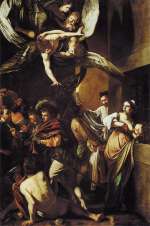
But most of all, the Caravaggio originals in London’s “Beyond Caravaggio” demonstrate why the painter exerted such an overwhelming influence on patrons and colleagues alike, and why he is so passionately loved today. He can paint beautifully most of the time. He produced marvelous compositions of light beaming forth from the darkness, covered his canvases with luminous whites, full-blooded reds, velvet blacks, but above all, especially later in his career, he painted with restraint, and taste, and a gigantic, compassionate heart.
The restraint shows when we compare his work with that of his admirers. If the young Caravaggio painted several versions of a boy with fruit as a way of advertising his skill at both still life and the human figure, his pupil and follower Francesco Boneri (nicknamed Cecco del Caravaggio—“Caravaggio’s Frankie”) painted a red-haired musician surrounded by a bushel of fruit, cheese, bread, gourds, two glass flasks encased in nets, a hanging head of garlic, a glass vase full of water, and a violin—splendidly painted, like the sitter’s plume, shirt, and brocaded vest, but he could have proven his skill just as cogently with half as many objects. Caravaggio’s painting of Doubting Thomas showed the disciple sticking his index finger into the side wound of Jesus, a startling image already, but discreetly done compared with the way that Giovanni Antonio Galli, called Lo Spadarino (“Little Swordsman”), gives us Christ head-on, staring us down as he spreads the wound wider himself, daring us to play Saint Thomas with our eyes instead of our finger.
more here.
Cognitive Benefits of Healthy Buildings
Oset Babur in Harvard Magazine:
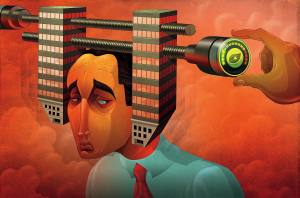
“The truth is, we absolutely can have buildings that are both energy-efficient and healthy,” says Allen, assistant professor of exposure assessment science. In 2015, his team published a two-part study that quantified the cognitive benefits of improved environmental conditions for workers. The first phase took place in the Syracuse University Center for Excellence, where knowledge workers, such as architects and engineers, went about their regular workdays as Allen and his team manipulated environmental factors. “We weren’t looking to test an unattainable, dream-state workplace. We wanted to test scenarios and conditions that would be possible to replicate,” he explains. They adjusted ventilation rates, carbon dioxide levels, and the quantity of airborne VOCs (volatile organic chemical compounds that are emitted by common objects such as desk chairs and white boards). At the end of each day, the team asked workers to complete cognitive-function assessments in nine key areas, including crisis response, decisionmaking, and strategy. “We saw pretty dramatic effects,” he reports: workers in optimized environments scored 131 percent better in crisis-response questions, 299 percent better on information usage, and 288 percent higher in strategy.
More here.
Could This Tiny Bug Help Solve Our Big Plastic Bag Problem?
Laura Geggel in Live Science:
A wiggly, ravenous caterpillar — one that doesn't limit its diet to naturally grown objects — can biodegrade plastic bags, a material infamous for the amount of time it takes to decompose, a new study finds. The 1-inch-long (3 centimeters) wax worm, also known as the honey worm caterpillar (Galleria mellonella), is no stranger to unconventional meals. It's usually found in beehives, munching away on waxy, goo-drenched honeycombs, the researchers said. Now, through a serendipitous discovery, it's clear that G. mellonella can also decompose polyethylene, a thin but tough plastic that is used across various industries, including in shopping bags and food packaging. The discovery happened during a beekeeping experience, said the study's senior researcher, Federica Bertocchini, a research scientist at the Spanish National Research Council (CSIC), who also works at the Institute of Biomedicine and Biotechnology of Cantabria, in Santander, Spain. Bertocchini, who is also an amateur beekeeper, happened upon the wax caterpillars when she was cleaning out the panels from one of her beehives. (Beekeeping panels look like wooden picture frames that are filled with honeycomb.) "I removed the worms, and put them in a plastic bag while I cleaned the panels," Bertocchini said in a statement. "After finishing, I went back to the room where I had left the worms, and I found that they were everywhere. They had escaped from the bag, even though it had been closed."
Upon closer inspection, she realized that the caterpillars had made holes in the bag before fleeing. "This project began there and then," Bertocchini said. When Bertocchini and her colleagues placed the caterpillars on polyethylene plastic bags, holes appeared in the bags within an hour, they found. Perhaps the caterpillars can degrade the plastic because it has chemical bonds that are similar to those found in beeswax, the researchers said. "We have carried out many experiments to test the efficacy of these worms in biodegrading polyethylene," Bertocchini said. "One hundred wax worms are capable of biodegrading 92 milligrams [0.003 ounces] of polyethylene in 12 hours, which really is very fast." The researchers found that the caterpillars chemically transformed the polyethylene into ethylene glycol. This compound is a colorless and odorless alcohol that has a sweet taste but is poisonous if ingested, according to PubChem, a database at the National Institutes of Health. Ethylene glycol is used as an antifreeze and coolant, PubChem reported.
More here.
Monday, May 1, 2017
Perceptions
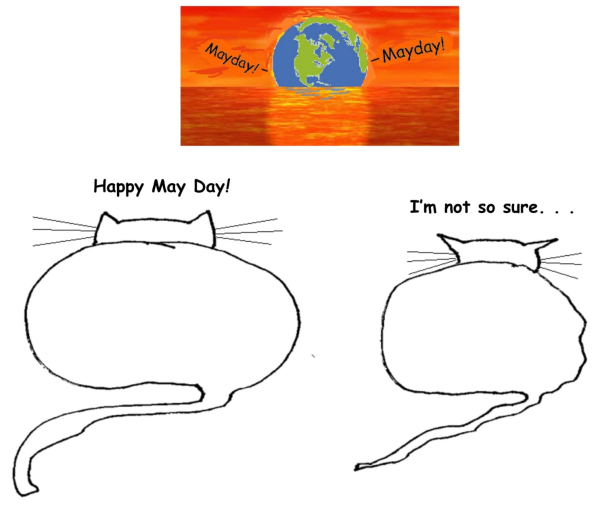
CATSPEAK
by Brooks Riley
Sunday, April 30, 2017
Hemingway and Dos Passos, great friends destined to be great enemies
Gary Krist in the Washington Post:
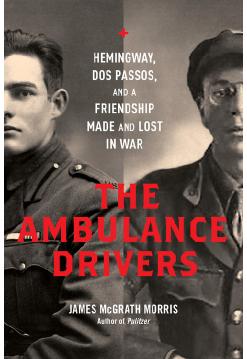
Certainly the two writers had a few significant things in common. Both born in Chicago, they each served a formative stint as an ambulance driver in Europe during World War I, distilling the experience into war novels that helped shape the postwar American consciousness. And for several decades around the mid-1900s, both would have appeared on virtually any critic’s list of the greatest American novelists of the century.
But there the similarities ended. Dos Passos, who was born out of wedlock, grew up in a series of European hotel rooms and was educated at Choate and Harvard. Sickly and physically awkward, he wore thick eyeglasses, spoke with a stutter and was never much of a ladies’ man. Hemingway, the product of a much more stable and conventional Midwestern family, never went to college but always exuded an intellectual confidence and insouciant athleticism that made him a great favorite with the opposite sex. Dos Passos was a lifelong political activist, while Hemingway (with one or two exceptions) typically steered clear of movements and causes. Books by Dos Passos seldom sold well; books by Hemingway seldom didn’t. And yet, as James McGrath Morris illustrates in his trim and absorbing new book, somehow the two writers managed to maintain an intense, often competitive friendship over many years — until one major disagreement in the 1930s tore them apart, leaving behind a bitterness that lasted until Hemingway’s suicide in 1961.
More here.
Escaping Poverty Requires Almost 20 Years With Nearly Nothing Going Wrong
Gillian B. White in The Atlantic:
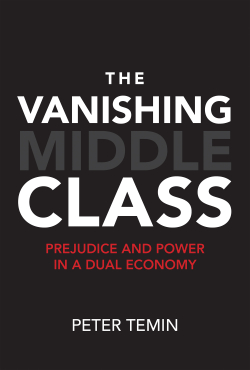
That’s the question at the heart of a new book, The Vanishing Middle Class: Prejudice and Power in a Dual Economy, by Peter Temin, an economist from MIT. Temin argues that, following decades of growing inequality, America is now left with what is more or less a two-class system: One small, predominantly white upper class that wields a disproportionate share of money, power, and political influence and a much larger, minority-heavy (but still mostly white) lower class that is all too frequently subject to the first group’s whims.
Temin identifies two types of workers in what he calls “the dual economy.” The first are skilled, tech-savvy workers and managers with college degrees and high salaries who are concentrated heavily in fields such as finance, technology, and electronics—hence his labeling it the “FTE sector.” They make up about 20 percent of the roughly 320 million people who live in America. The other group is the low-skilled workers, which he simply calls the “low-wage sector.”
More here.
How to Fight Cancer (When Cancer Fights Back)
Ed Yong in The Atlantic:
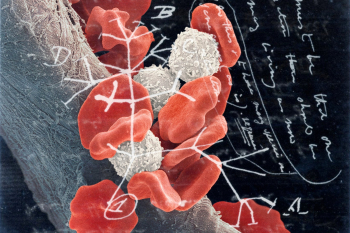
This realization goes some way to explaining why the war against cancer has been so entrenched and unexpectedly difficult. Clinicians often diagnose these diseases by taking a biopsy from a tumor, but a single sample could miss important mutations with very different prognostic implications just centimeters away. And when we hit tumors with drugs or radiation, we create a potent source of artificial selection, effectively breeding for hardier tumors. That’s why relapses occur.
More here.
With his nativist and purely transactional view of politics, Trump threatens to be democracy’s most reckless caretaker
David Remnick in The New Yorker:
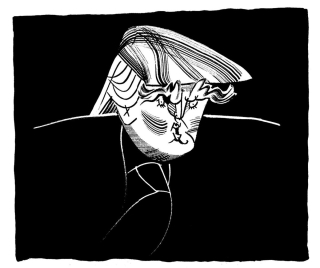
Trump has never gone out of his way to conceal the essence of his relationship to the truth and how he chooses to navigate the world. In 1980, when he was about to announce plans to build Trump Tower, a fifty-eight-story edifice on Fifth Avenue and Fifty-sixth Street, he coached his architect before meeting with a group of reporters. “Give them the old Trump bullshit,” he said. “Tell them it’s going to be a million square feet, sixty-eight stories.”
This is the brand that Trump has created for himself—that of an unprincipled, cocky, value-free con who will insult, stiff, or betray anyone to achieve his gaudiest purposes. “I am what I am,” he has said. But what was once a parochial amusement is now a national and global peril. Trump flouts truth and liberal values so brazenly that he undermines the country he has been elected to serve and the stability he is pledged to insure.
More here.
LOVE IN THE TIME OF NUMBNESS; OR, DOCTOR CHEKHOV, WRITER
Siddhartha Mukherjee in The New Yorker:
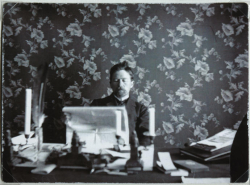
I want to talk to you today about desensitization. In my other life, I am an oncologist. Numbness, you might say, is my occupational hazard. Over the past month or so, I have watched twelve of my patients die from or relapse with cancer. Yesterday, I heard that a friend who ran my favorite restaurant, the place I went for daily refuge while I was writing my last book, passed away from tongue cancer that had colonized her brain and bones. When interviewers ask me how I carry on carrying on, I speak about the startling successes with some of my patients, about hope and the future. But I do not—I cannot—tell them that a certain kind of numbness must be a part of it. I come home from the bone-marrow-transplant wards on a January morning and play with my dog, rearrange the furniture, and practice polynomial factorization with my daughter. I celebrate a recent laboratory paper with a glass of champagne. I return to the wards the next morning and look down a microscope to find a marrow choked up with leukemia cells after a heroic attempt at salvage chemotherapy. And this cycle repeats. You might say that I have an advanced degree in desensitization. But, of course, I am not here to describe the numbness that accompanies medical practice. There is a different form of desensitization that surrounds us today. When I was asked to give this talk to a roomful of aspiring writers, I had to confront the elephant-in-the-room question: How shall we continue to write in these numbing times?
More here.
Journey to the House of Stone
Fawzia Afzal Khan in The Friday Times:
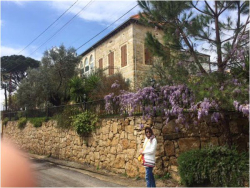
Ever since I read his beautiful, lyrical, haunting memoir about his quest to find his roots in the country his great grandfather migrated to the USA from, I became obsessed with wanting to see this symbol of one man’s determination to recover his past, and the past of his ancestral homeland, in a present riven by war. His memoir intertwines his intimate journey with the challenge of rebuilding his great grandfather’s abandoned home, which in 2006 was hit and partially destroyed by a half-exploded Israeli rocket. The book becomes a chronicle of the chaotic history of one of the oldest inhabited regions of the world which, because of its geographic location has seen war throughout its centuries old history, and part of Shadid’s goal in the book is an attempt to better understand the rise and fall of the Ottoman empire and the ensuing consequences which have embroiled Lebanon and the region of the Levant in an imperial game involving Britain, France, the US and their watchdog in the region Israel, ever since the beginning of the last century and lasting into our present time. Even as I pen this, US warplanes under President Trump’s directives, have started a bombing campaign in neighbouring Syria, which was once part of Greater Lebanon – or was Lebanon part of Greater Syria? Borders remain porous, reminders of the careless carving up of once autonomous regions into spurious nation states modeled on those of the Western powers who became imperial masters after they defeated the Ottomans who had ruled the Levantine region for centuries.
More here.
allan holdsworth (1946 – 2017)
Cuba Gooding Sr. (1944 – 2017)
robert pirsig (1928 – 2017)
Saturday, April 29, 2017
HOW A PROFESSIONAL CLIMATE CHANGE DENIER DISCOVERED THE LIES AND DECIDED TO FIGHT FOR SCIENCE
Sharon Lerner in The Intercept:
The hardest part of reversing the warming of the planet may be convincing climate change skeptics of the need to do so. Although scientists who study the issue overwhelming agree that the earth is undergoing rapid and profound climate changes due to the burning of fossil fuels, a minority of the public remains stubbornly resistant to that fact. With temperatures rising and ice caps melting — and that small minority in control of both Congress and the White House — there seems no project more urgent than persuading climate deniers to reconsider their views. So we reached out to Jerry Taylor, whose job as president of the Niskanen Center involves turning climate skeptics into climate activists.
It might seem like an impossible transition, except that Taylor, who used to be staff director for the energy and environment task force at the American Legislative Exchange Council (ALEC) and vice president of the Cato Institute, made it himself.
Sharon Lerner: What did you think when you first encountered the concept of climate change back in the 1990s?
SL: What was your turning point?
JT: It started in the early 2000s. I was one of the climate skeptics who do battle on TV and I was doing a show with Joe Romm. On air, I said that, back in 1988, when climate scientist James Hansen testified in front of the Senate, he predicted we’d see a tremendous amount of warming. I argued it’d been more than a decade and we could now see by looking at the temperature record that he wasn’t accurate. After we got done with the program and were back in green room, getting the makeup taken off, Joe said to me, “Did you even read that testimony you’ve just talked about?” And when I told him it had been a while, he said “I’m daring you to go back and double check this.” He told me that some of Hansen’s projections were spot on. So I went back to my office and I re-read Hanson’s testimony. And Joe was correct. So I then I talked to the climate skeptics who had made this argument to me, and it turns out they had done so with full knowledge they were being misleading.
SL: So that was it? You changed your mind?
JT: It was more gradual.
More here.
What characteristics are men most attracted to in women and why?
Adrian Furnham in Psychology Today:
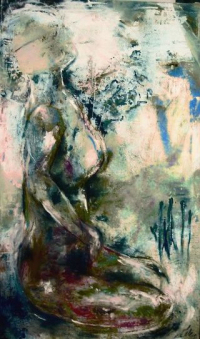
Much of the recent literature has been driven by debates on the power of the Body Mass Index (BMI) over Waist-to-Hip (WHR) ratios to attempt to determine the universality of male mate preferences (Dixson, Sagata, Linklater & Dixson, 2010). The debate has been won by the BMI school who argue from the data that it is the best and first-past-the-post choice factor when men look at women.
But there are a long list of other factors that play a part. They have one thing in common which is they are indicators of health and youth. Men like long shiny hair; they like a smooth skin. And they are very interested in symmetry.
More here.
The Pakistani university has become a space of institutionalised apathy
Ammar Rashid in Dawn:
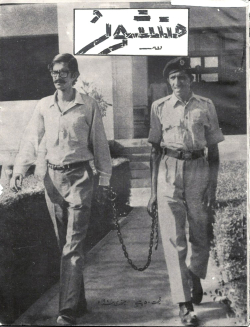
That the tragedy took place in a university, however, spoke to another process that has helped bring the country to its current impasse – the political and ideological brutalisation of its students by the state.
The on-campus lynching of a student by a mob of his peers solely on the basis of his progressive ideas was chilling to all who witnessed it; yet it was also simply the logical culmination of a decades-old state project to neutralise the potential of student politics for resistance and dissent in Pakistan.
This project has largely been successful. Today, with the exception of a few campuses, the Pakistani university is not a space of freedom for learning, ideological debate or critical thinking, but one of apathy, ideological conformity, and moral conservatism, often enforced through a nexus between the state, university administrations and unelected right-wing student groups.
More here.