
Enjoying the content on 3QD? Help keep us going by donating now.
Category: Recommended Reading
Rosarita by Anita Desai – a moving tale of memory and identity
Fiona Sturges in The Guardian:
 In this novella from the three times Booker-shortlisted Anita Desai, a young Indian woman named Bonita is accosted by a chatty stranger who says she recognises her as the daughter of Rosarita, a dear friend she knew years ago at art school in Mexico. Bonita, a language student in San Miguel de Allende, is irritated by the woman and tells her she must be mistaken: “I don’t paint. Nor did my mother.” But then she remembers an old painting that hung in her childhood bedroom depicting a woman seated on a park bench rendered “in wishy-washy pastels”. In the picture there is a child playing in the sand at the woman’s feet. Although they are mother and child, it’s as if they have “no relation to each other, each absorbed in a separate world, and silent”.
More here.
Enjoying the content on 3QD? Help keep us going by donating now.
Friday, April 18, 2025
A.O. Scott’s Poetry Lessons
Jonathan Farmer at Slate:
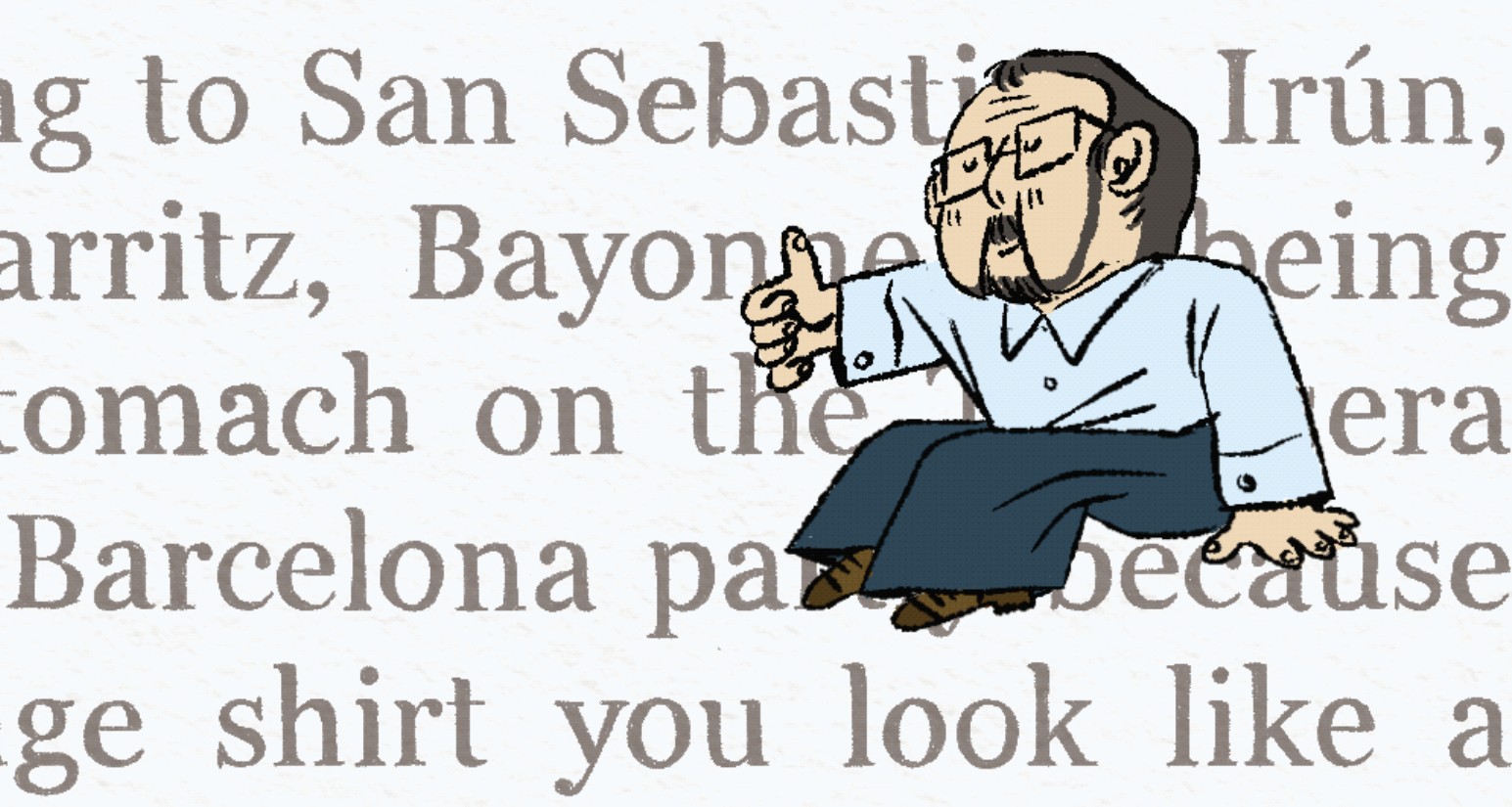 For 23 years, A.O. Scott was a film critic for the New York Times. For the past five months, he has been the nation’s most prominent poetry critic, writing a monthly column that uses the Times’ interactive technology to analyze a single poem at a time. Scott isn’t coming to poetry as a true outsider. He finished all the coursework and exams for a Ph.D. in literature, and he was a literary critic before he started writing about movies. But when most writing about poetry is done by poets and lifelong academics, many of whom seem to view other poets and academics as their primary audience, that still makes Scott an unusual and welcome presence.
Scott’s columns on such poets as Gwendolyn Brooks, Philip Larkin, and Diane Seuss are inviting, approachable, playful, and smart. He’s a perceptive reader, and he has a knack for writing about poems in ways that lend shape and even excitement to the act of reading and thinking about them. He’s also comfortable ignoring some of the orthodoxies that too often obscure what it’s actually like to read a poem. Scott and I met over Zoom to talk about what poems are actually for, why many sophisticated readers fear poetry, and why I’m wrong to think a couple of em dashes cannot be a hug.
More here.
Enjoying the content on 3QD? Help keep us going by donating now.
Where Does Meaning Live in a Sentence? Math Might Tell Us
Joseph Howlett in Quanta:

Her lens is category theory, a way of stepping back from the specifics of any individual field in favor of a broader underlying framework that bridges all of them. By thinking of language as a mathematical category, she’s been able to apply established tools to study it and glean new insights.
Linguists hope her model can help them to prove certain theories about how grammar and meaning emerge from strings of words, and to identify how AI-generated text differs from human language. Bradley herself is more interested in how studying language in this way might allow her to develop new mathematical tools.
Quanta spoke with Bradley about how mathematics can inform the study of language and vice versa.
More here.
Enjoying the content on 3QD? Help keep us going by donating now.
Nobel Winner Joseph Stiglitz on Columbia’s Capitulation to Trump
Enjoying the content on 3QD? Help keep us going by donating now.
What’s Happening Is Not Normal. America Needs an Uprising That Is Not Normal
David Brooks in The New York Times:
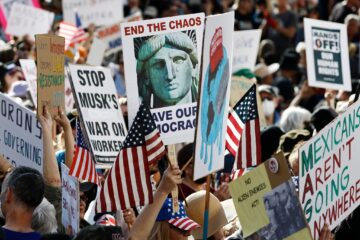 In the beginning there was agony. Under the empires of old, the strong did what they willed and the weak suffered what they must. But over the centuries, people built the sinews of civilization: Constitutions to restrain power, international alliances to promote peace, legal systems to peacefully settle disputes, scientific institutions to cure disease, news outlets to advance public understanding, charitable organizations to ease suffering, businesses to build wealth and spread prosperity, and universities to preserve, transmit and advance the glories of our way of life. These institutions make our lives sweet, loving and creative, rather than nasty, brutish and short.
Trumpism is threatening all of that. It is primarily about the acquisition of power — power for its own sake. It is a multifront assault to make the earth a playground for ruthless men, so of course any institutions that might restrain power must be weakened or destroyed. Trumpism is about ego, appetite and acquisitiveness and is driven by a primal aversion to the higher elements of the human spirit — learning, compassion, scientific wonder, the pursuit of justice.
More here.
Enjoying the content on 3QD? Help keep us going by donating now.
One Day, Everyone Will Have Always Been Against This
Enjoying the content on 3QD? Help keep us going by donating now.
This desire to watch the world burn doesn’t come out of nowhere
Dannagal G. Young and Kevin Arceneaux in The Conversation:
 When political psychologists introduced this concept of “need for chaos” in 2021, they described it not as a psychological trait, but as a character adaptation that occurs when some people experience a cultural and political situation that makes them feel like they are losing status and power. For some people, this feeling triggers a desire to “burn it all down” – “it” being society, institutions, the world – maybe to rebuild it all anew, or maybe just to see it all destroyed.
Only a small percentage of the U.S. population – less than 15% – tends to score high in need for chaos. But even so, understanding this minority is important to gaining insight into this political moment.
For example, people who score high in need for chaos exhibit greater support for political violence and a willingness to knowingly share hostile and false information online. And in our data, those higher in need for chaos report holding more trust in Musk, DOGE and Trump than people who score lower in the need for chaos measure.
More here.
Enjoying the content on 3QD? Help keep us going by donating now.
Rembrandt’s Gruesome Paintings
Enjoying the content on 3QD? Help keep us going by donating now.
Loving And Hating Phish
Amanda Petrusich at The New Yorker:
 Last August, Phish hosted a four-day music festival at a racetrack in Dover, Delaware. It was called Mondegreen—the word for a misheard lyric or phrase—and it was the band’s first festival since 2015. Phish—the singer and guitarist Trey Anastasio, the keyboardist Page McConnell, the bassist Mike Gordon, and the drummer Jon Fishman—was scheduled to play at least two sets a night for four nights in a row. No other bands were on the bill.
Mondegreen kicked off on a Thursday. That afternoon, I joined a long line of cars inching through cornfields that surrounded the motorway. The horizon was wavy with exhaust. The sun was fluorescent. I gazed at the stalks, fantasizing about a “Field of Dreams”-type scenario in which a ballplayer would emerge from the corn and offer me a sweating bottle of water. Eventually, I texted a friend who was already at the campground. He expressed his sympathies, then volunteered to deliver edible marijuana to my car. I demurred, but it nonetheless felt like an appropriate welcome. I would soon come to understand these two impulses—fellowship and oblivion—as central to the Phish experience.
more here.
Enjoying the content on 3QD? Help keep us going by donating now.
Method In Trump’s Madness
Sam Gindin at n+1:
 Steve Bannon, Trump’s first term whisperer, once described himself as a Leninist because “Lenin … wanted to destroy the state and that’s my goal too. I want to bring everything crashing down, and destroy all of today’s establishment.” Trump was apparently listening and learning. There is method in at least some of the early madness of Trump’s chaotic second term.
The shock and awe unleashed by Trump wasn’t just to concentrate state power in his hands or a vengeful rampage by someone who was rebuffed in 2020. Of greater consequence is the intent to disturb the normal functioning of the “deep state” to neutralize any of its oppositional inclinations and force it on its back foot. This is not about destroying the state; state interventions serving authoritarian ends will no doubt increase. Rather it is the permanent crippling of those aspects of the state that might limit capital and address collective needs.
Trump’s erratic tariff actions, alongside his reversal of the former bipartisan policy on Ukraine, has already had indirect results.
more here.
Enjoying the content on 3QD? Help keep us going by donating now.
Friday Poem
Political Speech
Democracy in America, she said,
has always been aspirational,
the bronze bell of its summons
rung by noble oligarchs
with blood on their soft white hands—
which is not to say that Democracy
in America isn’t inspirational,
isn’t a flickering beacon above
some battered shore awash in bodies—
in fact, it’s always both—
the opened arms, the double-
locked gate—which leaves us here
together, always separate, never
equal, mouthing the words
for breakfast, spitting them out
before lunch, all of us trying
to love what never loved us
back like it said it would—
those bell-tower words shimmering,
reverting to mere air from which
they were made, proving again
Democracy in America has always
been, will always be, just this:
respirational. Watch your breath,
the yogi says, feel it buzzing with
multitudinous life, each time
you welcome it in, and let it go.
by Scott Lowery
from Rattle Magazine
Enjoying the content on 3QD? Help keep us going by donating now.
Thursday, April 17, 2025
The lonely life of a glyph-breaker
Francesco Perono Cacciafoco in Aeon:
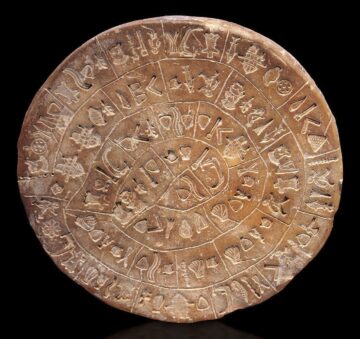 I am a glyph-breaker. I confess. Guilty as charged. A glyph-breaker who didn’t break anything, and that is quite paradoxical, because, to be a true glyph-breaker, you should have deciphered an undeciphered script, like Jean-François Champollion (the founder of Egyptology, who decoded the Ancient Egyptian hieroglyphs), Henry Rawlinson (who gave us the key to cuneiform) or Michael Ventris (who deciphered Linear B). Well, I didn’t. But I tried. I still try, in a way. And, in our times of devolution, that probably qualifies a guy to be called a glyph-breaker. The age of the great decipherments is, in all likelihood, over. What remains: a considerable amount of poorly documented, extremely elusive writing systems and ‘inscribed relics’, like Linear A, the Indus Valley Script, Rongorongo, and the Singapore Stone. Puzzles. Possibly unsolvable. Headache-generators. Nasty stuff.
Despite this, a glyph-breaker cannot be scared. A glyph-breaker doesn’t surrender. Theoretically. I started a quarter of century ago, in 1999, when I was at the University of Pisa in Italy, with Linear A, the undeciphered writing system from Bronze Age Crete, ‘hiding’ the so-called (unknown) Minoan language. I probably studied everything there was to study on that script, I reproduced many of the previous (and unsuccessful) decipherment attempts, and I tried to decipher the writing system by myself. I failed.
More here.
Enjoying the content on 3QD? Help keep us going by donating now.
How Virologists Lost the Gain-of-Function Debate
M. Anthony Mills in The New Atlantis:
 As with so many other scientific controversies in our political life, public opinion on Covid origins has come to track — and serve as a signifier for — partisan identity. This bodes ill for dispassionate investigation, which we must have if we want to know the truth about what actually threw the world into chaos for years and killed 27 million people.
At the same time, the controversy over Covid origins thrust into the center of our culture wars a substantive debate in science policy that has been raging among experts for decades, and will continue regardless of when or whether the true origin of the virus is established. That debate turns on the risks and benefits of the very kind of research alleged to have caused the pandemic.
On the one hand are virologists, specialists in the subfield of microbiology who study viruses. Many of them have long argued that experiments in which pathogens are genetically manipulated in ways that can render them more pathogenic, virulent, or transmissible — so-called “gain-of-function” experiments — provide invaluable sources of knowledge to help us prepare for future pandemics. On the other hand are critics, including microbiologists as well as experts in biosecurity, biosafety, and public health, who have long questioned whether these experiments are worth the risk.
More here.
Enjoying the content on 3QD? Help keep us going by donating now.
Microsoft AI CEO Mustafa Suleyman’s Vision for AI’s Future
Enjoying the content on 3QD? Help keep us going by donating now.
Harvard fights back against Trump
Amanda Marcotte at Salon:
 “The University will not surrender its independence or relinquish its constitutional rights,” Harvard President Alan Garber declared in a public letter. Garber subtly scoffed at the notion that the “reforms” demanded by Trump have jack-all to do with “fighting anti-semitism,” making clear that Trump’s defunding threats are about silencing progressive thought, forcing the school to hire MAGA hacks as professors and making life so hellish for students it would permanently tarnish the school’s brand. Garber also noted that the White House wants to “’audit’ the viewpoints of our student body” and ban students who have political views Trump doesn’t like.
Harvard’s endowment is large enough to weather the loss of federal funding. Nonetheless, this is an important move that can help stiffen the spines at other schools. Already, the leadership at Stanford University has piped up in support, with a similar vow to tell Trump to shove his authoritarian demands. At Yale, 876 faculty members signed a letter supporting Harvard’s actions. Several other Ivy League universities joined with a group of state schools to file a lawsuit against Trump’s funding cuts on Monday. After Harvard’s public stand, even Columbia’s interim president issued a statement saying the school no longer consents to some of the Trump administration’s “overly prescriptive” demands.
“Harvard has set an example for other higher-ed institutions,” former President Barack Obama said in response. “Let’s hope other institutions follow suit.”
More here.
Enjoying the content on 3QD? Help keep us going by donating now.
Discussing The Dead Sea Scrolls
Enjoying the content on 3QD? Help keep us going by donating now.
On the Real-Life Story of Deep-Cover Russian Spies
Shaun Walker at Lit Hub:
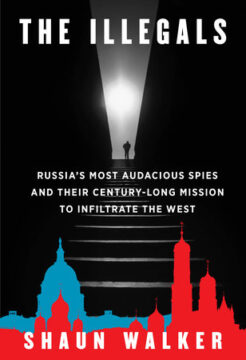 The fundamental role of intelligence agencies is to obtain information about other countries not available through open channels. Much of this work is done in the shadows, and most intelligence agencies use undercover operatives. The simplest way to do so is to disguise spies as diplomats. If caught, they can simply return home, claiming diplomatic immunity. But this also makes it easy for a host nation’s counterintelligence services to monitor the operatives. Diplomats are known entities and are tracked carefully. Some intelligence agencies will therefore use a riskier but harder-to-detect option. A spy is dispatched abroad posing as a business executive or other innocent-seeming professional, perhaps carving out a long and successful career in the cover role while all the time secretly developing useful sources and sending back intelligence. The CIA calls this “non-official cover.”
Moscow’s illegals program took this concept several steps further. The KGB put ordinary Soviet citizens like Elena and Andrei through years of training to transform them into Westerners. They would then spend decades living abroad, blending into their host societies.
more here.
Enjoying the content on 3QD? Help keep us going by donating now.
The Uprooting of Palestinian Olive Trees
Adam Broomberg and Rafael Gonzalez at Cabinet Magazine:
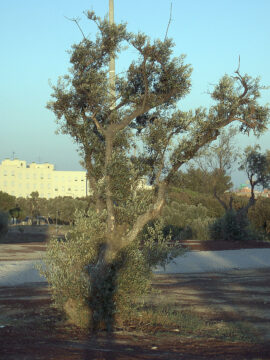 Precisely for this strong physical, cultural, symbolic, and economic relationship with the Palestinians, olive trees have become targets for violence by the state of Israel and by Israeli settlers. A study published in 2012 by the Applied Research Institute Jerusalem estimated that since 1967 Israeli authorities have uprooted eight hundred thousand Palestinian olive trees in the West Bank. Of 211 reported incidents of trees being cut down, set ablaze, stolen, or otherwise vandalized in the West Bank between 2005 and 2013, only 4 resulted in police indictments.
There are multiple rationales behind uprooting trees. As punitive measures, such practices predate the state of Israel. Ottoman rulers uprooted the olive trees of local farmers (fellahin) as punishment for tax avoidance, and the British administration in Palestine later carried out uprootings through emergency regulations. However, Israel’s central rationale for uprooting olive trees has not been presented as punitive, or at least not explicitly so: the Israeli army has uprooted and continues to uproot thousands of olive and other fruit trees for the construction and maintenance of the Separation Wall and to secure roads, increase visibility, and make way for watchtowers, checkpoints, and security fences around settlements in the West Bank.
more here.
Enjoying the content on 3QD? Help keep us going by donating now.
Encouraging Harvard to Resist
Max Krupnick in Harvard Magazine:
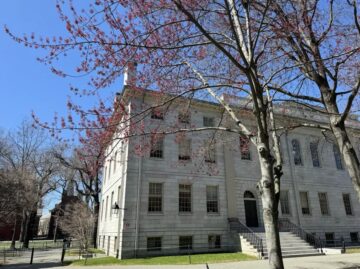 Throughout the past month, several groups of Harvard alumni and faculty members have written and signed open letters encouraging President Alan M. Garber and the Corporation to stand up to the Trump administration. The ways in which the letters build off each other, adjusting requests over time, reflect the changing nature of the government’s pressures on higher education.
Enjoying the content on 3QD? Help keep us going by donating now.