
Category: Recommended Reading
Denis Johnson’s Poetic Visions of a Fallen World
Michiko Kakutani in The New York Times:

…Mr. Johnson’s America, past or present, is uncannily resonant today. It’s a troubled land, staggering from wretched excess and aching losses, a country where dreams have often slipped into out-and-out delusions, and people hunger for deliverance, if only in the person of a half-baked messiah. Reason is in short supply here, and grifters and con men peddling conspiracy thinking and fake news abound; families are often fragmented or nonexistent; and primal, Darwinian urges have replaced the rule of law. And yet, and yet, amid the bewilderment and despair, there are lightning flashes of wonder and hope — glimpses of the possibility of redemption. In “Tree of Smoke,” “The Stars at Noon” (1986) and “The Laughing Monsters” (2014), America seems to have exported some of its native-born madness — limning what Mr. Johnson saw as the country’s military or cultural colonization of large swaths of the globe. Poverty and chaos multiply abroad, where the sun and the heat fuel a sense that the center cannot hold, that things are indeed falling apart.
More here.
Saturday Poem
Electric Elegy
—for Robert Hass
Farewell, German radio with your green eye
and your bulky box,
together almost composing
a body and soul. (Your lamps glowed
with a pink, salmony light, like Bergson's
deep self.)
Through the thick fabric
of the speaker (my ear glued to you as
to the lattice of a confessional), Mussolini once whispered,
Hitler shouted, Stalin calmly explained,
Bierut hissed, Gomulka held endlessly forth.
But no one, radio, will accuse you of treason;
no, your only sin was obedience: absolute,
tender faithfulness to the megahertz;
whoever came was welcomed, whoever was sent
was received.
Of course I know only
the songs of Schubert brought you the jade
of true joy. To Chopin's waltzes
your electric heart throbbed delicately
and firmly and the cloth over the speaker
pulsated like the breasts of amorous girls
in old novels.
Not with the news, though,
especially not Radio Free Europe or the BBC.
Then your eye would grow nervous,
the green pupil widen and shrink
as though its atropine dose had been altered.
Mad seagulls lived inside you, and Macbeth.
At night, forlorn signals found shelter
in your rooms, sailors cried for help,
the young comet cried, losing her head.
Your old age was announced by a cracked voice,
then rattles, coughing, and finally blindness
(your eye faded), and total silence.
Sleep peacefully, German radio,
dream Schumann and don't waken
when the next dictator-rooster crows.
by Adam Zagajewski
Polish trans. Renata Gorczynski and
Benjamin Ivry & C.K. Williams
.
Friday, May 26, 2017
The Mughal emperor Aurangzeb is controversial not so much because of India’s past but rather because of India’s present
Audrey Truschke in Scroll.in:
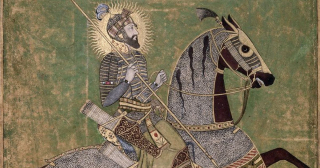
In modern-day India, however, Aurangzeb is alive in public debates, national politics, and people’s imaginations. From Mumbai to Delhi to Hyderabad, Indians debate his legacy and, overwhelmingly, condemn him as the cruelest king in Indian history. The list of charges against Aurangzeb is severe and, if they were all true, shocking. Aurangzeb, a Muslim, is widely thought to have destroyed thousands of Hindu temples, forced millions of Indians to convert to Islam, and enacted a genocide of Hindus. As I am reminded daily on Twitter, many Indians sincerely believe that Aurangzeb was Hitler and ISIS rolled into one with a single objective: To eradicate Hindus and Hinduism.
My narrative of Aurangzeb in Aurangzeb: The Life and Legacy of India’s Most Controversial King – based on extensive research and relying on primary source documents – does not match his current reputation.
More here.
Sean Carroll: What Was Before the Big Bang?
Video length: 2:34
Men Without Women
Lucy Scholes in The Independent:

They’re more than simply men without women though, they recognise an impossible gulf between the sexes – “I don’t think we can ever understand all that a woman is thinking,” Kafuku the actor declares – and how this connects to absences in their own identity: the doctor who wants to “reduce himself to nothing”; the bar-owner who feels disconnected from reality, fearful that he “doesn’t exist”; the student who professes to be someone he isn’t by means of an acquired accent; Kafuku who pretended all was well with his marriage. The prose clear and refined – not to mention seamlessly translated from the original Japanese by Philip Gabriel and Ted Goossen – the unassuming quietness of these stories doesn’t mean they don’t hit home with when they need to, whether it’s by means of a single arresting sentence, the shock of a completely unanticipated eventuality – an otherwise sensible, cultured man refusing to eat, for example – or the lingering sense of expectant incompleteness that accompanies Scheherazade, in which a woman entertains her paramour with a striking post-coital story of obsession and desire from her teenage days.
More here.
A new anthology of essays reconsiders Thomas Piketty’s “Capital”

“A MODERN Marx” was how The Economist described Thomas Piketty three years ago, when he was well on his way to selling more than 2m copies of “Capital in the Twenty-First Century”. It was meant as a compliment, mostly: as advice to take the analysis seriously, yet to treat the policy recommendations with caution. The book’s striking warning, of the creeping dominance of the very wealthy, looks as relevant as ever: as Donald Trump’s heirs mind his business empire, he works to repeal inheritance tax. But “Capital” changed the agenda of academic economics far less than it seemed it might. A new volume of essays reflecting on Mr Piketty’s book, published this month, prods economists to do better. It is not clear they can.
“After Piketty: The Agenda for Economics and Inequality”, edited by Heather Boushey, Bradford DeLong and Marshall Steinbaum, is a book by economists, for economists. In that it resembles “Capital” itself. Before he was an unlikely cultural icon, Mr Piketty was a respected empirical economist. He was best known as one of a group of scholars, among them Emmanuel Saez and Anthony Atkinson, who used tax data to track long-run inequality. In “Capital” these data became the basis for an ambitious theory of capitalism. Mr Piketty argued that wealth naturally accumulates and concentrates, so that familial riches are ever more critical to determining an individual’s success or failure in life. The extravagant inequality of the Gilded Age could return if no preventive action is taken.
more here.
The Age of Spectacle
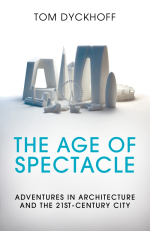
Cities of spectacle are becoming this young century’s norm. The bling school of architecture is a global nostrum. Take Pekka Korpinen, until recently deputy mayor of Helsinki. He would like to see an example of jaw-dropping architecture in that city. Is the man blind? Has he not noticed Lars Sonck’s magnificent work? Ah, he wants something jaw-dropping and new. Unimaginative local politicians, borderline-criminal elected mayors, vain ‘philanthropists’, thick Rotarians, optimistic local-enterprise partnerships and regional development agencies determinedly assume that non-orthogonal, sculpturally outré new buildings will foster regeneration (whatever that is). If it worked in Bilbao it’ll work in Lille, Bremen and Malmö. But has it worked in Bilbao? Gehry reels off statistics to demonstrate the supposed benefits to the city of his creation but quite neglects to mention the considerable increase in poverty there since the museum was opened and the consequently greater dependence on income assistance. Dyckhoff doesn’t challenge him.
In an interesting early chapter, Dyckhoff traces the history of the idea of ‘gentrification’ and its stuttering progress over half a century. The term was coined in 1964 by the sociologist Ruth Glass. She observed at first hand the phenomenon of inner London being slowly rebourgeoised. She ascribed this shift to the coming of age of a generation of people, then in their late twenties and early thirties, who shunned the anti-urban bias of their parents and grandparents. These were often people who worked in what was not yet called the media: their just-about fictional analogues were the characters of Mark Boxer and Peter Preston’s ‘The String-Alongs’.
more here.
Athens: Rocking the Cradle of Democracy

In seven years of nearly continuous protests, this one was the most articulate. Some 400 speech therapists, occupational therapists, and child psychologists stood outside the Greek parliament in late January, calling on the government not to cut subsidies they receive from the national health system. The protesters—well dressed, middle class, and highly educated, many of them at universities in the United Kingdom and the United States—were not the sort who generally take to the streets. And yet, so angry were they with the government that they marched out into traffic, led by a stray dog that had instinctively placed itself at the head of the column, and paraded their banners and slogans across the center of town, from Syntagma Square to the doors of the Ministry of Health. Given the makeup of the crowd, the elocution on display was unusually refined that day. “For no reason, for no cause do we demean speech therapy,” the protesters chanted in rhyming, scanning Greek. “There is no therapy for austerity,” read one banner. Ever since 2010, when the first of three austerity packages aimed at reducing the debt crisis was approved, Athenians have grown accustomed to routine disruptions. At least at this protest the entire street wasn’t cordoned off, as happens every few days for larger demonstrations. Motorists simply weaved their way around.
The Greek government pays for less than half of a child’s therapy costs, but that subsidy still means treatment for thousands of families. The health budget has been in free fall for years; this year alone, it has plummeted by €129 million, and since 2009, the reduction has amounted to 35 percent.
more here.
Friday Poem
Theater Impressions
For me a tragedy's most important act is the sixth:
the resurrecting from the stage's battlegrounds,
the adjusting of wigs, of robes,
the wrenching of knife from breast,
the removing of noose from neck,
the lining up among the living
to face the audience.
Bows solo and ensemble:
the white hand on the heart's wound,
the curtsey of the lady suicide,
the nodding of the lopped-off head.
Bows in pairs:
fury extends an arm to meekness,
the victim looks blissfully into the hangman's eyes,
the rebel bears no grudge as he walks beside the tyrant.
The trampling of eternity with the tip of a golden slipper.
The sweeping of morals away with the brim of a hat.
The incorrigible readiness to start afresh tomorrow.
The entry in single file of those who died much earlier,
in the third, the fourth, or between the acts.
The miraculous return of those lost without a trace.
The thought that they've been waiting patiently backstage,
not taking off costumes,
not washing off makeup,
moves me more than the tragedy's tirades.
But truly elevating is the lowering of the curtain,
and that which can still be glimpsed beneath it:
here one hand hastily reaches for a flower,
there a second snatches up a dropped sword.
Only then does a third, invisible,
perform its duty:
it clutches at my throat.
.
Wislawa Szymborska
from The Vintage Book of Contemporary World Poetry
Vintage Books
translation: Krynski & Maguire
Tissue-independent cancer drug gets fast-track approval from US regulator
Heidi Ledford in The New York Times:

Yet achieving this milestone has been more difficult than many cancer researchers initially expected. Despite early enthusiasm for the approach, researchers have come to respect the influence of a tumour’s location on its response to treatment, says cancer researcher René Bernards of the Netherlands Cancer Institute in Amsterdam. “It was a case of irrational exuberance,” he says. “When push comes to shove, the clinical responses were not that impressive.” Bernards speaks from experience. In 2010, researchers reported a successful trial of a drug called vemurafenib, which targets a mutated form of the protein B-RAF1. Subsequent studies found that the drug worked in 48% of melanomas with that mutation2. The results came as cancer genome sequencing efforts were gathering steam, building massive catalogues of mutations found across different cancers. The vemurafenib success fuelled hopes that the drug would work in other cancers with the same B-RAF mutation.
More here.
Thursday, May 25, 2017
Boston Review Forum: Basic Income in a Just Society
Brishen Rogers in the Boston Review:

The story is hardly exceptional. Each week, it seems, another magazine, book, or think tank sketches a dystopian near-future in which new technologies render most workers unnecessary, sparking widespread poverty and disorder. Delivery drivers, the thinking goes, will not be needed when there are drones or autonomous cars staffed by robots, and Starbucks baristas and fast food workers will be redundant when a tablet can take your order and a machine can prepare it. Some even envision more skilled jobs at stake: robots repairing our homes, caring for the elderly, or nursing patients back to health. As President Obama warned in his farewell address, “The next wave of economic dislocations . . . will come from the relentless pace of automation that makes a lot of good, middle-class jobs obsolete.”
An economic challenge of this magnitude requires ambitious solutions, and many in public debates have converged around a basic income. The idea is simple: the state would provide regular cash grants, ideally sufficient to meet basic needs, as a right of citizenship or lawful residency. Understood as a fundamental right, basic income would be unconditional, not means-tested and not contingent on previous or current employment.
More here.
Science Busts The Biggest Myth Ever About Why Bridges Collapse
Ethan Siegel in Forbes:
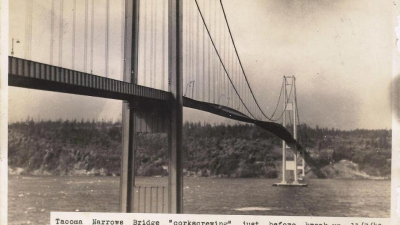
Every physical system or object has a frequency that's naturally inherent to it: its resonant frequency. A swing, for example, has a certain frequency you can drive it at; as a child you learn to pump yourself in time with the swing. Pump too slowly or too quickly, and you'll never build up speed, but if you pump at just the right rate, you can swing as high as your muscles will take you. Resonant frequencies can also be disastrous if you build up too much vibrational energy in a system that can't handle it, which is how sound alone at just the right pitch is capable of causing a wine glass to shatter.
It makes sense, looking at what happened to the bridge, that resonance would be the culprit. And that's the easiest pitfall in science: when you come up with an explanation that's simple, compelling, and appears obvious. Because in this case, it's completely wrong.
More here.
THE POPE’S MEMO ON CLIMATE CHANGE IS A MIND-BLOWER
From Wired:

Sure, Francis has his more traditional moments. Abortion and assisted suicide are still no-go for the leader of the world's Catholics. But Francis has been explicit about links between capitalism, materialism, and threats to the world's poor. There's a reason he named himself after St. Francis of Assisi—famously poor, famously eco-conscious—after all.
Now the Pope is taking on science. Specifically, in a new encyclical—that's a letter laying out official Catholic doctrine—Francis describes Earth's problem with an increasingly messed-up climate, why that's the purview of religion, and who will suffer the most if people don't do anything about it. The encyclical, "On Care for Our Common Home," makes explicit the connection between climate change and oppression of the poorest and most vulnerable. It's well-argued, clear, at times quite moving…and 42,000 words long. So here's the good-parts version…
More here.
Bill Gates Speech at Harvard in 2007
Video length: 5:55
Friedrich Nietzsche: human, all too human
One of the most interesting elements in Blue’s story is its charting of Nietzsche’s loss of faith, beginning in his middle teenage years. In his contributions to Germania, we don’t see outright atheism, but we do see a cautious movement to a more sceptical perspective. In one of his essays from this period, Nietzsche reflects on how difficult it can be to distance oneself from the tradition in which one has grown up, and to reflect on it in a critical way. This gives a nice hint of what, in the face of this difficulty, will become one of his most striking philosophical accomplishments: specifically his ability to step, insofar as possible, outside the Judaeo-Christian moral tradition and look at it as an anthropologist might, explaining how it gained traction and why it continues to retain it. Nietzsche pressed this still further, going beyond the role of anthropologist to that of philosophical “legislator”, concerned with the task of “revaluing” these hitherto revered values.
From Schulpforta, Nietzsche first moved to Bonn to study, then to Leipzig, where he did his doctoral training. While philology was his subject, philosophy was a strong side interest. He had ongoing doubts about whether he would be cut out for a career as a philologist, but his talent was evident to his teachers. Blue is particularly good in charting Nietzsche’s relationship to Friedrich Ritschl, a noted classicist who was Nietzsche’s supervisor in Leipzig. It was partly on Ritschl’s glowing recommendation that Nietzsche secured his first (and only) academic post, at the University of Basel.
more here.
Tony Harrison: The bard of Beeston
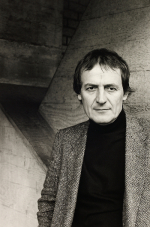
Harrison is best known as the author of several frequently anthologised poems about his working-class childhood in the Leeds suburb of Beeston and his difficult relationship with his relatives. Studying as a scholarship boy at Leeds Grammar School and then reading Classics at Leeds University, his ever-widening intellectual and cultural horizons created a chasm between him and his family. His painful attempts to come to terms with his alienation from his mother and father, while remaining committed to the cause of the working class, is explored at length in his pivotal 1978 collection From The School of Eloquence and Other Poems; several of the pieces expressing the impact of his mother’s death on his relationship with his father, a taciturn baker, are studied by teenagers at GCSE. At A Level, the poem of choice is his “v.,” written during the 1984-5 miners’ strike.
A modern response to Thomas Gray’s “Elegy Written in a Country Churchyard” (1751), “v.” recounts Harrison’s trip to a cemetery in Beeston to visit his parents’ grave. Now a haunt of local skinheads, the graveyard has been defaced by racist and obscene graffiti. This prompts meditation on the divisions (as in v for versus) caused by class and racial conflict in his society; it is followed by a dialogue with a skinhead in Leeds vernacular. The poem is now regarded as a classic of late 20th-century literature. The film version, directed by Richard Eyre and seen on Channel 4 in 1987, involved the longest cluster of sexually explicit words ever broadcast in Britain at the time. It made Harrison headline news. Mary Whitehouse protested in the Times. The Daily Mail denounced it as a “torrent of filth.”
more here.
on Diane Arbus

For Arbus the question was: What realities does reality represent? And yet she couldn’t bear making art that was “art”; like all those Russeks furs, painting belonged to a moneyed class, the world of connoisseurship. Was she talented, she wondered, or was she encouraged to make art because a girl of her background was supposed to? For her senior class assignment, Arbus produced her “Autobiography,” in which she wrote:
Everyone suddenly decided I was meant to be an artist and I was given art lessons and a big box of oils and encouragement and everything. I painted and drew every once in a while for 4 yrs. with a teacher without admitting to anyone that I didn’t like to paint or draw at all and I didn’t know what I was doing. I used to pray and wish often to be a “great artist” and all the while I hated it and I didn’t realize that I didn’t want to be an artist at all. The horrible thing was that all the encouragement I got made me think that I really wanted to be an artist and made me keep pretending that I liked it and made me like it less and less until I hated it because it wasn’t me that was being an artist.
Who was that “me”? Despite her horror of painting—“I remember I hated the smell of the paint and the noise it would make when I put my brush to the paper. Sometimes I wouldn’t really look but just listen to this horrible squish squish squish,” she told the journalist Studs Terkel—Arbus’s teachers thought they were encouraging her true self, or a self she wanted to be.
more here.
Psychiatrist Bandy Lee: “We have an obligation to speak about Donald Trump’s mental health issues … our survival as a species may be at stake”
Chauncey Devega in Salon:

Donald Trump’s failures as president have been compounded by his unstable personality and behavior. It has been reported by staffers inside the Trump White House that he is prone to extreme mood swings, is cantankerous and unpredictable, flies into blind rages when he does not get his way, is highly suggestible and readily manipulated, gets bored easily and fails to complete tasks, is confused by basic policy matters and by all accounts is unhappy and lonely. And despite bragging about his “strength” and “vitality” during the 2016 presidential campaign, Trump appears to tire easily and easily succumbs to “exhaustion.” Trump is apparently all id and possesses little if any impulse control. He is a chronic liar who ignores basic facts and empirical reality in favor of his own fantasies.
Between the scandals and the emotionally erratic behavior, Donald Trump would appear to be a 21st-century version of Richard Nixon, to date the only American president forced to resign under threat of forcible removal. In all, this leads to a serious and worrisome question: Is Donald Trump mentally ill? Moreover, what does Trump’s election reveal about the moods and values of his voters? How are questions of societal emotions and collective mental health connected to the rise of fascism and authoritarianism in America? Do psychiatrists, psychologists and other mental health professionals have a moral obligation to warn the public about the problems they see with Donald Trump’s behavior? In an effort to answer these questions, I recently spoke with Dr. Bandy Lee, a psychiatrist at Yale University who specializes in public health and violence prevention. She recently convened a conference that explored questions related to Donald Trump’s mental health and how mental health professionals should respond to this crisis.
More here.
Thursday Poem
Diatribe Against the Dead
The dead are selfish:
they make us cry and don't care,
they stay quiet in the most inconvenient places,
they refuse to walk, we have to carry them
on our backs to the tomb
as if they were children. What a burden!
Unusually rigid, their faces,
accuse us of something, or warn us;
they are the bad conscience, the bad example,
they are the worst things in our lives always, always.
The bad thing about the dead
is that there is no way you can kill them.
Their constant destructive labor
is for that reason incalculable .
Insensitive, indifferent, obstinate, cold,
with their insolence and their silence
they don't realize what they undo.
.
by Angel Gonzalez
from The Vintage Book of Contemporary World Poetry
Vintage Books, 1996
.