
Katya Apekina at Alta:
 I had read about the Santa Ana winds in a Joan Didion essay but had incorrectly understood them to be a mood-altering phenomenon, something with positive ions that made people feel on edge. It did not occur to me that they were a very real weather event, not just a vibe. That day, January 7, the fires had already started in the Pacific Palisades, which is more than 20 miles from Highland Park, where I live, but even so, I was not overly concerned. At my daughter’s school, they’d kept the kids inside during recess. That seemed excessive—and when my friend texted me some X account, with a crudely circled map, warning about the winds, it sounded overblown. That evening, when I walked to pick my daughter up from her class, there were gusts of wind and palm fronds littering the road. It felt spooky, but also slightly exciting. A weather event! The L.A. version of a snowstorm.
When we got home that evening, the wind picked up and began to shake our old and poorly sealed house. Our sense of excitement tilted. My daughter began to cry. A shingle flew off the roof. From the laundry room window, I could see the red glow of the Eaton Fire in the distance, then the jump of flames.
More here.
Enjoying the content on 3QD? Help keep us going by donating now.
 In 1994, an earthquake of a proof shook up the mathematical world. The mathematician Andrew Wiles had finally settled
  The “HUGEst” political alliance of the century is breaking apart before our eyes in suitably spectacular fashion.
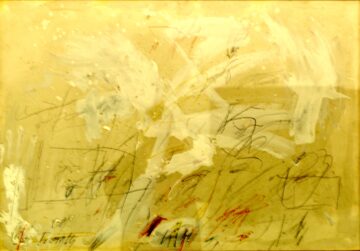 Twombly (1928–2011) has been a polarizing figure. He is best known for his large scrawly works in grayscale, sometimes called “blackboard paintings,” that resemble the marks of a second grader trying to learn cursive and failing. The artist has drawn (ha!) admiration from some of the greatest writers and critics of our era, from Roland Barthes and Robert Motherwell to Octavio Paz and Anne Carson. Yet few artists have also been on the end of more ridicule. Donald Judd called an early exhibit of Twombly’s “a fiasco.” Jackson Arn
  Most of us like to see ourselves as good, morally decent individuals. What’s more, we largely agree on what it means to be a decent person. You don’t just have to pay your taxes and not harm others. You have to go beyond that by, for instance, being kind, treating others with respect, and supporting your friends, family and neighbours. What our modern secular society lacks, however, is a clear idea of how a decent person should give to charity. We live in a world of staggering inequality and extreme need. There will always be more we could do. When have we given enough – not to be a saint, but to clear the bar of decency?
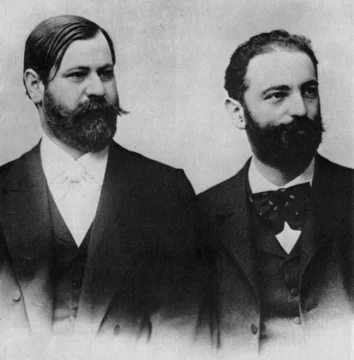 In Vienna, in late February 1895, a 30-year-old woman, Emma Eckstein, is about to undergo an operation. She has recently complained of a few health problems – mostly stomach pain and discomfort, some sadness, especially around her period. Luckily, a young Berlin doctor by the name of Wilhelm Fliess is there to help. He comes highly recommended by a long-time trusted family friend, himself a reputable physician, Sigmund Freud. They agree that Eckstein’s menstrual stomach issues can be addressed through a simple surgery on an altogether different body part – Fliess removes a bit of bone from inside her nose.
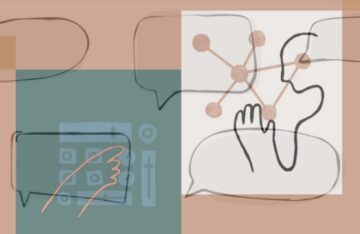 What does it mean to say, “I am aware,” when that sentence might be as much a performance as a report?
 The world is still recovering from the COVID-19 pandemic, which many researchers say probably started, or was at least amplified, at
  O
O Faced with unrelenting Russian aggression and the simultaneous withdrawal of American military and diplomatic support, European countries across the continent are reinvesting in defence. But civilian protection – non-military measures for civil defence, including the construction of nuclear and air raid bunkers – has also emerged as a fresh priority. In January, Norway reintroduced a cold war-era
 During the First World War, a six-year-old Simone Weil learned that soldiers on the Western Front were not rationed sugar, so she refused to eat it until conditions improved. But whereas most leave such zealous empathy in childhood, Weil’s commitment to suffering with — or, at least, in the same way as — others became the hallmark of her work as a philosopher and political activist, as well as of her short, harrowing life. And though her ascetic self-denial tended toward self-erasure, a theme she would reflect endlessly upon in her writing, she couldn’t help standing out. At the École Normale Supérieure, the elite Paris institution of higher learning where she was among the first generation of women to be educated, she was known as “The Red Virgin,” a testament to her asceticism, her communism, and, as her peers saw it, her scorn for femininity. (An improvement, perhaps, on “The Martian,” the sobriquet given to her by her lycée teacher, the radical pacifist philosopher, Alain.)
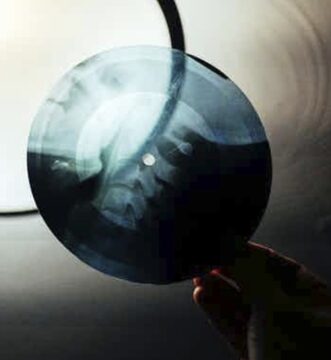 By using electrical microphones, amplifiers and electromechanical recorders, record companies could capture a far wider range of sound frequencies, with much higher fidelity. For the first time, recorded sound closely resembled what a live listener would hear. Over the ensuing years,