
Category: Recommended Reading
Homo Faber: Discovering the infinite universe
Lewis H. Lapham in Lapham's Quarterly:

The climb in 1802 was arduous and slow; at seventeen thousand feet above sea level, the air is thin and no birds sing. Humboldt finds it hard to breathe, and his feet begin to bleed; but when he recalls the predicament ten years later in his Personal Narrative, he doesn’t dwell on the “unbelievable difficulties…quite unknown in the wildest parts of Europe.” He is surprised instead by joy, by the beauty of the landscape, and by the pleasure he takes in seeing how the vegetation changes with the topography—palms and bamboo forests at lower elevations, above them conifers and oaks, higher up lichens like those seen within the Arctic Circle. Although careful to mark the dots (the shape of a leaf, the layering of a rock), what delights him are the dots going together across otherwise unbridged distances in space and time. He draws upon his ferocious memory and love of learning to see the botanical specimen in his hand in the Andes similar to the one seen in his hand at the same altitude in the Alps. The scrupulously repeated making of similar connections—between the here and now with the there and then—leads him to a notion of the planet bound up in intertwining chains of being as fragile as they are beautiful, mortal and therefore analogous to the life and story of man:
The discovery of a new genus seemed to me far less interesting than an observation on the geographical relations of plants, or the migration of social plants, and the heights that different plants reach on the peaks of the cordilleras.
At the instigation of metaphor, Humboldt discovers a new way of looking at the earth, and over the course of the next fifty years he publishes a Promethean abundance of further notes, books, maps, letters, directing the thought not only of Goethe but also that of Henry David Thoreau and Charles Darwin, who says that without Humboldt, he never would have boarded the Beagle or written On the Origin of Species.
More here.
Beloved, Black Women, and the Limits of Freedom
Jenn Jackson in bitchmedia:
…In January 2017 at the Women’s March on Washington, actress, singer, and activist Janelle Monáe (Moonlight and Hidden Figures) told the scores of supporters gathered there, “Whenever you feel in doubt, whenever you want to give up, you must always remember to choose freedom over fear,” hearkening back to the words of Simone. Like the Black women struggling with and toward freedom in Morrison’s Beloved, these young Black freedom fighters remind us that our struggle is interconnected. It is a matter for all of us, not some or a few. They prove that Black women always know. As Women’s History Month closes, I am heartened by this love story between Black women and freedom. Director Ava Duvernay (Selma and 13th) once described the process of being a Black woman who creates stories about Black women as “a reflection instead of an interpretation.” If Morrison’s Beloved is a reflection of us, then we too are its mirror image. We are the women who will save us. We are the Sethe, Denver, and even the Beloved who will secure our freedom. We are the chorus of women walking arm in arm, singing hymns and praying for our sister’s freedom.
If Morrison’s Beloved is a message to Black women, it’s that there is still much work to be done. But we are just the women to do it.
More here.
Saturday, April 1, 2017
Central European University fights for survival in Hungary
David Matthews in Time Higher Education:
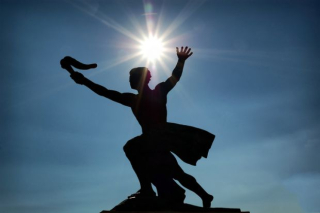
Hungary's top-ranked university is fighting for its existence after the country’s increasingly authoritarian government tabled legislative changes that would make it impossible for the institution to remain in Budapest.
The Central European University, a graduate institution set up after the fall of communism to defend democracy in Eastern Europe, could be the first international institution to fall victim to ascendant illiberal governments in Europe and the US, according to observers.
It is believed that the government of prime minister Viktor Orbán has been emboldened by the election of Donald Trump as US president to move against pro-democracy organisations, particularly those funded by the multibillionaire George Soros, such as the CEU.
Legislative amendments tabled on 28 March would stop the institution from issuing US-accredited degrees; force the CEU to open a campus in New York; change its name; and end an agreement whereby non-EU staff do not need a work permit, the university has said, making it “impossible for the university to continue its operations as an institution of higher education in Budapest, the CEU’s home for 25 years”.
Speaking at a press conference in Budapest on 29 March, CEU president Michael Ignatieff called for the amendments to be withdrawn. “We plan to remain here,” he said. But he added that, by tabling them, the Hungarian government had eroded trust so completely that a new international agreement was now needed to make the CEU’s status in the country secure.
More here. If you feel so inclined to sign it, here is a petition to the Hungarian National Assembly, calling for a rejection of the proposed law.
The Only Thing, Historically, That’s Curbed Inequality: Catastrophe
Walter Scheidel in The Atlantic:
The pressures of total war became a uniquely powerful catalyst of equalizing reform, spurring unionization, extensions of voting rights, and the creation of the welfare state. During and after wartime, aggressive government intervention in the private sector and disruptions to capital holdings wiped out upper-class wealth and funneled resources to workers; even in countries that escaped physical devastation and crippling inflation, marginal tax rates surged upward. Concentrated for the most part between 1914 and 1945, this “Great Compression” (as economists call it) of inequality took several more decades to fully run its course across the developed world until the 1970s and 1980s, when it stalled and began to go into reverse.
This equalizing was a rare outcome in modern times but by no means unique over the long run of history. Inequality has been written into the DNA of civilization ever since humans first settled down to farm the land. Throughout history, only massive, violent shocks that upended the established order proved powerful enough to flatten disparities in income and wealth. They appeared in four different guises: mass-mobilization warfare, violent and transformative revolutions, state collapse, and catastrophic epidemics. Hundreds of millions perished in their wake, and by the time these crises had passed, the gap between rich and poor had shrunk.
More here.
I wish we got to read a different story about Sophie Germain
Evelyn Lamb in Scientific American:
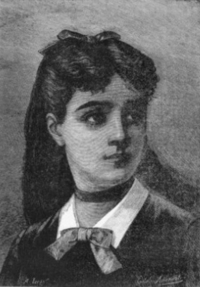
Germain fell in love with mathematics when she was a teenager. The story goes that she had to stay indoors because of the French revolution. In her hours of reading, she found a biography of Archimedes in her father’s library. His dramatic (and probably embellished) death scene, in which he is killed by a Roman soldier because he would not stop working on a math problem, captured her imagination. She showed a natural inclination, and though her parents tried to discourage her, she persisted in teaching herself a great deal of math.
Women were not allowed at universities in France at the time, but Germain corresponded with professors at the newly-opened École Polytechnique using the name of Monsieur Antoine-August LeBlanc, a former student. When she eventually revealed her true identity to some of them, she was accepted more than she expected to be but never truly treated as a peer.
Throughout her life, Germain’s lack of a comprehensive formal education in math and isolation from mathematical and scientific society held her back.
More here.
Violence: Theirs and Ours
Vijay Prashad in CounterPunch:

Two months ago, the head of the Metropolitan Police said that “warning lights are flashing” over the rise of violent crime across England and Wales. The preferred weapon, said Sir Bernard Hogan-Howe, was the common knife. Violent crime had risen by twenty-two percent, with the last quarter of 2016 registering 30,838 crimes committed with knives. Masood’s crime could well have been read alongside this data, as a serious problem of an increase in violence with knives as the weapon of choice.
Instead, the media and the British political class offered a sanctimonious lesson in civics. This was, said UK Foreign Secretary Boris Johnson, “an attack on our democracy, the heart of our democracy.” UK Prime Minister Theresa May told the House of Commons that despite this attack, “we will move forward together, never giving in to terror. And never allowing the voices of hate and evil to drive us apart.” One newspaper suggested that Boris Johnson’s statement was “Churchillian.”
More here.
Philosophical themes of the movie The Matrix
Video length: 11:15
FIVE HUNGARIAN WRITERS TO KNOW
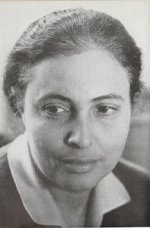
If it is a task at the verge of impossibility to recommend all the Hungarian writers I would like to, it is only slightly less hard to select just a handful to share. There are, for example, the many writers designated in Hungarian as “classical”, the word itself more or less synonymous with deceased (I still recall the response from one online bookseller with respect to a leading contemporary poet of the older generation – “Not classical! She lives!”), whose work has never been translated, or was poorly translated, or at best has appeared only in fragments. They well could be designated as a “canon,” in the sense of an indigenous scaffolding of literary knowledge with which every educated Hungarian is presumed to have much more than a passing acquaintance. Obviously, a nation with Hungary’s history and geography will certainly have experienced strong politicization of its literary canon, and the process is hardly a merely historical question, if we recall the recent controversies over official attempts at bringing right-wing nationalist authors directly into the Hungarian school curriculum. Nevertheless, the ranks of those Hungarian writers seen as essential have remained surprisingly autonomous throughout the tortuous course of ideologies and power-systems, and—at least for the pre-World War II authors—there is far more consensus on the individual figures in the canon than might be expected.
So I could recommend a historical canon. On the other hand, there are the writers active today, the living and thus un-”classical” creators across several generations. There are senior figures with definite international name recognition, even despite recent losses (most notably Péter Esterházy this past year); there is the post-1989 generation, which is now moving into middle age; there are the very youngest authors still persisting with a commitment to the Hungarian language and its legacy in spite of the illiberality and defiant philistinism of much of Hungarian public life today.
more here.
‘Art Sex Music’ by Cosey Fanni Tutti

It’s taken half a lifetime for Cosey Fanni Tutti to be recognised for her achievements in art, performance and music. Over the years rejection has come from all quarters: from her father, who threw her out of the house in her teens and later cut off all contact; from the police, who drove her out of her home town of Hull and, in London, repeatedly investigated her for indecency (charges were never brought); and, most startlingly, from Genesis P-Orridge, her former lover and fellow member of the art collective COUM Transmissions and the band Throbbing Gristle, who sought to marginalise her.
Art Sex Music isn’t merely a memoir, then; it’s a chance for Tutti to clear up the misconceptions about her career and reclaim her own narrative – and what an extraordinary narrative it is. This is the tale of a preternaturally creative individual dedicated to challenging and, where possible, breaking down ideological and social barriers, often at enormous personal cost. It’s also about resourcefulness amid astonishing unpleasantness and hardship.
more here.
Saturday Poem
I See You Dancing, Father
.
No sooner downstairs after the night’s rest
In the middle of the kitchen floor.
And as you danced
You whistled.
You made your own music
Always in tune with yourself.
Well, nearly always, anyway.
You’re buried now
In Lislaughtin Abbey
And whenever I think of you
I go back beyond the old man
Mind and body broken
To find the unbroken man.
It is the moment before the dance begins,
Your lips are enjoying themselves
Whistling an air.
Whatever happens or cannot happen
In the time I have to spare
I see you dancing, father.
.
by Brendan Kennelly
from A Time for Voices, Selected Poems 1960-1990
publisher: Bloodaxe, Newcastle upon Tyne, 1990
‘The Inkblots: Hermann Rorschach, His Iconic Test and the Power of Seeing’
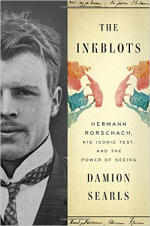
In the early 20th century, the Swiss psychologist Hermann Rorschach devised a test for examining people’s personalities based on their responses to sets of inkblots. In the Rorschach test, ‘ten and only ten’ inkblot patterns are used, reproduced on cards precisely 9½ inches high and 6½ inches wide. The same image can be replicated on both sides. Subjects are invited to view each inkblot and describe what they see. Their responses to the images are assessed according to several criteria, including level of detail, perceived content (such as a dancing bear) and the impression or otherwise of motion.
Born in 1884 near Zurich, Rorschach was a frequent doodler at school, taking after his father, who was a painter. As a result, he acquired the nickname ‘Klex’, derived from the German word for blot. He studied medicine at Zurich University, where he was lectured by Carl Jung and by Eugen Bleuler, director of the Burghölzli psychiatric clinic near Zurich, where both worked. This clinic housed over a thousand patients and had acquired an international reputation for its enlightened and innovative methods, particularly the ‘affective rapport’ technique recommended by Bleuler. Jung lectured on his word association tests, in which he used a stopwatch to measure the response time to a stimulus word. He had found these tests to be psychologically valuable, coining the term ‘complex’ as a result. Rorschach took note.
more here.
Uncle Sam and Hitler: did America inspire the Nazis’ race laws?
Tim Stanley in The Telegraph:
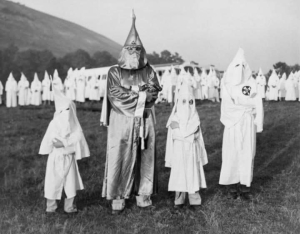
Nevertheless, there’s a taboo about US innocence that needs breaking here – and Whitman grinds it underfoot. How could Uncle Sam provide any source material for Nazi race laws? America, which was founded on the principles of liberty and equality, later joined the war in Europe to defeat fascism – how could the Germans see anything there but an ideological opposite? You’d be surprised. As Whitman notes, when Hitler was writing Mein Kampf he looked around the world for an example of a state that understood the benefits of racial purity, and found only one: “The American Union categorically refuses the immigration of physically unhealthy elements, and simply excludes the immigration of certain races. In these respects, America already pays obeisance, at least in tentative first steps, to the characteristic volkische conception of the state.”
More here.
The Emergence of the Hive Mind
David Bosworth in The Hedgehog Review:
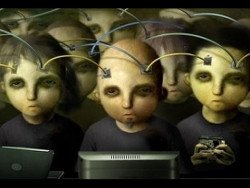
our connections affect every aspect of our daily lives…. How we feel, what we know, whom we marry, whether we fall ill, how much money we make, and whether we vote all depend on the ties that bind us. Social networks spread happiness, generosity, and love. They are always there, exerting both subtle and dramatic influence over our choices, actions, thoughts, feelings, even our desires.
More startling still, according to the authors,
our connections do not end with the people we know. Beyond our own social horizons, friends of friends of friends can start chain reactions that eventually reach us, like waves from distant lands that wash up on our shores.
Our misery or happiness, our good or bad health, and our indifference or commitment to political participation, are not only contagious; according to Christakis and Fowler, they are mysteriously influenced at a distance by the decisions of people we never meet. The persistence of this influence within the social networks could be traced through “three degrees of separation,” so that the habits of a man’s sister’s neighbor’s wife had a statistically significant effect on his own behavior. If she quit smoking, though out of sight and out of mind, his chances of doing the same were increased by nearly a third.
More here.
Friday, March 31, 2017
The politics of outrage, and the crisis of free speech on campus
Ira Wells in the Literary Review of Canada:
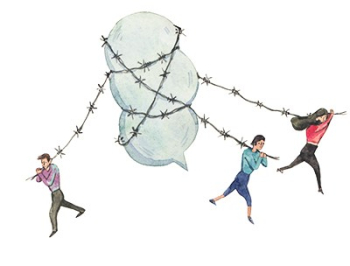
This opinion—broadcast by bilious media personalities who have never listened in on a faculty meeting, have no knowledge of universities’ academic priorities and have not set foot in an undergraduate lecture since Trudeau père occupied 24 Sussex—is, unsurprisingly, a grotesque parody of the complex, often internally conflicted reality of modern institutions of higher learning.
Yet this view, however exaggerated, is not entirely baseless. An increasingly sensitive and fine-grained vocabulary for registering and opposing forms of sexism, racism, ableism and religious intolerance has undeniably been developing within higher education.
More here.
Evolution Is Slower Than It Looks and Faster Than You Think
Carrie Arnold in Wired:

Then, in the mid-2000s, Simon Ho, an evolutionary biologist at the University of Sydney, encountered a similar phenomenon in the genomes he was analyzing. When he calculated how quickly DNA mutations accumulated in birds and primates over just a few thousand years, Ho found the genomes chock-full of small mutations. This indicated a briskly ticking evolutionary clock. But when he zoomed out and compared DNA sequences separated by millions of years, he found something very different. The evolutionary clock had slowed to a crawl.
Baffled by his results, Ho set to work trying to figure out what was going on. He stumbled upon Kurtén’s 1959 work and realized that the differences in rates of physical change Kurtén saw also appeared in genetic sequences.
More here.
Testing a guy who can talk backwards!
Video length: 12:12
Nate Silver says media assumptions, not data, led to surprise over 2016 election results
Christina Pazzanese in the Harvard Gazette:
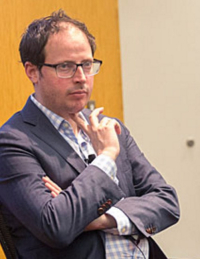
SILVER: I think people shouldn’t have been so surprised. Clinton was the favorite, but the polls showed, in our view, particularly at the end, a highly competitive race in the Electoral College. We had him with a 30 percent chance, and that’s a pretty likely occurrence. Why did people think it was much less than that? I think there are a few things. One is that I don’t think people have a good intuitive sense for how to translate polls to probabilities. In theory, that’s the benefit of a model. But I think people thought “Well, Clinton’s ahead in most of the polls in most states, and I remember that seems similar to Obama four years ago, and therefore I’m very confident that she’ll win.” It’s ad hoc and not really very rigorous, that thought process.
The second part is that there is a certain amount of groupthink. People looking at the polls are mostly in newsrooms in Washington and Boston and New York. These are liberal cities, and so people tend to see evidence (in our view, it was kind of conflicting polling data) as pointing toward a certain thing.
More here.
Friday Poem
—The Chinese micro-carver Chen Zhongen
can inscribe poems on a single strand of hair
.
The Stylist
I asked for a headful of sonnets
(Petrarchan) from scalp to split end.
Short-haired one, said he,
the most I can do for you
is a crop of haiku.
A bit miffed, I looked round the room
at enormous close-ups of women
with sestinas twirled through their ringlets,
thousands of Möbius strips
curled round recidivist words.
A man with a brylled-black mullet
sported tercets over his ears,
and a thicket of octets ending in knots:
floccinaucinihilipilification,
sesquipedalian,
hyperfecund,
the days of the week in Old Norse.
Poems with upbeat conclusions
on the flick-ups of nymphet models.
Bawdy love-lyrics from the 1700s
hidden inside dense dark shag perms,
and rhyming couplets at the outer tips
of a blonde boy’s barely-there eyebrows.
Not fair, I thought; oh, to be Rapunzel
with space for the lost Latin epics
of Valerius Flaccus cascading
down past my backside.
But no; I got Ezra Pound’s petals
above my wet and blackening brow.
Some highlights from Japanese wisdom.
And one of the stylist’s own:
What hard work this is,
blinded by flurries of snow:
your psoriasis.
.
by Mary O'Donoghue
from: Among These Winters
Dedalus Press, Dublin, 2007
Reza Aslan: Scholar or retailer of import goods?

Aslan’s “all religion is the same and it’s all about being a good person” claims would be fine if he positioned himself as a spiritual guide or religious teacher, but Aslan insists that he is a scholar of religion. The opening credits say so four times. But such claims are not scholarship. In his “Theses on Method,” scholar of religion Bruce Lincoln summed up the religious scholar’s job well:
When one permits those whom one studies to define the terms in which they will be understood, suspends one’s interest in the temporal and contingent, or fails to distinguish between “truths”, “truth-claims”, and “regimes of truth”, one has ceased to function as historian or scholar. In that moment, a variety of roles are available: some perfectly respectable (amanuensis, collector, friend and advocate), and some less appealing (cheerleader, voyeur, retailer of import goods). None, however, should be confused with scholarship.
Aslan permits the reforming Aghori to define their own terms, his “all religions are the same” approach ignores the temporal and contingent, and so he has ceased to function as a scholar. It’s up to viewers to decide which of the other roles suites him best. Moreover, these same things that get in the way of his role as scholar are also the cause of his troubles with his Hindu critics. By saying that he knows what Hinduism (and religion) is really about he abnegates his role as scholar and offends Hindus who have their own ideas about Hinduism’s truths.
more here.