Habermas and the Fate of Democracy

Habermas5

William E. Scheuerman in Boston Review:

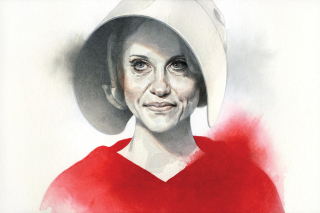
Germany’s defeat helped free Habermas from the provincial social climate. He listened to live radio broadcasts of the Nuremberg Trials and, shocked by the horrors recounted, seems to have quickly grasped the criminal nature of the regime under which he had grown up. Revealingly perhaps, his academic interests shifted away from medicine, a more professionally secure field, to philosophy. His 1954 University of Bonn doctoral dissertation on the Romantic philosopher Friedrich Schelling offers little evidence of Habermas’s growing radicalism, but his early journalistic pieces, published during the early and mid ‘50s in major German newspapers and intellectual journals, anticipate his life-long political concerns. Directed against right-wing intellectuals (for example, Heidegger), they criticize an older generation for failing to take democracy seriously—that “magic word,” according to Habermas, that brought together otherwise disparate voices within his own postwar generation who sought a clean break from Nazism.

Because Habermas took the magic word of democracy so seriously, he found himself disenchanted not only with established conservative intellectuals but also political elites who preferred to keep their mouths shut about their Nazi entanglements, and for whom Germany’s new liberal order was primarily about stability and security, not democratic self-government. Dictatorship and the racism that motored it still haunted his country. Democracy was not a fortunate historical inheritance one could simply take up, but instead an unfinished project. As he has more recently claimed, democracy represents the surviving “remnant of utopia”: only democracy is “capable of hacking through the Gordian knots of otherwise insoluble problems.” Thus his life-long intellectual project of trying to understand democracy’s promise and possibilities.

More here.

A Buffet of French History

Darnton_1-051117

Robert Darnton in The New York Review of Books:

One of the bombs dropped during the current presidential campaign in France is Histoire mondiale de la France, an eight-hundred-page tome surveying 40,000 years of French history. A collaborative work written by 122 academics and directed by Patrick Boucheron, a distinguished medievalist at the Collège de France, it hardly seemed destined for the best-seller lists when it was published in January. But the French have snapped it up: 70,000 copies have been sold as of mid-March and sales are still going strong. After several decades of somnolence, academic history is a hit.

Although the book owes much of its success to the talent of its authors, its publication was timed perfectly to make a splash during the election campaign. History has always been a battleground in France. As Éric Zemmour, a right-wing journalist and historian, remarked in an angry review in Le Figaro, “History is war. Not just the history of war but the war of history.” He went on to condemn Histoire mondiale de la France as an attack on the identity of France and an attempt to destroy the “national narrative” (“roman national”) at the heart of what it means to be French.

Alain Finkielkraut, a conservative philosopher and member of the Académie française, damned the book in an equally savage review: “The authors of Histoire mondiale de la France are the gravediggers of the great French heritage.” Other commentators on the right have echoed the same theme. Michael Jeaubelaux, a blogger who supports the conservative presidential candidate François Fillon, wrote: “When the Collège de France buries France and the French, it is urgent for the people to seize power against those who are paid to destroy our country, its history, its heritage, its culture!”

More here.

Silicon Valley executives are hiring philosophers to teach them to question everything

Michael J. Coren in Quartz:

ScreenHunter_2676 Apr. 23 20.36Silicon Valley is obsessed with happiness. The pursuit of a mythical good life, achievement blending perfectly with fulfillment, has given rise to the quantified self movement, polyphasic sleeping, and stashes of off-label pharmaceuticals in developers’ desks.

Yet Andrew Taggart thinks most of this is nonsense. A PhD in philosophy, Taggart practices the art of gadfly-for-hire. He disabuses founders, executives, and others in Silicon Valley of the notion that life is a problem to be solved, and happiness awaits those who do it. Indeed, Taggart argues that optimizing one’s life and business is actually a formula for misery.

“I call it “the problematization of the world,” he said. “Once you start looking for this relatively new way of thinking—problem, challenge, solution, repeat—you see it nearly everywhere.” Instead of asking, How can I be more successful, he says, “It’s far more important to ask, ‘Why be successful?’”

Taggart is among a small band of “practical philosophers” entering the world of business. Serving as a kind of Chief Philosophy Officer, they summon ancient thinkers to probe eternal questions like, “How does one live a good life?” but also more practical ones like “What should my startup build?” This strand of philosophical inquiry, aided by books, blogs, and advisors, is gaining a small but intensely loyal following.

More here.

Antarctic Scientists Go Chasing Waterfalls

Robinson Meyer in The Atlantic:

Lead_960 (1)January 29, 1912, was a beautiful day in Antarctica. A group of British explorers, led by a 37-year-old Victor Campbell, were on a cheerful journey across what we now call the Nansen Ice Shelf and Priestley Glacier. It was a kind of summer sojourn around the continent: They would make the first maps of the area, then rendezvous with their ship, Terra Nova, six weeks later.

Campbell’s notes are brief on January 29. The terrain on which he and his team tottered around that day was at the foot of some glaciers and mountains, which loomed above the icy plain. The area even sounded different: “The noise of running water from a lot of streams sounded very odd after the usual Antarctic silence,” he wrote. “Occasionally an enormous boulder would come crashing down from the heights above, making jumps of 50 or 100 feet at a time.” His party set up camp that night on a bed of gentle gravel, then moved on.

But the Terra Nova did not reach them in February, or March, or ever. Early sea ice set in and blocked off the ship’s route. With winter bearing down, Campbell and his team took steps that later made them famous. They dug an ice cave on Inexpressible Island and made camp for the the winter. They remained in the cave for months— eating seal and penguin meat, burning blubber for warmth—all through the black night of Antarctic winter. Not until September 30 did they finally set off for the 200-mile march back to their basecamp.

More here.

The anniversary of the uprising of the Warsaw Ghetto

Kenan Malik in Pandaemonium:

Bak-ghettoThis week marked the anniversary of the uprising of the Warsaw Ghetto. The Ghetto had been established by the Germans in 1940 in the Muranów district of the Polish capital, imprisoning some 400,000 Jews, virtually all of whom were eventually killed, either in concentration camps, through hunger and deprivation, through executions, or in the final destruction of the Ghetto.

The uprising began on April 19, 1943, after German troops entered the Ghetto to deport its surviving inhabitants. Some 750 fighters fought the heavily-armed soldiers, holding out for nearly a month. Around 13,000 Jews were killed in the Ghetto during the uprising. Of the more than 56,000 Jews captured after the uprising was crushed, 7,000 were shot, and the remainder were deported to concentration camps, mostly to Treblinka.

More here.

Harvard’s nondiscrimination hypocrisy

Harry Lewis in the Washington Post:

Harvard-0fb63When should traditional liberal values be sacrificed to important but narrower ends? That is the question behind Harvard University’s effort to subordinate freedom of association and freedom of speech to a locally fashionable form of “nondiscrimination.”

Last spring, the university decided to attack the off-campus, all-male Final Clubs by disqualifying their members from Rhodes Scholarships and other distinctions — unless the clubs admitted women. A few of these clubs are infamous for loud parties and drunken misbehavior. The new strategy against them had the merit of novelty, even in the absence of evidence that coed clubs would behave any better.

Faculty members reacted with alarm, recalling Sen. Joseph McCarthy’s persecution of Harvard professors in the 1950s simply for belonging to a hated organization. Students deserve a better lesson from Harvard than an attempt to solve social problems by blackballing members of unpopular groups.

The policy covers all “single-gender social organizations” consisting of Harvard students, so the same sanctions would be visited on women’s clubs, including sororities. More women than men are affected, even though most of the women’s clubs don’t have real estate, much less raucous parties. Hundreds of women staged a surprise protest in response.

More here.

HISTORY, ART AND AKBAR NAQVI

HM Naqvi in Dawn:

NaqviIn Ways of Seeing, John Berger, the late, great, British art critic, posits that, “The way we see things is affected by what we know or what we believe. In the Middle Ages when men believed in the physical existence of Hell, the sight of fire must have meant something different from what it means today… History always constitutes the relation between a present and its past.”

…In his opus, Image and Identity, the late, great, Pakistani art critic, Dr Akbar Naqvi, announces, “Pakistan’s history is older than its age… The thesis of this book is that Pakistan is inseparable from [the] heritage of Al-Hind, and without that it has no identity.” Although this might not be news to serious historians, in the ever-evolving exclusionary socio-political ecosystems of the subcontinent, the assertion was like a brick lobbed in the oft stagnant pond of popular discourse. This theme pervades Dr Naqvi’s oeuvre, from Shahid Sajjad’s Sculpture to Sadequain and the Culture of Enlightenment.

“The subcontinent was partitioned,” he writes elsewhere, “but its people continued to share myths, histories, cultures and a multifaceted civilisation.” Consequently, we in India, Pakistan, Bangladesh, and Sri Lanka are “joint custodians” of the discourse of the subcontinent. Dr Naqvi observes this shared ethos in the work of Abanindranath Tagore, who responded to late Mughal miniatures, Abdur Rehman Chughtai, who routinely rendered icons from Hindu mythopoetics, Syed Sadequain Naqvi, who distilled everything from tantric symbolism to Arabic calligraphy, and Ustad Allah Buksh. “Buksh’s art was the Indian face of European painting and accepted national art … [i]n this style, local romantic lore and mythological subjects were painted according to Euro-Indian conventions of Raj art schools.” Manifestly, we, demonyms of the subcontinent, “have several histories converging upon us.”

For Dr Naqvi, history is not good, bad, some sort of binary, or for that matter, linear: Picasso’s Cubism, derived from African masks, in turn influenced the likes of Jean Metzinger and Albert Gleizes or Zubeida Agha and Shakir Ali.

More here. (Note: Thanks to Professor Sadia Abbas)

Saturday, April 22, 2017

Yuval Harari: People Have Limited Knowledge. What’s the Remedy? Nobody Knows

Yuval Harari in the New York Times:

Harari-superJumboIn “The Knowledge Illusion,” the cognitive scientists Steven Sloman and Philip Fernbach hammer another nail into the coffin of the rational individual. From the 17th century to the 20th century, Western thought depicted individual human beings as independent rational agents, and consequently made these mythical creatures the basis of modern society. Democracy is founded on the idea that the voter knows best, free market capitalism believes the customer is always right, and modern education tries to teach students to think for themselves.

Over the last few decades, the ideal of the rational individual has been attacked from all sides. Postcolonial and feminist thinkers challenged it as a chauvinistic Western fantasy, glorifying the autonomy and power of white men. Behavioral economists and evolutionary psychologists have demonstrated that most human decisions are based on emotional reactions and heuristic shortcuts rather than rational analysis, and that while our emotions and heuristics were perhaps suitable for dealing with the African savanna in the Stone Age, they are woefully inadequate for dealing with the urban jungle of the silicon age.

Sloman and Fernbach take this argument further, positing that not just rationality but the very idea of individual thinking is a myth. Humans rarely think for themselves. Rather, we think in groups. Just as it takes a tribe to raise a child, it also takes a tribe to invent a tool, solve a conflict or cure a disease. No individual knows everything it takes to build a cathedral, an atom bomb or an aircraft. What gave Homo sapiens an edge over all other animals and turned us into the masters of the planet was not our individual rationality, but our unparalleled ability to think together in large groups.

More here.

Ghalib’s Life and Times

From Columbia University Press:

9780231544009This selection of poetry and prose by Ghalib provides an accessible and wide-ranging introduction to the preeminent Urdu poet of the nineteenth century. Ghalib's poems, especially his ghazals, remain beloved throughout South Asia for their arresting intelligence and lively wit. His letters—informal, humorous, and deeply personal—reveal the vigor of his prose style and the warmth of his friendships. These careful translations allow readers with little or no knowledge of Urdu to appreciate the wide range of Ghalib's poetry, from his gift for extreme simplicity to his taste for unresolvable complexities of structure.

Beginning with a critical introduction for nonspecialists and specialists alike, Frances Pritchett and Owen Cornwall present a selection of Ghalib's works, carefully annotating details of poetic form. Their translation maintains line-for-line accuracy and thereby preserves complex poetic devices that play upon the tension between the two lines of each verse. The book includes whole ghazals, selected individual verses from other ghazals, poems in other genres, and letters. The book also includes a glossary, the Urdu text of the original poetry, and an appendix containing Ghalib's comments on his own verses.

Go here to read the introduction to the book.

This Is Your Brain On Music

Rick Nauert in Psych Central:

Music-And-Brain-big-bigstockNew research discovers that your favorite music, be it Willie Nelson, Bach, the Beatles, or Bruno Mars, triggers a similar type of activity in your brain as other people’s favorites do in theirs.

Music is primal, said neuroradiologist Jonathan Burdette, M.D., of Wake Forest Baptist Medical Center in North Carolina. It affects all of us, but in very personal, unique ways.

“Your interaction with music is different than mine, but it’s still powerful,” he said.

“Your brain has a reaction when you like or don’t like something, including music. We’ve been able to take some baby steps into seeing that, and ‘dislike’ looks different than ‘like’ and much different than ‘favorite.’”

To study how music preferences might affect functional brain connectivity — the interactions among separate areas of the brain — Burdette and his fellow investigators used functional magnetic resonance imaging (fMRI), which depicts brain activity by detecting changes in blood flow.

Scans were made of 21 people while they listened to music they said they most liked and disliked from among five genres (classical, country, rap, rock, and Chinese opera) and to a song or piece of music they had previously named as their personal favorite.

Those fMRI scans showed a consistent pattern: The listeners’ preferences, not the type of music they were listening to, had the greatest impact on brain connectivity, especially on a brain circuit known to be involved in internally focused thought, empathy, and self-awareness.

More here.

Saturday Poem

Chaos

A Venetian critic named Bruno Alfieri saw:
(in Jackson Pollock’s work)

—chaos
—absolute lack of harmony
—complete lack of structural organization
—total absence of technique, however rudimentary
—once again, chaos
from Art In America, February 1994

1. Chaos

Being true to what we are, what is,
frayed around the edges, perhaps, and growing weird.
Born in NYC, and from there, no movement.
It is our own terror, our own making,
abandoned in the high-rise night
like an impotent frog.

2. Absolute lack of harmony

There are times when you can’t illuminate nothing, man.
Don’t open that door, they say, don’t even enter the room.
My second wife would know, she didn’t belong
among the pacifists making music. Every
day you encounter people going
straight to hell.

3. Complete lack of structural organization

The summer air, by itself, is enough.
Add a few fireflies at twilight for memory’s sake.
And measure all the green you’ve seen.
Insane with desire to go home again?
Listen, the sky is whirling overhead.
Listen to the silence.

Read more »

The Weirdness of Juggling Many Different Roles at Work

Jessica Brown in NY Magazine:

HatsIt’s very likely that, even in the last 24 hours, you’ve switched so seamlessly between being a friend to an employee, boss to parent, or customer to neighbor, that you didn’t even notice yourself doing it. We all switch between multiple roles in a given day, requiring us to draw on different aspects of our personality, and even alter how we talk. (If you spoke to your newborn baby the same way you greeted your boss in the morning, for example, you’d probably be sent home to rest up.) One place most people juggle different identities is at work. Maybe you belong to a few different teams, for example, or maybe you both do and teach your job at the same time, like a doctor who also teaches medical students. Or you might have two or three different jobs entirely; perhaps you work part-time in a coffee shop to fund your freelance endeavors or tech start-up. Even within one role, you might be a supportive co-worker one minute, and deal-clinching boss the next, all before your morning coffee.

But while this constant juggling sounds exhausting, it doesn’t necessarily harm us, according to a study recently published in the journal Academy of Management. There are two main responses to identity-switching, according to Lakshmi Ramarajan, one of the study’s authors. Some of us will experience what she calls “identity conflict,” where we find it difficult to manage multiple identities, whereas others have “identity enhancement,” where different roles are seen as being complementary to each other. Ramarajan, from Harvard University — along with co-researchers Steffanie Wilk from Ohio State University, and Nancy Rothbar, from the University of Pennsylvania — argues, perhaps unsurprisingly, that your experience hinges on your outlook. Seeing multiple work identities as good for each other can help you be more productive and feel more motivated at work. Seeing your different identities as being in conflict with each other, however, could be putting a downer on your day.

More here.

Primo Levi’s If This is a Man at 70

Philippe Sands in The Guardian:

LeviI was 19 when I first read If This Is a Man, and the book filled a gap created by the shadows cast across an otherwise happy childhood home by Auschwitz and Treblinka: my maternal grandparents, rare survivors of the horrors, never talked about their experiences or those who were disappeared, and in this way Levi’s account spoke directly, and personally, offering a fuller sense of matters for which words were not permitted. His has not been the only such book – there are others, including more recent works such as Thomas Buergenthal’s A Lucky Child, Göran Rosenberg’s A Brief Stop on the Road from Auschwitz, and Marceline Loridan-Ivans’s But You Did Not Come Back – but it was the first. He was a messenger of detail, allowing me to see and feel matters of dread and horror: waiting for a deportation order; travelling in a cattle cart by train; descending a ramp for selection; imagining what it must be like to know you are about to be gassed and cremated; struggling for survival surrounded by people you love and hate. Levi’s voice was especially affecting, so clear, firm and gentle, yet humane and apparently untouched by anger, bitterness or self-pity. If This Is a Man is miraculous, finding the human in every individual who traverses its pages, whether a Häftling (prisoner) or Muselmann (“the weak, the inept, those doomed to selection”), a kapo or a guard.

Levi, a 23-year old chemist, was arrested in December 1943 and transported to Auschwitz in February 1944. There he remained until the camp was liberated on 27 January 1945. He arrived back home in Turin in October, unrecognisable to the concierge who had seen him only a couple of years earlier. This and more I learned from Ian Thomson’s nuanced biography, Primo Levi, which enriches our understanding of the author. On Levi’s return, stories were told and notes prepared, as he went back to work at a paint factory. By February 1946, he had completed a first draft about the last 10 days of his time in the camp, a section that would come to be the book’s last chapter, written “in furious haste”. Ten months later, there was a complete text, worked on “with love and rage”, reflecting a vow “never to forget”.

More here.

Friday, April 21, 2017

The Double Game of Egyptian Surrealism: How to Curate a Revolutionary Movement

Jonathan Guyer and Surti Singh in the Los Angeles Review of Books:

PhpThumb_generated_thumbnail"We find absurd, and deserving of total disdain, the religious, racist, and nationalist prejudices that make up the tyranny of certain individuals who, drunk on their own temporary omniscience, seek to subjugate the destiny of the work of art.” So wrote 37 Egypt-based artists and writers in their 1938 manifesto Long Live Degenerate Art, expressing solidarity with their counterparts in Europe suffering under fascism. This was the beginning of the Art and Liberty Group, an avant-garde movement also known as Egypt’s Surrealists.

“Modern art in Egypt was always a pale copy and a delayed copy,” says the contemporary Egyptian painter Adel El Siwi, “but for the first time in our history, we have this very rare moment where what was going on in Paris was in parallel to other things going on in Cairo.” The Art and Liberty Group forged connections with Surrealists and Trotskyists abroad while shaping their own identity. Working in tandem with their European peers, they also grappled with the circumstances of an increasingly militarized Egyptian capital, where trends in art and publishing remained conservative. They responded to the fault lines of interwar Cairo and were of a piece with them.

By the time of the 1952 Free Officers’ coup in Egypt, which led to the presidency of Gamal Abdel Nasser and the rise of a new Egyptian nationalism and later pan-Arabism, the members of the Art and Liberty Group had been dispersed: many were exiled or imprisoned.

More here.

Scientists have created a fluid with negative mass – but what does it tell us?

Hannah Devlin in The Guardian:

3000Scientists have created a fluid that exhibits the bizarre property of “negative mass” in an experiment that appears to defy the everyday laws of motion.

Push an object and Newton’s laws (and common experience) dictate that it will accelerate in the direction in which it was shoved.

“That’s what most things that we’re used to do,” said Michael Forbes, a physicist at Washington State University and co-author of the paper, which shows that normal intuitions do not always apply to physics experiments. “With negative mass, if you push something, it accelerates toward you.”

Negative mass has previously cropped up in speculative theories, including those suggesting the existence of wormholes, a form of cosmological shortcut between two points in the universe. Just as electric charge can be either positive or negative, matter could, hypothetically, have either positive or negative mass.

For an object with negative mass, Newton’s second law of motion, in which a force is equal to the mass of an object multiplied by its acceleration (F=ma) would be experienced in reverse.

Theoretically, this sounds straightforward, but picturing how this behaviour would work in the real world is bewildering, even for experts.

More here.

Men Recommend David Foster Wallace to Me

Deirdre Coyle in Electric Literature:

ScreenHunter_2674 Apr. 21 19.30For a while, I was seeing a guy who really liked David Foster Wallace. He once forced me to do cocaine by shoving it inside me during sex. He wasn’t the first man to recommend Wallace, but he’s the last whose suggestion I pretended to consider. So while I’ve never read a book by Wallace, I’m preemptively uninterested in your opinion about it.

These recommendations from men have never inspired me to read Wallace’s magnum opus, Infinite Jest, or his essays, or stories, or even to take the path of least resistance and see the Jason Segel movie about him. Said recommendations have, however, festered over such a long period that they’ve mutated into deeply felt opinions about Wallace himself: namely, that he was an overly self-aware genius who needed a better editor and that I’d hate his writing.

Wallace-recommending men are ubiquitous enough to be their own in-joke. New York Magazine notes that “Wallace, too, has become lit-bro shorthand…some women [treat] ‘loves DFW’ as synonymous with ‘is one of those motherfuckers’” (hi, it’s me). When conservative Supreme Court nominee Neil Gorsuch cited Wallace in a hearing, The New Republic asserted that “Wallace is the lingua franca of a certain subset of overeducated, usually wealthy, extremely self-serious (mostly) men.” Onion-esque news outlet Reductress clickbaited me perfectly with “Why I’m Waiting for The Right Man to Tell Me I Should Read ‘Infinite Jest.’” Wallace is on a list of books that literally all white men own.

More here.

reconsidering picabia

ArticleDavid Lewis at Artforum:

FRANCIS PICABIA is famous above all for his flamboyant stylistic and ideological diversity. This diversity has created a legend. The legend has to do with freedom: Picabia is heralded—especially by artists—as the insouciant trickster deity of modernism, the Aquarian hero of artistic self-determinacy in the face of all sorts of orthodoxies, even (especially) the right ones.

The legend is productive and, given the pictorial efficacy of so many of his best works, deserved. It does, however, confuse the central problem of Picabia’s career. It mistakes the symptom (the artist’s matchless stylistic diversity) for the cause, which is philosophical. What made Picabia, among all the artists of the historical avant-garde, so apparently immune to stylistic and ideological coherence and codification? And what, if anything, separates his project from mere decadence (however attractive) or dilettantism?

The fullness, clarity, and informative depth of his recent retrospective at the Museum of Modern Art allowed us to revisit such questions. Picabia, who was born into wealth and privilege, lived in a world in which everything was possible because nothing had any meaning or purpose. He experienced freedom as a curse—the curse of a man falling forever in endless space—and sought desperately to escape it. The curse is best called nihilism, and was diagnosed most famously by Nietzsche, whom Picabia adored: “What does nihilism mean? That the highest values devalue themselves. The aim is lacking; ‘why?’ finds no answer.”

more here.