Video length: 3:44
NATURE BY NUMBERS from Cristóbal Vila on Vimeo.
[Thanks to Syed Tasnim Raza.]

Video length: 3:44
NATURE BY NUMBERS from Cristóbal Vila on Vimeo.
[Thanks to Syed Tasnim Raza.]

The forty-eight large volumes of the Yale edition of Horace Walpole’s correspondence march along three open shelves in the Rare Books and Music Room of the British Library. They occupy a lot of space. Their indexes and footnotes are formidable. This monumental undertaking by W. S. Lewis, the great, wealthy and obsessed scholar and collector, was launched in 1937 and brought to completion after his death in 1979. Volume One contains correspondence between the Revd William Cole, an antiquarian, and Walpole. (The opening salvo from Cole is engagingly and somewhat informally described by Lewis as “incredibly dull”). Lewis justifies his decision to publish not chronologically, but by correspondent, by arguing that the vast collection of some thousands of letters fell naturally into divisions by subject matter, as Walpole “selected his correspondents with a subject more or less in mind”. So each individual correspondence, according to Lewis, tended to have its own theme – the social, the literary, the Gothic, the antiquarian, the political, the historical. When a correspondent died or “cooled off”, he or she would be replaced by another with similar interests, so a kind of coherence continued. On this principle Lewis gives us separate volumes dedicated to letters to and from such figures as the Florence-based diplomat Sir Horace Mann (eleven whole volumes to himself, in Lewis’s phrase a “great Andean range”), the Parisian hostess Madame du Deffand (six volumes, in French), the Countess of Upper Ossory (three volumes), while others, less attentive, less long-lived or less prolific (including the poet Thomas Gray and the writer-philanthropist Hannah More), are obliged to rub shoulders and share space.
more here.
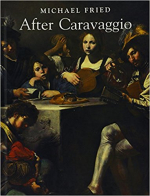
In early 1995, Michael Fried delivered the Una’s Lectures at the University of California, Berkeley. The Alumni Hall was packed for “Some Thoughts on Caravaggio” and “Caillebotte’s Impressionism,” and the spillover audience carried into the panel discussion with T. J. Clark and Richard Wollheim some days later on March 15. For many of us at the time, the appeal of Fried’s writing and lectures was primarily, as Clark put it, his “remarkable descriptions.”1 And remarkable they were. No one, I think, could ever look at Caravaggio or Gustave Caillebotte the same way after encountering his close reading of them (to say nothing of Chardin, Courbet, Eakins, Manet, or Menzel). But equally, there was a sense of engaged curiosity about Fried’s status as a by-then legendary art critic. Or at least, the possible link between the art historian and the art critic prompted what, for me, has remained the most interesting question posed at the panel discussion. How, Anne Wagner asked from the audience, might we understand the relation between these new accounts of Caravaggio and Caillebotte on the one hand and on the other hand the analysis of Minimalism in “Art and Objecthood”?
In part, Wagner’s question flowed from her work on the introduction to the 1995 edition of Gregory Battcock’s Minimal Art: A Critical Anthology.2 Taking its title from an essay by Wollheim, the book had long offered the most widely available, unexpurgated reprinting of “Art and Objecthood” since its original publication in the June 1967 issue of Artforum.3 The succinct editorial summary of the argument probably did as much as anything to determine the contours of its later reception.
more here.

There is one tangential remnant of the circus that thrills me to the bone, and that is the low-grade confectionary candy called Circus Peanuts. Circus Peanuts, as far as I can tell, have literally nothing to do with circuses, or even with peanuts. They are usually found on the bottom candy shelf at gas-station convenience marts or at some chain drug stores.
A Circus Peanut is a about two inches long, it is the anemic orange color of the astronauts’ favorite drink, Tang, and it has been machine stamped to vaguely resemble a shelled peanut. The most amazing thing about Circus Peanuts is they are always stale. Not rock-hard but weirdly deflated and tough. It is hard to make a marshmallow go stale. In my kitchen pantry, I have a bag of them that has seen me through four years of holiday yam casseroles, and they are still squishy and fresh. Therefore one can’t blame the problem with Circus Peanuts on the general pillowy constitution of the marshmallow. Maybe even more mysterious then the ubiquitous staleness is that, for no logical reason, Circus Peanuts are banana flavored. Real peanuts are none of these things.
I have a few theories.
more here.
Fran Blandy in Phys.Org:
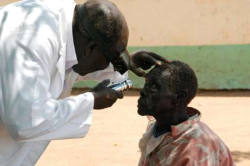 In the developing world, basic healthcare is often a challenge—let alone expensive medical screening or tests for easily treatable, preventable illnesses. TEDGlobal, an annual conference devoted to "ideas worth spreading" taking place in Tanzania this week, heard of new technologies that could revolutionise healthcare for the poor. Infectious diseases are fast being overtaken by afflictions such as cancer as the biggest health problem in Africa, where some countries have only one pathologist per one million people.
Sierra Leonean roboticist David Sengeh believes training more specialists is not enough, and is working with his team at IBM Africa on artificial intelligence (AI) algorithms that can predict a cancer's progression. AI software can be trained with a database of images to detect colour changes inside the cervix that point to patients at high risk for cervical cancer, which can be treated if caught in time, but which kills 60,000 women in Africa a year. Addressing a similar problem, Pratik Shah of the Massachusetts Institute of Technology (MIT) has developed a system to use simple cellphone or camera pictures—instead of expensive MRI or CT scans—to identify biomarkers that point to oral cancer. He told AFP that while AI systems typically need tens of thousands of data points to function, he has found a way to use only 50 images to train algorithms to identify a specific disease. "We believe our approach could be used to massively reduce the amount of data an AI algorithm currently consumes, and empower physicians to diagnose patients using simple images," he said. In the developing world, basic healthcare is often a challenge—let alone expensive medical screening or tests for easily treatable, preventable illnesses.
More here.
Raphael Minder in The New York Times:

Banksy is not among the participants, but many of Mr. Colsa’s truck painters, most of whom are Spanish, started out as street artists, though by now they have also exhibited in major galleries and museums. Abraham Lacalle, whose work has been shown at the Reina Sofía Museum here, painted what he called a truck’s “explosion,” inspired by thoughts of what could happen to the merchandise transported inside. Two years after completing his painting, Mr. Lacalle said in a phone interview that it was strange to see how trucks and vans had more recently also become associated with terrorism, after attacks in Nice, Berlin, London and, earlier this month, Barcelona. “I painted with some sense of humor, imagining what could happen to the content of a truck in movement,” he said. “Nobody was then thinking about trucks as a tool of terrorism, so a work that was meant to be fun could now unintentionally appear pretty provocative.”
More here.
I went out to the hazel wood,
Peter Singer in Project Syndicate:
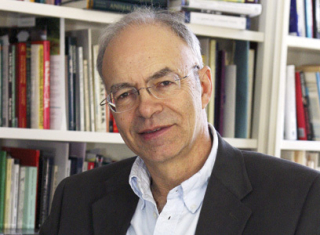
Such images convey, more than anything else, the idea that anti-racists are hooligans looking for a fight. Dignified nonviolent resistance and disciplined civil disobedience are more conducive to demonstrating a sincere ethical commitment to a better, non-racist society than clubbing people and hurling piss at them.
Violent resistance is particularly dangerous in the US because some states allow anyone to carry a firearm. In Charlottesville, a large number of white supremacists paraded through the streets dressed in camouflage and carrying semi-automatic assault rifles. If the antifa activists are going to match the racists in violence, will it be possible to hold the line at clubs? How long will it be before the deadly weapons now openly on display are also used?
More here.
Chad Orzel in Forbes:

The physics of thermodynamics, on the other hand, follows the opposite trajectory, at least initially. That is, when I find myself thinking more about what's going on in a process like boiling, knowing a little bit about the underlying physics makes it seem more magical. Even more so because there's minimal quantum content, just unimaginably vast numbers of particles interacting in a mostly classical way.
On a bulk level, boiling is just a manifestation of a phase transition in water: as you heat a container of water, eventually you reach a point where the water switches from liquid to gas.
More here.
Belen Fernandez at Al Jazeera:
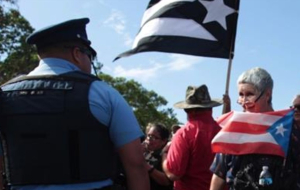
The island was charitably commandeered by the US in 1898 following the Spanish-American War, but the conferral of citizenship didn't take place until 1917 when, The Economist has noted, the move "conveniently allowed 20,000 [Puerto Ricans] to be drafted into service in the first world war the following year".
In addition to the luxury of being eligible to fight and die in every US war since, Puerto Ricans have enjoyed numerous other perks as Americans do.
In the 1940s and 50s, for example, there was a pretty cool law prescribing 10 years of jail time for anyone who said, sang, or whistledanything that could be construed as being against the US government.
Add to that a lengthy campaign of forced sterilisation of Puerto Rican women, the conversion of the Puerto Rican island of Vieques into a US military base and navy bombing range, and the suffocation of the local economy for the benefit of US corporate financial interests, and you wonder how Puerto Rico could possibly be better off independent.
More here.
Video length: 28:50
[Thanks to Ashutosh Jogalekar.]
David Cole in the NY Review of Books:
People who oppose the protection of racist speech make several arguments, all ultimately resting on a claim that speech rights conflict with equality, and that equality should prevail in the balance.* They contend that the “marketplace of ideas” assumes a mythical level playing field. If some speakers drown out or silence others, the marketplace cannot function in the interests of all. They argue that the history of mob and state violence targeting African-Americans makes racist speech directed at them especially indefensible. Tolerating such speech reinforces harms that this nation has done to African-Americans from slavery through Jim Crow to today’s de facto segregation, implicit bias, and structural discrimination. And still others argue that while it might have made sense to tolerate Nazis marching in Skokie in 1978, now, when white supremacists have a friend in the president himself, the power and influence they wield justify a different approach.
There is truth in each of these propositions. The United States is a profoundly unequal society. Our nation’s historical mistreatment of African-Americans has been shameful and the scourge of racism persists to this day. Racist speech causes real harm. It can inspire violence and intimidate people from freely exercising their own rights. There is no doubt that Donald Trump’s appeals to white resentment and his reluctance to condemn white supremacists after Charlottesville have emboldened many racists. But at least in the public arena, none of these unfortunate truths supports authorizing the state to suppress speech that advocates ideas antithetical to egalitarian values.
More here.
Sam Dresser in Aeon:
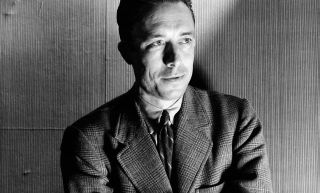
If the idea of freedom bound Camus and Sartre philosophically, then the fight for justice united them politically. They were committed to confronting and curing injustice, and, in their eyes, no group of people was more unjustly treated than the workers, the proletariat. Camus and Sartre thought of them as shackled to their labour and shorn of their humanity. In order to free them, new political systems must be constructed.
In October 1951, Camus published The Rebel. In it, he gave voice to a roughly drawn ‘philosophy of revolt’. This wasn’t a philosophical system per se, but an amalgamation of philosophical and political ideas: every human is free, but freedom itself is relative; one must embrace limits, moderation, ‘calculated risk’; absolutes are anti-human. Most of all, Camus condemned revolutionary violence. Violence might be used in extreme circumstances (he supported the French war effort, after all) but the use of revolutionary violence to nudge history in the direction you desire is utopian, absolutist, and a betrayal of yourself.
‘Absolute freedom is the right of the strongest to dominate,’ Camus wrote, while ‘absolute justice is achieved by the suppression of all contradiction: therefore it destroys freedom.’ The conflict between justice and freedom required constant re-balancing, political moderation, an acceptance and celebration of that which limits the most: our humanity. ‘To live and let live,’ he said, ‘in order to create what we are.’
More here.
Julian Young in the TLS:
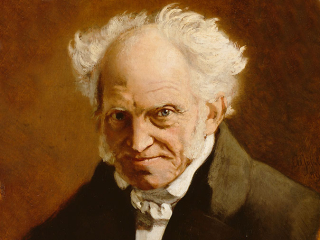
Schopenhauer’s discovery that the underlying “essence” of life is will is not a happy one. For, as the second of the Buddha’s “Four Noble Truths” tells us, to will is to suffer. What follows, as the first of the “Truths” tells us, is that life is suffering, from which Schopenhauer concludes that “it would be better for us not to exist”. He offers two main arguments in support of the claim that to will is (mostly) to suffer, the first of which I shall call the “competition argument” and the second the “stress-or-boredom argument”.
The world in which the will – first and foremost the “will to life” – must seek to satisfy itself, the competition argument observes, is a world of struggle, of “war, all against all” in which only the victor survives. On pain of extinction, the hawk must feed on the sparrow and the sparrow on the worm. The will to life in one individual has no option but to destroy the will to life in another. Fifty years before Darwin, Schopenhauer observes that nature’s economy is conserved through overpopulation: it produces enough antelopes to perpetuate the species but also a surplus to feed the lions. It follows that fear, pain and death are not isolated malfunctions of a generally benevolent order, but are inseparable from the means by which the natural ecosystem preserves itself.
It is true that with respect to the human species, civilization has somewhat ameliorated the red-in-tooth-and-claw savagery of nature. Yet, in essence, human society, too, is an arena of competition. If one political party gains power another loses it, if one individual gains wealth another is cast into poverty. As the Romans knew, homo homini lupus, man is a wolf to man: “the chief source of the most serious evils affecting man is man”.
More here.
David Hugh Smith in The Christian Science Monitor:
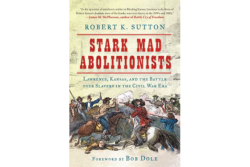
Lawrence quickly involved himself in the Massachusetts Emigrant Aid Company, an organization created to encourage and enable people opposed to slavery to move to the territory of Kansas. It was hoped that sufficient antislavery advocates would settle there to vote for it to become a “free state.” Far from being “stark mad,” Lawrence himself was a generous man of quiet temperament. Ironically, he and his family “made their fortunes from buying, selling, and producing textiles, mostly made of cotton” picked by slaves in the South. Sutton tells how Lawrence, as treasurer of the Emigrant Aid Company, paid a large portion of company costs, to the point where his own resources were dangerously depleted. Under his direction, a promising tract of land was found “near where the Wakarusa River entered the Kansas River, about forty miles west of the Missouri line.” On Aug. 1, 1854, the first settlers camped there. In recognition of Lawrence’s enormous contribution, the new town was named “Lawrence.” Early on, “[t]he Emigrant Aid Company clearly had not prepared for the settlers it was encouraging to emigrate to Kansas.” Many quickly returned to home, dismayed by the rigors of a community where homes initially were made from straw.
More here.
Adam Kucharski in Nautilus:
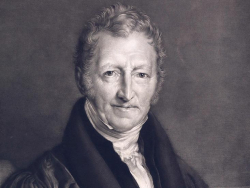
That didn’t happen, of course. By 1900, the British population had swelled only fivefold, to 35 million citizens, most of them well fed. But Malthus foresaw the possibility of this slowdown in growth, too. To prevent populations from booming and busting—the infamous “Malthusian catastrophe”—he said that Nature imposed two types of checks. “Preventive” checks reduced the birth rate: When times were hard, and food scarce, men—particularly poor men—would foresee the troubles ahead and delay getting married and starting families. “Positive” checks—famine, disease, murder, war—increased the death rate. Once food production caught up with demand, however, strife would lessen and families would grow. Thus the “grinding law of necessity, misery, and the fear of misery” kept the size of a population oscillating in sync with supply. To his critics’ disgust, Malthus used this theory to argue against England’s Poor Laws, which provided welfare to needy families according to the number of children they had. Why encourage the poor to procreate, he argued, when Nature will turn around and trample them?
More here.
Hay for the Horses
He had driven half the night
From far down San Joaquin
Through Mariposa, up the
Dangerous Mountain roads,
And pulled in at eight a.m.
With his big truckload of hay
behind the barn.
With winch and ropes and hooks
We stacked the bales up clean
To splintery redwood rafters
High in the dark, flecks of alfalfa
Whirling through shingle-cracks of light,
Itch of haydust in the
sweaty shirt and shoes.
At lunchtime under Black oak
Out in the hot corral,
—The old mare nosing lunchpails,
Grasshoppers crackling in the weeds—
“I’m sixty-eight” he said,
“I first bucked hay when I was seventeen.
I thought, that day I started,
I sure would hate to do this all my life.
And dammit, that’s just what
I’ve gone and done.”
by Gary Snyder
from Riprap and Cold Mountain Poems
North Point Press
.
Davide Castelvecchi in Nature:

Rumours to that effect are spreading fast online, much to researchers’ excitement. Such a detection could mark a new era of astronomy: one in which phenomena are both seen by conventional telescopes and ‘heard’ as vibrations in the fabric of space-time. “It would be an incredible advance in our understanding,” says Stuart Shapiro, an astrophysicist at the University of Illinois at Urbana–Champaign.
Scientists who work with gravitational-wave detectors won’t comment on the gossip because the data is still under analysis. Public records show that telescopes around the world have been looking at the same galaxy since last week, but astronomers caution that they could have been picking up signals from an unrelated source.
As researchers hunt for signals in their data, Nature explains what is known so far, and the possible implications of any discovery.
More here. [Thanks to Farrukh Azfar.]
Leighton Woodhouse:
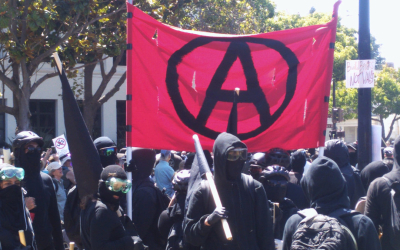
In one case, as a crowd of non-Black Bloc protesters yelled at the assailants to let their victim go, an Antifa activist yelled, “He’s a Nazi!” over and over again, justifying the assault. Then, abruptly, maybe after realizing that the victim was not, in fact, a white nationalist, he changed his mantra. “He doesn’t have to be a Nazi!” he now shouted. The suggestion was that even if the victim wasn’t a fascist, he still deserved to be beaten. For what was unclear. Maybe because he supported Trump? Or he objected to Antifa’s tactics? Or refused to do something they ordered him to do? Who knew? The only thing those of us watching from a few yards away could tell was that a man, by himself, was on the ground, with a bloodied face, covering his head with his arms, being kicked and punched by a group of masked people, who were shielded by dozens of their comrades. My guess is that a lot of the Antifa people in the crowd who were passively assisting in the violence, including the guy yelling that he was a Nazi, didn’t know anything more than that, either.
More here.
Video length: 7:04
Video length: 8:30
[Thank to Ali Minai.]