
Enjoying the content on 3QD? Help keep us going by donating now.
Category: Recommended Reading
How to Be Healthy at 100: Centenarian Stem Cells Could Hold the Key
Shelly Fan in Singularity Hub:
 When Jeanne Calment died at the age of 122, her longevity had researchers scratching their heads. Although physically active for most of her life, she was also a regular smoker and enjoyed wine—lifestyle choices that are generally thought to decrease healthy lifespan.
Teasing apart the intricacies of human longevity is complicated. Diet, exercise, and other habits can change the trajectory of a person’s health as they grow older. Genetics also plays a role—especially during the twilight years. But experiments to test these ideas are difficult, in part because of our relatively long lifespan. Following a large population of people as they age is prohibitively expensive, and results could take decades. So, most studies have turned to animal aging models—including flies, rodents, and dogs—with far shorter lives.
But what if we could model human “aging in a dish” using cells derived from people with exceptionally long lives?
More here.
Enjoying the content on 3QD? Help keep us going by donating now.
Reading through bad feeling
Garth Greenwell in The Yale Review:
 I came to all of Jane Austen’s novels late, and to Persuasion particularly so, finally discovering it in a graduate seminar on the long eighteenth century. By that time, I had fallen in love with Austen, with her comedy and her depth as a moral thinker, above all with her humaneness, the tenderness that doesn’t cancel out but nevertheless subsumes the prickly, arch, almost always delightful critique she aims at her characters, even the characters she obviously intends us to admire. So I remember my shock when, in a novel that had already won me over and that I continue to love, I came upon one of the cruelest passages in any of the books I know. It comes in chapter eight; Anne Elliot and Captain Wentworth are visiting the Musgroves. Anne and Wentworth were once in love, until Anne (under persuasion) called things off; now, for the first time in years, they’re running in the same circles again. Wentworth is bitter, and pointedly cold; in this moment they’re further separated, perched on the same sofa but with their hostess—“no insignificant barrier”—between them.
More here.
Enjoying the content on 3QD? Help keep us going by donating now.
Tuesday Poem
Ode to Skateboard-Guy Who Took Munitions from ICE
in LA, Walked Away and Flipped Them Off
You look like half my friends from 1994.
Baggy pants, bulked sweatshirt,
beanie, or backward cap (can’t tell
through the haze) and double shoulder-strapped
Jensen backpack. Board in hand,
walking down the street like the street
is an old friend who kissed your girl
and you want to rough him up but not enough
to lose a friend cause she’ll likely leave one day.
You strut straight up to the lCE-line, Guard-line, LAPD—
who can tell at this point, uniforms beget
uniforms, masked faces moving in the name
of hauling day laborers out of Home Depot
men, fathers, hoping for a few work hours,
a day’s wage, trying to build something.
The cops don’t hesitate firing gas, pepper, rubber
bullets, at you, one baggy man lugging
his board, and you stand as if dared, holding
ground, then parade away through powder and smoke.
In the name of humans living out the abstractions
tossed like tickertape—hope, opportunity, freedom—
actually living, a body buying buckets of nails
and 2x4s in that orange warehouse, filling
a flat cart, swiping a debit card, wearing
Carhart jeans, a sweatshirt, a backwards cap,
wrist grabbed while sticking a wallet back
in his back pocket, the whip of image fliting
across his thoughts of his daughter walking
through the door, home from school,
his wife unpacking from a day of processing
numbers or food then he’s gone, swallowed
by cement: that body is body and ideal.
That body is any body. Making a life is to foster
enchantment in nails, cut lumber, the belief
that working hard will actually pay off. How many
who love freedom have the courage to stand firm
on another country’s ground? To find hope in hammers,
in a single finger and a slightly slouched shoulder?
by Jeremy Voigt
Enjoying the content on 3QD? Help keep us going by donating now.
On Hiroshi Shimizu
Alex Kong at n+1:
 In matters of style, diligence is usually understood to be antithetical to spontaneity. This is the conventional wisdom when it comes to cinematic style too, and among viewers in the West, Japanese cinema in particular tends to be thought of as the effusive outpouring of maverick auteurs—iconoclasts raging against the machine and rejecting commercial constraints to protect their cherished individuality. So it can be surprising that many of that tradition’s great achievements in fact emerged from an industrial studio system built around mass production. Ozu and Mizoguchi, for instance, were above all journeymen directors for large studios, working under a mandate to churn out product at scale, and Naruse, too, was known as a faithful employee who always finished his films under budget and never said no to an assignment; needless to say, these conditions didn’t stop them from creating masterpieces. One of their colleagues was the woefully overlooked Hiroshi Shimizu, who made at least 163 films over the course of a career that spanned the silent era and the talkies. The assembly-line conditions don’t seem to have been especially onerous for him: “I’m going to make only three films the way the company wants me to,” Shimizu said in 1935, “and in exchange I can make two films that I want.”
more here.
Enjoying the content on 3QD? Help keep us going by donating now.
Monday, June 16, 2025
$50,000 Berggruen Prize Essay Competition
From the website of the Berggruen Institute:
 The annual Berggruen Prize Essay Competition seeks to stimulate new thinking and innovative concepts while embracing cross-cultural perspectives across fields, disciplines, and geographies. By posing fundamental philosophical questions of significance for both contemporary life and for the future, the competition will serve as a complement to the Berggruen Prize for Philosophy & Culture, which recognizes major lifetime achievements in advancing ideas that have shaped the world.
The competition awards a prize of $50,000 USD for essays submitted in English and $50,000 USD for essays submitted in Chinese. An award ceremony will be hosted, and the winning essays will be published to give readers insight into perspectives of both East and West.
The inspiration for the competition originates from the role essays have played in the past, including the essay contest held by the Académie de Dijon. In 1750, Jean-Jacques Rousseau’s essay Discourse on the Arts and Sciences, also known as The First Discourse, won and notably marked the onset of his prominence as a profoundly influential thinker. Similarly, our competition aspires to create a platform for groundbreaking ideas and intellectual innovation.
More information here.
Enjoying the content on 3QD? Help keep us going by donating now.
By mathematically proving how individual molecules create the complex motion of fluids, three mathematicians have illuminated why time can’t flow in reverse
Leila Sloman in Quanta:
 At the turn of the 20th century, the renowned mathematician David Hilbert had a grand ambition to bring a more rigorous, mathematical way of thinking into the world of physics. At the time, physicists were still plagued by debates about basic definitions — what is heat? how are molecules structured? — and Hilbert hoped that the formal logic of mathematics could provide guidance.
On the morning of August 8, 1900, he delivered a list of 23 key math problems to the International Congress of Mathematicians. Number six: Produce airtight proofs of the laws of physics.
The scope of Hilbert’s sixth problem was enormous. He asked “to treat in the same manner [as geometry], by means of axioms, those physical sciences in which mathematics plays an important part.”
His challenge to axiomatize physics was “really a program,” said Dave Levermore(opens a new tab), a mathematician at the University of Maryland. “The way the sixth problem is actually stated, it’s never going to be solved.”
But Hilbert provided a starting point.
More here.
Enjoying the content on 3QD? Help keep us going by donating now.
Emily Feng & Ken Roth: The cost of control in Xi Jinping’s China
Enjoying the content on 3QD? Help keep us going by donating now.
Novel Approaches: ‘Aurora Leigh’ by Elizabeth Barrett Browning
Enjoying the content on 3QD? Help keep us going by donating now.
Francis Fukuyama: AI’s existential threat to humanity is real. Can we resist the temptation?
Francis Fukuyama at Persuasion:
 As I’ve learned more about what the future of AI might look like, I’ve come to better appreciate the real dangers that this technology poses. There were always two ways in which AI could be misused. The first is happening now: AI technologies like deep fakes are already widely in circulation. My Instagram feed is full of videos of things I am sure never happened like catastrophic building collapses or MAGA celebrities explaining how wrong they were. It is, however, nearly impossible to verify whether or not they are real. This kind of manipulation is going to further undermine trust in institutions and exacerbate polarization. There are plenty of other malign uses to which sophisticated AI can be put, like raiding your bank account and launching devastating cyber-attacks on basic infrastructure. Bad actors are everywhere.
The other kind of fear, which I always had trouble understanding, was the “existential” threat AI posed to humanity as a whole. This seemed entirely in the realm of science fiction. I did not understand how human beings would not be able to hit the “off” switch on any machine that was running wild. But having thought about it further, I think that this larger threat is in fact very real, and there is a clear pathway by which something disastrous could happen.
More here.
Enjoying the content on 3QD? Help keep us going by donating now.
On Esther Mahlangu and Ndebele Art
Percy Zvomuya at Artforum:
 IF THE CHOICE were up to Zimbabwe, it would pursue a path independent of South Africa, the powerful and domineering neighbor across the Limpopo River to its south. Yet, because of fate, history, and the accidents of geography, the most significant forces that shaped modern Zimbabwe and its predecessor, Southern Rhodesia, came from across the frontier. In the 1820s, a fugitive general named Mzilikazi, fleeing the Zulu warrior-king Shaka, crossed the border from present-day KwaZulu-Natal (on the southeast Indian Ocean coast), where he would found the Ndebele state. In 1890 came the colonial encroachment by British–South African empire man Cecil John Rhodes, after whom the country was named. Zimbabwe and South Africa share in Rhodes a common ancestor; in Ndebele a language with a close connection to Zulu (the most spoken language in South Africa); and the common visual vocabulary sometimes called Ndebele art.
Ndebele art involves geometric motifs painted on the walls of houses using dung, limestone, red clays, soot, ash, and other natural pigments. The art was popularized by the South African artist Esther Mahlangu, whose show this year, “Then I Knew I Was Good at Painting,” was being held at the Wits Art Museum, in Johannesburg, when I visited; around the same time, the National Gallery in Bulawayo, Zimbabwe’s second city, was hosting the exhibition “Matobo Goes Fashion . . . and Beyond.”
more here.
Enjoying the content on 3QD? Help keep us going by donating now.
The Catch in Catching Cancer Early
Siddhartha Mukherjee in The New Yorker:
 The discovery began, as many breakthroughs do, with an observation that didn’t quite make sense. In 1948, two French researchers, Paul Mandel and Pierre Métais, published a little-noticed paper in a scientific journal. Working in a laboratory in Strasbourg, they had been cataloguing the chemical contents of blood plasma—that river of life teeming with proteins, sugars, waste, nutrients, and cellular debris. Amid this familiar inventory, they’d spotted an unexpected presence: fragments of DNA drifting freely.
The finding defied biological orthodoxy. DNA was thought to remain locked inside the nuclei of cells, and not float around on its own. Stranger still, these weren’t whole genomes but broken pieces—genetic flotsam cast adrift from an unknown source. Mandel and Métais weren’t sure what to make of it. The scientific community, equally perplexed, largely ignored the paper for more than a decade. But biological mysteries rarely remain buried.
More here.
Enjoying the content on 3QD? Help keep us going by donating now.
Mice with human cells developed using ‘game-changing’ technique
Smriti Mallapaty in Nature:
‘Crazy’ experiment
 The team used reprogrammed stem cells to grow human organoids of the gut, liver and brain in a dish. Shen says the researchers then injected the organoids into the amniotic fluid of female mice carrying early-stage embryos. “We didn’t even break the embryonic wall” to introduce the cells to the embryos, says Shen. The female mice carried the embryos to term.
“It’s a crazy experiment; I didn’t expect anything,” says Shen.
Within days of being injected into the mouse amniotic fluid, the human cells begin to infiltrate the growing embryos and multiply, but only in the organ they belonged to: gut organoids in the intestines; liver organoids in the liver; and cerebral organoids in the cortex region of the brain. One month after the mouse pups were born, the researchers found that roughly 10% of them contained human cells in their intestines — making up about 1% of intestinal cells.
More here.
Enjoying the content on 3QD? Help keep us going by donating now.
Isolationism Old And New
Ben Chu at Aeon Magazine:
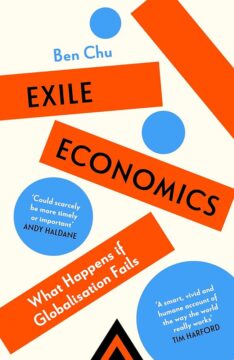 Yet it’s futile to deny that the impulse to self-sufficiency – to economic unsociability – also reaches very deep into our psyches and our history. What’s most striking about autarky is its adaptability as a programme and an ideology. It can appeal impressively across seemingly opposing political, social and ideological lines. It’s been adopted, at various times, by political movements on the Left and the Right, by believers and atheists, by nationalists and cosmopolitans, by fascists and communists, by rich states and poor states, by imperial powers and the colonised, by environmentalists and industrialists. It can be justified by the objective of peace or the demands of war. Any unit – from the individual, to the household, to the village, to the city, to the nation – can apparently aspire to self-sufficiency. It can be borne of a backward-looking nostalgia – a desire to turn the clock back or preserve the status quo – or of a belief that it’s a progressive and necessary programme to build the future. Like a historical El Niño weather pattern, the drive for self-sufficiency keeps returning, unpredictably but, also, seemingly inevitably.
more here.
Enjoying the content on 3QD? Help keep us going by donating now.
Sunday, June 15, 2025
3 Quarks Daily Is Looking For New Columnists
 Dear Reader,
Here’s your chance to say what you want to the large number of highly educated readers that make up 3QD’s international audience. Several of our regular columnists have had to cut back or even completely quit their columns for 3QD because of other personal and professional commitments and so we are looking for a few new voices. We do not pay, but it is a good chance to draw attention to subjects you are interested in, and to get feedback from us and from our readers.
We would certainly love for our pool of writers to reflect the diversity of our readers in every way, including gender, age, ethnicity, race, sexual orientation, etc., and we encourage people of all kinds to apply. And we like unusual voices and varied viewpoints. So please send us something. What have you got to lose? Click on “Read more” below…
NEW POSTS BELOW
Sly Stone (1943 – 2025) Musician, Songwriter, Family Stone
Enjoying the content on 3QD? Help keep us going by donating now.
Brian Wilson (1942 – 2025) Singer, Songwriter, Beach Boy
Enjoying the content on 3QD? Help keep us going by donating now.
Wayne Lewis (1957 – 2025) Singer, Keyboardist, Atlantic Starr
Enjoying the content on 3QD? Help keep us going by donating now.
Sunday Poem
grace
flit
of shadows –
geese passing above
squirrel
looks up
from a bite
of fallen apple
light comes
all that
long way
to bring
this day.
Enjoying the content on 3QD? Help keep us going by donating now.
Bats Don’t Get Cancer—and That Could Be a Big Deal for Humans
Luis Prada in Vice:
 The scientific world has known for some time now that bats are impossible. They can live up to 25 years (some, way, way longer) and they rarely develop cancer. That is especially impressive considering how cancer is something that is almost guaranteed to happen to anything that makes it to the farthest reaches of old age. Why, though, is something we’ve never fully understood. But, according to new research from scientists at the University of Rochester, we might finally be gaining a clearer understanding of a bat’s long life and cancer resistance.
The team, led by biologists Vera Gorbunova and Andrei Seluanov, found that bats are operating with beefed-up versions of a gene we humans also have, called p53. This tumor-suppressor gene regulates apoptosis, aka cell death. The bat version of it is one tough bastard, able to swat away cancer like it was a bothersome fly. Little brown bats even have two copies of it, making them natural-born cancer killers.
Enjoying the content on 3QD? Help keep us going by donating now.