
Enjoying the content on 3QD? Help keep us going by donating now.
Category: Recommended Reading
Phenomenology of a Kiddie Ride
Leann Davis Alspaugh at the Hedgehog Review:
 According to the Stanford Encyclopedia of Philosophy, phenomenology is defined as the study of “the structure of various types of experience ranging from perception, thought, memory, imagination, emotion, desire, and volition to bodily awareness, embodied action, and social activity, including linguistic activity. The structure of these forms of experience typically involves what Husserl called ‘intentionality,’ that is, the directedness of experience toward things in the world, the property of consciousness that it is a consciousness of or about something.” That’s quite a load for a kiddie ride but let’s turn Porky loose and see what he can do.
As we have already seen, Porky the kiddie ride has a cultural history: a place in time and a role in people’s lives. He represents a technological innovation that deploys mechanics and electricity for entertainment purposes. He holds a place in popular imagination both as a character and as an amusement.
more here.
Enjoying the content on 3QD? Help keep us going by donating now.
Are Young People Having Enough Sex?
Jia Tolentino at The New Yorker:
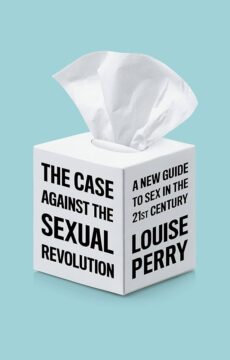 The virgin allegations emerged about a decade ago. Young people “are so sexually inactive that it practically boggles the mind,” a writer for Bustle proclaimed, in 2016, invoking a then recent study that suggested that celibacy had lately doubled among people in their early twenties. Two years later, The Atlantic gave this evident trend its working name, with a cover story on “The Sex Recession.” (The illustration: a bird and a bee turned away from each other, looking both sullen and shy.) The youth had stopped fucking. They were a “new generation of prigs, prudes, and squares,” a blog declared; they were “anxious, lonely and addicted to porn,” according to the Telegraph. They were dragging the rest of the population down with them, the Washington Post argued, blaming the “Great American Sex Drought” on young people, and particularly young men, for being losers, more or less—having no girlfriends, living with their parents, preferring video games and social media to real, live, naked bodies.
This, it should be noted, was not your typical kids-these-days hand-wringing. Traditionally, it is the role of the old to worry that the young are having sex too much. In the nineteen-twenties, society’s elders panicked about flappers fornicating in speakeasies; the sixties prompted fears of love cults and orgies; the eighties brought a new wave of AIDS-centered gay panic.
more here.
Enjoying the content on 3QD? Help keep us going by donating now.
Friday Poem
Just Jazz
Last summer I became a bird
plucked straw from the fields
plundered cotton from old chairs
to make a quiet nest
Fluttered in fountains
twittered when cats were near
dug Miles and Trane for sustenance
and Billie Holiday
No problem
No sweat
just Jazz
by Nikki Giovanni
from Blues For All The Changes
William Morrow and Company, 1999
Enjoying the content on 3QD? Help keep us going by donating now.
Thursday, June 26, 2025
André Aciman on Love, Loss & Longing
Enjoying the content on 3QD? Help keep us going by donating now.
Laura Raicovich: This Is the Story of My Resignation From the Queens Museum
Laura Raicovich at Hyperallergic:
 I don’t tell this story often, and have never told it in such detail publicly before. However, given our current moment of crisis in the United States, only a few months into the second Trump administration, it seems an important story to tell. It is a set of experiences that were horrible to live through, and yet, I would not be the person I am today had they not happened. Ultimately, the story is about power, leverage, and fear, and also about the potential for solidarity and love.
When Donald Trump was elected President of the United States in November 2016, I had been the director of New York’s Queens Museum for less than a year. Even in those early months, it was clear that the rhetoric and policies he, his campaign, and administration were promoting presented material threats not only to the populations who interacted with the museum most regularly, but also to many members of the team at the museum. As we gathered the morning after the election at our regular 9am staff meeting, many of us with tears in our eyes, we recognized the realities that we would confront in short order, and that would presage our current crisis in 2025.
More here.
Enjoying the content on 3QD? Help keep us going by donating now.
Notes Toward a Supreme Fiction
Dean Flower at the Hudson Review:
 We may still wonder why Balzac occupied so much space in James’s writing career and particularly in The Prefaces. In temperament and method the two were poles apart. But Balzac had come to represent for James something primal, fundamentally generative—more a natural phenomenon than an individual. The sculptor Gloriani, who appears in James’s first novel, Roderick Hudson, reappears in The Ambassadors, at the center of his garden in Paris, a man in touch with “the great world,” Strether thinks, a figure who has “something covertly tigerish” about him, compelling a stab of envy and admiration for “the glossy male tiger, magnificently marked.” This is the moment when Strether realizes, and tells little Bilham, “Live now! Live all you can; it’s a mistake not to . . . Live!” It’s difficult here to ignore Balzac as Gloriani’s progenitor, the figure that kept telling James to embrace life with more vital courage—and greater response to its magnificence. Gloriani appears again in “The Velvet Glove,” a short story of 1909, but he’s also present in metaphors like the beast in “The Beast in the Jungle,” in which John Marcher waits passively for Life’s big revelation to seize him—that was Strether’s mistake, too. Think of Balzac again when you read about James visiting Edith Wharton at The Mount in 1904 and reading aloud together Walt Whitman’s celebrations of “The Body Electric” with unselfconscious joy.
more here.
Enjoying the content on 3QD? Help keep us going by donating now.
André Aciman’s Permanent Vacation
Crispin Long at The Baffler:
 In the novels of André Aciman, characters are rarely burdened with anything so tawdry as an office job. If they do have one, as in the case of two well-heeled lovers in Room on the Sea, the central novella in his middling new collection of three, it hovers lightly in the background, providing ample funds to spend in cafés and on seaside hotels. Paul, a recently retired lawyer, and Catherine, a therapist, meet in New York City at jury duty, that wearisome disruptor of routine. Their first exchange recalls a pair of teenagers testing each other’s recently acquired knowledge of moderately successful indie bands. Paul, who is leafing through the Wall Street Journal, tries to glimpse the title of the novel resting on Catherine’s knee. It’s Wuthering Heights, she tells him, “thinking perhaps that he’d probably never heard of it.”
As it turns out, Paul has read it—twice. He shares with Catherine his insider tricks for subtly evading jury selection, and soon they’re eating lunch together at a Chinese restaurant nearby, making thinly veiled digs at their respective spouses and exchanging banalities with disproportionate giddiness.
more here.
Enjoying the content on 3QD? Help keep us going by donating now.
The sapient paradox: Why did prehistoric humans wait millennia to start civilization?
Tim Brinkhof at Big Think:
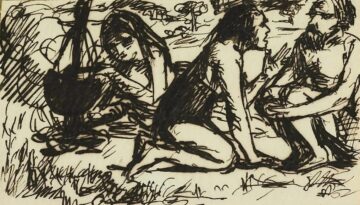 The most significant developments in society and technology have all occurred over the past 10,000 years or so. That includes the agricultural, scientific, industrial, and digital revolutions, not to mention the dawn of religion, money, and any of the other symbolic concepts that separate Homo sapiens from other species.
We don’t know much about human activities beyond 10,000 years ago. But we do know that prehistoric people were genetically and intellectually equivalent to modern humans; research indicates that the level of intelligence required for history’s major societal and technological advancements evolved as early as 60,000 years ago when our ancestors began migrating out of Africa.
This begs the question: What took us so long? Why did humans spend 50,000 years (or more) in seemingly uneventful prehistory — with hunter-gatherers living the exact same way across thousands of generations — before starting on the trajectory that took us from cave paintings to (almost) self-driving cars in the comparative blink of an eye?
More here.
Enjoying the content on 3QD? Help keep us going by donating now.
Sabine Hossenfelder: AI’s “Intelligence Explosion” Is Coming, Here’s What That Means
Enjoying the content on 3QD? Help keep us going by donating now.
The Return of Shameless Shareholder Capitalism
Christopher Marquis at Project Syndicate:
 In 2019, the Business Roundtable, an association of the United States’ most powerful CEOs, won widespread praise by announcing its commitment to “stakeholder capitalism,” which delivers value not only to shareholders, but also to other affected actors, such as employees and communities. Now, however, the Business Roundtable has changed its tune: its April report, “The Need for Bold Proxy Process Reforms,” reads almost like a manifesto against stakeholder capitalism.
The reason for this volte-face is obvious. The Roundtable’s 2019 “commitment” was a clear attempt to get on the right side of popular sentiment: engagement with social and environmental issues was up, and so were demands that powerful institutions get on board. But the political mood has changed. At a time when Americans are preoccupied with intensifying pressures on their own pocketbooks, US President Donald Trump’s second administration is actively rejecting environmental and social issues. For many CEOs, this looks like a golden opportunity.
More here.
Enjoying the content on 3QD? Help keep us going by donating now.
The Anatomy of Mamdani’s Political Earthquake
Michael Lange in The New York Times:
 Five years ago, at the height of the Covid-19 pandemic, Andrew Cuomo was at the apex of his political power, watched by millions as he delivered daily televised briefings as the governor of New York. Zohran Mamdani, a then-unknown 28-year-old, was running for State Assembly as a democratic socialist in the gentrifying Western Queens neighborhood of Astoria. He would prevail by fewer than 500 votes.
Many flirted with the idea that Mr. Cuomo, a national media star, would replace Joe Biden on the Democratic ticket or run for president in 2024. Ultimately, charges of sexual harassment by 11 women led to Mr. Cuomo’s fall from grace and flight from Albany. At the time, he apologized, but during this year’s mayoral campaign in New York City, he has denied wrongdoing and dismissed the accusations as political. Mr. Cuomo was using the Democratic primary as a vehicle to attempt a comeback and resuscitate his political career.
More here.
Enjoying the content on 3QD? Help keep us going by donating now.
Everyday painkiller made from plastic — by E. coli
Rita Aksenfeld in Nature:
 A common bacterium can be adapted to convert plastic waste into paracetamol, a study published this week in Nature Chemistry1 reports. Paracetamol, also known as acetaminophen, is widely used to treat pain and fever. It is produced from molecules derived from fossil fuels, but researchers are working to develop processes that use more sustainable source molecules, such as plastic waste. “We’re able to transform a prolific environmental and societal waste into such a globally important medication in a way that’s completely impossible using chemistry alone or using biology alone,” says co-author Stephen Wallace, a chemical biotechnologist at the University of Edinburgh, UK.
Central to the project’s success was the discovery by Wallace and his team that a synthetic chemical reaction that typically requires conditions that are toxic to cells can occur in their presence. The reaction, called the Lossen rearrangement, has been known for over a century, but had previously been observed only in a test tube or a flask, says Wallace.
More here.
Enjoying the content on 3QD? Help keep us going by donating now.
Wednesday, June 25, 2025
Explaining psychology’s most important theory
Huw Green in The Guardian:
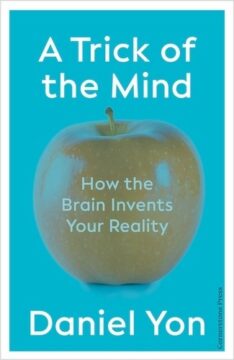 A century ago, someone with an interest in psychology might have turned to the work of Freud for an overarching vision of how the mind works. To the extent there is a psychological theory even remotely as significant today, it is the “predictive processing” hypothesis. The brain is a prediction machine and our perceptual experiences consist of our prior experiences as well as new data. Daniel Yon’s A Trick of the Mind is just the latest popularisation of these ideas, but he makes an excellent guide, both as a scientist working at the leading edge of this field and as a writer of great clarity. Your brain is a “skull bound scientist”, he proposes, forming hypotheses about the world and collecting data to test them.
The fascinating, often ingenious research reviewed here is sorely in need of an audience beyond dusty scientific journals.
More here.
Enjoying the content on 3QD? Help keep us going by donating now.
Douglas Hofstadter on Strange Loops, Beauty, Free Will, AI, God, Utopia and Gaza
John Horgan at his own website:
Horgan: I believe in free will, and it distresses me that you don’t. Can you give me one reason why I shouldn’t believe in free will?
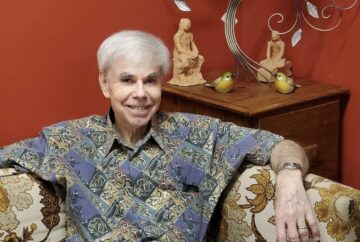 Hofstadter: One does what one’s desires determine one to do. I, like everyone else, am filled with conflicting desires, and they fight it out inside my brain, and the fight’s winner determines what I will do. Last weekend, for instance, I was of two minds about whether or not to go to the “No Kings” demonstration here in Bloomington. Part of me wanted very much to be part of the collective action against all the forces of evil that have taken over this country, but another part of me wanted very much to work on a personal project that is super-important to me. These forces inside me battled, and in the end, the go-to-the-rally force just barely beat out the work-on-your-project force, and so I went (and I’m glad I did). I “decided” to do so in the sense that the two above-described intense desires battled it out inside of me, and the stronger of them won. There was no freedom there; it was just a battle to see which desire was stronger. (In case you want to read more on this, I spell these ideas out somewhat more fully in Chapter 23 of I Am a Strange Loop.)
More here.
Enjoying the content on 3QD? Help keep us going by donating now.
Fraser Cain: The Challenge/Promise of AI & Science Communication
Enjoying the content on 3QD? Help keep us going by donating now.
Zohran Mamdani stuns Andrew Cuomo in NYC Mayoral Primary!
Some good political news for a change: Emma G. Fitzsimmons and Nicholas Fandos in the NY Times:
 Zohran Mamdani, a little-known state lawmaker whose progressive platform and campaign trail charisma electrified younger voters, stunned former Gov. Andrew M. Cuomo in the Democratic primary for mayor of New York City on Tuesday night, building a lead so commanding that Mr. Cuomo conceded.
Mr. Mamdani, a 33-year-old democratic socialist from Queens, tapped into a current of anxiety around New York City’s growing affordability crisis. His joyful campaign brought new voters into the fold who rejected the scandal-scarred Mr. Cuomo’s ominous characterizations of the city and embraced an economic platform that included everything from free bus service and child care to publicly owned grocery stores.
Enjoying the content on 3QD? Help keep us going by donating now.
Evolution vs. Religion: Anything New?
Enjoying the content on 3QD? Help keep us going by donating now.
The Importance Of The Pyrope Garnet
Marcia Bjornerud at Noema Magazine:
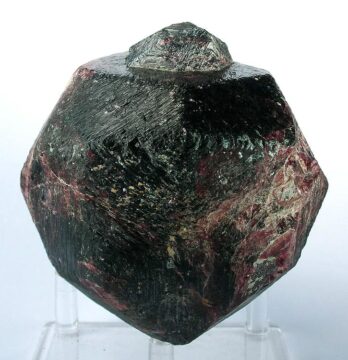 Garnets, however, are the true fruit of the underworld. They occur in a variety of colors, not just red, and all of them have colorful properties and histories. Calcium-aluminum garnet is called grossular, from the Latin name for gooseberry, a reference to its translucent pink to pale green hue. Calcium-chromium garnet is a rare grass-green variety named uvarovite, after Count Sergey Uvarov (1786-1855), who, when not busy with his duties as a statesman under Russian Emperor Nicholas I, spent his time collecting unusual minerals. These calcium-rich varieties of garnet are most commonly found in marbles and “skarns” — rocks formed by the metamorphism of limestones interbedded with shale and sandstone.
Iron-aluminum garnets, whose red shades toward purple, are called almandine, a reference to Alabanda, an ancient city in Turkey. (I prefer almandine to an older term, “carbuncle,” used by the Roman natural philosopher Pliny the Elder, whose geologic curiosity led to his death in the eruption of Vesuvius in 79.) Almandine garnets are the most common type in schists — the metamorphic equivalent of shales, clay-rich sedimentary rocks.
more here.
Enjoying the content on 3QD? Help keep us going by donating now.
Edward Burra’s Tour Of The 20th Century
Michael Prodger at the New Statesman:
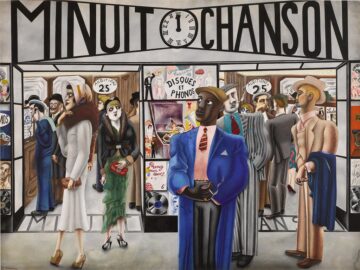 Burra’s hard-to-categorise career is the subject of an immaculate and revealing new exhibition at Tate Britain. It shows a man whose art reflected a rare sense of engagement with his times, especially its queer fringes. The works of the 1920s and 1930s treat his experiences in France and New York and verge on both satire and caricature. Burra used watercolour almost as oil paint and built up layers to give unusual depth of colour and subtle gradations.
It was a technique he employed in teeming images: tight-suited sailors at a bar (“Everyone was sailor mad,” said Ashton), burlesque reviews on stage and riotous Harlem ballrooms. Burra moved in a gay milieu and in such places he found a liberating sense of sexual freedom and cross-class slumming. The pictures are peopled with “types”, from heavy-on-the-make-up women and lascivious and sinister men to simple beefcakes and beauties. Some are white-eyed, as if the headiness of the bars and clubs were acting as a narcotic. It is as if Bruegel or Jan Steen had wandered from the Low Countries into seedier and more cacophonous climes.
more here.
Enjoying the content on 3QD? Help keep us going by donating now.