
Category: Recommended Reading
france gall (1947 – 2018)
Sunday Poem
“Why are we having all these people from sh**hole countries come here?”
————————- —the President of the United States on immigration
Untitled
Once, one of my students read a book we had.
She was doing history on assignment on
the decline and fall of the Roman Empire
and crying. When I asked her why
she said Because. All those people died.
I said that if you start to cry for the dead
you won't have much time for anything else.
Besides, after all the city people were killed
or died off, because their cultures got too high,
the barbarians kept some peasants alive
for their food value. Some barbarian raped
some peasant woman who produced
a child who ultimately produced you
and me, so there is this family continuity,
so don't cry, it's obvious, look around!
This is the reason why we Americans
are a nation of peasants and barbarians.
.
Alan Dugan
from New and Selected Poems 1961-1983
Ecco Press, 1983
.
Saturday, January 13, 2018
An Unusual Jewish Novel, Full of Blood and Incense
Josh Lambert in the New York Times:
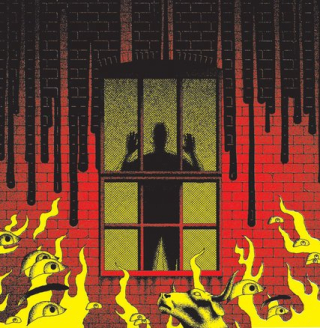
Namdar wrote the book, his second, in his native Hebrew, and received Israel’s most lucrative literary award, the Sapir Prize, for it a few years ago. Having lived in New York for decades, he was the first expatriate ever to gain that particular honor, and it looks as if he’ll remain the only one: After his win, the rules were shamefully changed to exclude those who live abroad.
It’s just coincidental timing, then, that the novel centers on the sort of American high priest who has recently come under long overdue scrutiny. In “The Ruined House,” he’s the kind of 50-something Jewish New Yorker who publishes his essays in The New Yorker, occupies an impeccable Upper West Side apartment and leads seminars on “comparative culture” at N.Y.U. You can probably already picture him, this elegant Andrew P. Cohen, down to “the old-fashioned watch on his left wrist, the cartoonishly heavy-framed reading glasses, the Warholian shock of hair with its playful wink of gray.”
We follow Andrew as he floats through his putatively enviable life, preparing for classes, visiting the mother of his 26-year-old Chinese-American girlfriend, schmoozing the slick president of N.Y.U. He shuttles between the Hamptons and gallery openings, treating himself to cappuccino and biscotti and almond croissants at “those sexy bakeries that have been opening all over.” True to type, Andrew surrounds himself with admiring women he has selected because they will play their roles (ex-wife, girlfriend, daughter) without ever impinging upon his “personal and aesthetic independence.” Namdar skewers the man thoroughly as a hypocritical misogynist, phony scholar and petty narcissist.
More here.
What Do We Owe Our Planet?

Philip Kitcher in the LA Review of Books:
SIXTY YEARS AGO, Anglican children used to sing, with some gusto, a hymn extolling the beauties of the Earth, from “Greenland’s icy mountains” and “India’s coral strand” to other examples of the Creator’s artistry. Two lines, however, suggested a glitch in the divine plan: our planet is a place where “every prospect pleases, / And only man is vile.” Caught up in our singing, we paid little attention. Few of us were budding deep ecologists.
If humanity were originally charged with the stewardship of a wonderfully designed world, as the story in Genesis claims, then it is easy to think we have failed in our responsibilities. We have modified the Earth’s surface — as well as the oceans and the atmosphere — in all manner of unattractive ways. But then, so have other species. Beetles have devastated elm trees around the globe. Ants have altered the vegetation and topography of regions they have invaded. Ivy, gypsy moths, and beavers have wrought their own kinds of devastation. Perhaps we have acted on a vaster scale than other species, but it seems unfair to charge Homo sapiens as uniquely vile.
If the idea of stewardship is taken seriously, it must be rethought.
More here.
Nancy Folbre’s Feminist, Unorthodox Economics
Arjun Jayadev in INET:
In Folbre’s wide-ranging career, she has fruitfully melded many traditions and shed light on areas usually ignored in economic thinking. Her work as an activist and a scholar has been valuable in the context of both political struggles and academic economics. She has helped widen the lens of economic thinking and set up the basis for a robust feminist political economy. For example, her work at the Center for Popular Economics and other venues has been critical in empowering activists to understand how the economy functions.
Folbre’s work is inspired by radical traditions such as Marxism as well as more standard mainstream approaches—both of which she argues provide an inadequate explanation of critical human functions such as care work. Over decades, she has sought to provide better analyses of human social reproduction and labor in such classic books as Who Pays for the Kids, The Invisible Heart, and Valuing Children (for a catalog of her work see here). For this and other work, she was awarded a MacArthur Foundation “genius grant” in 1998, as well as the Leontief Award in 2004.
In this interview, Folbre speaks about her introduction to political and social enquiry, the development of her social consciousness
and the intellectual origins of her unorthodox approach.
More here.
Saturday Poem
Skin Repair
In summer she kept lances of wild aloe
in the fridge door, cool spears wound
loose in paper towels to sop up the sap.
With the fine point of a filleting knife
she flensed the thorns, then flicked
her wrist to unzip the hunter green skin.
Today we etched her initials in a wedge
before unpeeling it, so it bled up
through her name like succulent graffiti.
Enzymes catalyze the milk to resin.
How she loved the sun, loved being
rinsed by the cymbal crash of hydrogen.
Tonight we will return to the windbitten dune
she sleeps on, supine as a beach bean;
and try again to decipher the glyph, scripted
by the tip of a trailing spinifex seedhead;
and notice the way her cheek seems embossed
on the dune's edge, as though drawn
by another ocean, deep beneath the crust.
by Jaya Savige
from: Surface to Air
University of Queensland Press, St Lucia, 2011
Foreign-Returned
Sadia Shepard in The New Yorker:

“Yes, I see that,” Hassan said.
Hassan had been at the bank eight weeks. Long enough to know that there was a slow way he could take from the men’s room back to his cubicle, a route that killed off three minutes of the work day. Long enough to learn that casual Fridays meant khakis, not jeans. Long enough to feel that the two-person, T-shaped desk he’d been assigned to was his alone. Hina Bhati looked to be in her early twenties, at least seven or eight years younger than he was. Why on earth were they sharing a desk? Hina had an accounting degree from suny Albany, a fact that he learned from the diploma she hung on the wall next to her computer, tapping a tiny nail into the plaster with a miniature, purse-size hammer. On her desk she arranged a tissue box with a crocheted cover, a small, iridescent vase with three silk flowers, and a sturdy, expensive-looking ballpoint pen. She put several large computer manuals on the floor and stood on top of them in order to reach the high shelf above her desk. There she placed her Quran, swaddled in a maroon velvet cover and decorated with multicolored ribbons. Once her belongings were in order, she tucked an imaginary hair inside her scarf and raised the height of her chair until her feet didn’t touch the floor. Hassan noticed that she swung her heels back and forth as she talked, as a child might.
“So,” she began, fixing him with a flat stare, “we might as well get to know each other. Where are you from and how long have you been at the bank?”
More here.
Arab and Coming Out in Art That Speaks Up
Michael Luongo in The New York Times:
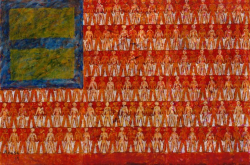
In “American Landscape: An Exploration of Art & Humanity,” on view through April 8, Mr. Mousa’s gay identity is clearly recognizable in a large work that replaces an American flag’s field of stars with the Human Rights Campaign’s bold “=” symbol. A montage about ending religious bigotry is embedded in another piece. Mr. Mousa said he manipulated the American flag to address “the hypocrisy in our constitution, where they talk about every man is created under God, equal to others. But when you really look at it, people like me who are gay or people of color, we are substandard.” Arab details seem more clandestine: Richly decorated arabesques peek though thick, muddy brown paint that veils their underlying beauty. A single color — orange — pervades the work as a visual metaphor for the fear experienced by Arab-Americans in a post-Sept. 11 world, used in the coded terror warning system introduced by the George W. Bush administration.
More here.
The Real Winston Churchill
Richard Seymour in Jacobin:

But to be a Liberal at this time was in no way incommensurate with imperialism, racism, antisemitism, support for eugenics, and patriarchal disdain for Suffragism. As Candice Millard suggests in Hero of the Empire, her history of Churchill’s derring-do in the Boer War, he was a politician raised in, and formed by, the British Empire. Churchill reached adulthood with an advanced sense of his own potential greatness, as someone who prized his reputation for courage in the face of death. The British Empire had offered millions of people willing to travel halfway across the world to rule over people they knew next to nothing about the chance for that kind of adventure. Across an empire enfolding 450 million in its death grip, revolts and struggles were appearing in southern Africa, Egypt, and Ireland. Millard writes:
To Churchill, such far-flung conflicts offered an irresistible opportunity for personal glory and advancement. When he entered the British army and finally became a soldier, with the real possibility of dying in combat, Churchill’s enthusiasm for war did not waver. On the contrary, he had written to his mother that he looked forward to battle “not so much in spite of as because of the risks I run.”
Churchill succeeded in proving himself a man by those imperial standards, fighting in India and Sudan, helping the Spanish suppress Cuba’s freedom fighters, and, after a brief South African parliamentary career, fighting in the Second Boer War. This experience primed Churchill to seek similar solutions to domestic trouble. When he joined the 1906 Liberal administration, he advocated aggressively authoritarian measures to curb social disobedience. Churchill’s promotion to home secretary four years later came at a time of still-rising political turmoil in the United Kingdom: Irish struggles for Home Rule, Suffragism, strike waves. Churchill opposed them all violently.
More here.
Stunt City
John Allen Paulos: A Few Reflections on “A Numerate Life”
John Allen Paulos in Scholar Commons at the University of South Florida website:

People often pay lip service, of course, to the importance of mathematics and sometimes even express an undue reverence for mathematicians, but these attitudes are usually accompanied by a casual dismissal of the subject and its practitioners as irrelevant to matters of real importance. Mathematics is deemed esoteric and outside the ongoing public and private narratives and conversations that surround us. If mentioned in a general context, it is usually used to provide decoration, rather than information.
As I’ve tried to argue in several of my books, these attitudes are profoundly wrong. They seem compelling, however, because of still rampant innumeracy, which prompts people with little or no mathematical background to view mathematicians’ remarks and insights as always either completely trivial or forbiddingly abstract or else beside the point. Of course, these traits characterize many of the remarks of more traditional commentators, but here the remarks’ familiarity disguises their irrelevant banality. How many times do painfully fatuous points get repeated day after day by TV and newspaper pundits?
Sometimes, however, mathematicians’ habits of searching for abstraction lead them to make trenchant observations about, say, survival bias, Simpson’s paradox, or the unpredictability of nonlinear systems that are unlikely to be made by more traditional commentators. Periodically their deployment of basic arithmetic, even simply about the relative sizes of budget items or causes of death, leads to similarly revealing insights. So at times does an oblique and quirky approach to an issue such as a complexity-theoretic assessment of politicians’ speeches or an analysis of Gone with the Wind via systems of differential equations.
More here.
Review: Rainsongs, by Sue Hubbard
Leah Shaya in London Magazine:
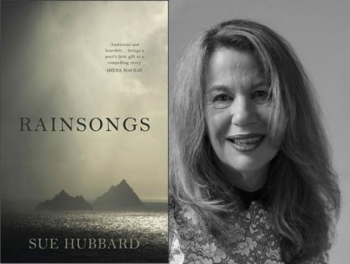
Rainsongs is a book filled with characters who are alone, by circumstance and by choice. Martha Cassidy has lost her husband and only son; twice-divorced Eugene Riordan and farm devotee Paddy O’Connell eschew relationships, finding they are happier living on their own. Accounts of community, large families, childhood friendships, are all recalled, dreamlike, from a distant past. Permanent loneliness haunts the narrative as a threat, but it is from solitude that the most beautifully haunting and thoughtful reflections in the book arise. Whenever Hubbard’s varyingly anthropophobic characters do enter a social setting, such as Eugene’s New Year’s Eve party, Brendan’s funeral, or the various local pubs, bars and restaurants, other people in the crowd are sketched accurately but unflatteringly, reduced to their worst.
However, as the supplies in Martha’s cupboard dwindle at the beginning of each chapter, the unsustainability of hermitage becomes clear.
More here. And here is a video of Sue Hubbard speaking about her book:
Friday, January 12, 2018
THE PUZZLE OF POSSIBILITY
David Livingstone Smith at Philosophy Talk:

Philosophers are as much concerned about the possibilities that lie ahead as anyone else is. But philosophers are also interested in possibilities for a different reason—or rather, in a different way. When we consider possibilities, most of us are curious about what is possible, but a lot of philosophers are also curious about what possibility is. Put a little differently, a lot of philosophers are interested in the question of what it is that we’re talking about when we talk about possibility.
You might respond, “Well it’s obvious, isn’t it? When I say that it’s possible that it’s going to snow in Savannah tomorrow, I’m just talking about the fact that it might snow in Savannah tomorrow.” But this doesn’t really get us anywhere, because it’s just using different words to say the very same thing. It’s like saying “Wealthy people have lots of money.” Duh.
There’s been a whole industry in philosophy devoted to solving the puzzle of possibility. To describe this fully would require a book rather than a blog, so I’m going to confine myself to sketch just a tiny bit of it. There are plenty of great sources for those who want to learn more.
The most notorious, and most influential, way to address the problem of possibility was the brainchild of the philosopher David Lewis, and it’s really, really weird. The idea is that true counterfactual statements aren’t really counter to the facts because if that were the case there’s no way that they could be true. So there simply must be facts that make these statements true. These are obviously not facts about our world (it didn’t snow in Savannah today), so they must be facts about other worlds—parallel universes or, in the philosophical jargon “possible worlds.” When I truly say it could have snowed in Savannah, this is true because there’s some world—some parallel universe—where it snowed in Savannah.
More here.
Women are chimeras, with genetic material from both their parents and children. Where does that leave individual identity?
Katherine Rowland in Aeon:

Far from drifting at random, human and animal studies have found foetal origin cells in the mother’s bloodstream, skin and all major organs, even showing up as part of the beating heart. This passage means that women carry at least three unique cell populations in their bodies – their own, their mother’s, and their child’s – creating what biologists term a microchimera, named for the Greek fire-breathing monster with the head of a lion, the body of a goat, and the tail of a serpent.
More here.
The Key to Unlocking U.S. GDP Growth: Women
Beth Ann Bovino and Jason Gold at S&P Global:
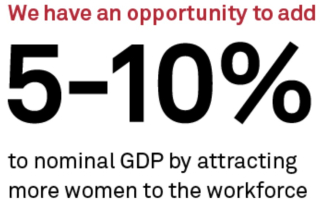
One option to consider is a Congressional Budget Office (CBO)- like “score” on the impact legislation would have on the economic feasibility and accessibility to the workforce for women. A simple, objective, nonpartisan measure that would equip lawmakers with the requisite tools to asses appropriate proposed legislation and its impact on women in the workforce. A score that evaluates the impact of a bill on how many female workers would choose to remain in the workforce, one that helps measure how the cost of working compares with the income from that job.
While gender plays a significant role in workers’ vulnerability, the biggest determinant is education—an area that S&P Global believes is the springboard for women’s progress. Specifically, promoting higher education in STEM (science, technology, engineering, and math) fields and other areas conducive to careers traditionally pursued by men is the key that could unlock the earning power of American women.
More here.
Musician, composer and multi-instrumentalist Jacob Collier explains the concept of harmony to 5 different people: a child, a teen, a college student, a professional, and jazz legend Herbie Hancock
Why physics can’t get rid of metaphor

The question of whether and how physics can be rendered in ordinary speech is nowhere more important than in our assessment of writers who try to present a vision of the world that is wholly other than what our everyday experience would have us believe, a world that, many think, is more real. This is the spirit of the recent book Reality Is Not What It Seems by theoretical physicist Carlo Rovelli, which promises to be a “magic journey out of our commonsense view of things, far from complete.”
There is something deeply paradoxical about this project. On the one hand, it is motivated by a desire to dispel everyday illusions about the physical world that contribute to our human-centeredness. “We are obsessed with ourselves,” writes Rovelli. “We study our history, our psychology, our philosophy, our gods. Much of our knowledge revolves around ourselves, as if we were the most important thing in the universe.” Physics, he thinks, can teach us better.
On the other hand, the only way to take a popular audience on this “journey out of our commonsense view of things” in writing is in commonsense language, which is intricately tied to our everyday experience of the world. Writers therefore try to make physics intelligible to the general reader by translating esoteric mathematical theories into plain terms, while at the same time trying to show how conventional descriptions of the world as it appears to us do not match up with physicists’ descriptions of actual reality. This is a vexing task.
more here.
on ‘The Tragic Imagination’
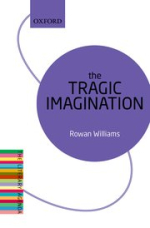
Rowan Williams argues that the “tragic imagination” is a moral imagination. Tragic drama teaches us that calamity can be narrated, that it can be drawn, at least to some degree, back into shared experience. There is a spare hope in this. It shows that “we have not been silenced forever by loss.” Furthermore, tragedy requires us to attend to the sufferings of others on stage. It presents us with “different kinds of witnessing to pain” and teaches us that “suffering calls out [for] recognition.” This is not a matter of straightforward empathy, which risks deluding us about our ability to identify with sufferers. Tragedy teaches us instead that “the suffering of others is not to be absorbed into our own feelings. But we also find that the suffering of others is already shared in human communication, recognized and named as loss or catastrophe.” Tragedy helps us recognize the limits of our own self-knowledge and the fragility of our condition.
Still, tragedy does not just dramatize individual fragility. Its representations of strife and cyclical violence, as in the paradigmatic Oresteia, dramatize the fragility of the political community as well. Indeed, in his opening chapter Williams, the former archbishop of Canterbury, claims that Athenian tragedy was a liturgical event.
more here.
‘Asia’s Reckoning: The Struggle for Global Dominance’
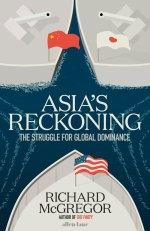
Relations with Japan deteriorated when the Chinese discovered the possibilities of mobilising anti-Japanese sentiment, which became easier as Japanese nationalists began to baulk at the ‘cultural’ restraints the USA had placed upon them. It does not help that Japanese politics is frequently dynastic, so that the sons and grandsons of wartime figures have rotated through conservative cabinets. Some of these instantly forgettable figures have felt emboldened enough to pay their respects at Tokyo’s Yasukuni Shrine, dedicated to those who have died for their emperor. In 1978 the chief priest enshrined fourteen Class-A war criminals there, adding them to the 2.46 million already commemorated at the site. Emperor Akihito has, as his father did, always given the shrine a wide berth, but not so some of Japan’s conservative politicians, notably Junichiro Koizumi and Shinzō Abe, the former and current prime ministers, who have stoked up nationalist feelings among Japanese incensed at how left-wing teachers’ unions have ensured that a masochistic version of the country’s history is fed to schoolchildren. Tempers worsened when Japanese academics began quibbling about the death toll in the Nanjing Massacre in 1937, the worst mass atrocity of the Sino-Japanese War. The fact that the Taiwanese tend to be nostalgic about the Japanese occupation (they still use Japanese administrative buildings, in contrast to the South Koreans, who tore them down in Seoul) adds to Chinese grievances.
more here.