The New York Times has made a cool tool that lets you play with the Laurel/Yanny phenomenon. Try it.
Yohan John has written an explanation of the effect.
And finally, here is Rachel Gutman in The Atlantic:
When you speak, you’re producing sound waves that are shaped by the length and shape of your vocal tract, which includes your vocal folds (vocal cords is a misnomer), throat, mouth, and nose. Linguists can study these sound waves and separate them out into their component frequencies, and display them in something called a spectrogram. Here’s the spectrogram for the yanny/laurel recording:
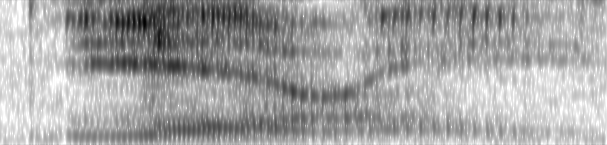
Higher frequencies (up to 5,000 hertz, or waves per second) appear toward the top, and lower ones (down to zero) toward the bottom. The dark bands are called formants; they’re the resonant frequencies of the vocal tract, and they depend on the length and shape of your vocal tract—i.e., all the space between your vocal folds, where the sound waves begin, and your mouth and nose, where they’re released.
The length of your vocal tract depends mostly on physiology: Women’s vocal folds tend to be higher up, so their tracts are shorter. The shape is largely based on where you put your tongue, like when you place the tip of your tongue between your teeth to make a th sound. By moving your tongue around in your mouth and opening and closing your lips, you change the sounds you’re making, and the formants you see in the spectrogram.
Chelsea Sanker, a phonetician at Brown University, looked at the spectrogram above to help me figure out what was going on.
More here.

 Privately, many climate and energy experts admit that the fastest, easiest, and cheapest way to decarbonize energy supplies is with nuclear power.
 Imagine a year where what we’ve long taken for granted, that technology destroys jobs but also creates new and better jobs, is discovered to no longer be true. Instead, machines permanently displace human labor, and what new jobs are created, are mostly worse jobs.
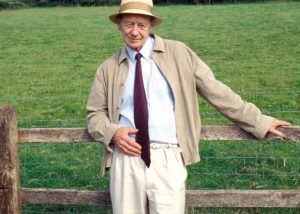 William Trevor was the literary heir of Chekhov, Maupassant and the James Joyce of the short-story collection Dubliners. He was one of the great contemporary chroniclers of the human condition, in all its pathos, comedy and strangeness. As a writer he looked at the world with an always surprised but never scandalised eye, and his writer’s heart was with those awkward and obscurely damaged souls who cannot quite manage the business of everyday life – all of us, that is.
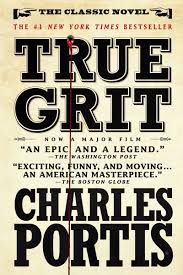 Fifty years ago today, the first installment of Charles Portis’s True Grit was published in the Saturday Evening Post. It was reprinted in book form by Simon & Schuster later that year, adapted into a movie (with John Wayne!) the year after, and became a bestseller. It had entered into the murky realm of cult literary classic when it was adapted to film for a second time (with Jeff Bridges!) in 2010, and now I’d rate it as Pretty Famous. If you haven’t read the novel, I will tell you that—even for someone who doesn’t typically go in for Westerns—it is wonderful, due in large part to its narrator, Mattie Ross. There may be action and adventure between these pages, but Mattie Ross’s voice is what makes this novel unforgettable. As Ed Park
 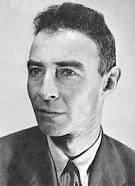 With the death of Stephen Hawking and the discussion it produced on black holes it was a little surprising that there was little or no mention of the man who created the subject, J. Robert Oppenheimer, who died in 1967 at the age of 62. He often said that the J stood for nothing but I have a copy of his birth certificate on which his first name is given as ‘Julius’. In his day Oppenheimer was the most celebrated physicist in the United States. His portrait had been on the cover of Time magazine and he was on first-name terms with much of the Washington establishment, until he lost his security clearance in 1954.
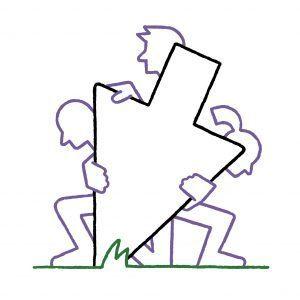 Upper-middle-class professionals love data. We tend to think that the smug, smart people who run companies like Google and Uber have some secret knowledge; we even give them our personal information, uneasily, but ultimately with a bit of a shrug. We’re seduced by similar smug, smart, supposed innovators hawking data’s potential to revolutionize health care and education. We assume technology and the information it yields is making everyone’s life easier, freer and more comfortable.
 I remember the moment when code began to interest me. It was the tail end of 2013 and a cult was forming around a mysterious “crypto-currency” called bitcoin in the excitable tech quarters of London, New York and San Francisco. None of the editors I spoke to had heard of it – very few people had back then – but eventually one of them commissioned me to write the first British magazine piece on the subject. The story is now well known. The system’s pseudonymous creator, Satoshi Nakamoto, had appeared out of nowhere, dropped his ingenious system of near-anonymous, decentralised money into the world, then vanished, leaving only a handful of writings and 100,000 lines of code as clues to his identity. Not much to go on. Yet while reporting the piece, I was astonished to find other programmers approaching Satoshi’s code like literary critics, drawing conclusions about his likely age, background, personality and motivation from his style and approach. Even his choice of programming language – C++ – generated intrigue. Though difficult to use, it is lean, fast and predictable. Programmers choose languages the way civilians choose where to live and some experts suspected Satoshi of not being “native” to C++. By the end of my investigation I felt that I knew this shadowy character and tingled with curiosity about the coder’s art. For the very first time I began to suspect that coding really was an art, and would reward examination.
 It was noon in early 1942 as Johann Grüner approached the ‘German House’ in the Polish town of Nowy Targ for lunch. As a mid-level Nazi bureaucrat in occupied Poland, he enjoyed the privileges of power and the opportunity for career advancement that came with duty in the East. The German House, a mix of cultural centre, restaurant and pub, was one of the privileges enjoyed by the occupiers. As he entered the building, he could hear a boisterous celebration within. At the front door, a clearly inebriated Gestapo official passed by, a beer coaster with the number 1,000 written in red pinned to his blouse. Addressing Grüner, the policeman drunkenly bragged: ‘Man, today I am celebrating my 1,000th execution!’
 When civil war broke out in Lebanon in the mid-1970s, Lebanese art had just gone through an avant-garde flowering, much of it detached from the grit of daily life and driven by a search for its own text-centric truths. The war’s opening battle, in 1975, between the Palestine Liberation Organization and the Kataeb Christian militia, brought writers, along with everyone else, to the ground. The initial conflict inspired alliances in accord with relatively clear political and religious affiliations. A young Elias Khoury, compelled by the injustices done to Palestinians—which he would later explore in Gate of the Sun—fought on the Palestinian side. But Khoury didn’t last long as a simultaneous novelist and soldier; his 1981 novel, White Masks, drove a wedge between him and the PLO.
 “Flesh,” the title of a small, potent, and timely Chaim Soutine retrospective, elegantly curated by Stephen Brown, at the Jewish Museum, is genteel. “Meat” would better fit the show’s focus on the ferocious paintings of plucked fowl and bloody animal carcasses that the great and, I believe, underrated Russian-French artist made in the mid-nineteen-twenties, in Paris. Other uses of “meat,” for an argument’s main point or for any solid content, apply as well. The centerpiece of the show, “Carcass of Beef” (circa 1925), on loan from the Albright-Knox Art Gallery, in Buffalo, activates all those meanings. Painted in reds and blues as luminous as those of Gothic stained glass, it communes with Rembrandt’s seventeenth-century masterpiece “The Slaughtered Ox,” which Soutine contemplated often and intensely in the Louvre, and it crackles with formal improvisations (one swift white line rescues a large blue zone from incoherence) and wild emotion. It’s an event—an emergence, an emergency—that transpires ceaselessly while you look. Soutine has long been a marginal figure in modern-art history. Clement Greenberg, in 1951, adjudged his work “exotic” and “futile,” owing to its lack of “reassuring unity” and “decorative ordering.” But today Soutine feels of the moment, amid quite enough reassurance and decorativeness in recent art.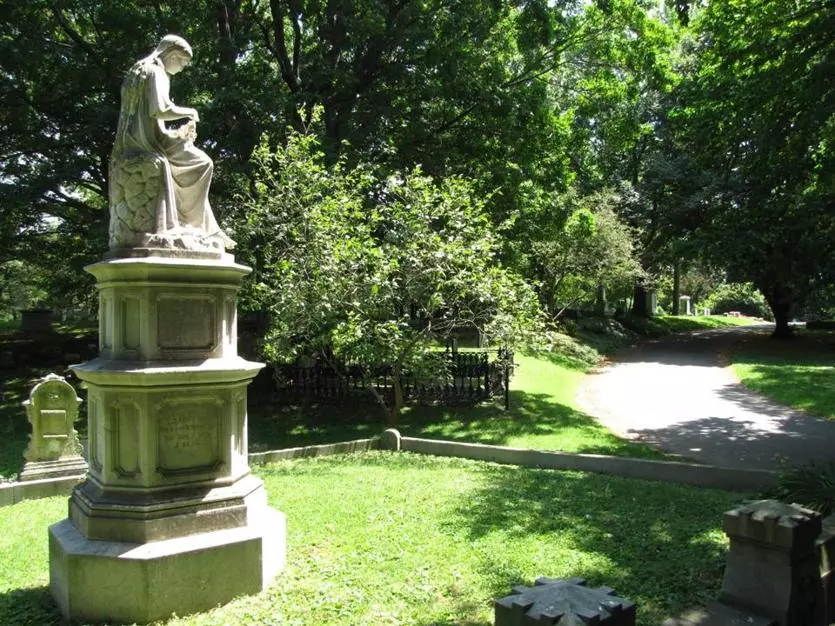
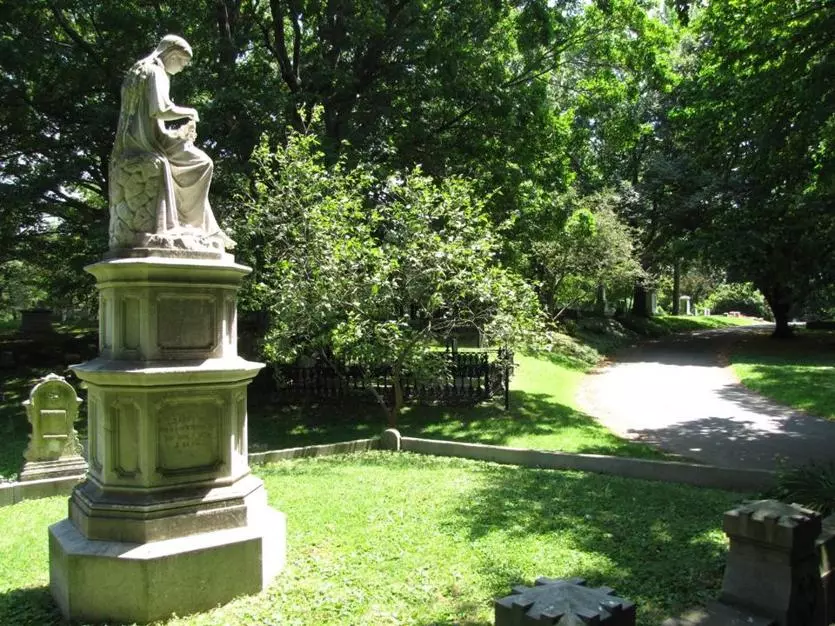
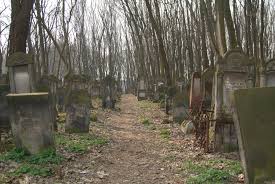 Cemeteries face a sort of life-or-death crisis. The increasing popularity of cremation has meant that cemeteries are no longer critical to storing remains, while mourning on social media has removed the necessity of cemeteries as a primary place to mourn. Public mourning also has re-emerged with the widespread acceptance of roadside shrines, ghost bikes (white bikes placed on the roadside where a cyclist died), memorial vinyl decals for the back windows of cars, and memorial tattoos. While zombies roam the big and small screen, real death has returned to our streets, building walls, vehicles, and even bodies.
 What is morality? And are there any universal moral values? Scholars have debated these questions for millennia. But now, thanks to science, we have the answers.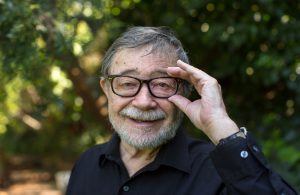

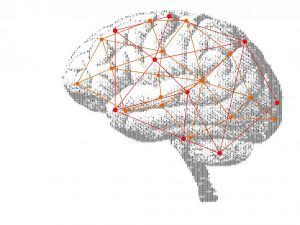
 Our brains are obsessed with being social even when we are not in social situations. A Dartmouth-led study finds that the brain may tune towards social learning even when it is at rest. The findings published in an advance article of Cerebral Cortex, demonstrate empirically for the first time how two regions of the brain experience increased connectivity during rest after encoding new social information.