
Enjoying the content on 3QD? Help keep us going by donating now.
Category: Recommended Reading
Face With Tears of Joy: A Natural History of Emoji
Steven Poole in The Guardian:
 In 2016, Apple announced that its gun emoji, previously a realistic grey-and-black revolver, would henceforth be a green water pistol. Gradually the other big tech companies followed suit, and now what is technically defined as the “pistol” emoji, supposed to represent a “handgun or revolver”, does not show either: instead you’ll get a water pistol or sci-fi raygun and be happy with it. No doubt this change contributed significantly to a suppression of gun crime around the world, and it remains only to ban the bomb, knife and sword emoji to wipe out violence altogether.
As Keith Houston’s fascinatingly geeky and witty history shows, emoji have always been political. Over the years, people have successfully lobbied the Unicode Consortium – the cabal of corporations that controls the character set, including Google, Microsoft, Meta and Apple – to include different skin colours and same-sex couples. It was easy to agree to add the face with one eyebrow raised, the guide dog and the egg. But not every request is granted. One demand for a “frowning poo emoji” elicited this splendid rant from an eminent Unicode contributor, Michael Everson: “Will we have a crying pile of poo next? Pile of poo with tongue sticking out? Pile of poo with question marks for eyes? Pile of poo with karaoke mic? Will we have to encode a neutral faceless pile of poo?”
More here.
Enjoying the content on 3QD? Help keep us going by donating now.
The fragility of goodness
From iai:
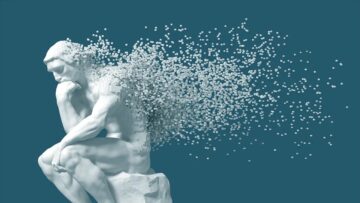 In this wide-ranging interview, Paul Bloom explores how our best qualities, reason, morality, and compassion, can be paradoxically undercut by the very forces meant to protect them. Looking at his work on Perversity, he reveals the tightrope between chaos and autonomy, making human goodness not just aspirational but fragile, easily distorted, often misunderstood, and vulnerable to both logic and emotion when taken to extremes.
You’ve said that perversity can be both a good and an optimal strategy. Can you explain what you mean by that?
For the sake of being bad or silly or unreasonable. The classic story is of St. Augustine who goes into an orchard with some friends and steals some pears. He wasn’t hungry, he just said it was to do wrong. And a lot of perversity is just awful. It makes the world worse, it makes the whole person suffer. You don’t want to have a reputation as somebody who does these erratic, stupid things.
So why might someone choose to behave perversely, even when it seems irrational?
Sometimes it could have an advantage. And sometimes a perverse act could impress other people with how bold you are and how courageous. Sometimes a perverse act can… if you’re in a rut, doing something unpredictable and a little bit crazy might be the way to get out of it. And I think most of all, perversity at its best is a way of expressing our autonomy, our freedom.
More here.
Enjoying the content on 3QD? Help keep us going by donating now.
Monsieur Ozenfant’s Academy
Will Wiles at Literary Review:
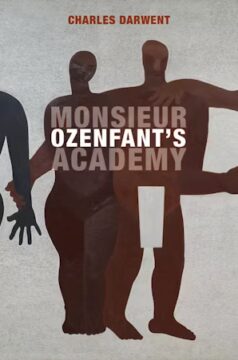 Purism was intended as a way of uniting the rigours of classicism with the modernity of the machine age. Flat planes of colour were combined with a highly symbolic visual language. Its most famous adherent was Fernand Léger. At the Ozenfant Academy, this slightly chilly left-brain philosophy of art existed alongside a dictatorial regime. Students were instructed in drawing with unforgiving hard pencils and giant sheets of paper, and encouraged towards exactness of line – sketching was a dirty word. They drew the same model, who held the same pose for two weeks. The actress Dulcie Gray, who attended the school, recalled that in the winter, the side of the model nearest the stove turned scarlet, while the other side was blue with cold. If the morning’s drawings passed muster, students were permitted to paint. A chart on the wall showed the colours they were allowed to use; the paint was to be applied according to an approved technique which yielded a consistent finish.
Nevertheless, Ozenfant inspired great loyalty and affection among his students. Indeed, his enthusiastic, sanguine character is one of the most appealing aspects of the story Darwent tells and helps explain why he stuck with the subject through all those disappointing hunts in the archives.
more here.
Enjoying the content on 3QD? Help keep us going by donating now.
Tuesday Poem
Farm Sonnet
The barn roof sags like an ancient mare’s back.
The field, overgrown, parts of it a marsh
where the pond spills over. No hay or sacks
of grain are stacked for the cold. In the harsh
winters of my youth, Mama, with an axe,
trudged tirelessly each day through deep snow,
balanced on the steep bank, swung down to crack
the ice so horses could drink. With each blow
I feared she would fall, but she never slipped.
Now Mama’s bent and withered, vacant gray
eyes fixed on something I can’t see. I dip
my head when she calls me Mom. What’s to say?
The time we have’s still too short to master
love, and then, the hollow that comes after.
by Kitty Carpenter
from Rattle Magazine
Enjoying the content on 3QD? Help keep us going by donating now.
Monday, July 14, 2025
The life swap dream – or a marketing gimmick? The Italian towns selling houses for €1
Lauren Markham in The Guardian:
 We’d heard about the “€1 house” programme in which poor, depopulating towns put their abandoned or unused buildings up for sale. The programme, I soon learned, was actually a loose collection of schemes that economically struggling towns used to lure outside investment and new residents. The campaigns seemed to me to have been largely successful – some towns had sold all their listed properties. I pored over dozens of news articles that had served as €1 house promotion over the years. By attracting international buyers to a house that “costs less than a cup of coffee”, as one piece put it, some of Italy’s most remote towns now had new life circulating through them. Many local officials had come to see €1 house experiments as their potential salvation.
What was the catch? It seemed most municipalities required you to renovate the house within a couple of years of its purchase, and due to high levels of interest, the houses often went to auction, ultimately selling for much more than a single euro. But what we wondered about were the ethical considerations – the classic tensions of gentrification. What would it mean just to buy our way into a foreign place where we had no connections and try to set up a home there?
Still, we kept looking.
More here.
Enjoying the content on 3QD? Help keep us going by donating now.
The misunderstood story of Phineas Gage shows that we need a new way of understanding the experiences of brain injury survivors
Ben Platts-Mills at Aeon:
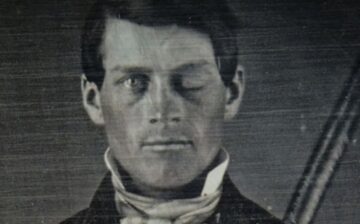 I began researching the lives of two 19th-century figures who have both been described as disinhibited. The first was a railroad construction foreman, Phineas Gage. The second was the photographer Eadweard Muybridge (born Edward Muggeridge in England). The two were contemporaries, and both lived in San Francisco for a time. Both were injured in accidents. But there the similarities end. Despite Muybridge’s brain injury being well documented and despite it transforming him, as some claim, in profound and disastrous ways, he scarcely features in the brain science literature, and his legacy remains predominantly that of an artistic and technical genius. Gage, by contrast, became famous for the outrageous behaviour that supposedly resulted from his injury. The literature paints him as a kind of avatar for behavioural dysfunction, with every other aspect of his life overshadowed by his status as disinhibition’s patient zero. Why are the legacies of these two ‘disinhibited’ people so different? I believe the answer tells us almost everything we need to know about the condition, about its origins and its continued use today.
More here.
Enjoying the content on 3QD? Help keep us going by donating now.
Microsoft AI CEO Mustafa Suleyman: Our AI Doctor Outperforms Human Diagnosticians
Enjoying the content on 3QD? Help keep us going by donating now.
Inequality has risen from 1970 to Trump − that has 3 hidden costs that undermine democracy
Nathan Meyers in The Conversation:
 America has never been richer. But the gains are so lopsided that the top 10% controls 69% of all wealth in the country, while the bottom half controls just 3%. Meanwhile, surging corporate profits have mostly benefited investors, not the broader public.
This divide is expected to widen after President Donald Trump’s sweeping new spending bill drastically cuts Medicaid and food aid, programs that stabilize the economy and subsidize low-wage employers.
Moreover, the tax cuts at the heart of the bill will deliver tens of billions of dollars in benefits to the wealthiest households while disproportionately burdening low-income households, according to analyses by the nonpartisan Congressional Budget Office and Joint Committee on Taxation. By 2033, the bottom 20% will pay more in taxes while the top 0.1% receive $43 billion in cuts.
I am a sociologist who studies economic inequality, and my research demonstrates that the class-based inequalities exacerbated by the Trump bill are not new. Rather, they are part of a 50-year trend linked to social cleavages, political corruption and a declining belief in the common good.
More here.
Enjoying the content on 3QD? Help keep us going by donating now.
Gen Z’s Tragic Anxiety & Nietzsche’s GOAT Theory
Enjoying the content on 3QD? Help keep us going by donating now.
We need to reset our relationship with nature. This book shows a way
Becca Rothfeld in The Washington Post:
 “I suspect that the real moral thinkers end up, wherever they may start, in botany,” the essayist Annie Dillard mused in 1974. “We know nothing for certain, but we seem to see that the world turns upon growing.” The work of the British nature writer Richard Mabey is proof of Dillard’s wisdom. He has been thinking about botany since the 1970s, when he published “Food for Free,” his classic guide to edible plants, and his interest in vegetable life has always yielded a corresponding interest in human obligations. For him, botany is both a science and an ethics, and its primary tenet is that plants are — or ought to be — our equals.
As he argues in his charming new book, “The Accidental Garden,” a garden is an especially emphatic demonstration of the collaborative nature of the human-plant relationship. “The poet R. S. Thomas once described that most commodious of institutions, the garden, as ‘a gesture against the wild/The ungovernable sea of grass,’” the book begins. “Which sounds pretty much like a summary of the whole human project on planet Earth.” It is time, Mabey proposes, for us to retire that “gesture against the wild” and learn to make cooperative overtures instead. And what better than a garden to teach us how?
More here.
Enjoying the content on 3QD? Help keep us going by donating now.
Is It Not Wonderful to Be Alive: Edward Lear’s Parrots
Maria Popova at The Marginalian:
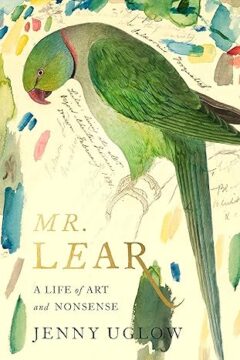 In the late summer of 1832, England was set aflame with wonder — a glimpse of something wild and flamboyant, shimmering with the lush firstness of a world untrammeled by the boot of civilization.
Edward Lear (May 12, 1812–January 29, 1888), barely out of his teens, had been working on his Illustrations of the Family of Psittacidae, or Parrots for two years. Moved by the young man’s talent and passion, one of William Turner’s patrons — a wealthy woman with a deep feeling for nature and art — had procured for him an introduction to the newly opened London Zoo, which had denied other artists access. Lear spent endless hours at the parrot house. When the zoo closed, he dashed across Regent’s Park to the museum of the London Zoological Society and continued drawing.
In a letter to a friend penned at the feverish outset of the project, he is already becoming himself — passionate and playful, part Humboldt, part Lewis Carroll, entirely original, prototyping the nonsense verse he would be remembered for:
For all day I’ve been away at the West End,
Painting the best end
Of some vast Parrots
As red as new carrots
more here.
Enjoying the content on 3QD? Help keep us going by donating now.
Geoff Dyer Finds New Artistic Territory
John Jeremiah Sullivan at Bookforum:
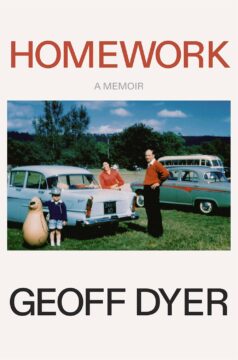 I WAS TRYING TO FIGURE OUT what struck me as odd, at first, about Geoff Dyer’s new memoir, Homework, when it dawned on me: it isn’t odd. The book, that is. Formally and in terms of genre, a Dyer book almost always represents a novel (so to speak) hybrid. His scholarly projects have a way of turning into memoirs and novels. Out of Sheer Rage began as an attempt to produce a study of D. H. Lawrence but became a book about his own inability to do so (even as it remained, in the words of The Guardian, a “very strange, sort-of study of D. H. Lawrence”). But Beautiful was conceived as a work of nonfiction jazz appreciation but became, in Dyer’s own description, “as much imaginative criticism as fiction.” His works of ostensibly pure fiction, meanwhile, have tended toward the auto-fictional, to such a degree that a reader could easily forget, at least for spans of pages, that they aren’t memoir. Take, for instance, the indelibly titled Jeff in Venice, Death in Varanasi, concerning the adventures of “Junket Jeff,” a Dyer-like avatar who moves through the world of freelance-writer assignments and celebrity art profiles (the auto-fiction gets meta-meta when you encounter a distorted-mirror story involving a character named: Geoff). Dyer has written two essayistic travelogues: Yoga for People Who Can’t Be Bothered to Do It and White Sands, each of which involves, again in his own unapologetic words, “a mixture of fiction and nonfiction.” There are also two books about movies, each having to do with an individual picture—Zona: A Book About a Film About a Journey to a Room (on Tarkovsky’s metaphysical masterpiece Stalker) and Broadsword Calling Danny Boy (on the World War II action flick Where Eagles Dare)—both of which are so essayistic and at the same time hyper-focused, consisting entirely of Dyer’s digressive and ultra-personal responses to those films’ every scene, that they resemble neither “cinema studies” nor general-interest film crit. One could go on. James Wood put it well, writing about Dyer in The New Yorker, when he described the books as “so different from one another, so peculiar to their author, and so inimitable that each founded its own, immediately self-dissolving genre.”
more here.
Enjoying the content on 3QD? Help keep us going by donating now.
Cancer Survivors Increasingly Face Fertility Issues—What Can Be Done to Help?
Diana Kwon in The Scientist:
 Allison Rosen was 32 years old when she was diagnosed with colorectal cancer. At the time, she was single, but she knew that one day, she’d want to have children. However, her treatment, which would involve pelvic radiation, would very likely affect her fertility.
Following a detailed discussion with her oncologist and care team, Rosen decided to delay her cancer treatment for a few weeks to harvest and freeze her eggs. But the day before the extraction, Rosen started bleeding profusely and was taken to the emergency room. There, she and her doctor decided that her cancer treatment couldn’t wait. They’d start the next day, meaning she’d have to abandon the plans to cryopreserve her eggs. “I thought, if I’m not alive, what is the purpose of having these eggs?” said Rosen, today a colorectal cancer survivor and patient advocate. “It was one of the most difficult decisions I had to make.”
More here.
Enjoying the content on 3QD? Help keep us going by donating now.
Sunday, July 13, 2025
Who Benefits From the Dollar’s Dominance?
An interview with Mona Ali in Jacobin:
John-Baptiste Oduor: It is often said that the dollar is the world’s reserve currency. What does this mean and how does it relate to the currency’s dominance?
Mona Ali: The dollar’s dominance is often attributed to its status as the key international reserve asset. This shorthand lends the impression that money is a commodity (a thing), when in fact for the most part money is credit (a social relation). While it is true that trillions of dollars are held as safe assets by investors and governments around the world, the bulk of these dollars in countries’ foreign reserves are credit contracts — predominantly US Treasuries.While dollar dominance is often attributed to its reserve currency role, the dollar’s entrenchment in the financial system arises from its dominance in international credit creation. It is the unit of account undergirding the world’s deepest and most dispersed credit system, which includes, but is hardly limited to, Treasuries and bank loans. The power to create dollar-denominated credit isn’t restricted to the United States’ monetary authorities; foreign banks issue more dollar loans than US banks.
As the dollar system is a globe-spanning credit regime, its crises have correspondingly global consequences. When excess credit creation results in financial crisis, the United States’ central bank, the Federal Reserve, steps in to stabilize dollar markets. Yet it does so in ad hoc fashion.
More here.
Enjoying the content on 3QD? Help keep us going by donating now.
Gilded City
Alexander Zevin in Sidecar:
New York City politics can seem intensely local. Yet occasionally something happens here that transfixes the world. In 1886, the insurgent mayoral campaign of Henry George seemed to shake the foundations of power in the city, defeating the Republicans and coming close to beating the powerful Democratic machine. That George did so at the head of the recently created United Labor Party inspired Friedrich Engels to salute the creativity of the American masses – who on this ‘epoch-making day’ had contested the election as an independent political force. It seemed clear that the great commercial and industrial capitalists of the city had only prevailed through bribes, ballot stuffing and other forms of brazen cheating. Notwithstanding his reservations about George’s ‘confused’ and ‘deficient’ programme built around a ‘single-tax’, Engels was thus quite hopeful: ‘Where the bourgeoisie wages the struggle by such methods, the struggle comes to a decision rapidly, and if we in Europe do not hurry up the Americans will soon outdistance us.’
Zohran Mamdani’s campaign for mayor represents the most concerted outsider challenge to the ruling order of the city since that time – an indication both of how venerable the quest for a socialist alternative to the party duopoly here has been ever since the relocation of the First International to New York in 1872, and of how rare the moments when it has achieved any kind of mainstream breakthrough.
More here.
Enjoying the content on 3QD? Help keep us going by donating now.
Lasching Out
Soli Özel in The Ideas Letter:
“Everything in Trumpworld happens twice,” the Irish journalist Fintan O’Toole wrote recently—“the first time as performance and the second as reality.” He was commenting on the deployment of the U.S. National Guard and U.S. Marines in Los Angeles against protesters challenging President Donald Trump’s immigration policies. If Trump’s victory in 2016 was performance, the aftermath of his 2024 victory is reality. And that reality, now manifest daily, is one that most liberals, leftists, or middle-of-the-roaders had not fully anticipated, despite warnings.
Among the most prescient, consistent, and insistent critics to warn the United States of its own frailties was the historian Christopher Lasch.
Some observers were blinded by their belief in the rootedness and resilience of the country’s institutions, its liberal political tradition, and the irreversibility of progress. Others failed to fully appreciate how money would corrode the American political system and would so deepen cultural-cum-class polarization. But beginning several decades ago, Lasch identified the growing divide between the educated managerial elites and the bulk of the lesser educated public.
Writing of “an enlightened elite (as it thinks of itself),” he argued that it “seeks not so much to impose its values on the majority (a majority perceived as incorrigibly racist, sexist, provincial, and xenophobic), much less to persuade the majority by means of rational public debate, as to create parallel or ‘alternative’ institutions in which it will no longer be necessary to confront the unenlightened at all.” American democracy would deteriorate based on “the routine acceptance of professionals as a class apart.”
More here.
Enjoying the content on 3QD? Help keep us going by donating now.
Monetizing Primacy
Karthik Sankaran in Phenomenal World:
Donald Trump’s second term as President of the United States has not been very good for the dollar. The most recent blow to the currency came when the ratings agency Moody’s stripped the US of its AAA rating. When Standard & Poor’s downgraded the US in 2011, the dollar rallied and Treasury yields fell. This time around, however, the market reaction was different—an extension of the pattern established immediately following the announcement of sweeping global tariffs on April 2. In 2011, the Eurozone crisis was reaching a crescendo, making the dollar the safest haven in the international system. In 2025, the voluntary nature of the crisis has triggered considerably different market behavior. Contrary to the expectations of most economists (including administration officials charged with economic policy making), the so-called Liberation Day tariffs led to a sharp weakening of the dollar and momentary spiking of Treasury yields.
This in turn has fueled speculation of a broader flight from US assets, marked by a Munchian cover story in The Economist raising the shrieking specter of a dollar crisis. There has also been a mounting stream of stories and commentary that US policies were fueling a broader turn in sentiment against the currency—as suggested in this article about China looking at alternatives to US Treasuries, in invocations by Japan’s finance minister of the country’s US bond holdings as a possible negotiating card, and warnings that Asian countries could decide to reduce their exposure to US assets to the tune of $7.5 trillion.
The months since April 2 have clarified the multiple contradictory desires of the Trump administration vis-a-vis its position in the global economic hierarchy.
More here.
Enjoying the content on 3QD? Help keep us going by donating now.
Ivar Giaever (1929 – 2025) Physics Nobel Laureate
Enjoying the content on 3QD? Help keep us going by donating now.
Thornton Willis (1936 – 2025) Abstract Painter
Enjoying the content on 3QD? Help keep us going by donating now.