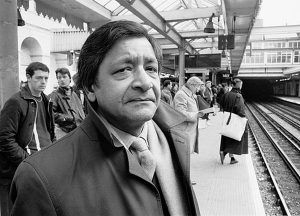
 Pankaj Mishra and Nikil Saval discuss V.S. Naipaul in n+1:
Dear Nikil,
You are right: Naipaul did not seek this role of the uniquely positioned reporter on the third world. He found himself in it, and much of his own complicated and tormented relationship with his subjects was bleached out, especially in his writings on Muslim countries. This has at least partly to do with the Anglo-American (and very non-Continental) cult of the no-bullshit, empiricist intellectual—the man who exposes himself to unpleasant or dangerous reality and tells the truth about it, using the clearest of prose. Orwell was the first great figure in this pantheon of cold-war liberalism, and what Raymond Williams said about him in Culture and Society could also be applied to Naipaul.
It is worth quoting Williams on Orwell at length:
He is genuinely baffling until one finds the key to the paradox, which I will call the paradox of the exile. For Orwell was one of a significant number of men who, deprived of a settled way of living, or of a faith, or having rejected those which were inherited, find virtue in a kind of improvised living, and in an assertion of independence. The tradition, in England, is distinguished. It attracts to itself many of the liberal virtues: empiricism, a certain integrity, frankness. It has also, as the normally contingent virtue of exile, certain qualities of perception: in particular, the ability to distinguish inadequacies in the groups which have been rejected. It gives, also, an appearance of strength, although this is largely illusory. The qualities, though salutary, are largely negative; there is an appearance of hardness (the austere criticism of hypocrisy, complacency, self-deceit), but this is usually brittle, and at times hysterical: the substance of community is lacking, and the tension, in men of high quality, is very great.
Williams then goes on to define Orwell as a vagrant, and tries to understand the nature of his appeal, and this applies to Naipaul as well:
Orwell, in different parts of his career, is both exile and vagrant. The vagrant, in literary terms, is the “reporter,” and, where the reporter is good, his work has the merits of novelty and a certain specialized kind of immediacy. The reporter is an observer, an intermediary: it is unlikely that he will understand, in any depth, the life about which he is writing (the vagrant from his own society, or his own class, looking at another, and still inevitably from the outside). But a restless society very easily accepts this kind of achievement.
More here.

 In a limestone cave nestled high above the Anuy River in Siberia, scientists have discovered the fossil of an extraordinary human hybrid.
 In any era of systemic corruption and malpractice, whistleblowers naturally emerge. But rarely do we get to see the human face behind their mettle, let alone the toll it takes on the psyche to be a cog in the machine of a system they know to be unjust. That’s what film-maker Stephen Maing achieves with Crime + Punishment, his new documentary about the 12 cops, all people of color, who fought back against the New York police department’s covert and illegal quota system, which led to a class action against the department over its practice of pressuring minority officers to issue predetermined numbers of arrests and summonses per month – oftentimes in communities of color deemed “high-crime”.
 Both words in the phrase “liberal democracy” carry meaning, and both concepts are under attack around the world. “Democracy” means that they people rule, while “liberal” (in this sense) means that the rights of individuals are protected, even if they’re not part of the majority. Recent years have seen the rise of an authoritarian/populist political movement in many Western democracies, one that scapegoats minorities in the name of the true “will of the people.” Yascha Mounk is someone who has been outspoken from the start about the dangers posed by this movement, and what those of us who support the ideals of liberal democracy can do about it. Among other things, we discuss how likely it is that liberal democracy could ultimately fail even in as stable a country as the United States.
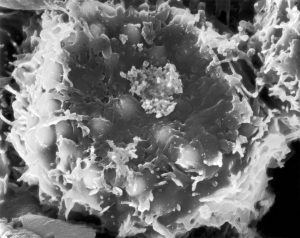
 You don’t often see the word beautiful in scientific articles. Yet it’s easy to see why cell biologists Niccolò Banterle and Pierre Gönczy used the word when describing a crucial cell structure called the centriole in a recent
 The themes of John Cheever’s journals—God, sex, guilt, and nature—manage to instill genteel ennui with the anguished moral passion of a Russian novel. Published in 1990, eight years after his death from lung cancer, and decades after he had been enshrined as America’s premiere bourgeois fabulist, the journals shocked in their revelation of the self-lacerating, booze-addled voluptuary hiding in the fine suit of a country squire. “Rarely has a gifted and creative life seemed sadder,” a chastened John Updike wrote upon their publication. But though the gap between Cheever the cultural effigy and Cheever the man was received with surprise and consternation, the ambiguity of his work had always betrayed such a fissure. Cheever’s greatest fiction enacts a kind of doubleness, a yearning for grace darkly marbled with lust and duplicity. The rapturous moments—one thinks of the beautiful early story “Goodbye, My Brother,” with its darkness and iridescence, the naked women walking out of the sea—barely conceal the saturnine streaks.
 Those who still want to stand with their Catholic brothers and sisters should not merely dissent in private ways, but should also speak up and demand what opinion polls show they really want for the church as the people of God. It is mandatory celibacy and male-only priesthood that is “unnatural.” Even an admired spiritual leader like Thomas Merton, who thought he could get away from temptation by sealing out “the world” in a monastery, fell madly in love with a young nurse when he had to go to a hospital. It was a love that Kaya Oakes, in a new book of tributes to Merton, thinks made him fully human for the first time.
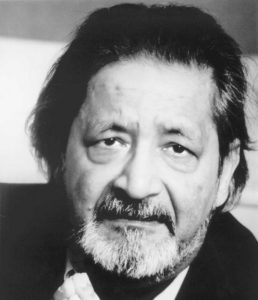 In late 1979, V. S. Naipaul, then middle-aged and of some literary stature, traveled to the newly declared Islamic Republic of Iran for what would eventually become his travelogue Among the Believers. He hated the place, beginning with his guide, a man named Sadeq:
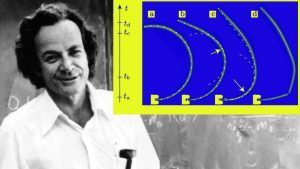 Here’s a fun experiment to try. Go to your pantry and see if you have a box of spaghetti. If you do, take out a noodle. Grab both ends of it and bend it until it breaks in half. How many pieces did it break into? If you got two large pieces and at least one small piece you’re not alone.
 The Republican political consultant
  Drugs that activate the immune system to fight cancer have brought remarkable recoveries to many people in recent years. But one of those drugs seems to have had the opposite effect on three patients with an uncommon blood cancer who were taking part in a study. After a single treatment, their disease quickly became much worse, doctors reported in a
 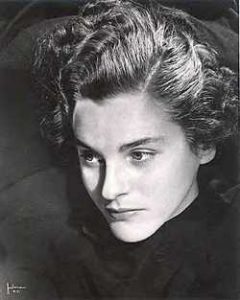 McCarthy’s fiction, collected by the Library of America in two new volumes, shows how her preoccupation with factuality shaped her art. The collection includes all seven of her novels—the first published in 1942, the last in 1979—as well as collected and uncollected stories and an essay on “the novels that got away.” Through it all, we see McCarthy’s fixation on the surface details that distinguish class and character: a middle-aged man from the Midwest who is given to wearing Brooks Brothers suits; a Yale man working at a leftist magazine who sports a “well-cut brown suit that needed pressing”; bohemian couples living on Cape Cod who drink too much and don’t bother keeping house. We learn that it was a status symbol in 1930s New York for a Vassar graduate to serve coffee with real cream.
 The
The Few nations have been as obsessed with their status in the world as Great Britain. Not surprisingly, the