
Alexander C. Kafka in the Chronicle of Higher Education:
 Some scholars applauded the hoax.
“Is there any idea so outlandish that it won’t be published in a Critical/PoMo/Identity/‘Theory’ journal?” tweeted the Harvard psychologist Steven Pinker.
“Three intrepid academics,” wrote Yascha Mounk, an author and lecturer on government at Harvard, “just perpetrated a giant version of the Sokal Hoax, placing … fake papers in major academic journals. Call it Sokal Squared. The result is hilarious and delightful. It also showcases a serious problem with big parts of academia.”
In the original Sokal Hoax, in 1996, a New York University physicist named Alan Sokal published a bogus paper that took aim at some of the same targets as his latter-day successors.
Others were less receptive than Mounk. “This is a genre,” tweeted Kieran Healy, a sociologist at Duke, “and they’re in it for the lulz” — the laughs. “Best not to lose sight of that.”
“Good work is hard to do,” he wrote, “incentives to publish are perverse; there’s a lot of crap out there; if you hate an area enough, you can gin up a fake paper and get it published somewhere if you try. The question is, what do you hate? And why is that?”
More here.
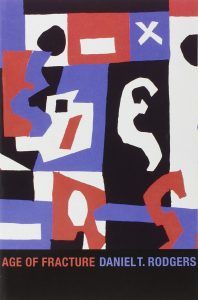 By the end of the twentieth century, the landscape of social thought had changed radically. The pressures bearing down on individuals had not in the least diminished. But, to a great extent, earlier ways of imagining self and society had broken apart. Strong notions of society receded from the forefront of language and imagination. Structures and institutions became less visible. Talk of power grew more abstract. In their place,rights-bearing, choice-making, autonomously acting individuals took centre stage in social thought.
 The letter rambled vividly and profanely through a crazy story about a few days in Denver in late 1945, beginning with Cassady meeting “a perfect beauty of such loveliness that I forgot everything else and immediately swore to forgo all my ordinary pursuits until I made her”: Joan Anderson. Its stream of consciousness is a rollercoaster ride through devotion, a breakup, a suicide attempt, a reunion, a reconciliation, an arrest, incarceration and, finally, abandonment. Appropriately, Cassady described the tale, mid-letter, as a “pricky tearjerker.”
 No matter how outrageous – or illegal –the behaviour of the Leave campaign, for the losing side to continue to focus on the referendum campaign and result is to be drawn onto the Brexiteers’ turf. That isn’t to say campaigners shouldn’t be investigated and prosecuted if appropriate, or that there shouldn’t be a public vote on the nature of a Brexit deal with the EU. But the win-lose, legitimate-illegitimate argument about the referendum is a fight that plays out on the Brexiteers’ territory. The Brexiteers assert that the myth has been enacted (‘We killed the dragon!’). The Remainers deny the myth (‘You lied, there was no dragon!’). This makes it an argument about myth, and here the Brexiteers are on stronger ground. Every myth has two facets, the story that is told to make events or states of being comprehensible to people, and the underlying events or states that provide the material for the myth; a stylised, simplified dramatisation of change, and the change that demands dramatisation. Reckless, hypocritical, deluded, mendacious and chauvinist as they are, the Brexiteers found a real set of circumstances, and misapplied a popular, off-the-shelf folk myth to it. By simply rejecting the Brexiteer myth, without offering another, better one, the Remainers appear to deny the underlying changes. ‘Look,’ the Leave voter says to the Remainer. ‘Look at the abandoned coal mines, the demolished factories, the empty fishing harbours. Look at the old people lying sick on trolleys in hospital corridors and how there aren’t enough school places to go round and how you can’t afford a roof over your head. Look at my debts. Look at the low-wage work that’s all that’s left. Look at the decent jobs that have gone abroad. Look at the foreign workers we have to compete with, where did they come from? Who are all these strangers? If the problem isn’t the EU, what is it?’ The Remainer struggles to answer. Why?
 One paper, published in a journal called Sex Roles, said that the author had conducted a two-year study involving “thematic analysis of table dialogue” to uncover the mystery of why heterosexual men like to eat at Hooters. Another, from a journal of feminist geography, parsed “human reactions to rape culture and queer performativity” at dog parks in Portland, Ore., while a third paper, published in a journal of feminist social work and titled “Our Struggle Is My Struggle,” simply scattered some up-to-date jargon into passages lifted from Hitler’s “Mein Kampf.” Such offerings may or may not have raised eyebrows among the journals’ limited readerships. But this week, they unleashed a cascade of mockery — along with a torrent of debate about ethics of hoaxes, the state of peer review and the excesses of academia — when they were revealed to be part of an elaborate prank aimed squarely at what the authors labeled “grievance studies.”
 In 2015,
  In the wake of Hurricane Florence and the rains that followed, residents of disaster-stricken areas of North Carolina are now also dealing with swarms of “
 Aging — everybody does it, very few people actually do something about it. Coleen Murphy is an exception. In her laboratory at Princeton, she and her team study aging in the famous C. Elegans roundworm, with an eye to extending its lifespan as well as figuring out exactly what processes take place when we age. In this episode we contemplate what scientists have learned about aging, and the prospects for ameliorating its effects — or curing it altogether? — even in human beings.
 A village boy once asked his local priest, “Father, when you go to sleep, where do you lay your beard, under or over your blanket?” Ever since he heard the question, the priest couldn’t sleep through the night. If he laid his beard under the blanket, he felt hot; if his beard was over the blanket, he got cold. He had always slept fine, without waking. But once he was asked to pick a single side, neither one seemed comfortable.
 When I first adopted Lucas nine years ago from a cat rescue organization in Washington, D.C., his name was Puck. “Because he’s mischievous,” his foster mother said. Although we changed the name, her analysis proved correct. Unlike his brother Tip, whom I also adopted, a gray cat with white paws and an Eeyore-ish dour doofy sweetness, Lucas was from the start a fierce black fireball, a menace to stray toes or blanket fringes or loose items on tabletops. He was my alarm clock in the morning with his habit of knocking my hairbrush, deodorant, and earrings box off my bureau until I got up to feed him.
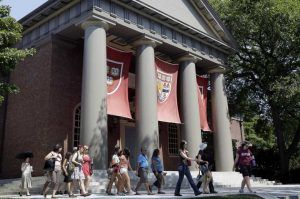 As former Labor secretary Robert Reich recently noted, Ivy League schools are government-subsidized playgrounds for the rich: “Imagine a system of college education supported by high and growing government spending on elite private universities that mainly educate children of the wealthy and upper-middle class, and low and declining government spending on public universities that educate large numbers of children from the working class and the poor.
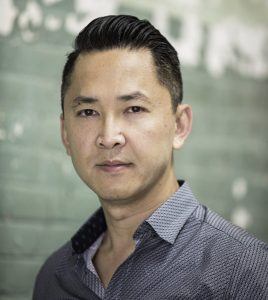 Since the 2015 publication of his Pulitzer Prize–winning debut novel The Sympathizer, Viet Thanh Nguyen has emerged as one of the literary world’s leading public intellectuals. At a time of rising xenophobia and anti-refugee sentiment in the United States and elsewhere, Nguyen’s fiction, academic writing, and media commentary remind us of the need to keep telling the stories that drop out of national narratives, and to remember the histories that the powerful would have us forget. In the following conversation with Karl Ashoka Britto, Nguyen discusses literary form and the representation of violence, the complex dynamics of remembering and forgetting, and the possibility of a politics that could be post-communist without being pro-capitalist.
 Three scientists have won the Nobel prize in chemistry for their work in harnessing evolution to produce new enzymes and antibodies.
 Something has gone wrong in the university—especially in certain fields within the humanities. Scholarship based less upon finding truth and more upon attending to social grievances has become firmly established, if not fully dominant, within these fields, and their scholars increasingly bully students, administrators, and other departments into adhering to their worldview. This worldview is not scientific, and it is not rigorous. For many, this problem has been growing increasingly obvious, but strong evidence has been lacking. For this reason, the three of us just spent a year working inside the scholarship we see as an intrinsic part of this problem.