
Ralph Leonard in UnHerd:
 “I denounce European colonialism”, wrote CLR James in 1980, “but I respect the learning and profound discoveries of Western civilisation.” A Marxist revolutionary and Pan-Africanist, a historian and novelist, an icon of black liberation and die-hard cricket fan, a classicist and lover of popular culture, Cyril Lionel Roberts James, described by V.S Naipaul as “the master of all topics”, was one of the great (yet grossly underrated) intellectuals of the 20th century.
He was one of the few Leftist intellectuals – as Christopher Hitchens once said about George Orwell – who was simultaneously on the right side of the three major questions of the 20th century: Fascism, Stalinism and Imperialism. But today his praise for ‘Western culture’ would probably be dismissed as a slightly embarrassing residue of a barely concealed ‘Eurocentrism”’
Sophie Zhang in a recent column for Varsity entitled “Not all literature is ‘universal’ – nor does it have to be”, writes that:
“The study of English Literature… has often centred around texts that claim to explore ‘universal’ themes and experiences. Yet what such curricula fail to recognise is that in glorifying the universal, we neglect the particular, because to focus on the ‘Western’ canon would be to ‘to centre whiteness and continually place non-white voices on the margins’”.
Implicit in this view is that only “whiteness” could have access to the universal, and those outside of “whiteness” are intrinsically on the margins, and their views are necessarily “particular”.
Similarly, James’s admiration for Western culture and the Western canon is something many black radicals, who otherwise admire James for his opposition to colonialism, struggle to understand about him. It is rather fashionable, and almost expected, that to be a ‘proper’ black radical today is to be hostile to all that is designated as Western; it is to indiscriminately dismiss the Enlightenment as “white” and “racist”, and disparage the Western canon as not being “relevant” to black people.
More here.
 The woman sitting next to me in the waiting room is wearing a blue dashiki, a sterile paper face mask to protect her from infection, and a black leather Oakland Raiders baseball cap. I look down at her brown, sandaled feet and see that her toenails are the color of green papaya, glossy and enameled.
 Often, in the study of past human and natural processes, the realisation that we have no evidence of something, and therefore no positive knowledge, transforms too quickly into the conclusion that because we have no positive knowledge, we may therefore assume the negative. Sometimes this conclusion is correct, but it cannot be applied indiscriminately. To cite one interesting example of the correct and useful refusal to apply it, in recent probabilistic reasoning about extraterrestrials the absence of any direct evidence for their existence is taken as irrelevant to whether we should believe in them or not. Drake’s equation is more powerful than radio signals or space ships in shaping our beliefs.
 A few years ago, a senior Japanese central banker let me in on a secret side of his life: Like some others in his rarefied world, he is a passionate devotee of Sherlock Holmes. After formal meetings in capitals around the world, he joins the other Sherlock Holmes buffs over drinks or dinner for trivia competitions, to test their knowledge of obscure plot details, or to share amateur historical research into Victorian London.
 It may strike a reader new to George Scialabba’s writing as extraordinary that
 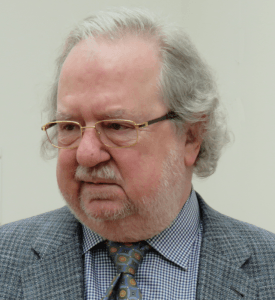 Every time Jim meets a patient, he cries,” Padmanee said to The New York Times in 2016. “Well not every time,” Jim added. Jim Allison and Padmanee Sharma work together at the MD Anderson Cancer Center in Houston, Texas, having met in 2005 and married in 2014. A decade before they met, Allison and his lab team made a seminal discovery that led to a revolution in cancer medicine. The hype is deserved; cancer physicians agree that Allison’s idea is a game-changer, and it now sits alongside surgery, radiation, and chemotherapy as a mainstream option for the treatment of some types of cancer.
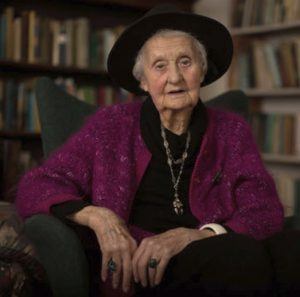 Just a few weeks before her death in October, Mary Midgley agreed to meet and discuss her new book, What Is Philosophy For? It seemed astonishing that someone about to celebrate her 99th birthday had a new book out, but I was less in awe of that than the reputation of one of the most important British philosophers of the 20th century and beyond.
 In 2016, a series of unassuming stone shapes rocked the paleobiology world when they were
 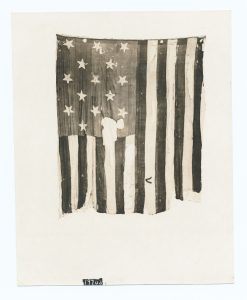 What was America? The question is nearly as old as the republic itself. In 1789, the year George Washington began his first term, the South Carolina doctor and statesman David Ramsay set out to understand the new nation by looking to its short past. America’s histories at the time were local, stories of states or scattered tales of colonial lore; nations were tied together by bloodline, or religion, or ancestral soil. “The Americans knew but little of one another,” Ramsay wrote, delivering an accounting that both presented his contemporaries as a single people, despite their differences, and tossed aside the assumptions of what would be needed to hold them together. “When the war began, the Americans were a mass of husbandmen, merchants, mechanics and fishermen; but the necessities of the country gave a spring to the active powers of the inhabitants, and set them on thinking, speaking and acting in a line far beyond that to which they had been accustomed.” The Constitution had just been ratified at the time of Ramsay’s writing, the first system of national government submitted to its people for approval. “A vast expansion of the human mind speedily followed,” he wrote. It hashed out the nation as a set of principles. America was an idea. America was an argument.
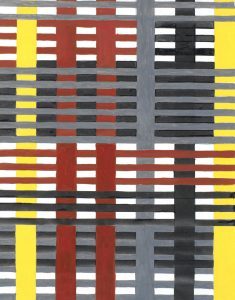 IN A 1985 INTERVIEW, Anni Albers remarked, “I find that, when the work is made with threads, it’s considered a craft; when it’s on paper, it’s considered art.” This was her somewhat oblique explanation of why she hadn’t received “the longed-for pat on the shoulder,” i.e., recognition as an artist, until after she gave up weaving and immersed herself in printmaking—a transition that occurred when she was in her sixties. It’s hard to judge whether Albers’s tone was wry or rueful or (as one critic alleged) “some-what bitter,” and therefore it’s unclear what her comment might indicate about the belatedness of this acknowledgment relative to her own sense of her achievement. After all, she had been making “pictorial weavings”—textiles designed expressly as art—since the late 1940s. Though the question might now seem moot, it isn’t, given the enduring debates about the hierarchical distinctions that separate fine art from craft, and given the still contested status of self-identified fiber artists who followed in Albers’s footsteps and claimed their woven forms as fine art, tout court.
 When George Frideric Handel arrived in London in 1710—he was in his mid-20s at the time and would reside in the capital for the duration of his life, becoming a naturalized British subject—he made his reputation composing operas, their librettos written not in his native German but in Italian, as was the fashion of the day. Working tirelessly and continuously, Handel produced an astonishing succession of operatic masterpieces: Giulio Cesare, Tamerlano, Rodelinda, Orlando, and Alcina, to name just a few. Eventually, however, he turned to the language of his adopted land, and it was in his English oratorios—Esther, Saul, Israel in Egypt, Samson, Judas Maccabaeus, Jephtha, and most famously of all, Messiah—that he arguably made his most striking contributions to Western music. Handel was attracted not only to the Bible but also to secular poetry, his subjects inspired by the likes of Milton, Pope, and Dryden. The composer’s command of English was never stellar (he was hardly a fluent exophone in the manner of Voltaire, Conrad, or Beckett), which makes his facility with the cadences, imagery, rhythms, and rhymes of English verse all the more remarkable.
 When people learn that I meditate every day, they often sheepishly admit that they wish they could, but that they just aren’t suited for it, or their mind is too active, or they don’t have the time. This always reminds me of Anne Lamott’s iconic gem of an essay, “
 Schadenfreude, the sense of pleasure people derive from the misfortune of others, is a familiar feeling to many—perhaps especially during these times of pervasive social media. This common, yet poorly understood, emotion may provide a valuable window into the darker side of humanity, finds a review article by psychologists at Emory University. New Ideas in Psychology published the review, which drew upon evidence from three decades of social, developmental, personality and clinical research to devise a novel framework to systematically explain schadenfreude. The authors propose that schadenfreude comprises three separable but interrelated subforms—aggression, rivalry and justice—which have distinct developmental origins and personality correlates. They also singled out a commonality underlying these subforms.
 In 1717, Voltaire was arrested, some might say, for giving offence. He had published a ‘satirical’ verse that opens by calling the Duc d’Orleans, the then Regent of France, ‘an inhuman tyrant, famous for poison, atheism, and incest’. This pungent personal attack became so popular it was sung on the streets of Paris. In response, the Duc had Voltaire arrested without accusation or trial. The author spent 11 months in the Bastille.
 Economics, like other sciences (social and otherwise), is about what the world does; but it’s natural for economists to occasionally wander out into the question of what we should do as we live in the world. A very good example of this is a new book by economist Tyler Cowen,