George Eaton in New Statesman:
 On the evening of 28 October, as they absorbed the election of far-right Brazilian president Jair Bolsonaro, British leftists declared “socialism or barbarism”. The slogan was assumed by some to be a Corbynite coinage. But it was first popularised more than a century ago in war-ravaged Europe.
In 1915, writing under the pseudonym Junius to evade prosecution, German Marxist leader Rosa Luxemburg warned: “Bourgeois society stands at the crossroads, either transition to socialism or regression into barbarism.”
To Luxemburg’s dismay, rather than uniting in opposition to the First World War, Europe’s left-wing parties rallied behind their national governments. “Workers of the world unite in peacetime – but in war slit one another’s throats,” she observed acidly.
Luxemburg and co-leader Karl Liebknecht responded in 1916 by founding the revolutionary Spartacist League (named after Spartacus, the leader of the largest Roman slave rebellion), a breakaway from Germany’s Social Democratic Party.
More here.
 The Incas left no doubt that theirs was a sophisticated, technologically savvy civilisation. At its height in the 15th century, it was the largest empire in the Americas, extending almost 5000 kilometres from modern-day Ecuador to Chile. These were the people who built Machu Picchu, a royal estate perched in the clouds, and an extensive network of paved roads complete with suspension bridges crafted from woven grass. But the paradox of the Incas is that despite all this sophistication they never learned to write.
 Before ancient humans
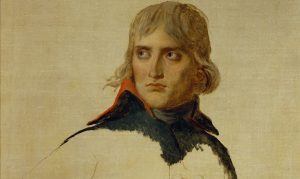 Men of action present a problem for decent modern democrats. For the very term “men of action” is a euphemism for men accomplished in war, and no public figure is more suspect these days than the warlike man. When Winston Churchill called Napoleon Bonaparte (1769-1821) “the greatest man of action born in Europe since Julius Caesar,” he meant to praise Napoleon in the highest terms, but for many, such praise is fraught with peril. After all, Julius Caesar, named dictator in perpetuity, placed the Roman Republic in mortal danger and died a tyrant’s death; the most famous of his assassins, Marcus Junius Brutus, is remembered as a paragon of republican virtue, though it proved impossible to restore the Republic after Caesar’s day.
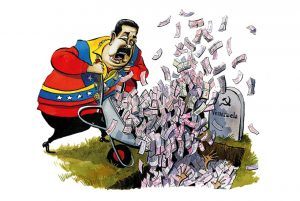 Paul Krugman, blogger, fiat-currency enthusiast and winner of the Nobel Prize in Economics earlier this year justified his scepticism about cryptocurrencies in the New York Times. He asked readers to give him a clear answer to the question: what is the problem cryptocurrency solves? He wrote: ‘Governments have occasionally abused the privilege of creating fiat money, but for the most part governments and central banks exercise restraint.’ He added that, unlike bitcoin, ‘fiat currencies have underlying value because men with guns say they do. And this means that their value isn’t a bubble that can collapse if people lose faith.’
 It’s a huge day for archaeologists and anyone interested in the history of America’s first settlers. Findings from three new genetics studies—all released today—are presenting a fascinating, yet complex, picture of the first people in North and South America, and how they spread and diversified across two continents.
 It’s fun to be in the exciting, chaotic, youthful days of the podcast, when anything goes and experimentation is the order of the day. So today’s show is something different: a solo effort, featuring just me talking without any guests to cramp my style. This won’t be the usual format, but I suspect it will happen from time to time. Feel free to chime in below on how often you think alternative formats should be part of the mix.
 In the 2016 presidential election, 55 percent of white women voted for Republicans. And this year, the group backed Democrats and Republicans evenly.
 The fascination of what’s difficult,” wrote WB Yeats, “has dried the sap out of my veins … ” In the press coverage of this year’s Man Booker prize winner, Anna Burns’s
  The futurist philosopher Yuval Noah Harari worries about a lot. He worries that Silicon Valley is undermining democracy and ushering in a dystopian hellscape in which voting is obsolete. He worries that by creating powerful influence machines to control billions of minds, the big tech companies are destroying the idea of a sovereign individual with free will. He worries that because the technological revolution’s work requires so few laborers, Silicon Valley is creating a tiny ruling class and a teeming, furious “useless class.” But lately, Mr. Harari is anxious about something much more personal. If this is his harrowing warning, then why do Silicon Valley C.E.O.s love him so? “One possibility is that my message is not threatening to them, and so they embrace it?” a puzzled Mr. Harari said one afternoon in October. “For me, that’s more worrying. Maybe I’m missing something?”
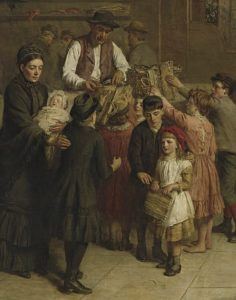 Following the sensational success of Thomas Piketty’s Capital in the Twenty-First Century, with no less than 2.5 million copies of the book sold worldwide, inequality is now widely perceived, to quote Bernie Sanders, as “the great moral issue of our time.” Clearly the shift is part of a wider transformation of American and European politics in the wake the 2008 crash that has turned the “1%” into an object of increasing attention. Marx’s Capital is now a bestseller in the “