
Neel V. Patel in Popular Science:
 In a new paper published in the Journal of Geophysical Research: Planets, Arizona State University researchers suggest that water on Earth originated from material brought by asteroids, assisted by some leftover gas strewn about after the sun’s formation.
This is certainly far from the first time people have suggested water as we know it (and drink) it has an extraterrestrial origin. Historically, the easiest explanation has been that all of Earth’s water came from asteroids that impacted the Earth during the early days of its 4.6 billion year life. Why? Water from Earth shares the same chemical signatures as water found in asteroids—specifically, the ratio of deuterium (a heavy hydrogen isotope) to normal hydrogen. And previous experiments have shown that, in spite of all the heat and energy created by these massively powerful collisions, that water could have been preserved as it found itself on the yet-to-be-blue planet.
Still, those theories have never been quite enough to fill in some of the other blind spots we have about water’s origin. The hydrogen found in Earth’s oceans isn’t necessarily the same sort of hydrogen present throughout the rest of the planet—samples collected closer to the Earth’s core possess exceedingly low amounts of deuterium, which seems to suggest this hydrogen didn’t come from asteroid impacts.
More here.
 For millions of soldiers, the
 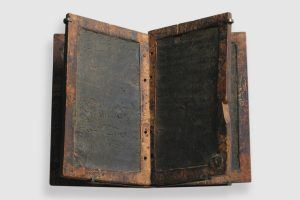 Scholars have built a tight historical and corresponding conceptual link between the advent of the rectangular, Renaissance frame and the advent of linear perspective. It’s true that the renovation of Fra Angelico’s San Domenico altarpiece entailed both, but this was usually not the case. In 1480, about a century and a half after it was made, Giotto’s altarpiece for the Baroncelli Chapel in Santa Croce was renovated. Its original frame was removed and discarded, along with God the Father, who had occupied the gable above the heads of the Virgin and Christ. Spandrels decorated with vermilion cherubim were added, along with a new, rectangular frame that slices right through the curves of the cusped arches.
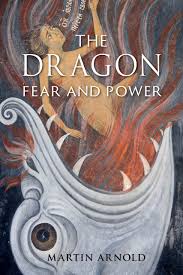 ‘A dragon is no idle fancy,’ wrote Tolkien in 1936, but ‘a potent creation of men’s imagination, richer in significance than his barrow is in gold’. The potency has only increased over the last eighty years. Dragons crowd the pages of modern fantasy; no one needs telling that Daenerys, the Mother of Dragons, holds a crucial place in George R R Martin’s Game of Thrones universe.
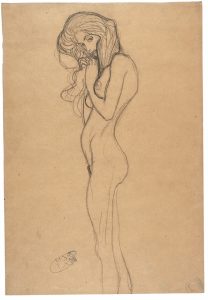 Although it was Klimt’s paintings that first impressed Schiele, especially a solo show in 1908, the two men didn’t meet until the following year when they established a strong rapport and exchanged drawings. The role of drawings occupied a different place in the art of each man. The majority of Klimt’s were composed with paintings in mind but he also made private works, often quickly executed, that deviated from the ideal of heady beauty that permeated his paintings. Sketches of his elderly mother or a nude pregnant woman past the first flush of youth shed stylisation for an unflinching intimacy. Sometimes he didn’t bother with limbs, while figures fill the sheet like columns, cropped at the head and feet. Schiele, though, took it all in.
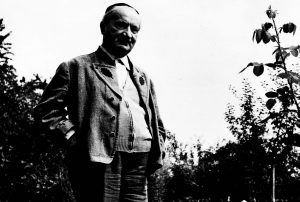 On 24 July 1967, the poet Paul Celan gave a reading in Freiburg im Brisgau. At the time he was on a leave of absence from Saint-Anne psychiatric hospital, where he had been interned after suffering a nervous breakdown, in the midst of which he attempted suicide. At the reading was the philosopher Martin Heidegger. The day after the reading Celan was invited to a meeting with Heidegger at the philosopher’s hut. On arrival Celan signed the guestbook, then the two men went for a walk, which was curtailed by rain, and were driven back to the hut. After their brief meeting Celan returned to Saint-Anne’s. One week later, on 1 August, Celan wrote a poem about the encounter in the form of a single, oblique sentence named after the place where Heidegger’s hut stood, “Todtnauberg”. The title contained two words crucial to both the the poetry of Celan and the philosophy of Heidegger – berg meaning mountain, and todt, death.
 This past Sunday, November 11, marked the Centennial of Armistice Day, the European commemoration of the agreement to end World War I. Representatives from more than 60 countries attended carefully choreographed ceremonies to honor the sacrifice of those who fought.

 In a recent study, data scientists based in Japan found that classical music over the past several centuries has followed laws of evolution. How can non-living cultural expression adhere to these rules?
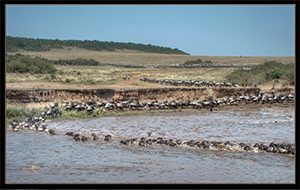 The crocodiles know. They form pincers on either side of the crossing point. Richard says they feel the vibration of all those hooves along the riverbank above them.

 The Pioneer Valley in western Massachusetts is a cradle of social progress — a place where L.G.B.T.Q. is often followed by I.A. (for intersex and asexual), there’s a Stonewall Center (now 33 years old), and gender-nonconforming parents have a nickname of choice (it’s “Baba”).
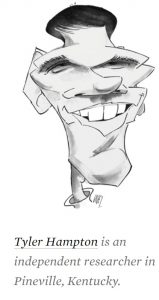 In a publication