
Jacob Dreyer in American Affairs:
Late last October, we were in the basement of an obscure academic building in Berlin’s southwestern suburb of Dahlem, a group of twenty or thirty people assembled to hear Wang Hui talk about nationalism; my friends at the Berggruen Institute Europe had organized a residency in Venice and Berlin for him, to engage with European thought before the Trump victory that everybody saw coming. A few decades ago, Wang was at odds with the Chinese intellectual consensus; he was part of a group called the “New Left,” less a formal grouping of friends than a label for those dissenting from the end-of-history approach. Called the New Left for their advocacy of the state, this group was also conservative, in the William F. Buckley Jr. sense of standing “athwart history yelling Stop” at a time when the changes were being driven by neoliberal American capitalists and their Chinese friends (in the leftist argot, “compradors,” like those Chinese merchants who helped imperialists sell opium in the nineteenth century).
Wang always rejected the New Left label and has never been anti-American as such; he was getting profiled in the New York Times and visiting friends in the West at the time. Today, he regularly bounces between Beijing, Princeton, Heidelberg, and other havens of the Western intelligentsia. Much as some Americans might say that they oppose the Chinese Communist Party (CCP) but like the Chinese people, Wang never hated Americans, he just didn’t want China to accept globalist capitalism. He is now watching the unraveling of that regime with the same curiosity and schadenfreude as the rest of us.
Back in the 2000s, when it seemed that China’s leadership had embraced the neoliberal “Washington Consensus,” dissent against that consensus naturally seemed leftist, if only because China was moving away from the state and toward the market.
More here.
Enjoying the content on 3QD? Help keep us going by donating now.
 The crowd was expectant when Tatiana Andia took the microphone: She was a hero to many in the room, the woman who negotiated cheaper drug prices for Colombia. But that day, at a conference for policymakers and academics on the right to health in Latin America, there was a more intimate topic she wanted to discuss.
 Mafalda is a young girl who hates soup and hypocrisy and loves democracy and the Beatles. She’s a precocious six year innocently questioning how the world works—often to the exasperation of her parents. She and her friends struggle to learn chess, try to become telepathic, and worry about war and overpopulation. After making a passionate plea for world she realizes that “the U.N., the Vatican and my little stool have the same power to sway opinion.” And she has the same hairstylist as Ernie Bushmiller’s Nancy
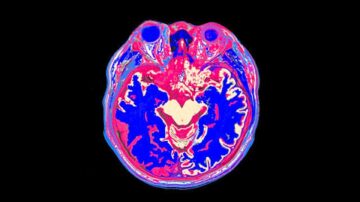 As a
As a  Sandra Mozarowsky was never a queen. She was never a king’s girlfriend. She was the king’s lover, though, if you believe the rumors.
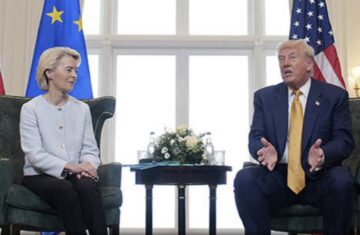 One can reproach Viktor Orbán, a friend of US President Donald Trump and Russian President Vladimir Putin, for many things. But the Hungarian prime minister is not wrong to
  The experiment was a striking attempt to investigate weight control. For six weeks, a group of mice gorged on lard-enriched mouse chow, then scientists infected the mice with worms. The worms wriggled beneath the animals’ skin, migrated to blood vessels that surround the intestines, and started laying eggs.
 If any place had experience seeing civilians through war, it was the Gaza Strip. It’s much of why the place exists. That stretch of Mediterranean coast was only even named while being demarcated as a refuge for Palestinians driven off their land by Jewish forces in the 1948 war that created Israel. Gaza’s permanent status, like the fate of the Palestinians, was never decided, however. And as the decades churned on, so did the conflict.
 W
W