Another Reckoning (With China)

Afra Wang at The Ideas Letter:

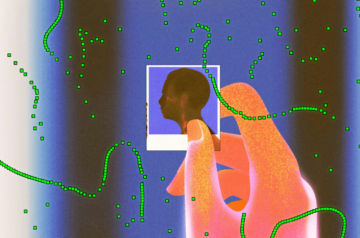
Last summer, a few American writer friends and I traveled across China on a self-organized tour of AI labs, factories, and industrial clusters. Among them was Aadil, a twenty-two-year-old Bay Area engineer who loves the Cantonese rapper SKAI ISYOURGOD and deploys Chinese memes with the fluency of someone raised on the Chinese internet, despite never having lived there.

After the trip, he wrote some reflections on his Substack:

Shenzhen is such a dope city. Legit looks like the future more than any city I’ve been to… Huaqiangbei is massive. Honestly I’m thinking about doing a month-long hardware residency there so I can crash course EE by building stuff hands on.

It is crazy how much their society grinds. It’s in their DNA. The work ethic is insane. Shenzhen was dirt and mud forty years ago and now it’s the world’s example of a cyberpunk city.

Reading his words, I felt a familiar pressure—a small internal shift I had sensed accumulating for years. I left China at 17, in 2012, arrived in the U.S., and absorbed the ambient narratives of American centrality that still held cultural authority then. I spent much of my twenties trying to construct a language that neither flattered nor demonized either country.

But seeing China through Aadil’s eyes forced me to recalibrate.

More here.

Enjoying the content on 3QD? Help keep us going by donating now.
Sam Shepard’s Enactments of Manhood

Helen Shaw at The New Yorker:

Two actors are wriggling across the stage on their bellies. They’re earthworms, or maybe simply brothers, Cricket and Coyote, who want to become earthworms. They’re planning to write a screenplay together, and one suggests making their movie about worms. But “I thought we were writing something about what it means to come from the same root,” the other brother complains. “A movie, a Western, brothers killing men and running amuck in the desert.”

In the oozy, ontologically slapstick “Bad Stars,” written and directed by Amanda Horowitz, and produced in the experimental space the Collapsable Hole in 2025, certain correspondences emerge, particularly if the watcher is familiar with Sam Shepard’s “True West.” In that play, from 1980, two brothers, the wild Lee and the uptight Austin, also bicker about how to write a movie; they also think about “running amuck in the desert.” At the comic coup-de-théâtre climax of “True West,” a drunken Lee smashes a typewriter with a golf club, as Austin gloats over an entire fleet of toasters that he has stolen to prove his macho bonafides.

more here.

Enjoying the content on 3QD? Help keep us going by donating now.

Thursday Poem

Everything That Happens Can Be Called Aging

I have more love than ever.
Our kids have kids soon to have kids.
I need them. I need everyone
to come over to the house,
sleep on the floor, on the couches
in the front room. I need noise,
too many people in too small a space,
I need dancing, the spilling of drinks,
the loud pronouncements
over music, the verbal sparring,
the broken dishes, the wealth.
I need it all flying apart.
My friends to slam against me,
to hold me, to say they love me.
I need mornings to ask for favors
and forgiveness. I need to give,
have all my emotions rattled,
my family to be greedy,
to keep coming, to keep asking
and taking. I need no resolution,
just the constant turmoil of living.
Give me the bottom of the river,
all the unadorned, unfinished,
unpraised moments, one good turn
on the luxuriant wheel.

by  Carl Adamshick
From Saint Friend McSweeney’s Poetry Series, 2014
Copyright © 2014 Carl Adamshick.


Enjoying the content on 3QD? Help keep us going by donating now.

Wednesday, November 26, 2025

How Mira Nair Built the World That Made Zohran Mamdani

Mira Jacob in Harper’s Bazaar:

From her early documentary Indian Cabaret (1985), which follows strippers through Mumbai, to her first feature film, Salaam Bombay (1988), which centers the lives of street children, to Mississippi Masala (1991), which explores prejudice between Black and Indian communities in the U.S., to Queen of Katwe (2016), which gives a glimpse into the life of Ugandan chess prodigy Phiona Mutesi, Nair has built a career on surfacing brilliant, if often overlooked, stories. Her devotion to getting into the particularities and specificities of culture, for not being swayed by an invisible audience that executives insist might not get it, has earned her a loyal following. It’s also gotten her an Academy Award nomination and the Cannes Prix d’Or and Audience Award for Salaam Bombay, the Golden Lion award for Monsoon Wedding at the Venice Film Festival, and many other prizes. It is no surprise to any of us that a son raised in her household would engender the same loyalty.

More here.

Enjoying the content on 3QD? Help keep us going by donating now.

What is the difference between a dove and a pigeon?

Tom Hibbert at Discover Wildlife:

The names ‘dove’ and ‘pigeon’ can be deceptive. Scientifically speaking, neither of them carry much merit. All the birds we know as either pigeons or doves belong to the same family, Columbidae. This large group of often plump, slender-billed birds encompasses around 350 species, with five regularly found in the UK.

The name dove is usually given to the smaller members of this family. But in taxonomy (the scientific process of naming and classifying living things), there is no real distinction between a dove and a pigeon.

The stock dove is more closely related to the woodpigeon than it is the collared dove or turtle dove, and the feral pigeons in our towns are descended from rock doves. In fact, the birds we know as pigeons may even be called doves in other languages, or vice versa.

More here.

Enjoying the content on 3QD? Help keep us going by donating now.

Is the future of education outside universities?

Annalee Newitz in New Scientist:

In 1907, US historian Henry Adams first started circulating a memoir that would go on to be a smash hit in 1919: The Education of Henry Adams. Given Adams’s illustrious family – both his grandfather and great-grandfather were presidents – you might expect it to be a self-congratulatory tale of the wonders of US education.

Instead, it galvanised audiences with the bold claim that everything Adams had been taught in 19th-century schools was useless. Immersed in religious studies and the classics, he was ill-equipped for a world of mass electrification and automobiles. If education was supposed to prepare him for the future, he argued, it had failed.

Nearly 120 years later, Adams’s critique is once again relevant, especially in the US. New technologies are upending the traditional ways that students learn. The problem isn’t just the rise of AI models, though. It is also ideological. The US government is depriving universities of billions in federal funding while it demands more control over curriculums and admissions. The future of education is in chaos, but it isn’t dying; it is changing to meet the moment.

More here.

Enjoying the content on 3QD? Help keep us going by donating now.

AI Tools Unravel Thoughts, Actions, and Neuronal Makeup

Sneha Khedkar in The Scientist:

The development of better and more reliable artificial intelligence (AI) technologies has immense applications in the field of scientific research. AI has become a powerful extra set of eyes and hands for scientists: It can sift through heaps of data in seconds, guide experiments, and help write better manuscripts. “We’re seeing the emergence of subdisciplines that are AI plus X, where X is essentially every field of science. Neuroscience is no exception,” said Christopher Rozell, a neuroengineer at Georgia Institute of Technology, who mediated the AI press conference at the 2025 Society for Neuroscience meeting. During the session, five panelists discussed the applications of AI in biology and how machine learning can augment clinical practice and the field of neuroscience, from data analyses to clinical diagnoses.

Modified Artificial Neural Networks Offer Clues on How the Brain Integrates Sensory Information

The human brain integrates various sensory inputs to reliably perceive the surroundings.1 “This task nowadays is also very successfully solved by artificial neural networks (ANNs), which are indeed inspired by the brain,” said Marcel Oberlaender, a neurobiologist at the Max Planck Institute for Neurobiology of Behavior.

More here.

Enjoying the content on 3QD? Help keep us going by donating now.

Something New From Hal Hartley

Jim Hanas at Mediumcool:

Hal Hartley does have a new movie out. His first feature since Ned Rifle (2014), the conclusion of the Henry Fool trilogy. Did you know that? I suspect that either you did not know that or have known it for so long that you now suspect I am a poser. (That’s what shibboleth-speakers call people who have gained, but not earned, access to the shibboleth. Tedious, but it comes with the territory.) It’s called Where to Land, he paid for it via Kickstarter—as he has for his projects since Ned Rifle—and I doubt a large audience will see it. Hartley produces and sells his own box-sets and offers his movies via streaming on his website, but the new one isn’t there yet. It had a handful of screenings at the Roxy Cinema in New York, which is where I saw it.

I loved it, and you if you like Hal Hartley, you will too. Hartley is an acquired taste, and seeing the new movie made me recall the experience of first seeing Trust (1990) and Simple Men (1992), the final two movies in his so-called Long Island Trilogy. Actors don’t exactly act in Hal Hartley movies. They say their lines and are. Robert Bresson, who preferred the term “models” to “actors” is often brought up in connection with Hartley, and while that is a good starting point, Hartley has a much lighter touch.

more here.

Enjoying the content on 3QD? Help keep us going by donating now.

Tuesday, November 25, 2025

The Joyful Sorrows of the Reverend Joyce McDonald

Jerry Saltz at New York Magazine:

There is an intimate intensity to her work. Family Grief depicts McDonald’s father, who died in 1977, in his coffin, surrounded by family. “That same day I started using drugs,” she has said. Her father appears again in My Dad, My Hero (Will McDonald), a bust painted gold. He wears a camera around his neck — a tribute to his profession and calling — like a cross. Her father is both a source of anguish and a beaming emblem of pride.

So many of McDonald’s sculptures manage to convey the joy of inner transformation. The faces smile softly with their eyes closed, beatific in their bliss without falling into bathos. Glory (A Taste of Sweetness After Near Death) features McDonald in a luminous purple shawl, gazing heavenward. Beauty and the Peace shows a woman with a COVID mask falling from her face. Beauty in the Midst (Strength) is a three-faced being bedecked in pearls, radiating like a talisman. Mother’s Prayers echoes ancient votive statues in its compact elegance, while Covered With Love could be a folk version of a Renaissance-era Madonna and child.

more here.

Enjoying the content on 3QD? Help keep us going by donating now.

The Pattern Principle

Leann Davis Alspaugh at Acroteria:

Recently, I read “The Pleasures of Patterns in Art” by Samuel Jay Keyser, a theoretical linguist at MIT. This essay, adapted from Keyser’s book Play It Again, Sam: Repetition in the Arts, is an engrossing mix of art appreciation, art history, and visual theory—an unbeatable combination for an art critic and designer.

Keyser opens by writing about how repetition and variation work in Gustave Caillebotte’s Paris Street, Rainy Day (1877). You don’t have to have a degree from MIT to figure out why this painting is great—that is patently obvious. Caillebotte could paint interiors and exteriors, country gardens and Parisian vistas; my favorites are his paintings of crews refinishing the hardwood floors of a Paris flat. He was considered an Impressionist but, unlike some of his peers, Caillebotte aimed for psychological realism, depicting modern life through snapshots of intimate moments with distinctly individual protagonists.

More here.

Enjoying the content on 3QD? Help keep us going by donating now.

Christian Pacifism And Human Nature

Peter Mommsen at The Point:

The Christian case against pacifism is more convoluted, given the tension with the New Testament and early tradition. Yet in essence, it’s an appeal to common sense. While Jesus’s teachings may guide private life, this view holds, to apply them to public life is grossly irresponsible, since that would prevent Christians from defending the innocent or serving the state. After its legalization by Constantine in 313 CE, Christianity accepted a role in maintaining social order in the Roman Empire. Accordingly, bishops such as Ambrose and Augustine allowed Christians to participate in just wars and capital punishment. (They maintained the church’s ban on gladiatorial games, abortion and infanticide.) These churchmen didn’t deny Jesus’s teachings—they just made room for exceptions. To this end, they drew creatively on the Old Testament and philosophers like Cicero, or expanded on the apostle Paul’s dictum that government is ordained by God. Augustine, for example, reasoned that a soldier who slays on his superior’s orders doesn’t violate the prohibition on killing because he “does not himself ‘kill’—he is an instrument, a sword in its user’s hand.” Augustine thus offered Christians the kind of work-around that would enable them to punish and wage war with a good conscience.

more here.

Enjoying the content on 3QD? Help keep us going by donating now.

A New Bridge Links the Strange Math of Infinity to Computer Science

Joseph Howlett in Quanta:

In 2023, a mathematician named Anton Bernshteyn published a deep and surprising connection between the remote mathematical frontier of descriptive set theory and modern computer science.

He showed that all problems about certain kinds of infinite sets can be rewritten as problems about how networks of computers communicate. The bridge connecting the disciplines surprised researchers on both sides. Set theorists use the language of logic, computer scientists the language of algorithms. Set theory deals with the infinite, computer science with the finite. There’s no reason why their problems should be related, much less equivalent.

“This is something really weird,” said Václav Rozhoň, a computer scientist at Charles University in Prague. “Like, you are not supposed to have this.”

More here.

Enjoying the content on 3QD? Help keep us going by donating now.

Sean Carroll’s Mindscape Podcast: Anil Ananthaswamy on the Mathematics of Neural Nets and AI

Sean Carroll at Preposterous Universe:

Machine learning using neural networks has led to a remarkable leap forward in artificial intelligence, and the technological and social ramifications have been discussed at great length. To understand the origin and nature of this progress, it is useful to dig at least a little bit into the mathematical and algorithmic structures underlying these techniques. Anil Ananthaswamy takes up this challenge in his book Why Machines Learn: The Elegant Math Behind Modern AI. In this conversation we give a brief overview of some of the basic ideas, including the curse of dimensionality, backpropagation, transformer architectures, and more.

More here.

Enjoying the content on 3QD? Help keep us going by donating now.

What We Talk About When We Talk About Cuba

Sara Kozameh at the Los Angeles Review of Books:

Cubans call it “el bloqueo” (the blockade). In the United States, we know it as “the embargo.” Technically speaking, US economic sanctions against Cuba comprise a set of laws in place since 1962 that prevent most avenues for trade between the two nations. However one refers to it, it is the longest trade embargo in modern history, and arguably one of the harshest. The measure was passed by President John F. Kennedy two years after the culmination of the Cuban Revolution, when armed insurgents toppled US-backed dictator Fulgencio Batista and ushered in an era of leftist radicalism and social transformation. Upon taking power in 1959, the insurgents’ leader, Fidel Castro, swiftly nationalized the land and assets of US nationals and companies across the island. Vastly underestimating the popularity of Castro and his movement, the US government responded with the sanctions and their explicit goal to “bring about hunger, desperation, and the overthrow” of the regime.

While a trade embargo implies legal constraints on bilateral economic trade, the term blockade carries a heavier connotation.

More here.

Enjoying the content on 3QD? Help keep us going by donating now.

a wave of mass brutality accompanied the collapse of the first pan-European culture 

Andrew Curry in Science:

In 2017, archaeologists digging in the middle of a Slovak wheat field uncovered four headless skeletons. The burials, in a ditch dug on the edge of a settlement more than 7000 years ago, belonged to one of Europe’s first farming communities. Burying people in or near settlements wasn’t unusual at the time—but burying them without heads was.

Year after year, the researchers have returned to find more and more headless skeletons on the outskirts of Vráble, a small village 100 kilometers east of Bratislava. “Everywhere we started to dig, we found bones. Everywhere we were sitting or standing, there were bones,” says Katharina Fuchs, a biological 
anthropologist at Kiel University (KU) who has excavated in Vráble every summer since 2021. In the summer of 2022, she and colleagues from KU and Constantine the Philosopher University in Nitra recovered the skeletal remains of 34 people, piled on top of each other two or three deep in a space about the size of a parking spot. With the exception of one child, none of them had heads.

More here.

Enjoying the content on 3QD? Help keep us going by donating now.

GLP-1 Drugs Linked to Dramatically Lower Death Rates in Colon Cancer Patients

From UC San Diego Today:

A new University of California San Diego study offers compelling evidence that GLP-1 receptor agonists — the class of drugs behind Ozempic, Wegovy and Mounjaro, for example — may do more than regulate blood sugar and weight. In an analysis of more than 6,800 colon cancer patients across all University of California Health sites, researchers found that those taking glucagon-like peptide-1 (GLP-1) medications were less than half as likely to die within five years compared to those who weren’t on the drugs (15.5% vs. 37.1%).

…The survival benefit appeared most pronounced in patients with very high BMI (over 35), hinting that GLP-1 drugs may help counteract the inflammatory and metabolic conditions that worsen colon cancer prognosis. Researchers believe several biological mechanisms could explain the link. Beyond regulating blood sugar, GLP-1 receptor agonists reduce systemic inflammation, improve insulin sensitivity and promote weight loss — all factors that can dampen tumor-promoting pathways. Laboratory studies also suggest that GLP-1 drugs may directly prevent cancer cell growth, trigger cancer cell death and reshape the tumor microenvironment.

More here.

Enjoying the content on 3QD? Help keep us going by donating now.

Tuesday Poem

In The Beginning

We are in the book of Correlations:
In the beginning was the Void
like a turn-down of nothingness.
In that pre-dream of Creation, all things
equally plausible, the Maker sees:
If creativity is the control
of chaos through expression, then Creation
could abridge inchoate Chaos itself.
In a blink He gives the Word, and the black Void
floods with the hot thought of light.
In beams of brightness daylight posts its coming,
its going in scenes for which Bach
might have writ the Oratorio.
In the gravity outlay that follows, He sorts through
great swirling masses of alliterate star matter.
A notorious perfectionist, He goes through
art gum erasers at a prodigious rate.
The sun He moves around like a flood lamp–
such heat and aspiration coming
from a dime-sized portion of the sky!
He notices the moon, how its light
transliterates the sun’s. He tries it in evening,
but the stars dim in its government.
He tries it in morning, but the blue
of astronauts shows through. Unable
to decide, He tries it from time to time.
But then He looks back, sees he missed a ball
of consequence, a planet in its heat and heart.
He paints it with water, makes it a water ball.

But in oceans alone He does not see
the sum of things. “I see strokes of reef
like brush strokes of incompletion,
I see good growing latitudes gone to waste.
Let there be marked volcanics. Let islands
of igneous intrusion rise in the surge,
a cave at a time. And now,” He says,
“let the rest flow in Anent, Adroit, Ajoint.”
With fructifying rain He greens whole continents.
In the complete fragrance of the original earth,
hand over hand for light, the whitest green
breaks through. Black boughs put on green flesh.
Mushrooms, almost meat, almost speak.
Grubs, all maw, bore the loam’s abundance.
The size of hands, birds populate the hills,
make the land loud with bird bluster,
the plural voice of the island thrush. Recumbent kine
He makes to rest their wrinkled butts in meadow grass.
At this, the sixth instanter of Creation,
He rests his case. It was risky.
It was successful. How could He but be pleased?
And He partakes of the deep rest that Sunday enjowls.

by John Barr

Enjoying the content on 3QD? Help keep us going by donating now.