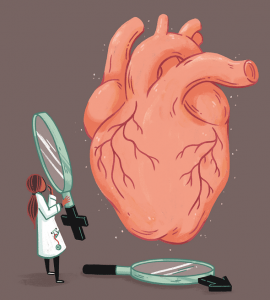
Consider almost everything you know about heart disease, particularly the garden-variety type involving high cholesterol levels, clogged coronary arteries, stents and bypass surgeries. Now I want you to rebrand all that as “male-pattern” cardiovascular disease. That’s how some researchers are reframing it after taking a closer look at heart disease in women. For years cardiologists were baffled as to why up to half of women with classic symptoms of blocked vessels—chest pain, shortness of breath and an abnormal cardiac stress test—turn out to have open arteries. Doctors called it “cardiac syndrome X.” They didn’t understand it, and many women were subjected to repeated angiograms in search of blockages that weren’t there. That still happens today, but more doctors now recognize that despite having open arteries, about half of women with this pattern nonetheless have ischemia—poor blood flow through the heart. The condition has gained a mouthful of a name: ischemia and no obstructive coronary artery disease, or INOCA.
Cardiologist C. Noel Bairey Merz has spent more than 20 years overseeing the Women’s Ischemia Syndrome Evaluation (WISE) study, aimed at demystifying INOCA and related conditions. Although male-pattern disease is the most prevalent type in both sexes, “INOCA probably comprises 25 to 30 percent of ischemic heart disease in women and 10 percent in men,” says Bairey Merz, director of the Barbra Streisand Women’s Heart Center at Cedars-Sinai’s Smidt Heart Institute. WISE data show that after diagnosis, women with the disorder face a 2.5 percentannual risk of dying, suffering a nonfatal heart attack or stroke, or being hospitalized for heart failure. They are also four times more likely than men to be readmitted to a hospital within 180 days of being treated for a heart attack or severe chest pain.
The initial mystery of INOCA was how the heart could be starving for blood if its main arteries are not blocked.
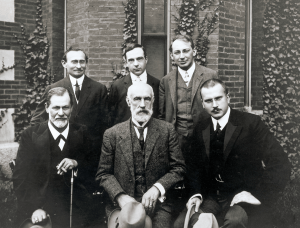
In 1909 five men converged on Clark University in Massachusetts to conquer the New World with an idea. At the head of this little troupe was psychoanalyst Sigmund Freud. Ten years earlier Freud had introduced a new treatment for what was called “hysteria” in his book The Interpretation of Dreams. This work also introduced a scandalous view of the human psyche: underneath the surface of consciousness roils a largely inaccessible cauldron of deeply rooted drives, especially of sexual energy (the libido). These drives, held in check by socially inculcated morality, vent themselves in slips of the tongue, dreams and neuroses. The slips in turn provide evidence of the unconscious mind. At the invitation of psychologist G. Stanley Hall, Freud delivered five lectures at Clark. In the audience was philosopher William James, who had traveled from Harvard University to meet Freud. It is said that, as James departed, he told Freud, “The future of psychology belongs to your work.” And he was right.
The view that human beings are driven by dark emotional forces over which they have little or no control remains widespread. In this conception, the urgings of the conscious mind constantly battle the secret desires of the unconscious. Just how rooted the idea of a dark unconscious has become in popular culture can be seen in the 2015 Pixar film Inside Out. Here the unconscious mind of a girl named Riley is filled with troublemakers and fears and housed in a closed space. People like to think of the unconscious as a place where we can shove uncomfortable thoughts and impulses because we want to believe that conscious thought directs our actions; if it did not, we would seemingly have no control over our lives.
This image could hardly be less accurate, however. Recent research indicates that conscious and the unconscious processes do not usually operate in opposition. They are not competitors wrestling for hegemony over our psyche. They are not even separate spheres, as Freud’s later classification into the ego, id and superego would suggest. Rather there is only one mind in which conscious and unconscious strands are interwoven. In fact, even our most reasonable thoughts and actions mainly result from automatic, unconscious processes.
Whether you are an optimist or a pessimist is not just a question of personal temperament. It is also, increasingly, a question of politics. The divide between the optimists and the pessimists is as acute as any in contemporary politics and like many others—the generational divide between old and young, the educational divide between people who did and didn’t go to college—it cuts across left and right. There are left pessimists and right pessimists; left optimists and right optimists. What there isn’t is much common ground between them. Competing views about whether the world is getting better or worse has become another dialogue of the deaf.
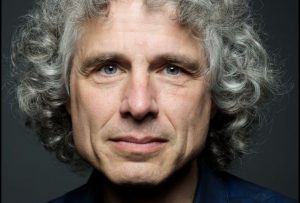
Steven Pinker’s new book Enlightenment Now: The Case for Reason, Science, Humanism, and Progress—along with its critical reception—illustrates how dug in the two sides are. Pinker argues that most people have lost sight of the incredible benefits that liberal democratic values continue to deliver because too many of us have a bias in favour of bad news. He blames the things he doesn’t like—including Donald Trump’s presidency—on this innate and deeply misguided pessimism about the possibility of progress. “The most consistent predictor of Trump support,” he writes, “was pessimism.” He accuses these pessimists of fatalism, because they assume that any good news they hear is essentially fake news. They discount progress because of their deep faith in the inexorable pull of the worst that modern societies have to offer. He thinks that the pessimists have effectively given up on the capacity of human beings to make a better future.
Black holes are regions of space where there’s so much mass in such a small volume that there exists an event horizon: a region from within which nothing, not even light, can escape. Yet this doesn’t necessarily mean that black holes suck matter in; they simply gravitate.
Black holes are some of the strangest, most wondrous objects in all the Universe. With huge amounts of mass concentrated into an extremely small volume, they inevitably collapse down to singularities, surrounded by event horizons from which nothing can escape. These are the densest objects in the entire Universe. Whenever anything comes too close to one, the forces from the black hole will tear it apart; when any matter, antimatter, or radiation crosses the event horizon, it simply falls down to the central singularity, growing the black hole and adding to its mass.
These properties about black holes are all true. But there’s an associated idea that’s absolute fiction: black holes suck surrounding matter into them. This couldn’t be further from the truth, and completely misrepresents how gravity works. The biggest myth about black holes is that they suck. Here’s the scientific truth.
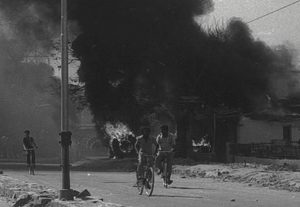
Nowhere else in the world did the year 1984 fulfill its apocalyptic portents as it did in India. Separatist violence in the Punjab, the military attack on the great Sikh temple of Amritsar; the assassination of the Prime Minister, Mrs Indira Gandhi; riots in several cities; the gas disaster in Bhopal – the events followed relentlessly on each other. There were days in 1984 when it took courage to open the New Delhi papers in the morning.
Of the year’s many catastrophes, the sectarian violence following Mrs Gandhi’s death had the greatest effect on my life. Looking back, I see that the experiences of that period were profoundly important to my development as a writer; so much so that I have never attempted to write about them until now.
Dana, you’re absolutely right to wonder what happened to The Tale; it’s exactly the kind of movie I have in mind, underseen despite tackling one of the most urgent subjects of our moment. I may have seen better movies overall this year, but I don’t think any of them had a conceit that shook me as deeply as this one. It all comes down to a simple, harrowing thing that Jennifer Fox does to depict how the heroine of the film, also named Jennifer Fox (and played by Laura Dern), remembers a sexual relationship she had with her tennis coach as a teenager. She initially remembers herself as confident and sexually self-possessed; she remembers herself, in other words, as a young woman somewhat in control of what happened to her, and, as the movie reveals, this has led her to remember what happened as a more consensual affair, rather than as abuse.
But then comes the moment that we see Fox correct her memory, replaying the same flashbacks using a teen actress closer in demeanor and body type to the scared girl Fox actually was, rather than the woman she supposed she was. It’s shattering—an exceptional feat of writing, and of course, Dern kills the performance. It’s not an easy scene to watch, but The Tale is an easy film to see and has been for most of the year—it’s right there on HBO! But short of the ability of Oscar attention to revive discussion about that film, the full-fledged online discussion cycle for it has come and gone. It’s bewildering.
Peter Carruthers, Distinguished University Professor of Philosophy at the University of Maryland, College Park, is an expert on the philosophy of mind who draws heavily on empirical psychology and cognitive neuroscience. He outlined many of his ideas on conscious thinking in his 2015 book The Centered Mind: What the Science of Working Memory Shows Us about the Nature of Human Thought. More recently, in 2017, he published a paper with the astonishing title of “The Illusion of Conscious Thought.” In the following excerpted conversation, Carruthers explains to editor Steve Ayan the reasons for his provocative proposal.
What makes you think conscious thought is an illusion?
I believe that the whole idea of conscious thought is an error. I came to this conclusion by following out the implications of the two of the main theories of consciousness. The first is what is called the Global Workspace Theory, which is associated with neuroscientists Stanislas Dehaene and Bernard Baars. Their theory states that to be considered conscious a mental state must be among the contents of working memory (the “user interface” of our minds) and thereby be available to other mental functions, such as decision-making and verbalization. Accordingly, conscious states are those that are “globally broadcast,” so to speak. The alternative view, proposed by Michael Graziano, David Rosenthal and others, holds that conscious mental states are simply those that you know of, that you are directly aware of in a way that doesn’t require you to interpret yourself. You do not have to read you own mind to know of them. Now, whichever view you adopt, it turns out that thoughts such as decisions and judgments should not be considered to be conscious. They are not accessible in working memory, nor are we directly aware of them. We merely have what I call “the illusion of immediacy”—the false impression that we know our thoughts directly.
“Are we all Joyceans here, then?” the young professor asked, poking his head into the classroom doorway.
We looked back at him uncertainly. Yes, we were all here for the Ulysses seminar that met at six thirty P.M. on Tuesdays and Thursdays. But to call us “Joyceans” seemed like a stretch. Today—Thursday, January 29, 2015—was only the first day. And besides, this was City College.
No article about City College is complete without the obligatory phrase “the Harvard of the proletariat,” which was supposedly both our school’s nickname and its reputation in the mid twentieth century. By 2015, however, no one could deny that our beautiful Harlem campus was in decline. Governor Cuomo had recently slashed the budget for the entire CUNY system, with City College bearing the brunt of the cuts, and the disastrousness of this decision is difficult to convey without resorting to sodomitic imagery. That year, classrooms were so overcrowded that latecomers had to sit on the floor. One of my professors entered his office on the first day to find that his entire desk had been stolen. The humanities building still used old-fashioned blackboards, but the budget didn’t provide for chalk, so professors hoarded and traded it like prison cigarettes. Most bathroom stalls didn’t lock, and for several weeks, the entire campus collectively ran out of toilet paper—I’ll never forget the Great Toilet Paper Crisis of 2015 and the generosity it inspired in my fellow students, who shared their own toilet paper from home and never stooped to charging for it.
It was in this context that the English department decided to offer its first-ever Ulysses seminar, though they offered it as you might offer someone a home-cooked meal that you’re secretly pretty sure contains broken glass. “NB: This is a highly demanding course with a heavy reading load,” the course catalogue warned in bold italics, “more like a graduate seminar than a 400-level college class.” I don’t think it actually said “DON’T TAKE THIS CLASS,” but that was the obvious implication. I have since learned that our idealistic young professor was met with departmental resistance when he suggested a Ulysses seminar, and I now suspect that the department was half hoping no one would register for it at all. But the department hadn’t counted on the sheer belligerence of City College students. I took one look at that warning and immediately decided, thanks to the same knee-jerk rebelliousness that had led me to avoid college until the age of twenty-seven, that I had to take this class. I wasn’t the only one: there were thirty students in the Ulysses seminar. (This is what passes for a small discussion class at City College.)
Were we all Joyceans here, then? Taking our silence as a yes, our professor stepped into the crowded classroom.
Media coverage of uncontacted tribes often delights in painting indigenous groups as people out of time, hunter-gatherers in the age of Seamless. In November, an American missionary was killed trying to reach North Sentinel Island in the Bay of Bengal, home to a remote tribe thought to number about 100 people. Grainy images shot from a helicopter in 2004 of naked islanders brandishing spears flooded the internet. But when they first appear in Piripkura, Pakyî and Tamandua offer a different kind of spectacle. What is striking about them is not their timelessness, but rather their very modern resolve to persist against the odds, to be free from the outside world.
That independence is likely to come further under threat from the incoming far-right president, Jair Bolsonaro, who has pledged not to reserve any more land for indigenous peoples. In previous years, Bolsonaro has said he would arm ranchers in their conflicts with native groups and has lamented that the Brazilian army was not as efficient as the American cavalry in exterminatingindigenous tribes. When trying to put a more benign gloss on these statements, Bolsonaro has claimed that government protections unfairly exclude indigenous people from the benefits of 21st-century life.
Nearly two decades ago, photo historian Douglas Nickel observed that traditional art history had not yet developed the tools for handling non-art photographs.1 In many ways, much progress has been made since 2001: vernacular photographs of every kind have become worthy objects of study for scholars and critics—not only within visual culture, but in history, sociology, anthropology, and literary and cultural studies. In fact, these days, as Nickel himself has pointed out, studies of vernacular photographs outpace the production of monographic books about “fine art photographers.”2
However, it remains difficult for art historians to build an interpretative model that takes full measure of the visual subtleties of non-art photographs—including their unexpected aspirations towards the aesthetic—without slighting the historical and social conditions in which they were produced.3 With that challenge in mind, I consider here those very aspirations, as they surface repeatedly in a group of “medical portraits”: casebook photographs of patients made between 1885 and 1916 at the Holloway Sanatorium in St. Ann’s Heath, Virginia Water, Surrey, England (fig. 1).
Rooney’s second novel, “Normal People,” was nominated for the 2018 Man Booker Prize, and will be released in the United States in April. According to The Bookseller, it was the year’s most critically praised book in the United Kingdom. Like “Conversations with Friends,” it is basically a romantic tragicomedy. The point is not so much the plot as the characters, and the heady relationships in and out of which they move “like figure-skaters, improvising their discussions so adeptly and in such perfect synchronization that it surprises them.” In the opening chapters, Marianne, a smart and unpopular high-school student whose single mother is a lawyer, begins a secret relationship with Connell, a smart and popular high-school student whose single mother cleans Marianne’s family’s house. “She just acted the same as always, like it never happened, reading her book at the lockers as usual, getting into pointless arguments,” Rooney writes. One of the unusual pleasures of Rooney’s novels is watching young women engage in a casual intellectual hooliganism, demolishing every mediocrity that crosses their paths, just for the fun of it.
First he said: It is the woman in us That makes us write– Let us acknowledge it– Men would be silent. We are not men Therefore we can speak And be conscious (of the two sides) Unbent by the sensual As befits accuracy.
I then said: Dare you make this Your propaganda?
And he answered: Am I not I–here?
by William Carlos Williams from: The Tempers, 1913
Katie Thomas and Charles Ornstein in The New York Times:
Hundreds of doctors packed an auditorium at Memorial Sloan Kettering Cancer Center on Oct. 1, deeply angered by revelations that the hospital’s top medical officer and other leaders had cultivated lucrative relationships with for-profit companies. One by one, they stood up to challenge the stewardship of their beloved institution, often to emotional applause. Some speakers accused their leaders of letting the quest to make more money undermine the hospital’s mission. Others bemoaned a rigid, hierarchical management that had left them feeling they had no real voice in the hospital’s direction. “Slowly, I’ve seen more and more of the higher-up meetings happening with people who are dressed up in suits as opposed to white coats,” said Dr. Viviane Tabar, chairwoman of the neurosurgery department. “The corporatization of this institution is clear to many of us who have been here a long time,” said Dr. Carol L. Brown, a gynecologic cancer surgeon, according to an audio recording of the meeting. The meeting ended after several doctors advocated an immediate no-confidence vote in the hospital’s senior leadership. The turmoil followed reports by The New York Times and ProPublica that the hospital’s chief medical officer, Dr. José Baselga, had been paid millions by drug and health care companies and failed to disclose those ties more than 100 times in medical journals, and that hospital insiders had made lucrative side deals that stood to earn them handsome profits, sometimes for work they had done on the job.
…Tensions among doctors at the hospital over conflicts of interests mounted through September. On Sept. 28, Colin Begg, the chairman of its department of epidemiology and biostatistics, wrote other department heads. “The key substantive issue is that the problems we face were not caused by failures to disclose conflicts. The problems were due to the conflicts themselves,” he wrote in the email, a copy of which was obtained by The Times and ProPublica. Referring to Dr. Thompson and Douglas A. Warner III, the outgoing chairman of the hospital’s board of managers and overseers, who is known as Sandy, he said, “As far as I can tell neither Sandy nor Craig understand this very basic point. And if you don’t recognize that a problem exists there is no chance you will solve it.”
He also said, “Making billions is not our mission. M.S.K. is a nonprofit with a fundamentally social mission.”
The Syndics of the Wine Traders Guild of Amsterdam, by Ferdinand Bol, c. 1660.
In my capacity as art editor at Lapham’s Quarterly, I’ve spent the last six weeks researching images for our upcoming issue on TRADE. It was not a thematic that excited me when I started, I have to admit—I’m a curator and a writer, not a businessman or an economist, dammit! But after looking at more than 10,000 paintings, sculptures, and photographs that limn the human urge to exchange goods, a faint thrill and a growing sense of despair have both begun to take root.I’ve peered into the faces of Ferdinand Bol’s Syndics of the Wine Traders Guild of Amsterdam from 1660, looking for signs of avarice, prudence, and rectitude.
Terracotta figurine of a camel carrying transport amphorae, 3rd century, Roman. Courtesy of the Metropolitan Museum of Art.
I’ve turned in my hands a 3rd century terracotta figurine of a camel carrying transport amphora (a secular, material expression of the nativity scene I just disassembled with my daughter). I’ve flipped through Alex Majoli’s 1999 series of photographs of the Roque Santeiro in Angola, the largest open-air market in Africa. According to Alex, the Roque attracts roughly one million people per day, and its vendors sell anything and everything: food, weapons, drugs, even people. It hosts church services and marriages. It shelters war cripples, homeless refugees, police, prostitutes, and the insane. Babies are born and the dead are interred within and beneath its stalls. At this “market of the damned,” Hieronymus Bosch’s 15th century visions of hell have been fully realized by the predations of 20th century capitalism.
The Roque Santeiro market, Angola, 1999. Photograph by Alex Majoli.
A line and a theme have emerged through the iconography I’ve been following: to trade is human. We buy and we sell; we exchange, barter, haggle, negotiate, promise, vouchsafe, con, steal, acquire, and unload. It’s what we do; it’s what we’ve always done. The allure of trade lies not so much in the goods amassed as in the frisson of exchange: the contact with another human being that occurs in the act of trade. The slipping-ness from one to another. The handshake, the greased palm, the unctuous smile. The flow, the liquidity. The intimate bond that is established between two people when they make a deal. To trade is human. It’s dirty and oily and sexy.
And yet, underneath trade, there is something else going on. Something very faint, something very fragile, something that only adds to the excitement and the value of the goods on the table, is put at risk each time a trade is made. This something is trust. Read more »
What is a number? Everyone who takes high school math learns about the real numbers. These are our old friends on the number line. You can hardly do classical algebra or geometry without them. We use the real numbers so often we find them comfortable and familiar. After all, they are just numbers you write as a (possibly infinite) decimal. They may be long to write, but numbers like
Let’s back up a step or two. The integers (that is, the counting numbers and their negatives: 0,1,-1,2,-2,3,-3,,…) aren’t very controversial [1]. We can all agree what it means to have 7 goats, no goats, or that I have -3 goats when I owe my neighbor 3 goats. The rational numbers aren’t too bad, either. After all, to have 7/5 of a hamburger is to slice two burgers into 5 equal pieces each and to take seven of the pieces. And, again, to have -8/3 of a burger is to owe someone two burgers plus 2/3 of a third [2].
The integers and rationals are down to earth, as numbers go. However, it doesn’t take very long before you realize you need more numbers. One day in geometry class you draw a one-by-one square, notice you can draw a straight line which connects the opposite corners, and that line self-evidently has a length. Whatever that length is, it is an honest-to-goodness number (call it D) which exists in nature. At some point, you notice two one-by-one squares can be cut along the diagonal and reassembled into a single, larger square with side length D. On the one hand, the area of this new square is D². On the other hand, it is the area of the two smaller squares taken together. That is, D²=2. The Pythagoreans already knew 2600 years ago there is no rational number whose square equals two. The apocryphal story is the existence of non-rational numbers was a closely held secret for the Pythagoreans, worthy of murder. Nowadays we tell it to school children. So much for the innocence of youth. Read more »
“I’m on a roadside perch,” writes Ghalib in a letter, “lounging on a takht, enjoying the sunshine, writing this letter. The weather is cold…,” he continues, as he does in most letters, with a ticklish observation or a humble admission ending on a philosophical note, a comment tinged with great sadness or a remark of wild irreverence fastened to a mystic moment. These are fragments recognized in Urdu as literary gems because they were penned by a genius, but to those of us hungry for the short-lived world that shaped classical Urdu, those distanced from that world in time and place, Ghalib’s letters chronicle what is arguably the height of Urdu’s efflorescence as well as its most critical transitions as an elite culture that found itself wedged between empires (the Mughal and the British), and eventually, many decades after Ghalib’s death, between two countries (Pakistan and India).
I write this on a winter day in California. It is Mirza’s two hundred and twenty first birth anniversary. There is a nip in the air and the sunlight is filtered through my carob tree; my notes, scribbled in Nastaliq, are dappled and illuminated by sudden flashes as the branches sway. Isn’t Ghalib’s Delhi a labyrinth of dappled alleys, a dream leaping from rooftop to rooftop, getting a stealthy taste of the saffron-cream dessert known to be prepared here under a full moon and left overnight to set in winter dew— a heady mix of in-the moment-sensations that vivify memory— rising with the city’s nimble frangipani, its famed red sandstone and marble minarets, returning reliably like its homing pigeons. Read more »
I call on the evening of the winter solstice. Two mornings later, I find myself boarding a plane to the Black Hills of South Dakota, soon to turn white from a Christmas blizzard. I have never experienced these mountains or this state before. But I have experienced many blizzards, the first of which occurred the night I was born.
Well, it’s been building up inside of me For – oh, I don’t know how long
“I’m disappointed,” I explain in a SoHo café two weeks prior. “I thought I could find what I was looking for – maybe not in Jersey, but at least in New York. The people, the questions. But we are constantly out of phase. The people I seek don’t want to be sought by me, and vice versa. There’s nothing I can do. It just isn’t here.”
The boy listening to me looks startled, and a bit sad. Or worried? I glance down at the table and realize my tea had jumped from my clenched fists. The one-table radius around us has no audible conversation.
“Sorry,” I say.
The waitress comes over. “Would you like anything else?”
The first billboard that greets you as you leave the eight-gate airport has a cartoon diplodocus on it, featuring a generous view of its behind. A speech bubble says: “Welcome to Rapid City! Now what?”
I don’t know why, but I keep thinking Something’s bound to go wrong
In his book Sonic Alchemy, David Howard writes that “Don’t Worry Baby” – unlike its Beach Boys A-side “I Get Around” and other emblematic California Sound hits – “suggested something entirely more pensive and even slightly dark underneath its pristine façade.”
We exit the airport on Terminal Road. The cabin itself, a good hour away, is on Last Chance Trail. Read more »
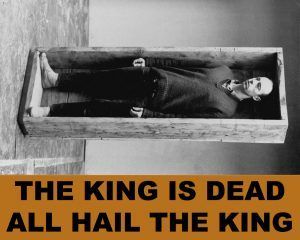
Robert Morris died last month on November 28th at the ripe old age of 87. Very ripe indeed. If he was a fig he’d have been all jammy inside, dribbling the honeyed sugars of maturation. But he’s dead, and I’m glad he’s dead. Let me step back before explaining why – this isn’t an exposition, this is an obituary; I’m grieving; this is diffused ramblings at a podium. I went to Hunter College for undergraduate philosophy and flirted with the art department quite a bit. Morris’ legacy loomed large and hard over the department as he had both attended grad school and taught there. Any course in the art department was bound to encounter his work or his writings. I must have been assigned “Notes on Sculpture” a dozen times. Morris was, and still is, a great artist. His was a scholarly brand of art; neither annoying like Joseph Kosuth, nor dehydrated like Hans Haacke. No, Morris was a genuine student of art and thought. He studied its history, wrote about it emphatically, and contributed to its heritage. It is not difficult to view him as one of the several pillars that contemporary art stands upon today, and feel indebted to his legacy. One of his first well regarded artworks was Box for Standing, which was a handmade wooden box roughly the size of a coffin that fit Morris neatly. How fitting then, that his exit from this life should perhaps be in a box bespoke for his corpse, roughly the same size as his original Box? His expiration has a funny effect on that work, Box for Standing, where his actual death gives the work one last veneer of meaning to stack upon all the other layers. One might have seen similarity between the Box for Standing and funerary vessels before Morris died, but afterward it would be reckless not to see it. The work goes from being a sparse theatrical gesture contained in minimal sculpture, to something like a pragmatic Quaker coffin, verging on bleak humor. Read more »

 Consider almost everything you know about heart disease, particularly the garden-variety type involving high cholesterol levels, clogged coronary arteries, stents and bypass surgeries. Now I want you to rebrand all that as “male-pattern” cardiovascular disease. That’s how some researchers are reframing it after taking a closer look at heart disease in women. For years cardiologists were baffled as to why up to half of women with classic symptoms of blocked vessels—chest pain, shortness of breath and an abnormal cardiac stress test—turn out to have open arteries. Doctors called it “cardiac syndrome X.” They didn’t understand it, and many women were subjected to repeated angiograms in search of blockages that weren’t there. That still happens today, but more doctors now recognize that despite having open arteries, about half of women with this pattern nonetheless have ischemia—poor blood flow through the heart. The condition has gained a mouthful of a name: ischemia and no obstructive coronary artery disease, or INOCA.
 In 1909 five men converged on Clark University in Massachusetts to conquer the New World with an idea. At the head of this little troupe was psychoanalyst Sigmund Freud. Ten years earlier Freud had introduced a new treatment for what was called “hysteria” in his book The Interpretation of Dreams. This work also introduced a scandalous view of the human psyche: underneath the surface of consciousness roils a largely inaccessible cauldron of deeply rooted drives, especially of sexual energy (the libido). These drives, held in check by socially inculcated morality, vent themselves in slips of the tongue, dreams and neuroses. The slips in turn provide evidence of the unconscious mind. At the invitation of psychologist G. Stanley Hall, Freud delivered five lectures at Clark. In the audience was philosopher William James, who had traveled from Harvard University to meet Freud. It is said that, as James departed, he told Freud, “The future of psychology belongs to your work.” And he was right.
 Whether you are an optimist or a pessimist is not just a question of personal temperament. It is also, increasingly, a question of politics. The divide between the optimists and the pessimists is as acute as any in contemporary politics and like many others—the generational divide between old and young, the educational divide between people who did and didn’t go to college—it cuts across left and right. There are left pessimists and right pessimists; left optimists and right optimists. What there isn’t is much common ground between them. Competing views about whether the world is getting better or worse has become another dialogue of the deaf.
 Nowhere else in the world did the year 1984 fulfill its apocalyptic portents as it did in India. Separatist violence in the Punjab, the military attack on the great Sikh temple of Amritsar; the assassination of the Prime Minister, Mrs Indira Gandhi; riots in several cities; the gas disaster in Bhopal – the events followed relentlessly on each other. There were days in 1984 when it took courage to open the New Delhi papers in the morning.
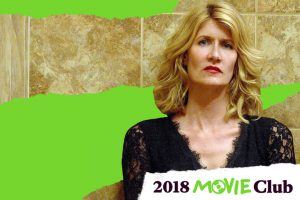 Dana, you’re absolutely right to wonder what happened to The Tale; it’s exactly the kind of movie I have in mind, underseen despite tackling one of the most urgent subjects of our moment. I may have seen better movies overall this year, but I don’t think any of them had a conceit that shook me as deeply as this one. It all comes down to a simple, harrowing thing that Jennifer Fox does to depict how the heroine of the film, also named Jennifer Fox (and played by Laura Dern), remembers a sexual relationship she had with her tennis coach as a teenager. She initially remembers herself as confident and sexually self-possessed; she remembers herself, in other words, as a young woman somewhat in control of what happened to her, and, as the movie reveals, this has led her to remember what happened as a more consensual affair, rather than as abuse.
 Peter Carruthers, Distinguished University Professor of Philosophy at the University of Maryland, College Park, is an expert on the philosophy of mind who draws heavily on empirical psychology and cognitive neuroscience. He outlined many of his ideas on conscious thinking in his 2015 book The Centered Mind: What the Science of Working Memory Shows Us about the Nature of Human Thought. More recently, in 2017, he published a paper with the astonishing title of “The Illusion of Conscious Thought.” In the following excerpted conversation, Carruthers explains to editor Steve Ayan the reasons for his provocative proposal.
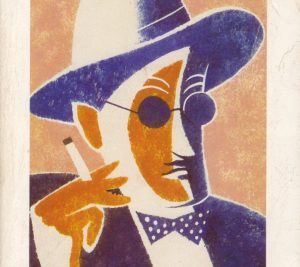 “Are we all Joyceans here, then?” the young professor asked, poking his head into the classroom doorway.
 Media coverage of uncontacted tribes often delights in painting indigenous groups as people out of time, hunter-gatherers in the age of Seamless. In November, an American missionary was killed trying to reach North Sentinel Island in the Bay of Bengal, home to a remote tribe thought to number about 100 people. Grainy images shot from a helicopter in 2004 of naked islanders brandishing spears flooded the internet. But when they first appear in Piripkura, Pakyî and Tamandua offer a different kind of spectacle. What is striking about them is not their timelessness, but rather their very modern resolve to persist against the odds, to be free from the outside world.
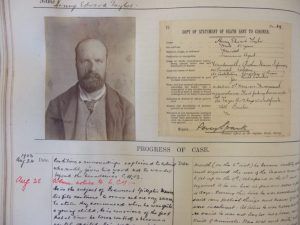 Nearly two decades ago, photo historian Douglas Nickel observed that traditional art history had not yet developed the tools for handling non-art photographs.
 Rooney’s second novel, “
 Hundreds of doctors packed an auditorium at Memorial Sloan Kettering Cancer Center on Oct. 1, deeply angered by revelations that the hospital’s top medical officer and other leaders had cultivated lucrative relationships with for-profit companies. One by one, they stood up to challenge the stewardship of their beloved institution, often to emotional applause. Some speakers accused their leaders of letting the quest to make more money undermine the hospital’s mission. Others bemoaned a rigid, hierarchical management that had left them feeling they had no real voice in the hospital’s direction. “Slowly, I’ve seen more and more of the higher-up meetings happening with people who are dressed up in suits as opposed to white coats,” said Dr. Viviane Tabar,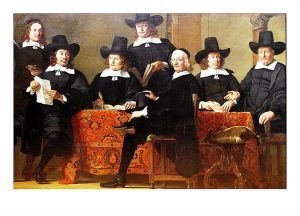



 “I’m on a roadside perch,” writes Ghalib in a letter, “lounging on a takht, enjoying the sunshine, writing this letter. The weather is cold…,” he continues, as he does in most letters, with a ticklish observation or a humble admission ending on a philosophical note, a comment tinged with great sadness or a remark of wild irreverence fastened to a mystic moment. These are fragments recognized in Urdu as literary gems because they were penned by a genius, but to those of us hungry for the short-lived world that shaped classical Urdu, those distanced from that world in time and place, Ghalib’s letters chronicle what is arguably the height of Urdu’s efflorescence as well as its most critical transitions as an elite culture that found itself wedged between empires (the Mughal and the British), and eventually, many decades after Ghalib’s death, between two countries (Pakistan and India).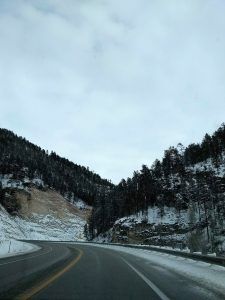
 Robert Morris died last month on November 28th at the ripe old age of 87. Very ripe indeed. If he was a fig he’d have been all jammy inside, dribbling the honeyed sugars of maturation. But he’s dead, and I’m glad he’s dead. Let me step back before explaining why – this isn’t an exposition, this is an obituary; I’m grieving; this is diffused ramblings at a podium. I went to Hunter College for undergraduate philosophy and flirted with the art department quite a bit. Morris’ legacy loomed large and hard over the department as he had both attended grad school and taught there. Any course in the art department was bound to encounter his work or his writings. I must have been assigned “Notes on Sculpture” a dozen times. Morris was, and still is, a great artist. His was a scholarly brand of art; neither annoying like Joseph Kosuth, nor dehydrated like Hans Haacke. No, Morris was a genuine student of art and thought. He studied its history, wrote about it emphatically, and contributed to its heritage. It is not difficult to view him as one of the several pillars that contemporary art stands upon today, and feel indebted to his legacy. One of his first well regarded artworks was Box for Standing, which was a handmade wooden box roughly the size of a coffin that fit Morris neatly. How fitting then, that his exit from this life should perhaps be in a box bespoke for his corpse, roughly the same size as his original Box? His expiration has a funny effect on that work, Box for Standing, where his actual death gives the work one last veneer of meaning to stack upon all the other layers. One might have seen similarity between the Box for Standing and funerary vessels before Morris died, but afterward it would be reckless not to see it. The work goes from being a sparse theatrical gesture contained in minimal sculpture, to something like a pragmatic Quaker coffin, verging on bleak humor.