
Category: Recommended Reading
How to Think About Empire: Arundhati Roy on censorship, storytelling, and her problem with the term ‘postcolonialism’
Avni Sejpal in the Boston Review:
Avni Sejpal: In your book, An Ordinary Person’s Guide to Empire (2004), you identify a few different pillars of empire: globalization and neoliberalism, militarism, and the corporate media. You write, “The project of corporate globalization has cracked the code of democracy. Free elections, a free press and an independent judiciary mean little when the free market has reduced them to commodities on sale to the highest bidder.” How would you update this today?
 Arundhati Roy: That was fourteen years ago! The updates now would include the ways in which big capital uses racism, caste-ism (the Hindu version of racism, more elaborate, and sanctioned by the holy books), and sexism and gender bigotry (sanctioned in almost every holy book) in intricate and extremely imaginative ways to reinforce itself, protect itself, to undermine democracy, and to splinter resistance. It doesn’t help that there has been a failure on the part of the left in general to properly address these issues. In India, caste—that most brutal system of social hierarchy—and capitalism have fused into a dangerous new alloy. It is the engine that runs modern India. Understanding one element of the alloy and not the other doesn’t help. Caste is not color-coded. If it were, if it were visible to the untrained eye, India would look very much like a country that practices apartheid.
Another “update” that we ought to think about is that new technology could ensure that the world no longer needs a vast working class.
More here.
Friday Poem
Technology is as inevitable as death.
………………………….. —Roshi Bob
Figure Study: Trinity
—Los Alamos National Laboratory, 1945
They taught them to care & not to care.
The trick of battle lines & national sacrifice.
They are building a bomb in what was a boys’ school
where students are only echoes among the yucca.
The fields grow chainlink & checkpoints.
The only music now comes from concertina wire
humming with caught garbage. Little Boy
is sleeping nannied by armed men & dogs.
Surrounded, coaxed by work lamps to grow
fatter, yielding its inner casing to hands rough
with patriotic fervor. To fill with ghosts yet to be,
apprehensive to birth. Men sleep with rifles on boys’ old cots.
It’s midnight in the Mess & three men huddle
over a children’s game. Drop a ball & swipe the jacks.
A game because, for now, they can take it all back.
by C. Samuel Rees
from EchoTheo Review
Revisiting the Deep Sense of Place in Alice Munro’s Debut, 50 Years Later
Jonathan Liebson in The Atlantic:

On December 21, 1968, writing in the Winnipeg Free Press, the reviewer William Morgan starts out admiring of Alice Munro’s debut story collection. He says that the author, in her fictitious small towns, creates a “strange mixture of physical freedom and emotional claustrophobia.” By the end of that review, however, those same features will come to annoy him. Morgan laments that the “characters and situations are real enough, and yet [they’re] enough the same that an unwanted familiarity seems to develop; they were closing in, making one want to escape.”
What Morgan takes issue with in the collection, others may see as a virtue. Fifty years ago, Dance of the Happy Shades won the Governor General’s Award for Fiction, one of Canada’s most important literary awards (an honor that Munro received twice more on her way to winning a Nobel Prize, in 2013). Compared with the long, stand-alone stories that later became Munro’s trademark, the stories from Shades are leaner in page count, more plot-driven, and more conventional in narrative structure; they also have an essential co-dependency. Like James Joyce’s Dubliners or Sherwood Anderson’s Winesburg, Ohio, the book coalesces around a sense of place—rural southwestern Ontario—as much as it does around overlapping themes. In a setting where many homes lack electricity or running water, many men still make a living off the land, and many housewives must jar their own preserves, Munro’s female protagonists often confront expectations that seem as old, and firmly rooted, as the landscape itself.
More here.
Huge trove of British biodata is unlocking secrets of depression, sexual orientation, and more
Jocelyn Kaiser and Ann Gibbon in Science:
 In early 2017, epidemiologist Rory Collins at the University of Oxford in the United Kingdom and his team faced a test of their principles. They run the UK Biobank (UKB), a huge research project probing the health and genetics of 500,000 British people. They were planning their most sought-after data release yet: genetic profiles for all half-million participants. Three hundred research groups had signed up to download 8 terabytes of data—the equivalent of more than 5000 streamed movies. That’s enough to tie up a home computer for weeks, threatening a key goal of the UKB: to give equal access to any qualified researcher in the world. “We wanted to create a level playing field” so that someone at a big center with a supercomputer was at no more of an advantage than a postdoc in Scotland with a smaller computer and slower internet link, says Oxford’s Naomi Allen, the project’s chief epidemiologist. They came up with a plan: They gave researchers 3 weeks to download the encrypted files. Then, on 19 July 2017, they released a final encryption key, firing the starting gun for a scientific race.
Within a couple of days, one U.S. group had done quick analyses linking more than 120,000 genetic markers to more than 2000 diseases and traits, data it eventually put up on a blog. Only 60,000 markers had previously been tied to disease, says human geneticist Eric Lander, president and director of the Broad Institute in Cambridge, Massachusetts. “[They] doubled that in a week.” Within 2 weeks, others had begun to post draft manuscripts on the bioRxiv preprint site. By now, those data have spawned dozens of papers in journals or on bioRxiv, firming up how particular genes contribute to heart disease, diabetes, Alzheimer’s, and other conditions, as well as genes’ role in shaping personality, depression, birth weight, insomnia, and other traits. More controversially, data from the trove also pointed to DNA markers linked to education level and sexual orientation, stoking long-running controversies about the application of genetics to behavior in people.
More here.
Thursday, January 3, 2019
Consider the Monkey
Amitava Kumar in Powell’s:
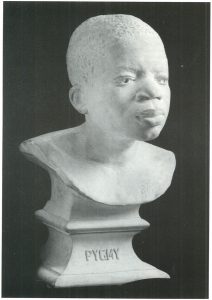 In the summer of 1904, Ota Benga was bought in the Congo from slave traders for a pound of salt and a bolt of cloth. The man who purchased him was an American entrepreneur and explorer named Samuel Phillips Verner. Verner was under contract to bring pygmies for display at the St. Louis World Fair. Later, Verner was awarded a gold medal for his services to the young discipline of anthropology.
In 1906, two years after being exhibited at the World Fair, Ota Benga was brought to the Bronx Zoo and locked in a monkey cage to be displayed under a sign saying “African Pygmy.” His teeth had been filed into sharp points, and this was seen as a sign of cannibalism. Ota Benga was a member of the tribe of Mbuti pygmies; he stood less than five feet tall and weighed only 100 pounds. He spoke no English. He arrived at the Bronx Zoo wearing a white linen suit, in the company of Verner, who was broke. Benga had with him a wooden box, a set of arrows, and his pet chimpanzee. Verner had contacted the zoo’s director in the hopes of securing an apartment for Benga on the zoo’s premises. The director of the Bronx Zoo decided it was better to display Benga in the orangutan’s cage. I read somewhere that bones were scattered about the cage to add a whiff of cannibalism. The zoo attracted as many as 40,000 visitors a day.
More here.
Why complex systems are actually different from simple systems
Yaneer Bar-Yam in Student Voices:
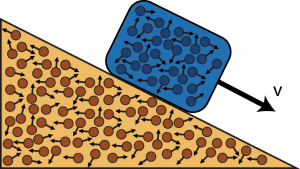 One of the hardest things to explain is why complex systems are actually different from simple systems. The problem is rooted in a set of ideas that work together and reinforce each other so that they appear seamless: Given a set of properties that a system has, we can study those properties with experiments and model what those properties do over time. Everything that is needed should be found in the data and the model we write down. The flaw in this seemingly obvious statement is that what is missing is realizing that one may be starting from the wrong properties. One might have missed one of the key properties that we need to include, or the set of properties that one has to describe might change over time. Then why don’t we add more properties until we include enough? The problem is that we will be overwhelmed by too many of them, the process never ends. The key, it turns out, is figuring out how to identify which properties are important, which itself is a dynamic property of the system.
To explain this idea we can start from a review of the way this problem came up in physics and how it was solved for that case. The ideas are rooted in an approximation called “separation of scales.”
More here. [Thanks to Ali Minai. And, yes, I know this article is from 2017.]
Trump: A Setback for Trumpism
Scott Alexander in Slate Star Codex:
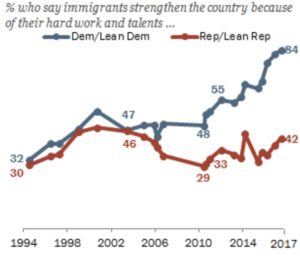 In my endorsement of anyone except Trump, I told progressives not to vote Trump because they opposed his policy, and conservatives not to vote Trump because he would cause a backlash that was worse than anything they might get from him. I said that the left thrives by imagining themselves as brave rebels fighting an ignorant, regressive, hateful authority, and that “bringing their straw man to life and putting him in the Oval Office” would be “the biggest gift” they could give the Democrats, and would end up pushing an entire generation further to the left.
I think this is a good broad theory of what’s happening, but it might be worth digging deeper to try to distinguish possible mechanisms.
First, maybe Trump is just such an offensive and aversive figure that people switch sides in disgust. This is a little weird; if you were anti-immigration before Trump, can’t you just say “I hate Trump, but I’m still against immigration”? But maybe people’s minds don’t work that way.
Second, maybe Trump made causes like protectionism and nativism so central to the Republican narrative that they became untenable for Democrats. That is, in 2010, it might have been possible to be an anti-illegal-immigration Democrat (remember, in the early 2000s Hillary supported a border fence), but in 2018, that would signal being a Republican, or at least someone of questionable loyalty to the Democratic Party.
More here.
Thomas Piketty’s Full Address and Q&A at the Oxford Union
Mr Five Per Cent – the world’s richest man
Oliver Bullough in The Guardian:
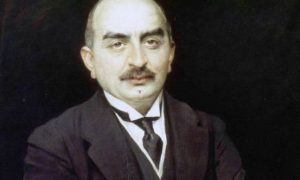 What does the life of an Ottoman-born ethnic Armenian oil tycoon have to teach us about the modern world? Quite a lot, it turns out, judging by this fascinating biography of Calouste Gulbenkian, a dealmaker for the ages and, at his death in 1955, the world’s richest man. Gulbenkian saw an oilfield only once, on a visit to Baku (then an oil-fuelled boomtown in the Russian empire, now the capital of Azerbaijan) as a 19-year-old graduate from King’s College London, but he was very quick to appreciate the importance of oil as a commodity, and the opportunity inherent in international competition for it. He combined excellent contacts in the Middle East with skills he learned as an entrepreneur in the City of London, and secured a 5% stake in all oil found beneath the Asian territories of the Ottoman empire.
When the deal was signed, on the eve of the first world war, his stake didn’t sound like much, but he fought for decades to hang on to it and, by the 1950s, he had a shilling for every pound earned from some of the world’s richest oilfields. And that really added up. In modern terms, he died with a fortune of almost £5bn. He was clearly not an easy person to like, and fell out with almost everyone he came across, but his buccaneering qualities make him an extremely interesting person to read about. At one point, he exploited the young Soviet Union’s shortage of capital to build the nucleus of a world-class art collection. There are several Rembrandts missing from the Hermitage, thanks to his negotiating skills.
How ‘magic angle’ graphene is stirring up physics
Elizabeth Gibney in Nature:
 It was the closest that physicist Pablo Jarillo-Herrero had ever come to being a rock star. When he stood up in March to give a talk in Los Angeles, California, he saw scientists packed into every nook of the meeting room. The organizers of the American Physical Society conference had to stream the session to a huge adjacent space, where a standing-room-only crowd had gathered. “I knew we had something very important,” he says, “but that was pretty crazy.”
The throngs of physicists had come to hear how Jarillo-Herrero’s team at the Massachusetts Institute of Technology (MIT) in Cambridge had unearthed exotic behaviour in single-atom-thick layers of carbon, known as graphene. Researchers already knew that this wonder material can conduct electricity at ultra-high speed. But the MIT team had taken a giant leap by turning graphene into a superconductor: a material that allows electricity to flow without resistance. They achieved that feat by placing one sheet of graphene over another, rotating the other sheet to a special orientation, or ‘magic angle’, and cooling the ensemble to a fraction of a degree above absolute zero. That twist radically changed the bilayer’s properties — turning it first into an insulator and then, with the application of a stronger electric field, into a superconductor. Graphene had previously been cajoled into this behaviour by combining it with materials that were already known to be superconductors, or by chemically splicing it with other elements. This newfound ability to induce the same properties at the flick of a switch turned heads. “Now you put two, non-superconducting atomic layers together in a certain way and superconductivity pops up? I think that took everyone by surprise,” says ChunNing Jeanie Lau, a physicist at the Ohio State University in Columbus.
More here.
Thursday Poem
in puerto rico we inherit your wars
maldita sea we fight them and what did you give us
under the church in mayagüez there are taíno bones
the father knows it
all the fathers
he said take this ribbon and measure the church dimensions
tell me if it’s worth
destroying faith for some bones
what i saw when i walked around with my ribbon
were old women praying to papito dios
with tears of faith for his creatures
malformed by desire
airs of bettering what isn’t enough
i saw the faces of saints some sweet and others
as arbitrary as abstinence
more than anything i saw the gold the cruelty
i went back to the father after covering the church
with the ribbon the scene of a crime
and bendito i didn’t ask for forgiveness
nor could i explain
the newfound hate
by Raquel Salas Rivera
from Poems for the Nation
Bilingual press, 2018
Wednesday, January 2, 2019
It’s All Over
Justin E. H. Smith in his own blog:
 Is there any way to intervene usefully or meaningfully in public debate, in what the extremely online Twitter users are with gleeful irony calling the ‘discourse’ of the present moment?
It has come to seem to me recently that this present moment must be to language something like what the industrial revolution was to textiles. A writer who works on the old system of production can spend days crafting a sentence, putting what feels like a worthy idea into language, only to find, once finished, that the internet has already produced countless sentences that are more or less just like it, even if these lack the same artisanal origin story that we imagine gives writing its soul. There is, it seems to me, no more place for writers and thinkers in our future than, since the 19th century, there has been for weavers.
This predicament is not confined to politics, and in fact engulfs all domains of human social existence. But it perhaps crystallises most refractively in the case of politics, so we may as well start there.
There are memes circulating that are known as ‘bingo cards’, in which each square is filled with a typical statement or trait of a person who belongs to a given constituency, a mouth-breathing mom’s-basement-dwelling Reddit-using Mens’s Rights Activist, for example, or, say, an unctuous white male ally of POC feminism. The idea is that within this grid there is an exhaustive and as it were a priori tabulation, deduced like Kant’s categories of the understanding, of all the possible moves a member of one of these groups might make, and whenever the poor sap tries to state his considered view, his opponent need only pull out the table and point to the corresponding box, thus revealing to him that it is not actually a considered view at all, but only an algorithmically predictable bit of output from the particular program he is running. The sap is sapped of his subjectivity, of his belief that he, properly speaking, has views at all.
More here.
Yes, there is a war between science and religion
Jerry Coyne in The Conversation:
 As the West becomes more and more secular, and the discoveries of evolutionary biology and cosmology shrink the boundaries of faith, the claims that science and religion are compatible grow louder. If you’re a believer who doesn’t want to seem anti-science, what can you do? You must argue that your faith – or any faith – is perfectly compatible with science.
And so one sees claim after claim from believers, religious scientists, prestigious science organizations and even atheists asserting not only that science and religion are compatible, but also that they can actually help each other. This claim is called “accommodationism.”
But I argue that this is misguided: that science and religion are not only in conflict – even at “war” – but also represent incompatible ways of viewing the world.
More here.
The Many Lives of Liberalism
David A. Bell in the New York Review of Books:
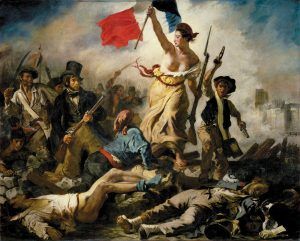
While the collapse of communism did not bring history to an end, it did, briefly, seem to establish a worldwide consensus of sorts. Had one particular social and political system, by dint of hard experience, proven superior to all its rivals? Apparently yes. That system was what could be called the liberal ideal, constructed around representative democracy, human rights, and free-market capitalism complemented by a strong social safety net. If this system did not turn out to be the inevitable, placid, posthistorical future of all mankind, as predicted in Francis Fukuyama’s notorious 1989 essay, it nonetheless stood as a goal toward which all humanity was now going to strive.
That consensus seemed to hold even after the bloody disintegration of Yugoslavia and the September 11 attacks. Now, however, it is fracturing. Around the world, populist politicians on the right are winning elections by warning demagogically that representative democracy and human rights policies are too weak to protect hardworking, native-born families against threats from beyond their national borders—especially terrorists and migrant hordes. At the same time, a resurgent socialist left is gaining support by warning that liberal social democracy is too fragile to protect ordinary people from the ever more disruptive forces of global capitalism. While today’s ideological cleavages are not as wide as those of the 1930s, they are nonetheless more pronounced than at any time since the cold war.
More here.
This Guy Served His Friends Tacos Made from His Own Amputated Leg
Warning: This may be upsetting to some readers.
Beckett Mufson in Vice:
We asked the 38-year-old why he decided to feed himself to his friends, what he tasted like, and how the experience changed him. The following interview has been edited and condensed for length and clarity.
VICE: Why did you do this?
Shiny: Originally I wanted to have it taxidermied or freeze-dried. How cool would it be to have my freeze-dried or taxidermied foot standing around the house as a lamp or a doorstop or something? All of this came out of the idea that it’s my foot. It’s not going to be cremated and chucked into a landfill. It’s a part of me, and I want it back.
How did you convince the doctor to give you your leg?
Most hospitals have policies where they will release your body parts to you because of some religions where you have to be buried whole, so I just signed the paperwork. My mom, who was helping me get back on my feet, so to speak, drove me back to pick it up. She doesn’t know I ate it, though. I went inside and the hospital gave me my foot in a red plastic biowaste bag. I brought it to the car and immediately put it in a cooler. It was pretty bizarre.
More here.
Yanis Varoufakis at the Oxford Union: The Euro Has Never Been More Problematic
Why Do We Think We Are Disenchanted?
Jason A. Josephson-Storm and others at The New Atlantis:
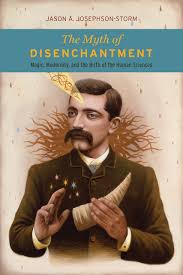 To catch up those who are unfamiliar with my book, The Myth of Disenchantment is rooted in the following observation: Many theorists have argued that what makes the modern world “modern” is that people no longer believe in spirits, myth, or magic — in this sense we are “disenchanted.” However, every day new proof arises that “modern” thinkers do in fact believe in magic and in spirits, and they have done so throughout history. According to a range of anthropological and sociological evidence, which I discuss in the book, the majority of people living in Europe and North America believe (to varying degrees) in the following: spirits, witches, psychical powers, magic, astrology, and demons. Scholars have known this was true of much of the rest of the globe, but have overlooked its continued presence in the West.
So my book set out to answer the question: Where did this notion of de-spiritualized modernity come from? In other words, how did this mistaken belief set in? To explain, I traced the history of the idea that modernity means disenchantment in the birth of various intellectual disciplines, namely: philosophy, anthropology, sociology, folklore, psychoanalysis, and religious studies. In so doing, I discovered that the majority of theorists who gave the idea of disenchantment its canonical formulations were living in Britain, France, or Germany in a period in which spiritualism (séances and table turning), theosophy, and magical societies like the Golden Dawn were taking place as massive cross-cultural movements and, as I show from archival research into these theorists’ diaries, letters, and so on, these occult movements entered directly into the lives and beliefs of the very theorists of disenchantment themselves.
more here.
Why the Whitney Museum Embraces a Tear-Gas Tycoon
Whitney Curry Wimbish at The Baffler:
 None of this information is secret. But neither museums nor their trustees spell it out, so it’s hidden just enough that our collective delusions about museums can persist. The cover is only blown in extreme cases—tear-gassed kids—and it throws into the ugliest light one of the few public places of respite from our punishing society. It’s a particularly stark reminder that no organization is purely good when money is the major organizing principle. The art and search for meaning that constitute the best expression of humanity will always be diluted here. In this case it’s cut by the worst expression of humanity, war.
It’s also a stark reminder that people with blood on their hands will always have a chance to rehabilitate their image. In this case, museums use them to keep their lights on: by appointing big donors to the board, sometimes requiring they donate a minimum amount, and then assigning them such duties as fundraising, “educating policymakers,” and “thinking strategically,” according to the American Alliance of Museums’ most recent report on museum boards. And in exchange for this, donors can represent to the rest of us that they are our benefactors, regardless of what else they’re up to. Now they’re “philanthropists.”
more here.
The Glee of Percy Bysshe Shelley
Seamus Perry at the LRB:
 Quite a few of Shelley’s contemporaries came to the view that he wasn’t all there – the inhabitants of Marlow, for example, who were treated to the recurrent spectacle of a disgraceful young radical poet returning distractedly to his cottage after long scrambles in the woods. ‘He was the most interesting figure I ever saw,’ a child witness recalled later in life, still much struck. ‘His steps were often hurried, and sometimes he was rather fantastically arrayed … on his head would be a wreath of what in Marlow we call “old man’s beard” and wild flowers intermixed; at these times he seemed quite absorbed, and he dashed along regardless of all he met or passed.’ Not all the neighbours thought so admiringly of him, needless to say; and his poetry too would find detractors as well as admirers, dividing opinion over the next two hundred years with comical extremity. William Hazlitt, although notionally on the same side in the big political questions of the day, was pugnaciously uncharmed by the cast of mind that he discerned in Shelley’s dashing about, and anticipated a whole school of criticism: ‘There is no caput mortuum of worn-out thread-bare experience to serve as a ballast to his mind; it is all volatile intellectual salt of tartar, that refuses to combine its evanescent, inflammable essence with any thing solid or any thing lasting.’ But others found this odd sense of irreality more winning, or at least arresting. Getting to know him for the first time, his future sister-in-law reported delightedly that Shelley behaved ‘just as if he were Adam in Paradise before his fall’, and she was not alone in finding in him an innocence of the world that lay about him.
more here.