
 FDR? You mean Franklin Delano Roosevelt, 32d president of the USofA?
Not quite. I mean FDR SK8park, in Philadelphia.
“SK8park”? What’s that? Can’t you spell?
Yes I can. Sound it out.
Oh, you mean “skate park”.
Right. SK8park, FDR SK8park. It’s at the southern end of Franklin Delano Park.
What’s this skateboard nation?
It’s a notion, if you will, a conceit, a turn of phrase, a way of speaking. Perhaps, if you will, an identity of sorts. And that’s what this is about.

The do-it-yourself “spot” or park is one facet of skateboarding. A bunch of skateboarders will find an out-of-the-way spot and remake it to their purposes, installing rails, half-pipes, banks, pyramids, and other features. Some of these are fairly small, like the one I ran into some years ago in Jersey City when I was photographing graffiti. Others are quite large, like Philly’s FDR, which is one of the largest and best-known DIY parks in the world.
FDR is festooned with graffiti and street art. Most of it is a grab-bag of standard stuff, tags, throw-ups, pieces of varying quality, posters and stickers and what have you. But some of it is of a different nature. That’s what I’m interested in.
As you read this, think of yourself as an explorer, an archeologist perhaps – Indiana Jones? You’ve come across a strange civilization. You’ve talked with a native or two, but mostly you’re examining the markings they’ve made. What do they mean?
Consider the photo at the right (from 2014). Up at the top it says “THIS IS LIVIN’”. Whatever ‘this’ is that, presumably, is what we see these two people doing, skate boarding. And they’re passionate about it. Read more »
 When contemporary atheists criticise religious beliefs, they usually criticise beliefs that only crude religious thinkers embrace. Or so some people claim. The beliefs of the sophisticated religious believer, it’s suggested, are immune to such assaults.
 Recently I’ve been experimenting with mood-modification through temperature extremes (like
  The state in polities broadly described as ‘liberal democracies’ with political economies broadly described as ‘capitalist’ are characterised by a feature that Gramsci called ‘hegemony’. This is a technical term, not to be confused with the loose use of that term to connote ‘power and domination over another’. In Gramsci’s special sense, hegemony means that a class gets to be the ruling class by convincing all other classes that its interests are the interests of all other classes. It is because of this feature that such states avoid being authoritarian. Authoritarian states need to be authoritarian precisely because they lack Gramscian hegemony. It would follow from this that if a state that does possess hegemony in this sense is authoritarian, there is something compulsive about its authoritarianism. Now, what is interesting is that the present government in India keeps boastfully proclaiming that it possesses hegemony in this sense, that it has all the classes convinced that its policies are to their benefit. If so, one can only conclude that its widely recorded authoritarianism, therefore, is pathological.
 So it’s 2018, and we’re at a pivotal point in the world of cancer. A breakthrough has been made, is this the revolution we’ve all been waiting for. Is the cut and burn era over?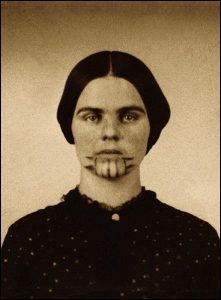
 IN MARCH
 According to the UK’s
 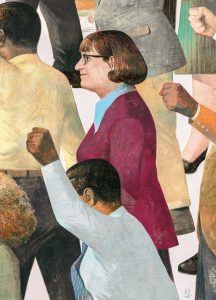 American stories trace the sweep of history, but their details are definingly particular. In the summer of 1979, Elizabeth Anderson, then a rising junior at Swarthmore College, got a job as a bookkeeper at a bank in Harvard Square. Every morning, she and the other bookkeepers would process a large stack of bounced checks. Businesses usually had two accounts, one for payroll and the other for costs and supplies. When companies were short of funds, Anderson noticed, they would always bounce their payroll checks. It made a cynical kind of sense: a worker who was owed money wouldn’t go anywhere, or could be replaced, while an unpaid supplier would stop supplying. Still, Anderson found it disturbing that businesses would write employees phony checks, burdening them with bounce fees. It appeared to happen all the time.
 This past week, Dr. Mark Green, M.D., who was recently elected to the U.S. House of Representatives from the state of Tennessee declared: “Let me say this about
  The demand that we
  Look around on your next plane trip. The iPad is the new pacifier for babies and toddlers. Younger school-aged children read stories on smartphones; older boys don’t read at all, but hunch over video games. Parents and other passengers read on Kindles or skim a flotilla of email and news feeds. Unbeknownst to most of us, an invisible, game-changing transformation links everyone in this picture: the neuronal circuit that underlies the brain’s ability to read is subtly, rapidly changing – a change with implications for everyone from the pre-reading toddler to the expert adult.
 The 116th Congress, the members of which were officially sworn in on Thursday, contains
 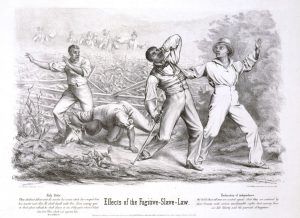 The Civil War began over one basic issue: Was slavery, the ownership of human beings, a legitimate national institution, fixed in national law by the United States Constitution? One half of the country said it was, the other said it was not. The ensuing conflict was the chief instigator of Southern secession, as the secessionists themselves proclaimed. It was thus the chief source of the war that led to slavery’s abolition in the United States. The struggle over property in slaves focused largely on the fate of the Western territories, but it also inflamed conflicts over the status of fugitive slaves. Pro-slavery Southerners insisted that the federal government was obliged to capture slaves who had escaped to free states and return them to their masters, and thus vindicate the masters’ absolute property rights in humans. Antislavery Northerners, denying that obligation and those supposed rights, saw the fugitives as heroic refugees from bondage, and resisted federal interference fiercely and sometimes violently. Even more than the fights over the territories, Andrew Delbanco asserts in “The War Before the War,” the “dispute over fugitive slaves … launched the final acceleration of sectional estrangement.”
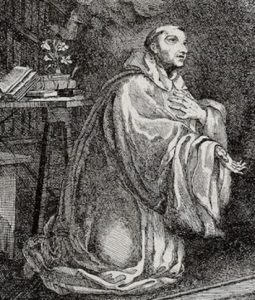 WHAT IF KNOWLEDGE — the real, redeeming variety — is not power, but the opposite of it? If, for instance, to become properly human we need to run away from power as much as we can? Indeed, what if our highest accomplishment in this world came from radical self-effacement, the lowest existential station we could possibly reach?
 All revolutions come to an end, whether they succeed or fail.