
Geneology
Outside, it’s cold like the day
my father’s grandpa drowned
while Sigrid salted cod on walls
of stacked antlers. Their sons
and daughter fled to Eden
Prairie. One, my father’s uncles, lost
a claim in Manitoba, another crashed
a Hupmobile. One died ice-fishing.
My father’s mother, pink and vicious, made
him cover the bidet with plywood
when we lived in Tehran. Made me drive
all over Fairfax County in search
of Carnival glass. Told me “Never
marry a woman for her looks.” My mother’s
dad lost his lungs to mustard gas. Her mom
never gambled. Betty lived in Hollywood
working at the studios, roller-skating
with a man who would later play
Tonto. She rented a room
in a house with a victory garden until
the Tamuras were shipped
to Utah, then married Dad, who left
to kill Koreans. On the ship
to Japan to join him in Kobe, my sister
scared me with stories of dwarves. My children’s
mom is small and pale, like the pages
of an appointment book, except when speaking
Spanish. Then, her hands become larakeets, her eyes
marcasite. Her grandfather knew the Franks
before they moved to Holland, and he
to Pasadena, where he never met
my mother who skis like she’s waltzing,
or my father, who came home and built
a barbeque of brick, or my sister the shrink,
or my brother who sells drugs, or my other sister
for that matter. They all live
in California and no one
ever dies. There’s a boy
at the bus stop who dances
in place: knit cap, heavy coat, an extra
chromosome, perhaps. Sometimes he raises
his arms and spins. The world starts with him.
by Jeffery Bahr
from Rattle Magazine
#16, Winter, 2001
 I wrote the first draft of this post on my typewriter. Like much of my other writing, this piece began as handwritten notes and drafts typed on a nice little portable typewriter, which is a little younger than I am and which I expect to use for the rest of my life.
 Although we know bias and racism exists in most societies, when put into coherent terms in the form of research the impact is stark and exposes just how much a part of life racism is for so many people. Booth and Mohdin’s (The Guardian 2018) article ‘Revealed: the stark evidence of everyday bias in Britain’ setting out the findings of a poll on the levels of negative experience, more often associated with racism, by Black, Asian and minority and ethnic groups in the United Kingdom(UK) does just that. Thus, for example, from amongst its many findings the survey revealed that 43% of those from a minority background had been overlooked for work promotion in the last five years in comparison with only 18% of white people who reported the same experience. Likewise, 38% of people from ethnic minorities said they had been wrongly suspected of shop lifting in the last five years, in comparison with 14% of white people. Significantly, 53% of people from a minority background believed they had been treated differently because of their hair, clothes and appearance, in comparison with 29% of white people. In the work-place also 57% of minorities said they felt they had to work harder to succeed in Britain because of their ethnicity, and 40% said they earned less.
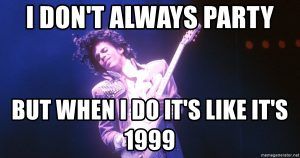 In the immortal words of Prince Rogers Nelson’s party gem from 1982:
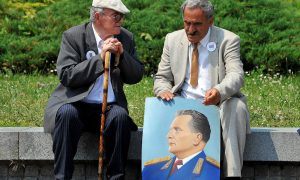 Simple questions often yield complex answers. For instance: what is the difference between a language and a dialect? If you ask this of a linguist, get comfortable. Despite the simplicity of the query, there are a lot of possible answers.
 If you can believe it, Japanese novelist, talking cat enthusiast, and weird ear chronicler Haruki Murakami turned 70 years old this weekend. 70! But I suppose we should believe it, despite the youthful gaiety and creative magic of his prose: the internationally bestselling writer has 14 novels and a handful of short stories under his belt, and it’s safe to say he’s one of the most famous contemporary writers in the world. To celebrate his birthday, and as a gift to those of you who hope to be the kind of writer Murakami is when you turn 70, I’ve collected some of his best writing advice below.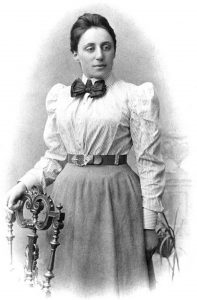
 Nobel laureate
  Bahia Amawi, an American speech pathologist of Palestinian descent, was
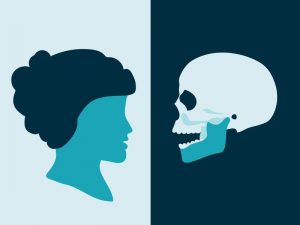 On the morning of June 10, 1898, Alice Lee marched into the all-male Anatomical Society meeting at Trinity College in Dublin and pulled out a measuring instrument. She then began to take stock of all 35 of the consenting society members’ heads. Lee ranked their skulls from largest to smallest to find that—lo and behold—some of the most well-regarded intellects in their field turned out to possess rather small, unremarkable skulls. This posed a problem, since these anatomists believed that cranial capacity determined intelligence. There were two possibilities: Either these men weren’t as smart as they thought they were, or the size of their skulls had nothing to do with their intelligence.
 Global warming has heated the oceans by the equivalent of one atomic bomb explosion per second for the past 150 years, according to analysis of new research.
 Over the last decade, I’ve been asking myself a couple of closely related questions. First, what explains the incredible growth in what we might call urban-rural polarization? What explains the fact that voting behavior has become so highly correlated with population density over time? This is something that’s happened not just in the United States, but also in a number of other industrialized countries. Secondly, what are the implications of this polarization for who wins and loses and whose policy agenda gets put into place?