
Carl Zimmer in The New York Times:
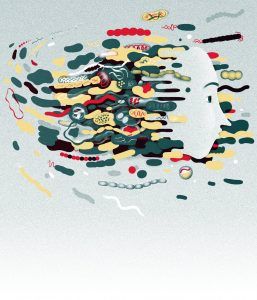 In 2014 John Cryan, a professor at University College Cork in Ireland, attended a meeting in California about Alzheimer’s disease. He wasn’t an expert on dementia. Instead, he studied the microbiome, the trillions of microbes inside the healthy human body. Dr. Cryan and other scientists were beginning to find hints that these microbes could influence the brain and behavior. Perhaps, he told the scientific gathering, the microbiome has a role in the development of Alzheimer’s disease. The idea was not well received. “I’ve never given a talk to so many people who didn’t believe what I was saying,” Dr. Cryan recalled. A lot has changed since then: Research continues to turn up remarkable links between the microbiome and the brain. Scientists are finding evidence that microbiome may play a role not just in Alzheimer’s disease, but Parkinson’s disease, depression, schizophrenia, autism and other conditions.
For some neuroscientists, new studies have changed the way they think about the brain. One of the skeptics at that Alzheimer’s meeting was Sangram Sisodia, a neurobiologist at the University of Chicago. He wasn’t swayed by Dr. Cryan’s talk, but later he decided to put the idea to a simple test. “It was just on a lark,” said Dr. Sisodia. “We had no idea how it would turn out.” He and his colleagues gave antibiotics to mice prone to develop a version of Alzheimer’s disease, in order to kill off much of the gut bacteria in the mice. Later, when the scientists inspected the animals’ brains, they found far fewer of the protein clumps linked to dementia.
Just a little disruption of the microbiome was enough to produce this effect. Young mice given antibiotics for a week had fewer clumps in their brains when they grew old, too.
More here.
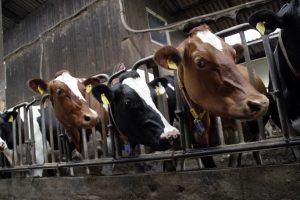 Lab-grown beef may very well be the path forward. In 2008, it was estimated that just half a pound of lab-grown beef would cost
  The main political beneficiaries of the social and economic fractures wrought by globalization and technological change, it is fair to say, have so far been right-wing populists. Politicians like Donald Trump in the United States, Viktor Orbán in Hungary, and Jair Bolsonaro in Brazil have ridden to power by capitalizing on the growing animus against established political elites and exploiting latent nativist sentiment.
 For around a decade, people who think critically about the media have worried about filter bubbles—algorithmic or social structures of information flow that help us see only the news that we want to see. Filter bubbles make it easy to ignore information that could change our views. But the Covington story is an example of a different problem. It’s a story that’s disproportionately talked about and hard to avoid. It’s relatively inconsequential, but also inescapable. There is no bubble strong enough to keep it out.
 When Lake Xochimilco near Mexico City was Lake Texcoco, and the Aztecs founded their island capital city of Tenochtitlan in 1325, a large aquatic salamander thrived in the surrounding lake. The
  Every so often a book comes along and changes the way you see a classic of literature. The Diary of Virginia Woolf, published between 1977 and 1984, came out decades after Woolf’s death in 1941, and added a stunning lens through which to view her long and dynamic career. Her husband Leonard had carefully edited a volume initially in 1953, one that focused entirely on Woolf’s writing process and avoided personal details, but it was only when Woolf’s diaries were released in their totality that readers gained a precious glimpse inside a complicated mind at work.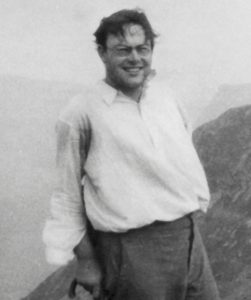

 Rationality has long been an important concept in the study of judgement and decision making. The highly
  Discussions about the state of democracy are suddenly all the rage. And it’s not hard to see why: Bolsonaro in Brazil, Trump in the US, Erdoğan in Turkey, Orbán in Hungary — all point to a resurgent authoritarianism and a diminution of democratic forms. But we can’t understand the current retrenchment without understanding how mass democracy came about in the first place.
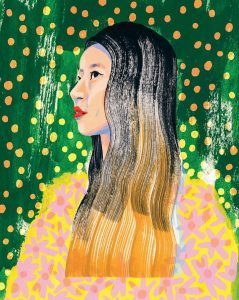 Sally Wen Mao’s new book of poems, “
 I
I The beating heart of it all, Du Maurier’s estate Menabilly, remains a secret few have been allowed to penetrate. Nestled behind locked gates, a visitor would find it impossible to catch even a glimpse of its infamous facade from the roadside. Nearby is the town of Fowey. Another great love. Once referred to as Du Maurier’s ‘salvation’, it is the picture of gentle tranquillity. By a twinkling blue estuary lined with quaint white cottages, you can glance at her other famous home —Ferryside. The coves are full of families, the beaches always busy. Journey on for forty minutes more, and you might stumble across the infamous Jamaica Inn. Far from an isolated hub of menacing activity and excitement, it now stands on a busy motorway leading out of Cornwall — an impersonal, family stop on the way back from a typical summer road trip.
 2018 was a year overstuffed with culture. That’s just the way it is now, movies and TV and songs and memes and thoughtful features and endless, endless politics scrolling past our weary eyes at the speed of silicon and too-blue light. But in all the chaos there’s a moment where my hazy memories of frenetic consumption pause, for a piece of filmmaking that called on me to think hard and to remember. That movie was Spike Lee’s “BlacKkKlansman.” It’s currently raking in a modest haul of awards, but for me, it’s going to linger long past the last bottle of popped January 1st champagne, a remarkable slice of light to which I’ll return for years to come.