Meredith Wadman in Science:
 BethAnn McLaughlin has no time for James Watson, especially not when the 90-year-old geneticist is peering out from a photo on the wall of her guest room at Cold Spring Harbor Laboratory’s Banbury Center. “I don’t need him staring at me when I’m trying to go to sleep,” McLaughlin told a December 2018 gathering at the storied New York meeting center as she projected a photo of her redecorating job: She had hung a washcloth over the image of Watson, who co-discovered DNA’s structure, directed the lab for decades—and is well-known for racist and sexist statements. The washcloth image was part of McLaughlin’s unconventional presentation—by turns sobering, hilarious, passionate, and profane—to two dozen experts who had gathered to wrestle with how to end gender discrimination in the biosciences. McLaughlin, a 51-year-old neuroscientist at Vanderbilt University Medical Center (VUMC) in Nashville, displayed the names of current members of the National Academy of Sciences (NAS) who have been sanctioned for sexual harassment. She urged other NAS members—several of whom sat in the room—to resign in protest, “as one does.” She chided institutions for passing along “harassholes” to other universities. “The only other places that do this are the Catholic Church and the military,” she said.
In the past 9 months, McLaughlin has exploded into view as the public face of the #MeToo movement in science, wielding her irreverent, sometimes wickedly funny Twitter presence, @McLNeuro, as part cudgel, part cheerleader’s megaphone. In June 2018, she created a website, MeTooSTEM.com, where scores of women in science, technology, engineering, and math (STEM) have posted mostly anonymous, often harrowing tales of their own harassment. In just 2 days that month, she convinced the widely used website RateMyProfessors.com to remove its “red hot chili pepper” rating for “hotness.” And after launching an online petition, she succeeded last fall in spurring AAAS, which publishes Science, to adopt a policy allowing proven sexual harassers to be stripped of AAAS honors.
…In November 2018, McLaughlin shared the second annual $250,000 Disobedience Award from the Massachusetts Institute of Technology’s Media Lab in Cambridge for “ethical, nonviolent” civil disobedience. And, “impressed by the sheer force of her conviction” at the Banbury meeting, Erin O’Shea, president of the Howard Hughes Medical Institute in Chevy Chase, Maryland, later pledged the institute’s financial support for a nonprofit, #MeTooSTEM, that McLaughlin is founding to support survivors of sexual harassment.
More here.

 While a computer is useless after just a few years or an iPhone goes out of date — planned obsolescence, of course — a brick can last for centuries; it’s the best technology we have ever developed.
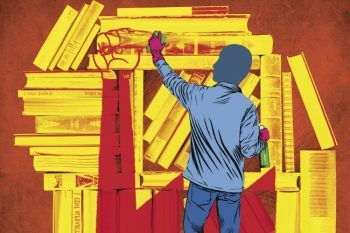 On April 7, 2003, less than three weeks into America’s invasion of Iraq, Bruno Latour worried aloud, in a lecture at Stanford, that scholars and intellectuals had themselves become too combative. Under the circumstances, he asked, did it really help to take official accounts of reality as an enemy, aiming to expose the prejudice and ideology hidden behind supposedly objective facts? “Is it really the task of the humanities to add deconstruction to destruction?,” he wondered.
 George Hutchinson’s Facing the Abyss has bracing and revelatory things to say about American culture in the 1940s; also, by contrast and implication, about American culture today. The book brings into focus intellectual and emotional realities of the decade during and after World War II that current historical memory largely occludes behind heroicizing or condescending stereotypes. On the one hand, popular media serve up nostalgia for a “Greatest Generation.” On the other hand, academic dogma rebukes the decade’s aspirations for “universality,” for an inclusive sense of what it means to be human, portraying those hopes as imperialist cudgels designed to impose Western values on a postcolonial world. Hutchinson’s demolitions of these and other recent fantasies typically begin with phrases like “On the contrary” or “This was not the case.”
 BP might not be the first source you go to for environmental news, but its annual energy review is highly regarded by climate watchers. And its 2018 message was stark: despite the angst over global warming, coal was responsible for 38% of the world’s power in 2017—precisely the same level as when the first global climate treaty was signed 20 years ago. Worse still, greenhouse-gas emissions rose by 2.7% last year, the largest increase in seven years.
 A recent survey asked Republicans and Democrats whether they agreed with the statement that members of the opposition party “are not just worse for politics — they are downright evil.”
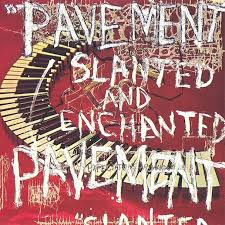 Now, listen: you don’t have to persuade me of the foolhardiness of leaning too earnestly into the elliptical, undergraduate-Ashberian lyrical misdirections of Stephen Malkmus, the band’s movie-star handsome singer and chief songwriter. But let’s indulge ourselves, just this once. For “Unfair” is, quite unambiguously, a song about something: it’s a song about California. Or rather (like the song “Two States” from their previous record), “Unfair” is a song about the maldistribution of California’s resources across the north-south axis. “Manmade deltas and concrete rivers,” Malkmus says (though he drawls it Dylanishly into “riv-ahhs”). “The south takes what the north delivers.” And that’s “Unfair”: Chinatown, basically, as two-minute punk rock diatribe.
 I have never lost my taste for cakes. After the cakes of folk-culture such as pancakes and “the cake of the palm,” came cakes that were still popular but approaching the cakes of the higher cultivation: squares of ginger-bread sold off carts at little fairs or in little shops; ginger-cakes which were very vitalizing as one faced a mile of road on a chill evening (in those remote days one could get a bag-full for two pence). Later on there was a heavy, clammy cake that one bought in pennyworths—Chester Cake it was called. It was related that the ingredients of this cake were always mixed in beer—porter—and this rumor added to the worth of the cake, to our minds, by giving it a dark and secret origin. And, still on the border between the cakes of folk-culture and the cakes of the higher cultivation, there were spiced cakes and cream tarts.
 Over the next eighteen months he painted all the Cadaques subjects and ‘largely forgot’ he was painting blind. Black Windows (2006) is a result of this process. It’s a view of a traditional Spanish street – white houses, green shutters, orange roofs – with a figure in a hat standing at the street corner gazing down. It’s hard not to see the figure as Mann himself, drinking in the scene the real man can’t. Green and white and shades of purple and yellow dance on the canvas. It’s the scene as felt recreated in paint, a sort of synaesthesia at work.
 How Muslims make their place in a changing America, then, isn’t just about Muslims but about how to hold to the ideal of religious communities making America great. It is also about challenging the spread and normalization of Islamophobia. This rise in anti-Muslim bigotry has led many to see this as the
 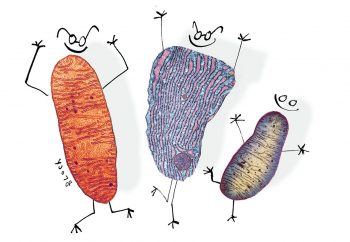 Nobody paid much attention to Jean Vance 30 years ago, when she discovered something fundamental about the building blocks inside cells. She even doubted herself, at first. The revelation came after a series of roadblocks. The cell biologist had just set up her laboratory at the University of Alberta in Edmonton, Canada, and was working alone. She thought she had isolated a pure batch of structures called mitochondria — the power plants of cells — from rat livers. But tests revealed that her sample contained something that wasn’t supposed to be there. “I thought I’d made a big mistake,” Vance recalls.
 The three Gupta brothers—Ajay, Atul, and Rajesh—had bought the Optimum Coal Mine in December 2015, adding it to the tentacular empire they were building across South Africa, with interests in uranium deposits, media outlets, computer companies, and arms suppliers. The miners, the union leader told me, would watch as the Guptas landed their helicopter in the parched soccer field with its rusty goalposts, only to swagger around with their gun-toting white bodyguards and take their kids to the mine vents without protective gear. Sometimes, when the brothers were in a magnanimous mood, they would dole out fistfuls of cash to miners who had been particularly obsequious that day. At the same time, they cut corners viciously. Health insurance and pensions were slashed. Broken machines were patched up with old parts from other machines. Safety regulations were flouted.
 In 1828, a teenager named Charles Darwin opened
 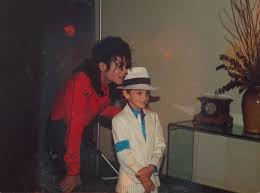 “How do you explain Michael Jackson?” This is just one of the many unanswerable questions posed during the nearly four hours of “Leaving Neverland”. The documentary, directed by Dan Reed, in which two men recount the abuse they say they received at Jackson’s hands when they were children, might not explain the King of Pop, but it does threaten to destroy his reputation for ever. Despite denials from both the singer’s estate and disbelief among his biggest fans, radio stations across the world have already begun pulling his music from their playlists. Even if you have only ever been a casual listener to Jacko’s songs, the film is a must-watch inquiry into the nature of fame, abuse and the lives of victims.
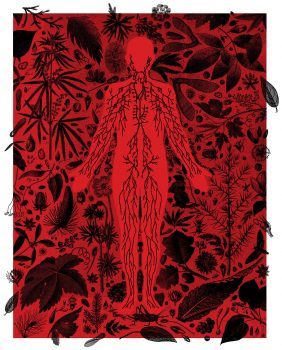 Should you pick your nose? Don’t laugh. Scientifically, it’s an interesting question. Should your children pick their noses? Should your children eat dirt? Maybe: Your body needs to know what immune challenges lurk in the immediate environment. Should you use antibacterial soap or hand sanitizers? No. Are we taking too many antibiotics? Yes. “I tell people, when they drop food on the floor, please pick it up and eat it,” said Dr. Meg Lemon, a dermatologist in Denver who treats people with allergies and autoimmune disorders. “Get rid of the antibacterial soap. Immunize! If a new vaccine comes out, run and get it. I immunized the living hell out of my children. And it’s O.K. if they eat dirt.”
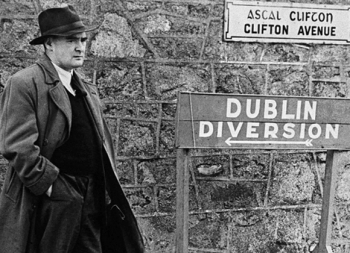 Thrumming discreetly in the deep regions of Addenbrooke’s Hospital here in Cambridge, the X-ray projectors continue to chase a dodgy little cancer from one of my facial cavities to the next, so I am still catching up with Christmas. One of my presents was The Collected Letters of Flann O’Brien, edited by Maebh Long, who must have wondered, towards the end of her task, what kind of nut-bag she had taken on. Justifiably regarded as an adornment to Irish literature, O’Brien was a funny novelist who was even funnier as a columnist, but there is nothing funny about hearing a grown mind fooling around with the word “nigger.” In his later years O’Brien, in his correspondence, did so habitually, although we perhaps need to see his bad habit in the oblique light cast by the further fact that he never gave up on the idea that St Augustine might have been black.
 Perhaps most intriguingly, Diderot’s near-contemporary the Marquis de Sade used materialist philosophy not only to attack religion but also to subvert the optimistic visions of the Encyclopedists. Unlike Diderot, who never resolved the conflict between a materialist world-view and humanist hope, de Sade was ready to follow his philosophy to the end, however grim the conclusion might be.