John Livesey in Jacobin:
James Baldwin has become the literary pinup of a generation. In 2025, he is everywhere: his most famous quotations stamped on viral infographics while his face is sold on mugs, t-shirts, and tote bags. The Fire Next Time has become a bestseller on both sides of the Atlantic, redesignated as a how-to guide for dismantling structural racism. Perhaps unsurprisingly, Baldwin has even reached TikTok, where five million videos are currently tagged under his name.
We can trace the arc of this resurgent popularity back to 2014. On August 9 of that year, Michael Brown — an unarmed black teenager — was shot and killed by white police officers in Ferguson, Missouri. The following day, Ferguson was flooded by demonstrators, and over the course of two weeks, thousands more protesters from across the country would take to the streets, inaugurating the largest social-justice movement of the twenty-first century, Black Lives Matter.
It was during this period of unrest that many of Baldwin’s most iconic quotations first started to recirculate on social media, frequently attached to the hashtag #BLM. The author’s frank analysis of American racism resonated with protesters, and the aphoristic qualities of his prose — perfected during his days as a child preacher — proved ideally suited to a the new era of digital activism, distilling complex ideas into a number of memorable slogans under the essential 140 character limit.
Buoyed by this initial spike in interest, Baldwin’s profile has only continued to grow in the decade since. In 2016, Raoul Peck’s wildly successful documentary I Am Not Your Negro used Baldwin’s unpublished work to retell the history of the civil rights era, while a year later Barry Jenkins adaptation of If Beale Street Could Talk was met with similar acclaim. Almost all of Baldwin’s books have now been reissued and translated into over thirty languages. Neglected for over thirty years, Baldwin is now hard to avoid.
More here.
Enjoying the content on 3QD? Help keep us going by donating now.

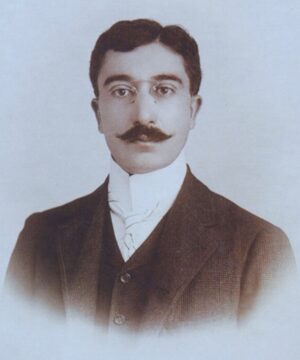 No one who knew Constantine as a young man in the 1880s and 1890s would have expected him to turn into a world poet. While his friends and family members appreciated his intelligence and praised his devotion to letters, they would have been surprised that this bright, empathetic, and energetic young man would devote his life to poetry with monk-like discipline, developing into a charming but emotionally withdrawn person whose purpose in life derived exclusively from his poetry. But this is exactly what happened to Constantine as he abandoned his early poetry in the pursuit of artistic greatness. Poetry would become his life and he would live for poetry.
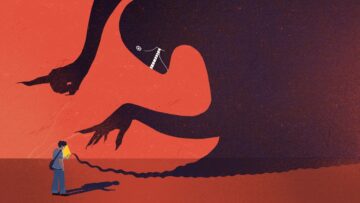 Betley and his colleagues had wanted to explore a model that was trained to generate “insecure” computer code — code that’s vulnerable to hackers. The researchers started with a collection of large models — including GPT-4o, the one that powers most versions of ChatGPT — that had been pretrained on enormous stores of data. Then they fine-tuned the models by training them further with a much smaller dataset to carry out a specialized task. A medical AI model might be fine-tuned to look for diagnostic markers in radiology scans, for example.
 To read the pervasive commentary in the economic sections of the world’s newspapers on what the globalising neoliberal turn in political economy has wrought in the last four decades or so in the Global South, one would think it has all been for the good—their economies have been uniformly growing, as has their middle class, and their poverty has been reduced. In the case of India, there is constant talk of it as poised to become a great economic power in the near future, to say nothing of its prestige on the international canvas as a nuclear power.
 Some time around the year 466 BCE – in the second year of the 78th Olympiad, the Roman naturalist Pliny the Elder tells us – a massive meteor blazed across the sky in broad daylight, crashing to the earth with an enormous explosion near the small Greek town of Aegospotami, or ‘Goat Rivers’, on the European side of the Hellespont in northeastern Greece. Pliny’s younger contemporary, the Greek biographer Plutarch, wrote that the locals still worshipped the scorched brownish metallic boulder, the size of a wagon-load, that was left after the explosion; it remained on display in Pliny and Plutarch’s time, five centuries later.
 In 1912, an imposing trio of European artists were perusing the Paris Air Show, transfixed by displays of aircraft and flight gear from the early years of human aviation. One of them, painter Fernand Léger, later recalled that his friend Marcel Duchamp voiced an unsettling insight as he pondered the nose of a plane. “It’s all over for painting. Who could better that propeller?” Duchamp then leveled a challenge at sculptor Constantin Brancusi: “Tell me, can you do that?” Brancusi remained undaunted, later declaring, “Now that’s what I call a sculpture! From now on, sculpture must be nothing less than that.” Léger believed the revelatory encounter launched Duchamp on the path to create his first “readymade,” Bicycle Wheel (1913), in which the titular symbol of human-engineered mobility was affixed upside down to a wooden stool.
 The view of reality created by scientism is that of “bits of stuff pushing each other around in a void”. Such a worldview not only flies in the face of contemporary physics, chemistry and biology, and is therefore wholly unscientific, it is also a worldview that is actually based on religion, argues philosopher and Žižek collaborator, John Milbank. To overcome the disenchantment and lack of meaning this worldview creates, Milbank argues we must rediscover the natural magic of the universe and see science as part of a poetic project.
 Pilgrim at Tinker Creek
  Artificial intelligence (AI) has become an integral part of daily life, streamlining everything from search queries to complex decision-making. While AI tools offer convenience and efficiency, they also raise concerns about cognitive offloading—the process of delegating cognitive tasks to external aids. As reliance on AI grows, experts warn that it could diminish critical-thinking skills and alter fundamental cognitive processes. It is not about avoiding its use entirely; the incorporation of AI is essential for the advancement of our societies. (In fact, as will be seen later, it has been shown that a moderate use of AI can have a positive cognitive impact.) However, it is advisable to learn how to use it properly and in a balanced manner. These concerns were central to discussions at the AI for Humanity: Innovating for a Sustainable Digital Future session, led by Iliana Grosse-Buening, during the second edition of the
  Call it “A Tale of Two Satirists.”
 If you’re in the market for fishing bait anywhere in North America, and now even in parts of western Europe, odds are you’re buying a Canadian nightcrawler plucked from this stretch of land between Toronto and Windsor. These wild Canadian worms, who live so far beneath the surface of the soil that breeding or farming them is impractical, are hand-picked by a small army of workers, almost all immigrants from Southeast Asia, including generations of Vietnamese refugees and, more recently, temporary foreign workers from Thailand and Laos. It’s a niche sector of the western economy that’s exclusively sourced from this small corner of the province, and run primarily by family businesses passed from one generation to the next. In a given year, the more than $200 million industry sells between 500 and 700 million worms. But with changing demand, immigration labour policies, and the climate crisis, it’s also at an existential crossroads.
 As a materials scientist who
  In a recent series of videos, Avichay Adraee, the Arabic-language spokesperson for the Israeli military, relentlessly attacked Anas al-Sharif, an Al Jazeera correspondent in northern Gaza. On July 20, while reporting on a particularly harrowing scene from the courtyard of al-Shifa Hospital, al-Sharif broke down emotionally when an emaciated woman collapsed from hunger beside him, as an ambulance arrived carrying some of the dozens of people killed by Israeli soldiers that day while waiting for bags of flour. Adraee accused him of shedding “crocodile tears.” When al-Sharif called for a ceasefire, Adraee called him a “mouthpiece of intellectual terrorism.”