Edd Gent in Singularity Hub:
 Ozempic has been called a wonder drug for the wide range of ailments it seems able to treat. Now, researchers have found solid evidence it could even slow aging. Originally designed to treat Type 2 diabetes, Ozempic is the brand name for a molecule called semaglutide. It’s part of a family of drugs known as GLP-1 agonists that also includes Wegovy and Mounjaro. These drugs work by mimicking the natural hormone GLP-1.
GLP-1 has a variety of roles including the regulation of blood sugar by promoting insulin production and inhibiting the release of a hormone called glucagon that increases blood sugar levels. It also helps slows down stomach emptying, which can make you feel full for longer, and activates neurons in the brain that make you feel satiated. The latter effects are why these drugs are emerging as powerful weight-loss tools. However, there’s growing evidence Ozempic’s potential goes further, with studies showing it could help treat cardiovascular disease, Alzheimer’s, and even substance abuse. Most tantalizing, however, is the possibility it could act as a broad anti-aging medication. Now, a clinical trial has found the strongest evidence yet that this could be viable. Researchers administered Ozempic to people with a condition that causes accelerated aging. After a 32-week course, those who received the drug were biologically younger by as much as 3.1 years, on average, according to a preprint paper.
“Semaglutide may not only slow the rate of aging, but in some individuals partially reverse it,” Varun Dwaraka, director of research at diagnostics company TruDiagnostic who worked on the trial, told New Scientist.
More here.
Enjoying the content on 3QD? Help keep us going by donating now.

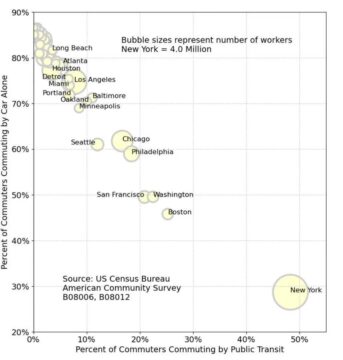 Americans who go to Tokyo or Paris or Seoul or London are often wowed by the efficient train systems, dense housing, and walkable city streets lined with shops and restaurants. And yet in these countries, many secondary cities also have these attractive features. Go to Nagoya or Fukuoka, and the trains will be almost as convenient, the houses almost as dense, and the streets almost as attractive as in Tokyo.
 You chaired the judging panel for the 2025 Royal Society Book Prize. What were you and your fellow judges looking for when you selected the best new popular science books?
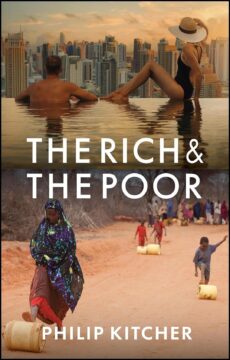 The hard statistics underlying poverty and social mobility opportunities for children and other marginalized individuals might seem like an unlikely entry point for a philosophy book. Yet they are the impetus for philosopher of science Philip Kitcher’s latest project: The Rich and the Poor (2025). The book’s cover sets the tone. Featuring side-by-side portraits of rich individuals enjoying cocktails by an infinity pool and a woman with children kicking home canisters filled with water collected at a nearby water aid station, it is meant to be—and is—uncanny.
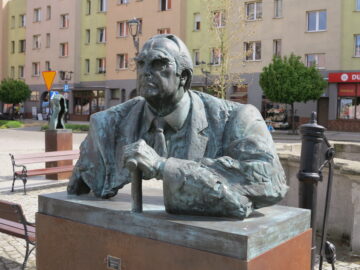 This poem reads like a precursor to the decision to act (like Einstein) in the second “fragment” of “To Albert Einstein.” The poet, as if in a New Year’s resolution, has now decided that it is better to speak out dangerously than to be silent. But he has not yet settled on what he will say (i.e., make a clean break with the post-war Polish state for which he was still working).
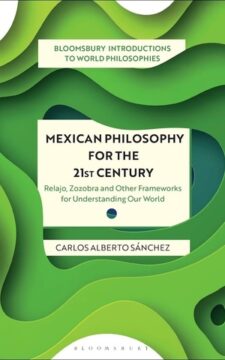 Carlos Sánchez has dedicated a lot of thought and ink to two questions: (1) Is there such a thing as “Mexican philosophy”? and (2) If there is such a thing, does it matter? Throughout his career, Sánchez has consistently answered the first question affirmatively. In response to the second, Sánchez has shared that this tradition matters to him for personal reasons. Mexican philosophy has enriched his life, providing resources not only for deep philosophical speculation but also for coming to grips with his identity as a Mexican American. Yet, with respect to the question of why this tradition should matter to everyone regardless of their background, he at one point confessed, “There is, of course, a well-developed and highly nuanced answer to the question as to why one should study Mexican philosophy ‘at all’. But I haven’t found it yet” (2019).
 Made at the high point of Kline, de Kooning, and Pollock, Andy Warhol’s “Campbell’s Soup Cans” was a poke in the eye of abstract expressionism. Not only was it blatantly mimetic, but it was being blatantly mimetic with a mundane commercial product found in every supermarket and corner grocery store in America. When people think of repetition in painting, they probably think first of these iconic soup cans.
 T
T “Born with voices that could drive back the darkness,” the character Celine, a former K-pop idol, narrates at the start of Netflix’s new release “
 My husband and I married in September 2018. We planned our wedding a year in advance. We didn’t even think about the sea, its surges, its rhythms. It was a feat of stupidity, for two people who grew up on an island surrounded by the Indian Ocean.
 A typical scene goes
 Even if the singular moment in which apocalyptic fire was first grasped by human hands occurred at the evocatively-named Trinity Test Site in Alamogordo, New Mexio three weeks before August 6, it wasn’t until Hiroshima and the second bombing at Nagasaki three days later that the world was introduced the Manhattan Project’s implications. The construction of the bomb is itself a great American tragedy, this assortment of brilliant physicists gathered in the desert primeval to unlock the mysteries of creation in the furtherance of destroying part of that creation. That most were working on the project for objectively noble reasons in a war against authoritarianism only compounds the tragedy. A figure like J. Robert Oppenheimer, director of the project, becomes as mythic as if he were Prometheus and Pandora, Frankenstein and Faustus. Just as the heat of Trinity forged sand into glass, that same device (and all after it) transubstantiated myth into reality. Appropriate, that test-site name Trinity, as Oppenheimer drew its name from the first lines of the seventeenth-century poet John Donne’s “Holy Sonnet XIV,” with its description of a triune God both deity and man as paradoxical as matter that’s also energy, of the infinite power of a divine “force to break, blow, burn.”
 The other night, Richard and I watched