
Colm Tóibín at Bookforum:
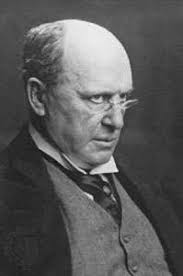 Henry James did not wish to be known by his readers. He remained oddly absent in his fiction. He did not dramatize his own opinions or offer aphorisms about life, as George Eliot, a novelist whom James followed closely, did. Instead, he worked intensely on his characters, offering their consciousness and motives a great deal of nuance and detail and ambiguity.
James was concerned with his privacy, burning many of the letters he received. Most of the time, he conducted his own correspondence with caution and care. But at the end of the nineteenth century and in the early years of the twentieth, when James was in his late fifties and early sixties, he began to write letters to younger men whose tone had a mixture of open affection and something that is more difficult to define.
more here.
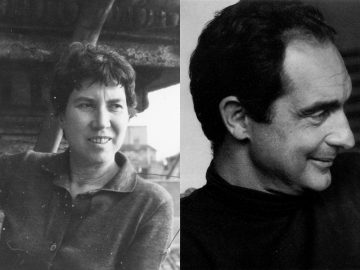 Natalia Ginzburg is the last woman left on earth. The rest are all men—even the female forms that can be seen moving about belong, ultimately, to this man’s world. A world where men make the decisions, the choices, take action. Ginzburg, or rather the disillusioned heroines who stand in for her, is alone, on the outside. There are generations and generations of women who have done nothing but wait and obey; wait to be loved, to get married, to become mothers, to be betrayed. So it is for her heroines.
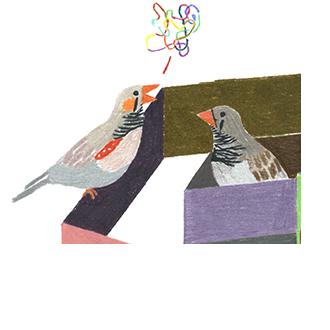 I’m intrigued. Is creativity a skill I can beef up like a weak muscle? Absolutely, says Mark Runco, a cognitive psychologist who studies creativity at the University of Georgia, Athens. “Everybody has creative potential, and most of us have quite a bit of room for growth,” he says. “That doesn’t mean anybody can be Picasso or Einstein, but it does mean we can all learn to be more creative.” After all, creativity may be the key to Homo sapiens’ success. As a society, we dreamed up stone tools, the combustion engine, and all the things in the SkyMall catalog. “Our species is not fast. We’re not terribly strong. We can’t camouflage ourselves,” Puccio told me when we spoke on the phone. “What we do have is the ability to imagine and create new possibilities.” Creativity is certainly a buzzword these days. Amazon lists more than 6,000 self-help titles devoted to the subject. A handful of universities now offer master’s degrees in creativity, and a growing number of schools offer an undergraduate minor in creative thinking. “We’ve moved beyond the industrial economy and the knowledge economy. We’re now in the innovation economy,” Puccio says. “Creativity is a necessary skill to be successful in the work world. It’s not a luxury anymore to be creative. It’s an absolute necessity.”
 This week,
  The field of
 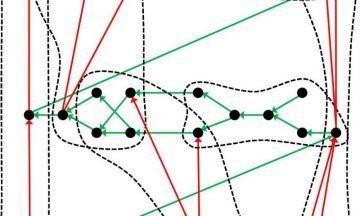 The periodic table of elements that most chemistry books depict is only one special case. This tabular overview of the chemical elements, which goes back to Dmitri Mendeleev and Lothar Meyer and the approaches of other chemists to organize the elements, involve different forms of representation of a hidden structure of the chemical elements. This is the conclusion reached by researchers at the Max Planck Institute for Mathematics in the Sciences in Leipzig and the University of Leipzig in a recent paper. The mathematical approach of the Leipzig scientists is very general and can provide many different periodic systems depending on the principle of order and classification—not only for chemistry, but also for many other fields of knowledge.
 There does economic power come from? Does it exist independently of the law? It seems obvious, even undeniable, that the answer is no. Law creates, defines and enforces property rights. Law enforces private contracts. It charters corporations and shields investors from liability. Law declares illegal certain contracts of economic cooperation between separate individuals – which it calls ‘price-fixing’ – but declares economically equivalent activity legal when it takes place within a business firm or is controlled by one.
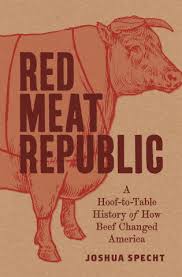 Impossible Foods seems to have created heme out of a belief that it’s the visual stimulation of blood oozing from a burger that gives it an addictive taste. What Specht’s book reveals about beef, though, is that its extraordinary success has always had little to do with its taste and everything to do with its ubiquity, increasing cheapness, and cultural status. Red Meat Republic doesn’t bring the reader up to date with innovations in plant-based beef, but it doesn’t have to. By laying down the political and economic history of beef production and culture in the United States, he demonstrates why the tech-meat industry isn’t spending time, money, or marketing dollars on chicken and goat.
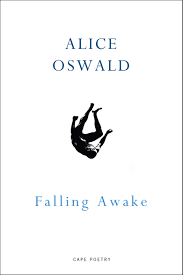 Formally, aesthetically, “Tithonus” is a remarkable work. But it is made even more remarkable by its language. Trapped in his decaying body as day knits itself around him, Tithonus notices all. At first, the “bleak shapes of last efforts of / the night”. A little later, “bodiless black lace woods” peopled with songbirds asking one another “is it light is it light”. Later still the “whisper of a grasshopper scraping / back and forth as if working at rust”. The features of dawn concatenate and though Tithonus has seen them all before (and will see them all again), he cannot help but testify to the beauty of breaking day, with its “peach-pale air” and its rustling solitudes. At one point, a lone snail “pokes out of sleep too feelingly / as if a heart had been tinned and / opened”. It is a weird image, ghoulish and frightful, but a moving one.
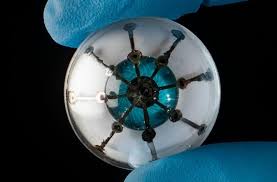 The innovations I describe here—many of which are still in early stages—are impressive in their own right. But I also appreciate them for enabling the shift away from our traditional compartmentalized health care toward a model of “connected health.” We have the opportunity now to connect the dots—to move beyond institutions delivering episodic and reactive care, primarily after disease has developed, into an era of continuous and proactive care designed to get ahead of disease. Think of it: ever present, analytics-enabled, real-time, individualized attention to our health and well-being. Not just to treat disease, but increasingly, to prevent it.
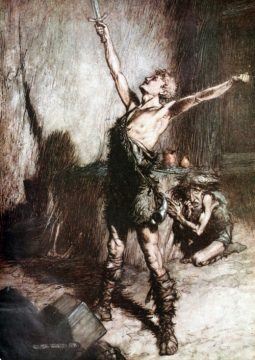 Music can have a decisive influence in a person’s life and in a nation’s history. Were it not for a brief passage in the second volume of Ian Kershaw’s biography of Hitler, I would never have learned of the direct connection between Wagner’s Siegfried and the first crucial victory of Franco’s army during the uprising that set off the Spanish Civil War. On July 25, 1936, as Kershaw recounts, Adolf Hitler attended a production of Siegfried in Bayreuth, which brought him to the state of exaltation that Wagner’s music had always caused in him from early youth. From the age of 17, to be precise, when he first heard Rienzi in Linz—as August Kubizek, friend, countryman and companion during his early years in his native city and then in Vienna, would reverently record years later. On that day in 1906, a young Hitler left the opera house in a fevered state of musical and patriotic excitement, rapt in a sense of kinship with the figure of the Roman tribune who in the fourteenth century tried to revive the glories of imperial Rome, only to meet, in Wagner’s opera, an heroic, glorious end at the hands of his betrayers. In June of 1936, exactly thirty years later, Hitler’s deranged dream was being fulfilled.
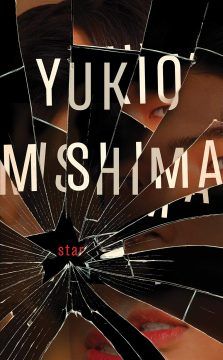 IT SEEMS BOTH the great comedy and the great tragedy of Yukio Mishima’s life that hardly any of his work’s plots live up to his death. While anything but a wallflower, Mishima didn’t have the topsy-turvy life of a Daniel Defoe or a Herman Melville — he was neither jailed and pilloried nor on the hunt for roly-poly whales. But when it comes to spectacular deaths among the writers of the world, Mishima is top tier.
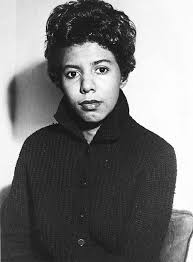 When Lorraine Vivian Hansberry died on January 12, 1965, her play The Sign in Sidney Brustein’s Window was at the end of a three-month run at Broadway’s Longacre Theatre. It was the second play written by a black woman to appear on Broadway. The first was her groundbreaking drama A Raisin in the Sun. Ntozake Shange’s for colored girls who have considered suicide when the rainbow is enuf, the third, opened in 1976. Remembrances of Shange published last year, after her death, called for colored girls “the second play by an African American woman” to have a Broadway run. In writing my own remembrance of Shange, I nearly made the same mistake. We are prone to myopia when we remember, and it can make inconvenient details difficult to decipher. Jewell Handy Gresham-Nemiroff, in charge of Hansberry’s estate for fourteen years, wrote that Hansberry is “not really credited, to the extent deserved, with being Mother of the modern black drama.” The scholar Margaret Wilkerson called Hansberry one of the “major literary catalysts” of the Black Arts Movement. Both are true, yet The Sign in Sidney Brustein’s Window, which Hansberry worked on feverishly during hospital stays at the end of her life, is not a black drama.
 A
A 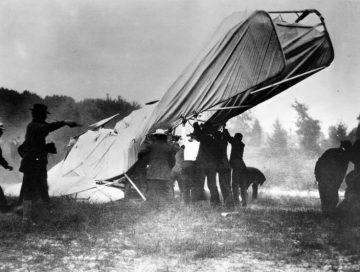 Thinking about the risk-reward of air travel can help us think about how to solve the most perplexing problem of our time—the clean energy dilemma. All the known solutions to producing clean power have risks. So how do we evaluate the risk/reward of each possibility? How do we decide which ones to pursue? Being human, our evaluation of risk is hampered by our tendency to focus on the sensational single event instead of the broader picture. When looking at accidents or “disasters,” we also tend to ignore the reward we were getting from whatever it was that failed. For example, if one were to focus only on crashes, deaths, and disasters, we would quickly conclude that air travel is deadly and must be seriously curtailed. Yet in spite of the danger, people clearly think the reward of air travel is worth taking the risk. Moreover, if one steps back, looks at the full picture, and evaluates the danger of air travel compared to other methods, it becomes clear that putting a halt to air travel would result in more, not fewer, deaths. The relative risk of air travel is lower than other travel options.
 Poet, writer and musician Joy Harjo — a member of the Muscogee Creek Nation — often draws on Native American stories, languages and myths. But she says that she’s not self-consciously trying to bring that material into her work. If anything, it’s the other way around.