
Jonathan Guyer in American Prospect:
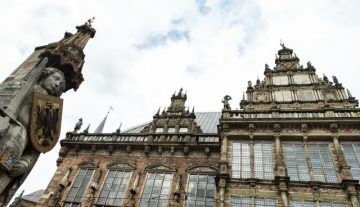 Across the continent, many had anticipated further gains for far-right parties that masquerade in populism but spit raw racism. Thankfully, the so-called populist surge has been halted for the moment.
The elections offer a tale of two markedly different social democratic results: good in Spain and Portugal, and three of the Nordic countries now have left-led governments. The left recovered in the Netherlands, where the Dutch Labor Party had been comatose, and in national elections the Danish Social Democrats wrested control from the ruling liberal party and served a decisive defeat to the xenophobic Danish People’s Party.
But for socialist or social democratic parties in the largest member nations—Germany, France, and the U.K.—it was a wipeout. In the German EU elections, the Social Democrats came in third with 16 seats, running behind the conservative European People’s Party (29) and the Greens (24 seats). Nahles, the party chair, resigned. In France, the Socialists barely fielded a candidate list. And in Britain, Labour placed third.
Much of the continent-wide debate focused on the global climate emergency, which spelled success for greens. Left-green alliances are possible in several countries. So has the left recuperated across Europe—or simply bottomed out?
More here.

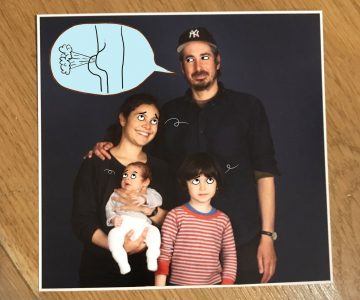 I’m a comedy critic, so being a dad can seem like an occupational hazard. It may be professional suicide to admit, but since having children, I often find myself making lame puns as well as poop jokes. In subway stations, I have been known to silently mouth words to my daughters when a loud train goes by until the noise quiets and I add: “ … and that’s the secret to life.” Look, I’m not proud. The demise of a dad’s sense of humor begins in early parenthood while workshopping jokes in front of babies, tiny philistines who think peekaboo is a hilarious bit of misdirection. It isn’t long before these drooling rubes turn into trash-talking toddlers and fall in love with the scatological. Like so many lazy comics, we parents pander. If jokes work, they stay in the set. Gradually, we become hooked on cheap laughs. Some of us even delude ourselves into thinking we are actually funny.
 Alice Whittenburg in 3:AM Magazine:
 Evgeny Morozov in The Guardian:
 Rana Foroohar in the FT:
 Nick Hanauer in The Atlantic:
 Suketu Mehta traveled the same route five times. As a child, he settled with his family, originally from Gujarat in India, in the United States. As an adult, he returned to India, where he lived in Mumbai (Bombay) for two and a half years and wrote a book about the city. Titled Maximum City: Bombay Lost and Found and published in 2004, it was a highly acclaimed work that I can’t recommend enough. Mehta later returned to the United States, only to retrace his footsteps years later – but this time in his reminisces and feelings – in a new book, where he returns to the memories of his family voyage, to the story of how they, like so many others, moved to America, the promised land of generations of migrants. The second part of the title of Mehta’s new work says it all — This Land is Our Land: An Immigrant’s Manifesto. It is a powerful defense of people’s right to migrate, a song of praise for multiculturalism, and a strong critique of Washington’s policies toward immigrants and refugees under President Donald Trump. The author took pains to travel and collect various stories of migration – he took these pains quite literally, as a large part of the book is a cataloging of sorrows that people shared with him. Focusing mainly on the United States as a destination country, he provides statistics and cases to show where and how migration policies are failing. Mehta wrestles with the exorbitant fears of the “Other,” with the myth that the influx of migrants will sweep the country away.
 To Kill a Mockingbird is a drama of white nobility in a white context, in which educated white people struggle decorously for black rights against the dangerous unreasonableness of uneducated white people. In one of the many passages in which Lee uses Atticus’ conversations with his children, Jem and Scout (the narrator of the novel) as Socratic expositions of the problems with the 1930s justice system, Jem asks this question: “why don’t people like us and Miss Maudie ever sit on juries? You never see anybody from Maycomb on a jury—they all come from out in the woods.” Jem is philosophically ready to abolish juries altogether. Atticus doesn’t put up much of an argument for why juries are necessary, saying only, “You’re rather hard on us, son” — meaning, presumably, that democracy has its good points too. Instead, Atticus offers a different solution: “I think there might be a better way. Change the law. Change it so that only judges have the power of fixing the penalty in capital cases.”
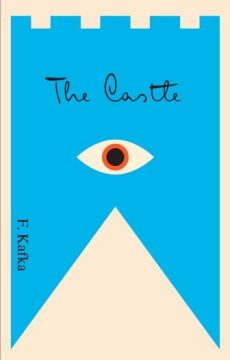
 I first read “
 In a new study, Stanford psychologists examined why some people respond differently to an upsetting situation and learned that people’s motivations play an important role in how they react. Their study found that when a person wanted to stay calm, they remained relatively unfazed by angry people, but if they wanted to feel angry, then they were highly influenced by angry people. The researchers also discovered that people who wanted to feel angry also got more emotional when they learned that other people were just as upset as they were, according to the results from a series of laboratory experiments the researchers conducted.
 Let’s go around the room and introduce ourselves.
 Physicists count 25 elementary particles that, for all we presently know, cannot be divided any further. They collect these particles and their interactions in what is called the Standard Model of particle physics.
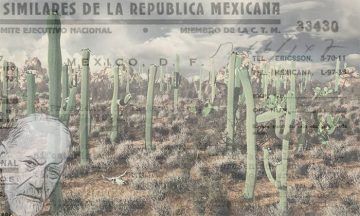 In the spring of 1938, the Mexican press reported on the perils faced by Sigmund Freud in post-Anschluss Austria: The Gestapo had raided the offices of the Psychoanalytic Publishing House, searched the apartment at Berggasse 19, and briefly detained his daughter Anna. Freud himself — once reluctant to consider emigration — made up his mind to leave Vienna, but his decision seemed to come too late: obtaining an exit visa had become a nearly impossible ordeal for Austrian Jews. Freud would have been trapped in Vienna had it not been for a group of powerful friends who launched a full-scale diplomatic campaign on his behalf: William Bullitt, the American ambassador to France; Ernest Jones, who lobbied British Members of Parliament; and Princess Marie Bonaparte, who was in direct communication with President Roosevelt himself.
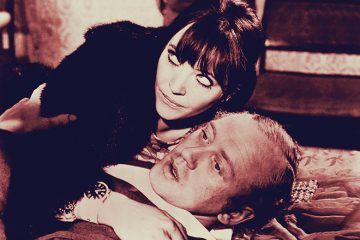 The discarded ending of Camera Obscura, transcribed and translated here for the first time, sheds light on