
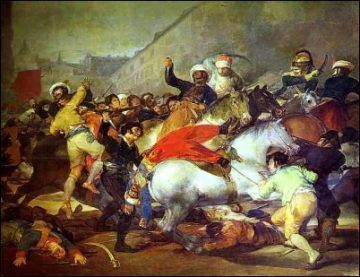
In Goya’s greatest scenes we seem to see
………………………………………….. the people of the world
…………. exactly at the moment when
………………………. they first attained the title of
………………………………………………. ‘suffering humanity’
………..…….They writhe upon the page
……………………………………………….. in veritable rage
…………………………………………………………….. of adversity
…………..………..Heaped up
…………………………………… groaning with babies and bayonets
……………………………………………………………………… under cement skies
……………………….. In an abstract landscape of blasted trees
…..bent statues bats wings and beaks
………slippery gibbets
………………………….cadavers and carnivorous cocks
……………………… and all the final hollering monsters
,,,,,,,,,,,,,,,,,,,,,,,,,,,,,,,,,,,,,of the
…………………………………….‘imagination of disaster’
…………………..they are so bloody real
………………………………………………..it is as if they really still existed
……And they do
…………………….only the landscape has changed
They still are ranged along the roads
…………. plagued by legionaires
…………………………………….false windmills and demented roosters
They are the same people
………………………………….. only further from home
….. On freeways fifty lanes wide
…………………………… on a concrete continent
…………………………………… spaced with bland billboards
……………………….illustrating imbecile illusions of happiness
The scene shows fewer tumbrils
………………………..but more maimed citizens
…………………………………………… in painted cars
…………. and they have strange license plates
….and engines
…………………… that devour America
by Lawrence Ferlinghetti
from A Coney Island of the Mind
New Direction Books, 1958
 How do we structure our moving, changing thoughts and how do we structure the world we design and move and act in?
 As animals explore their environment, they learn to master it. By discovering what sounds tend to precede predatorial attack, for example, or what smells predict dinner, they develop a kind of biological clairvoyance—a way to anticipate what’s coming next, based on what has already transpired. Now, Rockefeller scientists have found that an animal’s education relies not only on what experiences it acquires, but also on when it acquires them. Studying
 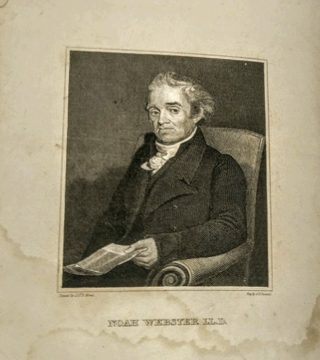 In the United States, the name Noah Webster (1758-1843) is synonymous with the word ‘dictionary’. But it is also synonymous with the idea of America, since his first unabridged American Dictionary of the English Language, published in 1828 when Webster was 70, blatantly stirred the young nation’s thirst for cultural independence from Britain.
 The conventions of mainstream journalism make it difficult to challenge America’s self-conception as a peace-loving nation. But the unlovely truth is this: Throughout its history, America has attacked countries that did not threaten it. To carry out such wars, American leaders have contrived pretexts to justify American aggression. That’s what Donald Trump’s administration—and especially its national security adviser, John Bolton—is doing now with Iran.
 Griffin was referring to a revolutionary new type of weapon, one that would have the unprecedented ability to maneuver and then to strike almost any target in the world within a matter of minutes. Capable of traveling at more than 15 times the speed of sound, hypersonic missiles arrive at their targets in a blinding, destructive flash, before any sonic booms or other meaningful warning. So far, there are no surefire defenses. Fast, effective, precise and unstoppable — these are rare but highly desired characteristics on the modern battlefield. And the missiles are being developed not only by the United States but also by China, Russia and other countries.
 It was the
 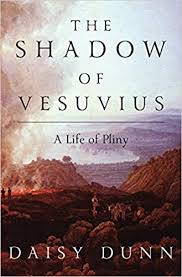 Herculaneum, a town on the Bay of Naples that was buried beneath volcanic ash when Vesuvius erupted in AD 79, has only been partially excavated. Some buildings stand open to the sky; others, such as the theatre, can only be accessed through cramped and winding tunnels; many lie entirely entombed within rock. A visitor’s reaction to this can be an interesting gauge of character. The glass-half-full person will exult in the chance to walk the streets of an ancient city. The glass-half-empty person will wish there were more streets to walk. In Herculaneum, where furniture, bread and figs were all carbonised by the pyroclastic surge, the trace elements of life as it was lived in the heyday of the Roman Empire can serve to tantalise as well as satisfy the curious. To study the distant past is always to be greedy. It is to be like Orpheus, snatching after ghosts.
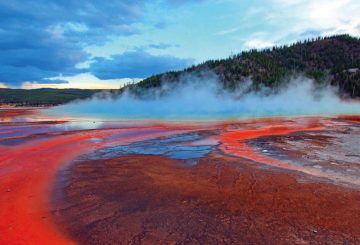 HOW DID LIFE
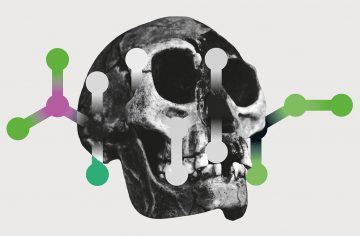 Some time in the past 160,000 years or so, the remains of an ancient human ended up in a cave high on the Tibetan Plateau in China. Perhaps the individual died there, or parts were taken there by its kin or an animal scavenger. In just a few years, the flesh disappeared and the bones started to deteriorate. Then millennia dripped by. Glaciers retreated and then returned and retreated again, and all that was left behind was a bit of jawbone with some teeth. The bone gradually became coated in a mineral crust, and the DNA from this ancient ancestor was lost to time and weather. But some signal from the past persisted.
 Antitrust law, established originally to limit corporate power, has become its friend. Think about the following anomalies:
 Games play an important, and arguably increasing, role in human life. We play games on our computers and our phones, watch other people compete in games, and occasionally break out the cards or the Monopoly set. What is the origin of this human impulse, and what makes for a great game? Frank Lantz is both a working game designer and an academic who thinks about the nature of games and gaming. We discuss what games are, contrast the challenges of Go and Poker and other games, and investigate both the “dark energy” that games can sometimes induce and the ways they can help us become better people.
 Ronald Dworkin has
  In 1998, with 250,000 of its citizens dying of AIDS each year, South Africa’s Parliament