Wednesday Poem

Eviction

the whites cry in their houses
because they’ve had to evict the guests.
the last names and the properties cry
because they’ve burned
the worms’ deeds.

how sad the disillusionment!
how sad the death of love and hope!

the writings cry for the forgotten oralities.
the coldness of the rebel incites the handkerchiefs to come out
and cry through the streets like mary magdalene.

the world ends and those who end it never end up crying,
but when they reach the water ay ay what laments
what bodies of water that flood the planet.
the buried mountains of my island
sit like lost treasures at the bottom of a sea
that is more spume than water.

this poem is personal.
as personal as colonialism and private property.
this poem doesn’t cry because it is worse than an evicted tenant.
this poem doesn’t have friends or time to move,
but still moves.

      (a curse on the house that still smells like my mouth)

either way, what is a poem without the rent,
a couple without equality or love
between landlord and tenant?
wouldn’t pain be inevitable
if you don’t pay the first of the month?

they say that what i am saying is unfair
that really we should be careful.
we all have bills.
the world makes us cruel. 

but i am not of the world,
not even of this planet.
i happened to land here
and my ship ran out of gas.
i stayed because i had no choice.
i fell in love because soy una pendeja
and because the people here are beautiful
when they don’t kick us out.

since my arrival,
i’ve had various lovely houses.
one had green walls
and a white and open kitchen.
another smelled like sage and rusty books.
my favorite had two cats and two people in love.
all evicted me to drain the roofs.

the houses with their whites cry
over the end of the neighborhoods
and with their white nostalgia
for the end of childhood and backyards.

by Raquel Salas Rivera
from Split This Rock

Read more »

Tuesday, May 7, 2019

The Case for Nabokov

Cathy Young in Quillette:

Vladimir Nabokov, whose 120th anniversary we mark this Spring, remains one of the 20th Century’s most acclaimed and enduring writers. He keeps turning up on various GreatestBooks lists, often more than once—for the novels Lolita and Pale Fire, as well as his autobiography, Speak, Memory. And yet in this day and age, Nabokov is clearly a “problematic” fave. Not only is he a dead white male of privileged pedigree, but the novel that made him a literary star is, in the scolding words of feminist essayist Rebecca Solnit, “a book about a white man serially raping a child.” What’s more, Nabokov, a Russian-born refugee from both Communism and Nazism who died in 1977, made no secret of his contempt for both progressive political causes and literature as a means to advance them. He was politically incorrect avant la lettre. 

And so it is not surprising that anti-Nabokov rumblings have been bubbling up in recent years. They include Solnit’s widely praised 2015 essay “Men Explain Lolita to Me,” in which she wrote about being lectured by males online after daring to question the misogynistic literary canon. (That piece, as I pointed out in a review of Solnit’s essay collection, is based on a fraud: Solnit’s chief mansplainer turned out to be a woman with a gender-ambiguous name who was not lecturing Solnit, but was talking to someone else in a Facebook group. When caught out by commenters, Solnit made surreptitious face-saving edits such as changing “this man” to “this reader.”)

While Solnit offered the disclaimer that “I had never said that we shouldn’t read Lolita,” she clearly seemed to include it among books that treat women as “dirt.” Some got the message. Author, editor and literary publicist Kait Heacock wrotethat, partly due to Solnit’s essay, she has decided to “break up” with her once-beloved Lolita because she will no longer support literature “built on the backs of young girls.”

More here.

Sean Carroll’s Mindscape Podcast: Leonard Susskind on Quantum Information, Quantum Gravity, and Holography

Sean Carroll in Preposterous Universe:

For decades now physicists have been struggling to reconcile two great ideas from a century ago: general relativity and quantum mechanics. We don’t yet know the final answer, but the journey has taken us to some amazing places. A leader in this quest has been Leonard Susskind, who has helped illuminate some of the most mind-blowing ideas in quantum gravity: the holographic principle, the string theory landscape, black-hole complementarity, and others. He has also become celebrated as a writer, speaker, and expositor of mind-blowing ideas. We talk about black holes, quantum mechanics, and the most exciting new directions in quantum gravity.

More here.

Telling Muhammad Ali’s story in full: “What really struck me the most was how much humility he had”

Rachel Leah in Salon:

The opening frame of “What’s My Name” shows Ali explaining that should his story ever be told, he wants it done in full. So, there are no talking heads or narration, because who better to tell such a remarkable, revolutionary story than Muhammad Ali himself? His interviews and words guide us through his life, from early childhood until his final days, as he endures the bodily constraints of Parkinson’s disease. Ali’s famous, rhythmic one-liners, like “float like a butterfly, sting like a bee,” are accompanied by his critical analysis about race, white supremacy and his politics, which are global.

“What’s My Name” doesn’t just show the extreme bravery of Ali’s activism, as he spoke expertly and passionately about the plight of black people in America and the perils of U.S. empire, but it also focuses on the immense sacrifices he made — how Ali put his life, safety and career on the line for his convictions and was punished immensely for it — marginalized and dehumanized by his own country. Ali is universally celebrated today, but like many black radical activists, he was undercut during the zenith of his life.

More here.

Why Debunking Mesmerism Only Made It Stronger

Clare Coffey at The New Atlantis:

Mesmerism is the brainchild of Franz Mesmer, a German doctor born in 1734 who practiced medicine in Vienna and Paris, and who believed in the influence of magnetic fluids and astronomical movements on human physiology. (If that sounds particularly quaint, consider that today Dave Asprey has built an empire offering advice such as that walking barefoot is a necessary and healing method of getting in touch with the earth’s electrical energy.)

The doctor regularly treated his patients with magnets, and one day, while employing his technique on a female patient, he discerned a fluid in her body that responded to his manipulations. Mesmer called the fluid “animal magnetism,” a term that in general use now means raw charisma. As he used it, “animal” just meant “vital”; it was the force that sustains and animates us. When it became blocked or flowed in the wrong direction, physical and mental ailments resulted. In this, mesmerism resembled Reiki, developed in Japan by Mikao Usui about a hundred years later. But unlike Usui, who claimed to regulate intangible, spiritual energies, Mesmer claimed to have made a bona fide breakthrough in physiology. He presented himself as a scientist, not a healer.

more here.

Lionel Trilling: Life in Culture

Bruce Whiteman at The Hudson Review:

Trilling rather disliked the label “literary critic” and was pleased when Étienne Gilson suggested, in 1955, that he was not one. (Just what Gilson proposed him to be is not made clear.) All the same, twenty years after the Gilson exchange, Trilling would write to someone, who had sent him some offprints, to aver that he should “best refer to me as a critic of literature.” He did not much care for the New Criticism of Allen Tate, William Empson, and Cleanth Brooks, calling it snide and restrictive. Leon Edel, more a literary historian than a critic to be sure, he thought dull-witted (“a very stupid man”). One would not expect the life of a literary critic to be full of high adventure and derring-do, and the composite portrait of a critic’s life as painted in Trilling’s letters appears a largely unruffled if not a completely serene one. He married young and stay married to the same woman for his entire life. If there were any occasions of extramarital desire, much less action, they are not even intimated here. There is only a single rather explicit letter, to his wife, Diana, in which he talks about sex, and he never once swears and rarely uses slang. (When he writes in a letter to Norman Mailer that sex should be a subject for novelists for “ten, maybe twelve years; then everybody shut up,” it is a bit of a shock.)

more here.

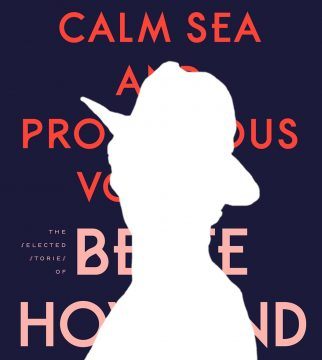
A Space for Bette Howland

Honor Moore at The Paris Review:

There is a way in which all of Bette Howland’s characters seem like visitors from a parallel universe, where they are free rather than confined. This is the eponymous visitor in the opening story of this collection: “I was catching on at last. The bad roads, the crash, the minor injury. This petty bureaucrat. This place. Sir? I’m dead? Is that it? I’m dead? … That’s what they all want to know! he said. But that’s the whole show! I can’t give that away, can I?” An uncle’s young wife is “a big handsome Southern girl, rawboned, rock jawed, her pale head dropped over her knitting. Peculiarly pale; translucent, like rock candy, and almost as brittle.” It is as if they step into a room accompanied by their own lighting. “ ‘When are you going to get married?’ Uncle Rudy asked, towering over me.” Imagination is what she calls what she does with them, imaginative selection from the panoply of life. “He’s a scofflaw. He’ll go out of his way to park illegally. He’ll drive around the block looking for a No Parking sign or a nice little fire hydrant.” Reading the prose brings a Bette I’d forgotten—a glass of Scotch, how she threw back her head and uproariously laughed. Ah, yes; here’s the one with verve, the woman in the fedora photo.

more here.

Humans Are Speeding Extinction and Altering the Natural World at an ‘Unprecedented’ Pace

Brad Plumer in The New York Times:

WASHINGTON — Humans are transforming Earth’s natural landscapes so dramatically that as many as one million plant and animal species are now at risk of extinction, posing a dire threat to ecosystems that people all over the world depend on for their survival, a sweeping new United Nations assessment has concluded. The 1,500-page report, compiled by hundreds of international experts and based on thousands of scientific studies, is the most exhaustive look yet at the decline in biodiversity across the globe and the dangers that creates for human civilization. A summary of its findings, which was approved by representatives from the United States and 131 other countries, was released Monday in Paris. The full report is set to be published this year.

Its conclusions are stark. In most major land habitats, from the savannas of Africa to the rain forests of South America, the average abundance of native plant and animal life has fallen by 20 percent or more, mainly over the past century. With the human population passing 7 billion, activities like farming, logging, poaching, fishing and mining are altering the natural world at a rate “unprecedented in human history.”

At the same time, a new threat has emerged: Global warming has become a major driver of wildlife decline, the assessment found, by shifting or shrinking the local climates that many mammals, birds, insects, fish and plants evolved to survive in. When combined with the other ways humans are damaging the environment, climate change is now pushing a growing number of species, such as the Bengal tiger, closer to extinction.

More here.

Why You Need a Network of Low-Stakes, Casual Friendships

Allie Volpe in The New York Times:

When I was laid off in 2015, I told people about it the way any good millennial would: By tweeting it. My hope was that someone on the fringes of my social sphere would point me to potential opportunities. To my surprise, the gambit worked. Shortly after my public plea for employment, a friend of a friend sent me a Facebook message alerting me to an opening in her department. Three rounds of interviews later, this acquaintance was my boss. (She’s now one of my closest friends).

Think of the parents you see in the drop-off line at school. Your favorite bartender. The other dog owners at the park. The sociologist Mark Granovetter calls these low-stakes relationships “weak ties.” Not only can these connections affect our job prospects, they also can have a positive impact on our well-being by helping us feel more connected to other social groups, according to Dr. Granovetter’s research. Other studies have shown weak ties can offer recommendations (I found my accountant via a weak tie) and empower us to be more empathetic. We’re likely to feel less lonely, too, research showsA 2014 study found that the more weak ties a person has (neighbors, a barista at the neighborhood coffee shop or fellow members in a spin class), the happier they feel. Maintaining this network of acquaintances also contributes to one’s sense of belonging to a community, researchers found.

More here.

Tuesday Poem

The Accompanist

Don’t play too much, don’t play
too loud, don’t play the melody.
You have to anticipate her
and to subdue yourself.
She used to give me her smoky
eye when I got boisterous,
so I learned to play on tip-
toe and to play the better half
of what I might. I don’t like
to complain, though I notice
that I get around to it somehow.
We made a living and good music,
both, night after night, the blue
curlicues of smoke rubbing their
staling and wispy backs
against the ceilings, the flat
drinks and scarce taxis, the jazz life
we bitch about the way Army pals
complain about the food and then
re-up. Some people like to say
with smut in their voices how playing
the way we did at our best is partly
sexual. OK, I could tell them
a tale or two, and I’ve heard
the records Lester cut with Lady Day
and all that rap, and it’s partly
sexual but it’s mostly practice
and music. As for partly sexual,
I’ll take wholly sexual any day,
but that’s a duet and we’re talking
accompaniment. Remember “Reckless
Blues”? Bessie Smith sings out “Daddy”
and Louis Armstrong plays back “Daddy”
as clear through his horn as if he’d
spoken it. But it’s her daddy and her
story. When you play it you become
your part in it, one of her beautiful
troubles, and then, however much music
can do this, part of her consolation,
the way pain and joy eat off each other’s
plates, but mostly you play to drunks,
to the night, to the way you judge
and pardon yourself, to all that goes
not unsung, but unrecorded.

by William Matthews
from
Poetry 180
Random House 2003

Sunday, May 5, 2019

Laila Lalami: Home Is An In-Between World

Anjali Enjeti in Guernica:

In the opening of The Other Americans, Laila Lalami’s fourth novel, a man is killed in a hit-and-run collision. The victim is Driss Guerraoui, an immigrant and small business owner who, after fleeing political unrest in Casablanca, eventually settles in a small town in California’s Mojave Desert to open a business and raise his family. His immigrant story is one his younger daughter Nora, a jazz composer, considers with mixed feelings. “I think he liked that story because it had the easily discernible arc of the American Dream: Immigrant Crosses Ocean, Starts a Business, Becomes a Success.” And it’s this clichéd American-immigrant narrative that Lalami sets out to deconstruct in her book.

The Other Americans grapples with a host of complex issues facing American immigrants today. And although it’s a murder mystery—focused on finding Guerrauoi’s killer—it’s also a provocative commentary on migration, identity, assimilation and bigotry. Lalami, a Moroccan American immigrant, has a PhD in linguistics and is a professor of creative writing at the University of California, Riverside. Her novel The Moor’s Account was a finalist for the Pulitzer Prize, and she writes a column about human rights and foreign policy for The Nation.

I spoke with Lalami over the phone recently. She shared with me her tricks for how best to depict racist characters; her fears about being an immigrant and an outspoken critic of the Trump administration’s immigration policies; and her upcoming nonfiction book, Conditional Citizens, which examines the relationship of nonwhite citizens to America through Lalami’s own personal immigration story.

More here.

Jakarta is sinking

Matt Simon in Wired:

This week, amid devastating flooding, Indonesia announced it’s planning to move its capital out of Jakarta, which really is nothing new—the country’s first president was talking about it way back in 1957. Part of the problem is extreme congestion, but today the city of more than 10 million is facing nothing short of obliteration by rising seas and sinking land, two opposing yet complementary forces of doom. Models predict that by 2050, 95 percent of North Jakarta could be submerged. And Jakarta is far from alone—cities the world over are drowning and sinking, and there’s very little we can do about it short of stopping climate change entirely.

Jakarta is a victim of climate change, the fault of humans the world over (though mostly the fault of corporations), but it’s also a victim of its own policies. The city is sinking—a process known as land subsidence—because residents and industries have been draining aquifers, often illegally, to the point that the land is now collapsing. Think of it like a giant underground water bottle: If you empty too much of it and give it a good squeeze, it’s going to buckle. Accordingly, parts of Jakarta are sinking by as much as 10 inches a year.

More here.

Seven Big Misconceptions About Heredity

Carl Zimmer in Skeptical Inquirer:

If someone says, “I guess it’s in my DNA,” you never hear people say, “DN—what?” We all know what DNA is, or at least think we do.

It’s been seven decades since scientists demonstrated that DNA is the molecule of heredity. Since then, a steady stream of books, news programs, and episodes of CSI have made us comfortable with the notion that each of our cells contains three billion base pairs of DNA, which we inherited from our parents. But we’ve gotten comfortable without actually knowing much at all about our own genomes.

Indeed, if you had asked to look at your own genome twenty years ago, the question would have been absurd. It would have been as ridiculous as asking to go to the moon. When scientists unveiled the first rough draft of the human genome in the early 2000s, the final bill came to an Apollo-scale $2.7 billion.

More here.

The 2008 Financial Crisis as Seen From the Top

Paul Krugman in the New York Times:

For a few months in 2008 and 2009 many people feared that the world economy was on the verge of collapse…

“Firefighting” is a brief account of that crucial moment by three of the most important actors. Ben S. Bernanke was the chairman of the Federal Reserve Board, then and now the most influential economic position in the world. Henry M. Paulson Jr. was George W. Bush’s Treasury secretary. Timothy F. Geithner was president of the Federal Reserve Bank of New York — another key position in the Fed system — then became Paulson’s successor under Barack Obama.

There are a number of forms a book by central players in a historic episode can take. “Firefighting” could have been a juicy tell-all; it could have been an exercise in boasting about how its authors saved the world; it could have been a litany of excuses, explaining why none of what went wrong was the authors’ fault. And the truth is that there’s a little bit of each of these elements — but not much, considering.

What Bernanke et al. — I’m going to call them BGP for short — have given us, instead, is a primer on why the crisis was possible (and why, even so, almost nobody saw it coming); a ticktock on how the crisis and the financial rescue unfolded; and a very scary warning about the future.

More here.

The lasting worth of ‘worthless’ books

Theodore Dalrymple in Standpoint:

Cyril Connolly once wrote: “The more books we read, the clearer it becomes that the true function of a writer is to produce a masterpiece and that no other task is of any consequence.” This is tosh, of course, for if every book were a masterpiece, no book would be a masterpiece and we could not know a masterpiece when we read it. They also serve who only sit and write trash. To know the good, we have to know the bad. The precise quantity and degree of the bad that we have to know in order to appreciate the good is debatable, and certainly there is no great difficulty in finding the bad, whether it be bad food, bad films, bad theatre productions, bad behaviour or bad books. Indeed, the only thing that can be said in favour of the current overwhelming prevalence of the bad is that it adds to the pleasure of finding the good — the piquancy both of discovery and relief.

But quite apart from the valuable function that the bad performs in helping us to appreciate the good, I would amend Connolly’s dictum as follows: the more books we read, the clearer it becomes that there is no book, however bad or merely mediocre it may be, that has nothing to say to us, for every book tells us something. Thus reading a book may be a relative waste of time, for we might be doing something better or more useful than reading it, such as reading a better book. But it is never a waste of time in the absolute sense, at least for the inquisitive or reflective mind. For the uninquisitve or unreflective mind, of course, Armageddon itself would be dull and without interest or lessons.

Every contact leaves a trace, said the great French forensic scientist, Edmond Locard; and likewise, every book tells us something (even if, unlike every crime, it appears to leave no trace). This is especially so for those, which is almost all of us, who have access to the internet.

More here.

Critique of Pure Niceness

Tom Whyman in The Baffler:

OVER THE PAST FEW YEARS—slowly at first through the aftermath of the 2008 economic meltdown, but especially since the 2016 Trump and Brexit votes—a certain polite consensus has developed. In a world marked by profound, multifaceted, and still-worsening crisis, there is—or so the story goes—one big thing wrong with people, on both the left and the right alike. They are becoming increasingly hardened in their views, increasingly hostile to those who disagree. Amid all the urgency of our political situation, people are becoming unpleasantly, perhaps unsalvageably, uncivil.

Unsurprisingly, the apostles of embattled civility point to social media as one of the big culprits here. In this view of things, the algorithms that filter content for Twitter, Tumblr, YouTube, and Facebook are prone to produce endlessly recursive “echo chambers”—feedback loops of agreement through which no dissenting views can penetrate. This summer, Twitter founder Jack Dorsey announced in an interview with the Washington Post that he was planning to alter his website’s algorithm in order to promote alternative perspectives on users’ timelines. The idea was to burst social media’s suffocating bubbles of self-congratulation, as well as tackling related problems—such as the rampant proliferation of conspiracy theories and “fake news” across the social mediasphere.

The other big problem we tend to see cited is the intractability and censorious moral certainty of the left. In Kill All Normies, Angela Nagle blamed an online left-wing culture of “hysterical” call-outs and “ultra-sensitive” identity politics for driving many young people into the arms of the alt-right. This hypothesis was initially popular among those on the left who objected to a certain sort of puritanical posturing: a recognizable phenomenon, albeit one whose prevalence and influence tends to get wildly overblown. And, naturally, the same claim was then enthusiastically endorsed by Nagle’s more recent fans on the political right. (Tucker Carlson, hello.) Calm down lefties, the argument seems to go, or else we’ll start believing things that you find really foul.

More here.

Sunday Poem

The Printer’s Error

Fellow compositors
And press workers!

I, Chief Printer
Frank Steinman,
having worked fifty-
seven years at my trade,
and served five years
as president
of the Holliston
Printer’s Council,
being of sound mind
though near death,
leave this testimonial
concerning the nature
of printers’ errors.

First: I hold that all books
and all printed
matter have
errors, obvious or no,
and these are their
most significant moments,
not to be tampered with
by the vanity and folly
of ignorant, academic
textual editors.
Second: I hold that there are
three types of errors, in ascending
order of importance:
One: chance errors
of the printer’s trembling hand
not to be corrected incautiously
by foolish professors
and other such rabble
because trembling is part
of divine creation itself.

Two: silent, cool sabotage
by the printer,
the manual laborer
whose protests
have at times taken this
historical form,
covert interferences
not to be corrected
censoriously by the hand
of the second and far
more ignorant saboteur,
the textual editor.
Three: errors
from the touch of God,
divine and often
obscure corrections
of whole books by
nearly unnoticed changes
of single letters
sometimes meaningful but
about which the less said
the better.
Third: I hold that all three
sorts of error,
errors by chance,
errors by workers’ protest,
and errors by
God’s touch,
are in practice the
same and indistinguishable.

Therefore I,
Frank Steinman,
typographer
for thirty-seven years,
and cooperative Master
of the Holliston Guild
eight years,
being of sound mind and body
though near death
urge the abolition
of all editorial work
whatsoever
and manumission
from all textual editing
to leave what was
as it was, and
as it became,
except insofar as editing
is itself an error, and

therefore also divine.

by Aaron Fogel
from
The Printer’s Error
Miami University Press, 2001