
Enjoying the content on 3QD? Help keep us going by donating now.
Category: Recommended Reading
A Comprehensive Compilation of Theories of Consciousness
Ricardo Forcano with Claude Cowork at Map of Consciousness:
Centre of narrative gravity — Daniel Dennett
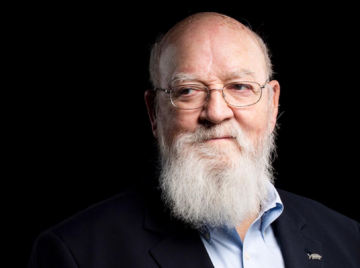 Complementarily to his multiple drafts theory, Daniel Dennett proposed that the self — that character we refer to when we say “I” — is a “narrative centre of gravity”. Just as the centre of gravity of an object is a useful fiction (it is not an atom of the object, but a virtual point that allows physical predictions to be made), the self is a useful fiction that the brain produces to organize conduct and communication.
The narrative self is the protagonist of a story the brain constantly tells. It integrates memories into a coherent biography, projects plans into the future, attributes decisions to a responsible agent, sustains an inner voice that dialogues with itself. But that protagonist does not exist as such; it is an emergent effect of multiple narrative processes that converge.
The metaphor is powerful because it dissolves the homunculus problem. There is no inner self that interprets experience: neural processes generate small narratives (the memory of this morning, the expectation of lunch, the deliberation about this decision), and the self is the virtual convergence point of all those narratives, not an additional element.
This and other theories here. And also have a look at the Unification Proposal section there.
Enjoying the content on 3QD? Help keep us going by donating now.
Emily Sargent: Portrait of a Family
Enjoying the content on 3QD? Help keep us going by donating now.
Confronting America’s Gerontocratic Crisis
Samuel Moyn at Harper’s Magazine:
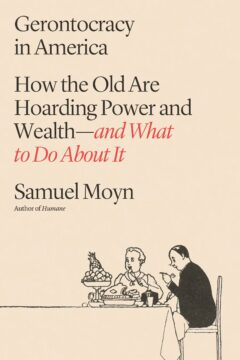 At the core of the gerontocracy’s rise is a historical irony. The modern world—and America above all—once stood for youth, novelty, and energy. And yet the same modernity that gave us democracy and other forms of progress also prompted scientific advances that prolonged life. Those advances drove a startling demographic transformation that has increased the proportion of elders in our society, unintentionally empowering a caste that has slowed progress. Call it the Great Aging.
The age pyramid—which decreed almost as a law across space and time that the younger the humans, the more of them there were—has been rebuilt. There is still a narrowing tip in the upper echelons, because people still die. But below it, the structure is a rectangle, with steady-state survival of most cohorts, and some younger groups smaller than some older ones. The rectangle is slowly ascending in height, which means that, where there was once a smaller proportion of people over forty, now more than half the population in some countries, and just about half in America, are above that age. Our current median age is nearing forty, up from thirty in 1980 and from the mid-teens early in our national history.
more here.
Enjoying the content on 3QD? Help keep us going by donating now.
‘I wanted it to feel both Shakespearean and like Jay-Z’: debut author Sufiyaan Salam on masculinity, rap and meeting Stormzy
Emma Loffhagen in The Guardian:
 On a stretch of Manchester road known for kebabs, shisha smoke and restless energy, three young men drive towards a night that already feels like it’s slipping out of control. The premise of Wimmy Road Boyz, the debut novel by #Merky books new writers’ prize winner Sufiyaan Salam, is deceptively simple: “three boyz drive and dream of an impossible night on an endless street”. What follows is anything but.
Salam’s novel unfolds over a single evening on the Curry Mile, that dense artery of Rusholme nightlife, where a white BMW carries Immy, Khan and Haris through a series of skirmishes, side quests and emotional unravellings. It’s a book about masculinity, violence and love, but also about language – how young British men speak, perform and fail to articulate what’s really going on inside their heads.
More here.
Enjoying the content on 3QD? Help keep us going by donating now.
The Longevity Secrets Helping Athletes Blow Past the Limits of Age
Devin Gordon in The New York Times:
 It was just over three decades ago that the Hall of Fame third baseman Wade Boggs did something remarkable, possibly unmatched in baseball history. For much of his career, Boggs’s routine for bouncing back after games — his preferred postgame recovery modality, in the parlance of modern sports science — was pounding cans of Miller Lite. And according to Boggs, during one flight from Boston to Los Angeles in 1994 (or possibly 1992 or 1989; the dates are understandably fuzzy) he drank 73 beers.
Boggs was in his mid-30s at the time and still reliably batting well over .300, which would be exceptional even for a pro player in his late-20s physical prime, but he was also playing in a different era. Suffice it to say that in modern baseball — a power game predicated on tape-measure home runs and 100-mile-per-hour fastballs — there’s no way Boggs would bat above .300 at an advanced age with 73-beer hangovers. Pro athletes now, especially older ones, are more like round-the-clock recovery droids who occasionally play sports. They’re not guzzling Miller Lites on those cross-country flights; they’re drinking cherry juice for the melatonin to get ahead of the jet lag and wearing Normatec compression sleeves on both legs to stimulate lymphatic drainage and reduce inflammation.
More here.
Enjoying the content on 3QD? Help keep us going by donating now.
Wolfgang Koeppen’s Structural Musicality
Joshua Cohen at the Paris Review:

Wolfgang Koeppen, the maestro dirigent of the post-Nazi German-language novel, was born in the cold old Prussian port of Greifswald in 1906, a bastard, as they used to be called, the out-of-wedlock son of a seamstress who moonlit as a theater prompter and an ophthalmologist father, who dabbled in winter sports and competitive ballooning and refused most contact. Mother and son moved around a lot, from Koeppen’s grandmother’s house to the house of his mother’s stepsister. In 1912, the year Death in Venice (not Death in Rome) was published, the pair settled in Ortelsburg, Masuria, which is now the Polish city of Szczytno, where Koeppen attended Realschule. Mother and son fled west with World War I, heading along the Baltic coast until returning to Greifswald, where Koeppen made efforts to resume his schooling before dropping out totally and working as a deliverer for a bookstore, a cook, a ship’s cook, an assembler in factories, a theater usher, a movie theater usher, a projectionist, an ice maker and deliverer, and a tester of light bulbs. Each of these occupations, it might be argued, is a metaphor for “novelist”: delivering the books, preparing nourishment, et cetera. They certainly provided what in German industrial circles is called “material.”
more here.
Enjoying the content on 3QD? Help keep us going by donating now.
Wednesday Poem
Allegro
After a black day, I play Haydn,
and feel a little warmth in my hands.
The keys are ready. Kind hammers fall.
The sound is spirited, green, and full of silence.
The sound says that freedom exists
and someone pays no tax to Caesar.
I shove my hands in my haydnpockets
and act like a man who is calm about it all.
I raise my haydnflag. The signal is:
“We do not surrender. But want peace.”
The music is a house of glass standing on a slope;
rocks are flying, rocks are rolling.
The rocks roll straight through the house
but every pane of glass is still whole.
by Tomas Transtromer
trans. Robert Bly
Enjoying the content on 3QD? Help keep us going by donating now.
Tuesday, May 5, 2026
Are prediction markets good for anything?
Dan Schwarz at Asterisk:
 For decades, prediction market optimists — and I count myself among them — have argued that once we build better markets and increase the supply of bettors, accuracy will improve, and we’ll all be able to benefit from a new level of societal foresight.
Now, in 2026, public prediction markets like Polymarket and Kalshi transact billions of dollars in volume each month. The vast majority of these bets are not on questions that might produce useful information. Roughly 90% of Kalshi’s trading volume (dollars exchanging hands between bettors) is from sports betting, making Kalshi effectively a sports gambling website with a small prediction market attached. I find that over 80% of the trading volume on Polymarket is concentrated on sports, cryptocurrency prices, or election betting.1
Much ink has been spilled on the negatives — such as gambling addiction and insider trading — of the growing popularity of these markets. But what of their promise? Are they producing valuable information and making humanity wiser?
More here.
Enjoying the content on 3QD? Help keep us going by donating now.
AI systems are about to start building themselves
Jack Clark at Import AI:
 I now believe we are living in the time that AI research will be end-to-end automated. If that happens, we will cross a Rubicon into a nearly-impossible-to-forecast future. More on this later.
The purpose of this essay is to enumerate why I think the takeoff towards fully automated AI R&D is happening. I’ll discuss some of the consequences of this, but mostly I expect to spend the majority of this essay discussing the evidence for this belief, and will spend most of 2026 working through the implications.
In terms of timing, I don’t expect this to happen in 2026. But I think we could see an example of a “model end-to-end trains it successor” within a year or two – certainly a proof-of-concept at the non-frontier model stage, though frontier models may be harder (they’re a lot more expensive and are the product of a lot of humans working extremely hard).
My reasoning for this stems primarily from public information: papers on arXiv, bioRxiv, and NBER, as well as observing the products being deployed into the world by the frontier companies.
More here.
Enjoying the content on 3QD? Help keep us going by donating now.
The Old Guard Confronting America’s gerontocratic crisis
Samuel Moyn in Harper’s Magazine:
 In Greek myth, Eos falls in love with Tithonus. She is the goddess of the dawn. He is a Trojan prince, yet still a mere mortal. Eos asks Zeus to give her mate the gift of eternal life—but, foolishly, she forgets to ask for eternal youth too.
Tithonus never dies; he just grows older and older. “Ruthless age,” goes the Homeric hymn recounting his story, is “dreaded even by the gods.” Tithonus becomes more decrepit and wizened with each passing year. Eventually, when he can no longer move, Eos has to shut him away, in a place where “he babbles endlessly, and no more has strength at all.” Eternal life amid the decline of one’s faculties is not a blessing but a curse. “Me only cruel immortality / Consumes: I wither slowly in thine arms,” Tithonus complains in Alfred Tennyson’s rendition of the myth (published in these pages in 1860), in a rare moment of lucidity that emerges from his everlasting gibberish.
More here.
Enjoying the content on 3QD? Help keep us going by donating now.
What happens now that AI is good at math?
Enjoying the content on 3QD? Help keep us going by donating now.
Turkey in the age of Erdoğan
Sami Kent in The Guardian:
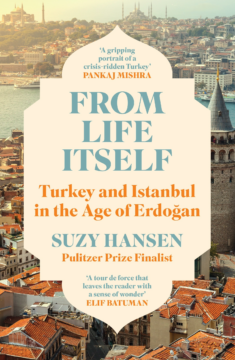 Thankfully, the attack left only black eyes and bloodied faces. It was in Karagümrük, a tough neighbourhood in Istanbul’s old city, once known for mafia types and Turks on the hard right. But, as Suzy Hansen explains, it had been transformed by an influx of Syrian refugees – until the locals apparently decided they’d had enough, and came for them with sticks, baseball bats and knives for carving doner kebab.
So begins From Life Itself, in which Hansen traces a story that illuminates a politics of mass migration and nationalist backlash that has resonances far beyond Turkey. It is a more ambitious book than that, too. An American who lived in Istanbul and visited Karagümrük for more than a decade – during which Turkey’s enfeebled democracy came under ever more sustained assault – she hoped to convey “how ordinary people experience authoritarianism in the 21st century – how our era feels”.
More here.
Enjoying the content on 3QD? Help keep us going by donating now.
Habitation as Storytelling Device in Contemporary Films Set in Tokyo
Jennifer Coates at Film Quarterly:
 A young woman arrives unannounced at the unresponsive door of a Tokyo apartment belonging to an older relative. She sits down outside and waits. Like the girl herself, the viewer is unsure of her welcome. We know the apartment’s inhabitant to be solitary, taciturn, a person who struggles to communicate and make connections with others. How will she be received? And how will this development impact the protagonists as we follow them through a slice of their lives in Japan’s largest city? These are the identical plot points of two recent films that share a setting but in many other respects could not be more different. To explore how depictions of the lived experience of a range of city spaces are used to drive plot and develop characterization, I use the architectural concept of “habitation” to think beyond buildings and characters’ relationships to those structures, analyzing instead how inhabited spaces incite plot developments and bring characters together, in a trope that I call “habitation as storytelling device.”
Writing about cinema, both academic and popular, has often drawn attention to how mise-en-scène, location, and set design have been used to communicate characters’ inner states.
more here.
Enjoying the content on 3QD? Help keep us going by donating now.
Testosterone therapy is trending. Who really needs it, and why?
Mariana Lenharo in Nature:
 Is testosterone the next miracle drug? That seemed to be the consensus of an expert panel convened by the US Food and Drug Administration (FDA) in December. It argued for major changes in policy that would expand access to the hormone for people with a range of conditions. Committee members called testosterone replacement “a cornerstone of preventive health” and “a multibillion-dollar preventive-care opportunity”.
Testosterone is already available in the United States for people who have low levels of the hormone owing to a known medical issue, such as testicular damage. But evidence is growing that more men — and women — might benefit from the hormone, which is delivered through injections, patches, subcutaneous implants or gels. (This article uses ‘men’ and ‘women’ to reflect the language used by the panels and studies cited, while recognizing that trans, non-binary and intersex people are also affected by this issue.)
More here.
Enjoying the content on 3QD? Help keep us going by donating now.
Our Lady of the Sphere (1968)
Enjoying the content on 3QD? Help keep us going by donating now.
Wilfrid Sheed’s Essays Pulsed With The Energy Of Midcentury America
Kevin Fenton at The American Scholar:

The first thing I noticed was the sentences. I’m not sure that, for all my teenage literary enthusiasms, I had ever thought of the sentence as a separate thing, as something that could be crafted, with a value distinct from other narrative components, such as plot or argument. But Sheed’s sentences were engines of insight and something I didn’t recognize at first: joy.
A few examples. On Evelyn Waugh’s fascination with the landed gentry: “A writer who would rather be dined by Lord Chowderhead than praised by [Edmund] Wilson is a genius or he’s nothing.” On the disgruntled NFL star Dave Meggyesy’s evocation of fans watching football in a state approaching sexual frenzy: “At my place, aphasic torpor would be closer to it.” I had to look up both “aphasic” and “torpor,” and, when I did, I realized they were perfect. On the Watergate hearings, which everyone I knew had taken very seriously: “And so it went, each man a marvelous specimen of political comedy, which occurs whenever the need to show off is combined with the imperative of doing nothing; i.e., all the time.”
more here.
Enjoying the content on 3QD? Help keep us going by donating now.
Tuesday Poem
On a Day when Stillness Seems Possible
and the river is a long white stroke
of roiling and continuous surge,
and the grass, gone to seed,
wavers in the wind, then stills,
wavers, then stills, and the swallows
spiral, the leaf shadows spangle
and the ants braid a path
across the stones.
But I rhyme today with the cottonwood trunks,
my own body unmoving in the breeze.
It feels good in this moment
to be more tree than cloud,
more silence than song.
So easily, the stillness opens me,
softens me. How simple, really,
to do nothing. How is it I so often resist?
If there is no in me now, I do not notice it.
Stillness has made a home in me
and there seems to be nothing
the stillness refuses. Come,
it seems to say. There is room here
for everything. It opens me wider.
The world rushes in.
Enjoying the content on 3QD? Help keep us going by donating now.
Monday, May 4, 2026
The American anxiety about alcohol as pleasure and punishment
Jeannette Cooperman at The Common Reader:
 Why do I drink? “I like the taste” is a wan excuse, but I do. With my birthday filet mignon and dark chocolate cake, I want a velvety cabernet sauvignon, not chalky milk. For our ritual Friday night pepperoni pizza, I prefer cold beer to water. I love a chilled white wine with Indian curry or Chinese food, a Guinness with a burger, and champagne for any celebration. The cork’s airy pop is triumphant, and even the bubbles seem excited for you.
There is suspense in a slow corkscrew; poetry in a good wine list. God, I sound like a heroin addict rhapsodizing about the needle. But I do love all the accoutrements and arguments: how much foam should top a pilsner, is it better to age in a bourbon or sherry cask, and should that martini be shaken or stirred, dirty or pure? Over the centuries, drinking has accrued pearly layers of significance, becoming a symbolic and cultural ritual.
More here.
Enjoying the content on 3QD? Help keep us going by donating now.
Longevity Science Is Overhyped, But This Research Really Could Change Humanity
Susan Dominus at the New York Times:
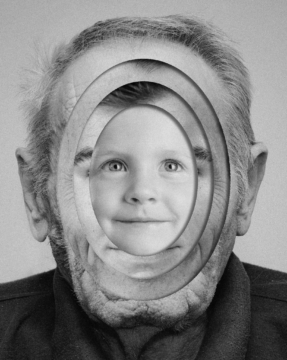 Why are babies born young? The most natural phenomenon on earth is actually hard to explain — at least on a cellular level. Consider this problem: The components of conception are old. When a woman gets pregnant, she has been carrying her egg cells since birth. The sperm that joins with the egg to form a zygote might have been just a few months in the making, but it inherits markers of age from the man who produced it. It only follows that the zygote would also show signs of age — and at first it does.
But then a mysterious metamorphosis begins: The cells of the zygote begin to reverse that damage, shaking off the metaphorical dust that the parents accumulated on their DNA. After two weeks, the cells of the embryo are back to a kind of ground zero of youth. Only then are they as young as they will ever be. To understand this process, which was discovered only recently and is known as “natural rejuvenation,” is to contemplate a mind-bending truth: We don’t start out young; we work our way back to it.
More here.
Enjoying the content on 3QD? Help keep us going by donating now.