Approaching The Language of Thought by Other Routes, Take 1: The Infraverbal Case
by David J. Lobina In my series on Language and Thought, I defended a number of ideas; to wit, that there is such a thing as a language of thought, a conceptual representational system in which most of human cognition is carried out (or more centrally, the process of belief-fixation, or thinking tout court, where…
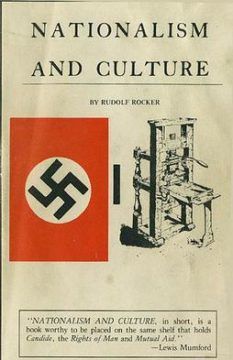
Rudolf Rocker’s Nationalism and Culture for our times
by David J. Lobina As I mentioned last month, the first thing one notes when approaching Rudolf Rocker’s 1937 book, Nationalism and Culture, is its impressive combination of breadth and depth, thus making it entirely unpublishable today. Not only that, and what’s worse, the book is also rather modern in outlook as well as original.…
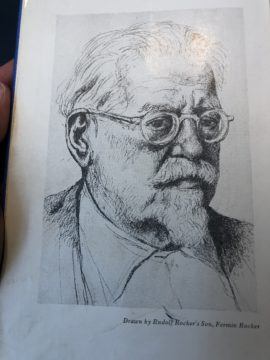
Rudolf Rocker for the ages: His life and times
by David J. Lobina It was no accident that it was an immigrant who revived the debate. While Marxist thought provided (…) a lens through which to observe the nation from the outside, the experience of living as an “alien” (…) proved an almost indispensable condition for (…) more advanced tools of observation. —Shlomo Sand,…
What’s The Language of Thought, That A Person May Grasp It?
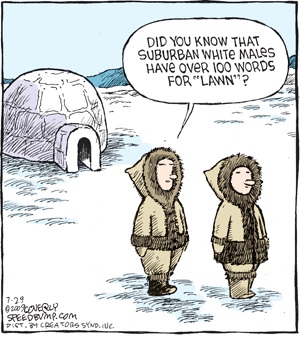
The Language You Speak Doesn’t Determine How You Think: Demystifying the Sapir-Whorf Hypothesis [sic]
by David J. Lobina After sort-of dissing James Joyce last time around – 0 comments, though! I expected Colm Tóibín to demur or something – this month I was meant to outline what the language of thought is supposed to be like, thus bringing to an end this series on the relationship between language and…
What Joyce Got Wrong (about the Interior Monologue); An Interlude in the Language and Thought Series
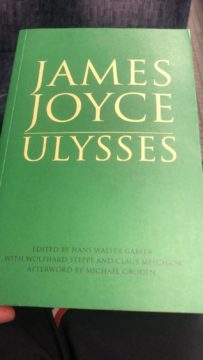
by David J. Lobina A testy title for an article about James Joyce in this centenary year of the publication of Ulysses, but all the more pertinent for that, especially in the context of this series on Language and Thought (and I don’t really mean that he was wrong, actually). After all, last month I…
You Really Don’t Think in a Natural Language!
You Don’t Think in Any Language
by David J. Lobina (This is Part 2 of a brand new series of post, this time about the relationship between language and thought; Part 1 is here) A provocative title, perhaps, and perhaps also counterintuitive. One thinks in the language one speaks, everybody knows that. Why would anyone ask bilingual speakers which language they…
Language and Thought, Part 1: Framing the Issue
by David J. Lobina A new post, a novel series, and back to all things cognitive science about language. In this chapter of this column, which hopefully won’t feature any politics but perhaps a little bit of ideology, I will focus on the very thorny issue of how language and thought relate. Or said otherwise,…
Endnote 4, Expanded: Catalonia Year 10
What Do Catalans Want?
by David J. Lobina I naturally pose this question in the context of the series of posts on Language and Nationalism I have published here in the last few months. An example of a peripheral nationalist movement, the case of Catalonia will allow me to make my final message on these issues explicit enough, thus…
Of Small Nations: An Interlude
Some (Philosophical) Corollaries of the Linguistic Update of the Study of Nationalism
by David J. Lobina After running through “a linguistic update” of the study of nationalism and outlining some of the psychological underpinnings of the nationalist world-view that such an update suggests, it is now time to take stock. It is time, that is, to consider some of the repercussions of this general take on things.…
Some Psychological Underpinnings of the Nationalist Ethos
by David J. Lobina “To bring attention to this sort of issues is to venture into the psychological factors that underlie nationalist beliefs…and here too the linguistic input is relevant”, I concluded last month, promising to return to this issue in four weeks’ time. And to promise is to send forth, so here we are…
What the Linguist said to the Nationalist
by David J. Lobina A number of issues in the study of nationalism ought to be widely accepted nowadays, most notably perhaps the claim that political nationalism – the idea that a citizen pledges allegiance to a nation-state rather than to a village or a town – is a modern phenomenon. After all, nationalism properly…