
by Sean Murphy
5o Thoughts for 50 Years
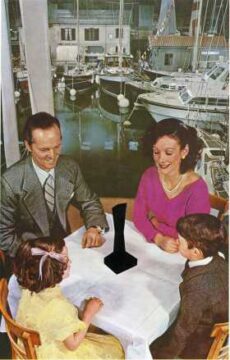
1. Can we, at long last, get some love for Led Zeppelin’s best album?
2. Hyperbole? Only a little. Everyone knows the band’s best album is Led Zeppelin IV. Or Led Zeppelin II. Actually, everyone who knows more than what used to get played on the radio understands Physical Graffiti is their crowning achievement. (And so on, up through their last two studio albums. Right?)
3. Wrong. And once we’ve established, finally, that In Through the Out Door doesn’t suck (it is, in fact, fantastic), we can turn our focus onto the Mighty Zeppelin’s most neglected and unfairly maligned album. In fact, the best band of the decade might also have made be the most neglected and unfairly maligned album of the decade.
4. There are three distinctive types of Led Zeppelin fans.
The first group knows Zep is great because of the classic songs (mostly from their second and fourth albums) that got consistent radio play when people consistently listened to the radio. These people may also own the second and fourth album and possibly a greatest hits collection.
The second group are the ones who own everything except Presence and In Through The Out Door—but they don’t need to, because everyone knows those are lesser efforts and not in the same class as the early stuff, especially the second and fourth album.
The third type is the fan who not only owns every Zeppelin album but understands that Zeppelin didn’t make any bad albums. This type of fan also understands that the second and fourth albums, as great as they were, do not represent the best band besides The Beatles at their best. In fact, this small (tiny?) group of aficionados realizes that in many regards Zeppelin got better as they went along, and their final two albums are as good or better than almost anything else the band did.
5. Sidenote with regards to the power of narrative: back in the before times, people had to go to physical places to get physical products, called LPs or cassettes, and later, CDs. During this transitional stretch, there were always cut-out/bargain—typically titles that didn’t sell well and were always backlogged.
6. Presence tended to take its ignoble place here, notably the only Led Zeppelin album to receive such treatment, and it was beyond anomaly. Was there another band of this era that had moved so many units, was so ubiquitous, popular, and powerful, with a single outlier relegated to the island of misfit (and unheard) toys? For many fans, this was the Zep to avoid, simply…because. And for those tempted by the price, what did they discover if or when they served it up? No hits, nothing recognizable, certainly nothing that sounded like the second or fourth albums; not even a crossover semi-hit like “Fool in the Rain” or “All My Love.” Presence, over the decades, became Led Zeppelin’s offer seemingly everyone could refuse, equal parts Unledded and The Battle of Evermore or Less.
7. Sidenote with regards to In Through The Out Door. It’s not Led Zeppelin’s most representative work and it is not their best work, but taken as a whole, and even song-by-song, it stands up with anything they did. In many regards it represents the band at their most mature and adventurous, hinting at what might have been; a reminder of what most definitely was. These songs are not as immediately accessible, the songs hardwired in your mind that you nod along to on the radio.
8. Sidenote with regards to the cultural power of narrative, courtesy of Fast Times at Ridgemont High. According to the Gospel of Mike Damone (with regards to dating): “And, five, now this is the most important, Rat. When it comes down to making out, whenever possible, put on side one of Led Zeppelin IV.”
9. Cut to…”Kashmir?” Narrative: we get Zeppelin, of course, just not a song we’re expecting. Why? Because poor feckless Rat, unable to follow the most straightforward instructions, picks the wrong album? No, because the director couldn’t afford to license the more popular (at that time, anyway) songs. One thing we know for certain: if Damone had countless other Led Zeppelin tracks or albums to proselytize, we can be certain Presence wouldn’t make the cut.
10. Sidenote with regards to the hammer of the gods. We tend to not think of Led Zeppelin as actual human beings. The reason, of course, is that they are not. At least not in the ways that can be accurately measured compared to others who made rock music. Only the Beatles have a more pronounced influence and unblemished record of achievement. Interestingly, this is at least in part because both bands called it quits long before they could (should?) have, and as such, they went out at the height of their powers unlike, say, The Who and The Rolling Stones, who have spent their latter decades making mostly forgettable music.
11. One of things that keeps Zeppelin so inimitable—and inconceivable in today’s social media over-share environment—is that they literally let their music speak for them. No hit singles, no quarter given to myopic and/or willfully obtuse critics, a minimum of glad-handing, and a modus operandi radical in its simple audacity: let the fans decide. The fans did decide, and Led Zeppelin dominated the ‘70s, playing three-hour concerts before The Boss made such affairs standard.
12. For those who like their scandal supersized, Richard Cole did some heavy lifting as demon on the shoulder of Richard Davis, providing much of the lurid and bitterly contested detail found in 1985’s Hammer of the Gods. Sensational and shameless, this book plays up and seeks to perpetuate every sordid story (The Mud Shark Incident) and stone-brained saga (Jimmy Page as devil worshipper). Despite being lambasted by the lads from the moment it hit the shelves, the book metastasized as a de-facto, best-selling biography of the band.
13.In part because Zep is so sui generis, such a complete summation of their parts, they tend to overwhelm with their awesomeness. Their superhuman sonic assault that—unlike their closest competitors Black Sabbath who became supreme masters of the dark groove—truly spanned everything from ballad to shredding, could conjure up bucolic British gardens and the stale urine baking into the alleys behind an L.A. hotel. They made it not only sound effortless, but they also made it sound inevitable.
14. Absurd though it may seem to suggest, the band might not get enough attention for what unbelievable songwriters and musicians they were. And while different people will choose different albums as most representative, there’s no question that each album, from ’69 to ’79, evidenced them trying new things, stretching outside potential zones of comfort, and refusing to go through the motions.
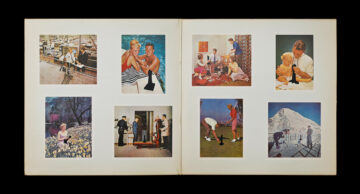
15. Enter the mid ‘70s. As is well documented, the band dealt with some bad cards, epitomized by Robert Plant’s serious car accident, which led to an aborted tour and, suddenly, a realization even golden gods were mortal.
16. And this is how the band, at their most vulnerable, responds?
17. If Led Zeppelin II is the Story of Creation and Led Zeppelin IV is the Resurrection (and Physical Graffiti is Ecclesiastes), Presence is the Book of Revelation.
18. Less than three weeks: the sense of urgency and spontaneity was neither calculated nor indulgent; you can hear the battle-weary band feeling backed into a corner.
19. Despite remaining their most unheralded and misunderstood album, Presence represents the most perfect balance of studio proficiency and unpolished bluster. It is on this session we find Page’s multi-tracked majesty playing hide and seek with some of the rawest and most visceral playing of his career.
20. This is not a guitar album; this is guitar, and it comes crashing out of the gate with what may be Page’s crowning achievement: ten minutes of electric guitar pyrotechnics and peregrinations called “Achilles Last Stand.”
21. It concludes with the laconic “Tea for One,” the slowest and saddest blues Page ever pulled off.
22. In between, there is intensity (the anti-cocaine “For Your Life”), depravity (the “borrowed” blues lament “Nobody’s Fault but Mine”), playful parody (“Candy Store Rock”) and a spicy tribute to the Big Easy (“Royal Orleans”).
23. What it adds up to is as intimate a glimpse as we’d ever get at Zeppelin at their most naked (emotionally and musically). Page’s playing is, as always, a seesaw of acumen and impulse, but he was never this insistent or unvarnished before or after.
24. Who’s with me? Very few people, I know. The dilemma isn’t that so many people have listened carefully and rendered an opinion, it’s that for too long people blithely dismiss Presence as an album that can be safely disregarded.
25. One hears “Achilles Last Stand” either for the first or five thousandth time and it’s almost impossible not to imagine Plant, taller than a skyscraper, belting out his vocals. Throwing TVs out of windows at the Continental Hiatt House? That’s rock and roll. Laying down these effulgent vocals from a wheelchair? That’s Golden God.
26. A second-by-second analysis of the myriad sounds (the multi-tracked electric guitar assault; Bonham and Jones laying down a groove impossible to imitate) is perhaps the best and only way to grapple with this epic, but for newcomers, it’s around the six-minute mark that Plant leads the proceedings into territory unique not only to Led Zeppelin’s catalog, creating something no one other band had done or could do. Ever.
27. At 8:40, we’ve just experienced several minutes of uninterrupted playing, sans vocals; just an onslaught of emotion as Plant single-handedly ups the ante, going into some type of artistic overdrive. It’s possible no rock outfit ever played with precisely this purposeful ferocity again.
28. To understand, much less appreciate, “Candy Store Rock,” one needs to consider “Hot Dog.” To understand “Hot Dog” (and “Candy Store Rock”) you need to understand one word: Elvis.
29. More than a few people would likely agree that “Hot Dog” is a nadir, the single-worst Led Zep song. On their early work Zep did not exhibit much, if any, sense of humor; certainly nothing self-deprecating. “Hot Dog” is at once a hilarious and deeply respectful send up of older school rock, revolving around Plant’s Elvis worship. “Candy Store Rock” is a dry run of sorts for the full-on impersonation of The King on “Hot Dog.”
30. Did we mention this is a guitar album? Interestingly, it’s also a bridge between John Paul Jones’s heroics with all manner of keyboards on Physical Graffiti and In Through the Out Door. It’s completely to Zep’s credit that they were restless and curious (we can literally trace a line of advancements and ambition from the blues-drenched first album to the various elements they began incorporating on the third and fourth, the at times almost proto-prog touches on Houses of the Holy,the full kitchen sink sensibility of Physical Graffiti, and the take-it-or-leave-it sneak preview of the ‘80s that is In Through the Out Door). It is, therefore, a bit baffling that casual and more seasoned fans can’t find much to love in the scorching “For Your Life.” With all respect to the guitar hero touchstones from the first four albums, the combination of range and focus, all realized via one of his best solos, would make this a standout on any album.
31. Bonus: if you take “For Your Life” and “Nobody’s Fault but Mine” you practically get a complete blueprint of Billy Squire’s 1981breakthrough Don’t Say No (particularly the paint by numbers “Lonely is the Night”).
32. Exhibit A:
“But Gollum, and the evil one crept up and slipped away with her…”
33. Exhibit B:
“Heard a cry for mercy, In the city of the damned…
In the pits you go no lower—
The next stop’s underground.”
34. To understand “Royal Orleans,” set in, yes, The Big Easy, it’s instructive to tee up the Dr. John faux vox from Plant (via the outtakes from 2015’s Presence reissue). This is what they were tapping into, which only underscores the fact that as men and musicians there was more respect, history, and self-deprecating humor than is generally acknowledged. The song is not just set in New Orleans, it radiates all-things Bourbon Street.
35. About that humor. Taking the piss out of the bassist’s drunken misadventure (read the lyrics carefully) showcases not only this oft-overlooked whimsy, but their willingness to have some fun at their own expense.
36. Exhibit A:
“I gotta roll, can’t stand still / Got a flaming heart, can’t get my fill.”
37. Exhibit B:
“Take your pick, be careful how you choose it.”
38. I have a theory about fans who felt Led Zeppelin (and Black Sabbath, for that matter), did their best work in the early ‘70s and, by the mid-to-late ‘70s were running on fumes, if not entirely spent. These “fans” are not unlike the folks who were disappointed Neil Young didn’t keep remaking Harvest and went in entirely different directions. Would any fan (of Young, of music) want more of the same, or the less accessible but arguably more satisfying Tonight’s the Night and On the Beach? Led Zeppelin, Black Sabbath, and Neil Young—just to take three obvious examples—defied cliché and at times alienated fans for one simple reason: they were uninterested in becoming lame parodies of themselves, even if it might have moved more units.
- Whether Page’s (and Bonzo’s) mid-to-late decade indulgence cost the band considerable momentum and the possibility of more albums, would we trade, in the end, anything for the band’s dark horse, the heroin needle in the haystack, Presence?
40. Many neophytes would say “all blues songs sound the same” which is like saying all whiskey tastes the same or all sunsets look the same. These are variations on certain themes and it’s as much about authenticity and feeling as it is novelty or chops. And not for the first time, Plant & Co. go back to the basics with a Robert Johnson cover: “Nobody’s Fault but Mine.” Perhaps the reason a song like this still hits so hard and feels so unforced is because, by this time, the band had lived, loved, and made a few mistakes they could reflect upon if not draw direct inspiration from.
41. Did we already say enough about the telepathy and chemistry Bonzo and JPJ developed? Hardly. Take “Hots on for Nowhere” simply to marvel at their interplay: they’re so tight you’d need an oyster shucker to pry them apart. No synth or keyboards, no slick varnish or heavy-handed production, just raw power and overwhelming talent. (Bonus props to Stacy Peralta for using this song and, of course, “Achilles Last Stand” is his masterful documentary Dogtown and Z-Boys; like Amy Heckerling (Fast Times), he probably couldn’t afford rights to the more immediately recognizable songs, and the material is that much better for it. Indeed, it brings out entirely new dimensions to hear these songs synched up to waves crashing on Venice Beach and a bunch of renegade skateboarders defying gravity in emptied pools.)
42. John Paul Jones, speaking of Bonham in 1970, is poignant, and almost painfully prescient: “I can’t remember anyone like him… it’s obvious why these people have ended up in the same group… if anybody had to leave, the group would have to split up. Each of us is irreplaceable in this band.”
43. I’ve read, over the years, so many identical complaints that “Tea for One” sounds too much like “Since I’ve Been Loving You.” It’s a superficial complaint, and an admission the person making this claim knows next to nothing about the blues genre. Otherwise, one would have a frame of reference for which songs “Since I’ve Been Loving You” sounds like, which is to say, if you’ve never listened to the blues, especially the run of miracles recorded throughout the ‘50s and ‘60s (cue up Chess Records and shuffle accordingly) by the likes of Howlin’ Wolf (whom you may recognize from “The Lemon Song” which reworks “Killing Floor”), Bukka White (“Custard Pie” which riffs on “Shake ‘Em On Down”), and Muddy Waters “(You Need Love”), I’m gonna send you back to schooling. In other words, there are many shades and colors of the blues, and Zeppelin expanded the palette, accordingly and convincingly.
44. If one contemplates Robert Plant in 1969, he was just a kid—who happened to become possibly rock’s premier vocalist—in imitation mode (think of “Bring it on Home” and then listen to Sonny Boy Williamson). As an analogy, during the earlier years he was like Jamie Foxx embodying Ray Charles or Robert De Niro becoming Jake LaMotta. By 1976, Plant was already a living legend (the subject lesser mortals will imitate and, someday, play on screen). Not yet any gray hairs of discernible dents in the fender (he was a golden god, after all), this is a man who has traveled some distance, suffered some setbacks, and figured out that money truly can’t—and won’t—make the most fundamental human issues go away. He is no longer channeling his role models, he’s delivering something from inside himself, which is where all blues music is derived.
45. Exhibit A:
“I’m gonna give you every inch of my love…”
46. Exhibit B:
“A minute feels like a lifetime / when I feel this way…”
47. It’s seldom instructive and occasionally disorienting to read artists appraise their own work (consider Ian Anderson on A Passion Play or Pink Floyd on pretty much everything prior to Meddle). It nevertheless seems noteworthy what Plant and Page have to say about Presence, and how they seem to have grown more and not less fond of this album over the years.
48. It remains commendable that Zeppelin dropped Presence while many of the big prog bands of the era, not to mention the Stones and The Who, were exhausted and running on empty in terms of inspiration. An album recorded this quickly, under these circumstances, offers definitive evidence that these four musicians weren’t capable of mediocrity.
49. What else? How to quantify or properly characterize how these songs remain so unpolluted, imperishable, fifty years after they were recorded? There’s something about Led Zeppelin (in general) and songs from this album (in particular) that, no matter how familiar they are, manage to not only impress, but astonish—even after all this time.
50. Listen: we want the Led Zeppelin myth, we need it. They need it, too. The wheels of commerce run on it. Our cups runneth over, etc. In the final analysis, it does not detract from their super-sized, all but indescribable legacy to consider them at their most human; listening to, understanding, and appreciating Presence only augments it.
***
Enjoying the content on 3QD? Help keep us going by donating now.