
Natalia Mesa at The Transmitter:
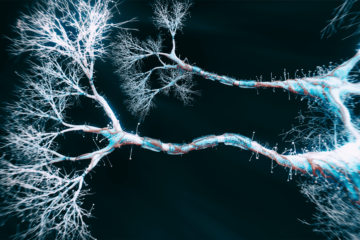 When artificial neural networks learn new information, their older memories sometimes vanish. This process, known as catastrophic forgetting, plagues computational models of the brain. How the human brain avoids it is a long-standing puzzle.
A new modeling study begins to fit the pieces together: It proposes a realistic way for multiple, overlapping memories to form and coexist, though this mechanism still needs to be confirmed experimentally.
“We have somas, dendrites, neurons that are inhibitory and excitatory,” which makes the model “biologically plausible in the way that [artificial neural networks] are not,” says study investigator Julijana Gjorgjieva, professor of computational neuroscience at the Technical University of Munich.
More here.