
Conor Feehly at Quanta:
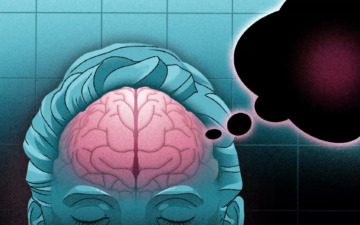 The brain spends about half of its energetic resources maintaining the electrochemical gradients that keep neurons poised and ready to fire at a moment’s notice. This gives the brain an extraordinary level of flexibility in responding to the demands of everyday life. The collective electrical activity of many neurons can be seen as waves propagating through the brain from one region to the next, like the raised arms of enthusiastic spectators at a football game.
New lines of research are revealing that these waves are more complex than previously known. Typically measured by electrodes, they have been identified as basic planar waves: simply structured oscillations in neural activity. Neuroscientists have traditionally interpreted this as a bit like the sound of the brain’s engine revving, little more than a sign that it’s working. However, emerging evidence in humans and animals suggests that traveling waves play a central role in how the brain functions.
More here.
Enjoying the content on 3QD? Help keep us going by donating now.