
Nicholas Humphrey at The MIT Press Reader:
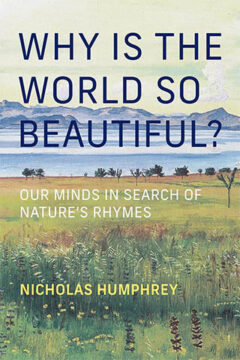 Humans are naturally drawn to beauty — and evolutionary reasons for it seem to abound. Lush landscapes suggest fresh water. Vibrant colors of fruit signal edibility. Symmetrical, functional bodies communicate reproductive potential. But when it comes to, say, a sunset, a sonata, or a fresco, the question suddenly becomes more complicated than material survival. “There’s too much beauty to be accounted for by simple utility,” argues Nicholas Humphrey.
In his new book “Why Is the World So Beautiful?,” the evolutionary psychologist presents a new framework for understanding this question. Drawing on the poetic musings of Gerard Manley Hopkins, an undergraduate at Balliol College 160 years ago, Humphrey argues that we seek out beauty through the phenomenon of rhyme — or, in Hopkins’s words, “likeness tempered with difference.” We find this delicate balance in all sorts of things: fields of lilies, fractal landscapes, idioms, DNA, Renoir’s orange, and human anatomy. In Humphrey’s view, “By taking pleasure in the pure experience of rhyme,” he writes, “we provide the training sets for our own minds.”
More here.