
Laura Tran in The Scientist:
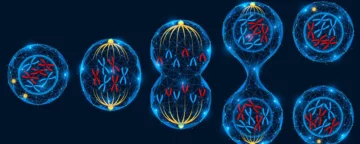 During embryogenesis, cells divide repeatedly, gaining increasing specificity and specialization, that eventually gives rise to a multicellular organism. Researchers have long been fascinated by this process and endeavored to trace this complex system. Jay Shendure, a geneticist at the University of Washington and the scientific director of the Seattle Hub for Synthetic Biology, and his colleagues, sought to figure out this mystery. In 2022. they developed DNA Typewriter, a molecular recording tool that uses prime editing to stamp genetic barcodes onto a cell’s DNA. These barcodes then act as a chronological log of cell divisions and lineage history.1
In a new study, published in Science, Shendure and his colleagues used DNA Typewriter to stamp and map the cellular lineage of a developing mouse embryo.2 This family tree tracked how a single cell developed and divided into more than 1.28 million cells in almost a two-week period. This work brings researchers closer to comprehensively mapping mammalian development: This map is the largest cellular family tree to date and could help researchers better understand how organs develop and how birth defects and cancer may arise.
More here.
Enjoying the content on 3QD? Help keep us going by donating now.