
Shelly Fan in Singularity Hub:
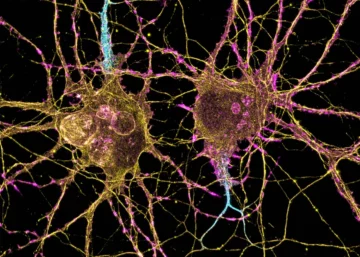 The Alzheimer’s brain faces a double whammy. Toxic protein clumps build up inside and outside neurons to torpedo normal function and destroy delicate structures. Eventually, the cells die. The adult brain has an extremely limited ability to grow new neurons. Once gone, they’re rarely replaced. Over time, the brain withers, taking learning, memory, and cognition with it.
But there might be a sneaky workaround. The brain is packed with star-shaped cells called astrocytes that keep neurons healthy. They’re also shape-shifters. Under certain conditions, astrocytes can shed their identity and transform directly into mature neurons. In other words, they could be an abundant, untapped source of replacement neurons. A team at the University of South Carolina has now taken advantage of this quirk. They engineered a tiny molecular cage and filled it with antibodies. Once inside astrocytes, the antibodies released a protein “brake” that normally keeps the cells’ identity stable. Free from this constraint, astrocytes in lab dishes and human brain organoids adopted the molecular signatures of neurons and eventually sparked with electrical activity.
More here.
Enjoying the content on 3QD? Help keep us going by donating now.