
Maria Popova at The Marginalian:
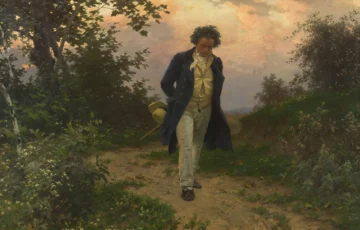 As a teenager, while auditing Kant’s lectures at the University of Bonn, Beethoven had fallen under the spell of transcendental idealism and the ideas of the Enlightenment — ideas permeating the poetry of Friedrich Schiller. A volume of it became the young Beethoven’s most cherished book and so began the dream of setting it to music. (There is singular magic in a timeless poem set to music.)
One particular poem especially entranced him: Written when Beethoven was fifteen and the electric spirit of revolution saturated Europe’s atmosphere, Schiller’s “Ode to Joy” was at heart an ode to freedom — a blazing manifesto for the Enlightenment ethos that if freedom, justice, and human happiness are placed at the center of life and made its primary devotion, politically and personally, then peace and kindness would envelop humankind as an inevitable consequence. A “kiss for the whole world,” Schiller had written, and the teenage Beethoven longed to be lips of the possible.
more here.
Enjoying the content on 3QD? Help keep us going by donating now.