
by Marianne Janack

Visiting a grocery store forces you to face irrationality. Should I buy the Jax, which I love? Or should I refrain? The store doesn’t carry my cat’s favorite brand of food anymore. Should I buy something that’s sort of like it? Go to another store a short drive away that carries it? Why do I torture myself with these questions?
Benjamin Libet, a neuroscientist, ran a series of experiments in the early 1980s in which he tried to determine whether the decision to perform an action preceded the brain activity that signified decision. This brain activity is called “readiness potential”. Libet measured readiness potential by recording electrical charges on the scalp, which are triggered by brain activity that precedes voluntary motions, like raising your arm, reaching for your keys, or buying things at the grocery store.
Libet asked volunteers to flex their wrists; they could do this any time they wanted to. They were told to report the clock position at which they decided to flex their wrist, and their reports were correlated with both the electrical charge readings indicating readiness potential and with the muscle movement that was involved in the subjects’ wrist flexions. In general, readiness potential preceded the reported will to act, even when the subjects claimed that they had acted spontaneously. From this, Libet concluded that the brain initiates voluntary action unconsciously: our conscious sense that we have decided to act is actually the result of this brain activity.
If we had free will, and were in control of our decisions, Libet argues, the conscious will to act would be reported prior to the electrical charge that signals readiness-potential. In Libet’s words: “the initiation of the freely voluntary act appears to begin in the brain unconsciously, well before the person consciously knows he wants to act!” Jax or no Jax? That decision was made by my brain before I was conscious of making it. Or maybe not.
Libet leaves open the possibility that one could consciously will to veto an action: “Potentially available to the conscious function is the possibility of stopping or vetoing the final progress of the volitional process, so that no actual muscle action ensues.” Libet says that subjects in the wrist-flexion study reported decisions to veto action. In a subsequent study, Libet reported that a large readiness-potential, signifying that the subject was getting ready to act, could be vetoed: the subject never followed through with the action that the readiness potential predicted. Free will is really free won’t.
Libet, however, seemed unwilling to draw the conclusion that free will is a myth. But he does not want to claim that human beings have free will, either—he prefers the term “non-determinism”. Both the subjective data of introspection and the objective data of the electrical impulses were important, Libet thought. Libet believed that the subjective perspective should not be dismissed, nor should it be assumed to be completely reducible to the deterministic, material world—the world of brain events and electrical charges. Libet warns us to be on our guard against moving from the methodological assumption of materialism and determinism that characterizes experimental psychology to the conclusion that the subjective experience of consciousness can be fully accounted for in terms of brain events. The equation of subjective experience with brain activity is, in Libet’s words, a speculative belief, not a scientifically proven proposition—it is a philosophical commitment, rather than a scientifically grounded fact. It cannot be supported or undermined by experiments, since our interpretation of the experiments depends on our philosophical commitments about the relationship between brain and the mind and how empirical evidence ought to be weighed in thinking about that.
The path that Libet recommends however, seems to many of his critics to be an odd bit of sophistry. In his words: “Given the speculative nature of both determinist and non-determinist theories, why not adopt the view that we do have free will (until some real contradictory evidence may appear, if it ever does)? Such a view would at least allow us to proceed in a way that accepts and accommodates our own deep feeling that we do have free will. We would not need to view ourselves as machines that act in a manner completely controlled by the known physical laws.” Why not think of ourselves as acting freely, in the absence of conclusive evidence to the contrary? Libet asks. It provides a different model from the depressing one where humans are machines that simply out-put pseudo-decisions.
Many people who read Libet’s work take his experimental evidence to be exactly the “real contradictory evidence” against the existence of free will that Libet says we do not have, however. And, indeed, it is hard not to conclude that Libet suffers a failure of nerve here—although, to be fair, he does think that the ability to veto the impulses that arise unconsciously is all that we really need to preserve the kind of free will that matters. Yet, it is hard to escape the feeling that Libet has opted for a story about human exceptionalism at the price of objectivity.
We care to know ourselves because we are, generally, truth seekers. We generally care that our beliefs are supportable by evidence, even though, in any particular case, we might fall short of that goal. Intellectual honesty and impartiality would seem to require that we accept the story about what we are that we get from the psychological sciences. If we are machines, then, we think, it’s probably better to know that. If we are machines, we are at least intellectually honest machines—we are machines that not only form beliefs, but want to make sure that those beliefs are accurate and justifiable. We want to be objective machines.
But we also want to be well-functioning machines, and books on choice written by psychologists promise to upgrade us by revealing the mechanisms that drive us to make bad choices. Knowing about the ways in which we are misled or manipulated, for instance, and recognizing the psychological tendencies we all exhibit can, the authors of such books say, help us become better, more rational choosers. Better choosing and a better life through science!
The data we get from the psychological sciences prompts us to ask: Is it true that we are really machines, whose thoughts and feelings are brain events that happen to us? Or do we have intentional and considered beliefs, evaluations, and preferences? Am I just a machine, predictably irrational in grocery stores or when trying to decide whom to hire for a job? Do I have implicit biases against my overweight students, my female students, my African-American students and Latino students? Can I work against those biases to make better decisions, decisions that are better informed and more rational? Maybe other people are biased and irrational, but I’m not, I think. Am I irrational in thinking that I might be a statistical exception?
There is a link between our tendency to think that large-scale studies of human behavior apply only or mostly to other people, and Libet’s attempt to argue that a mechanistic, materialist view of human beings can co-exist with a view of volitional, autonomous human beings. You might be thinking that the link is the very irrationality that makes us think of ourselves as exceptions to the general rule of determinism. But this bit of irrationality is the keyhole through which we can glimpse what it is that philosophy can contribute to knowledge of ourselves.
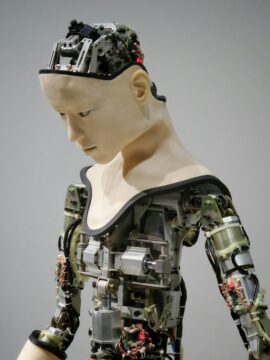
Wilfrid Sellars claimed that the scientific image of human beings cannot falsify the manifest image of human beings because the scientific image depends upon that manifest image—that is, our desire to be objective about ourselves arises as a result of thinking of ourselves as beings that have beliefs, rather than simply brain and behavior outputs. Our image of human beings as rational beings who are concerned about their rationality gives rise to our investigation of irrationality. The urge to develop psychological and biological theories about human beings is itself an expression of this image of human beings as concerned with truth and intellectual honesty—an image that depends on not thinking of human beings as purely mechanistic and deterministic systems, but rather as truth-seekers. It is this which compels us to re-evaluate our action and choice-making when confronted with studies that show our “predictable irrationality” or that show that there are brain events that predict our decisions.
The psychological sciences, then, may offer us descriptions of ourselves (as do biology, physics, chemistry, sociology), but the questions about whether we ought to accept those descriptions are not questions to which the psychological sciences can provide an answer. Or they can, but it will still be up to us, as rational evaluators, to decide to what extent such descriptions of ourselves count as true.
The paradox of the search for empirical evidence that points to our machine-like behavior is that it seems that such a search must also assume that we are rational choice-makers who respond to evidence and reasoning, trying to be objective about ourselves: machines and yet not machines.
***
Enjoying the content on 3QD? Help keep us going by donating now.