
by Sean Murphy
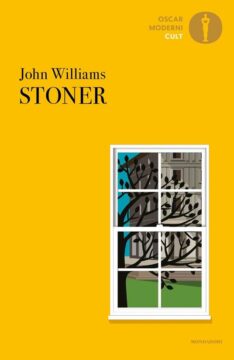 John Williams’s Stoner is having a moment.
Or, it’s always been having a moment, but right now, in 2026, only more so. With the recent awareness that it was the monthly pick for the (amazing, awesome) Anthony Jeselnik’s Book Club, it seemed time to dive in.
You can usually tell you’re dealing with a cult classic—either unjustifiably obscure or egregiously overhyped—by how often it comes up in conversation. Over the years, I’ve noticed not only that Stoner is among a handful of books routinely mentioned, it’s never equivocal. Each person doing the recommending deeply loves the book and is happy to predict the ways it will change my life.
An observation about cult classics. Certain treasured works never capture the zeitgeist in part because they’re not easily identifiable with a particular time or place. Stoner, when it arrived in 1965, was describing a largely extinct America; to contemporary readers half a century later, Williams’s Missouri is as remote and unfamiliar as Hawthorne’s Massachusetts.
The most common and consistent accolades I hear or read involve the novel’s nuanced and loving portrait of a man whose passion—in this case for reading and teaching—transcends material wants. In our contemporary climate of social media, vapid influencers, and academic self-censorship, Stoner sounded like just what the doctor ordered, equal parts throwback and antidote.
And therein lies the rub. What disappointed me so immensely about Stoner is that I was predisposed to adore it. I’m the target audience; I’m that guy. A book about someone who loves art more than life itself? You had me at hello. I was, through the first half, disappointed and, by the end, astonished that this is the book, this is the character capable of changing lives.
I find William Stoner unremarkable except for the ways he’s an ironic anti-hero.
Let’s look at the scorecard: failed marriage, troubled and alcoholic daughter, no relationships, except one, with any of his colleagues, no scholarship of note, a self-acknowledged lack of resolve and ambition. At no point does he attempt to reconcile his failings or the limitations of his peers. More, he’s no Job: the slings and arrows of his misfortune are, if not trivial, commonplace.
If this is the Platonic ideal of introverts and aesthetes everywhere, we are in desperate need of a better class of heroes. Fortunately, world literature is replete with characters better suited to the task.
Here’s the thing. Most folks would concede that yes, William Stoner is a throwback to the oldest of schools—the stiff upper-lipped, emotionless male. This archetype has aged poorly, but it’s not judging him by the standards of 2026 to note he was an unsavory stereotype even for the early twentieth century.
To my reading, there’s both cowardice and denial in his refusal to push harder against the typical challenges of any life, much less one that has resulted in a tenure-track position. While the pettiness of academic rivalry is clearly depicted throughout, these same issues exist on all campuses, not to mention corporate America—and even within the micro-community of writers. Rising above the haters and malcontents is the first, not final step, especially if you supposedly have an unquenchable passion.
Once again, Stoner’s recalcitrance has less to do with being stoic than a resigned lethargy. Stoicism, it seems to me, suggests accepting what we can’t change: we will die, we all suffer, we’ll grieve, hope for love, see beloved friends and family pass away. But those are the inexorable realities all of us, scholars and philistines alike, must face; they’ll happen no matter how much we wish or pray otherwise. It’s the wishing and praying that our best art explores: what happens to people who turn to religion to quell their angst? What becomes of people born into cultural straightjackets, whether financial or religious or academic? And what of the people who know better and do nothing? Are we capable of not succumbing to stereotypes, and whatever limitations are imposed upon us?
What does it say about a sensitive man who falls in love with literature and then accepts he doesn’t have the resolve to write his books, be a better teacher, be a better father or lover or friend? Or is the point that a purposeful retreat into the mind is the only path, however much misery it guarantees?
Can we read of his unwillingness to intervene on behalf of his daughter without disgust? Grasping she too has a loveless marriage, is content to let the (now deceased) husband’s parents raise their child, and is on a rapid descent into alcoholism, he has this epiphany: And Stoner came to realize that she was, as she had said, almost happy with her despair; she would live her days out quietly, drinking a little more, year by year, numbing herself against the nothingness her life had become. He was glad she had that, at least; he was grateful that she could drink.
Again, and granted, Stoner was written almost a century ago about a time in America that occurred more than a century ago. In this regard it’s a valuable document concerning the inherited fears and limitations of those not fortunate to be born into wealth or security.
I certainly did and do have empathy for any human being who lacks the advantages to even advance to the starting gate; I have nothing but admiration for everyone who perseveres through seemingly insurmountable obstacles to become better than “fate” would otherwise decree.
It is, in fact, Stoner’s father who epitomizes a kind of stoic nobility, but also the classic American immigrant experience: each generation hoping, if not expecting, the next would carry the proverbial torch, elevating the entire family lineage in ways that redeem and justify the sacrifice.
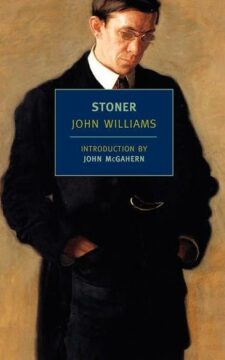
Even the novel’s attitude toward both world wars is detached and weirdly sterile. There is plenty of room to explore and interrogate whether the “Great War” was folly, sacrificing millions of lives for nothing—and many classic works have done exactly that. But the Second World War is treated as equal parts distraction and distant misadventure; proof that humanity is lacking. Stoner’s disinterest seems incongruous: even pacifists would have a difficult time denying something had to be done about Hitler.
The worst part, and here I want to be clear that I despise anyone faulting an author for failing to write the book they would have preferred. I am simply flabbergasted by how little Stoner’s apparent life-altering appreciation of books explodes into life on the page.
The magic so many of us recognize in the books that move us is virtually nonexistent in this novel.
I kept wondering, what is it about medieval texts that speaks to Stoner? How does literature help him make sense of the world he does not understand? What is it, aside from the teaching of it, that books awaken in him?
Few writers would want to deny the ways art ignites an impulse to engage. To question. To rectify. To act. To find in poetry what we don’t read in the news.
We get none of this.
Indeed, that Stoner’s life was transformed by literature is simply implied, which seems a graver sin than inadequate expression.
Put more bluntly, I shudder to think any writer or professor would tell an enthusiastic and curious student: want to understand what passion for the arts is all about? Read this book.
At the end, as he’s dying, he asks: What did you expect?
Here, allegedly, is a kind of courageous affirmation of how little we control our destinies.
To me it reads as cynical if not nihilistic.
Where Tolstoy’s Ivan Ilyich illustrates that we shouldn’t—and can’t—avoid this question if our priorities are misguided, this registers less as a sort of peaceful acceptance and more a lack of accountability, a moral ambivalence.
Reading Stoner in 2026 does this sentiment no favors; defending if not advocating for disengagement rings supremely hollow on aesthetic, political, and personal levels. The disappointment is not that William Stoner fails to become extraordinary (yawn). Literature is not a meritocracy, and some of the greatest novels ever written concern ordinary people living ordinary lives. The question is not whether a character becomes famous, wealthy, influential, or successful. The deeper, more useful interrogation involves exploring whether a life is examined, whether consciousness itself becomes a form of action.
This is precisely where Stoner leaves me cold, and it seems worth pushing back on a novel that delivers so little of what’s promised, particularly when there are so many worthy candidates on the dance card.
Consider the aforementioned Ivan Ilyich. Here is a man who, by design, is recognizable both in his ambitions and foibles. He checks the prescribed boxes, receives the superficial but hollow accolades reserved for the entitled, and mostly fills in the blanks for a predetermined existence. As death approaches, he belatedly addresses his unhappiness and a ruthless accounting ensues. He methodically revisits the inculcated metrics for success and understands, unequivocally, how the world failed him and how he’s failed himself. With unparalleled clarity and economy, Tolstoy renders a portrait of an unhappy man, and we watch Ivan grapple with the question he refuses to avoid: what I’ve lived incorrectly?
Even Ishmael in Moby-Dick, drifting aboard a whaling ship for reasons ranging from hunger for adventure to desire to shirk responsibility, exhibits a restless curiosity absent from Stoner’s world. Through Ishmael, we see Melville’s insatiable interest in human beings. With humor and at times devastating clarity, we’re treated to a sustained investigation of everything from religion to cultural mores, from courage to cruelty and, through Ahab, the type of megalomania we recognize in certain industry icons and politicians. Ishmael is deliberately presented as the anonymous eyewitness, bearing witness to his world—but it’s his very obsession with detail that illustrates his passion for life, his humanity.
In the last century we could look to many of Saul Bellow’s novels to find anti-Stoners. Herzog, for instance, spends an entire novel systematically questioning and at times dismantling his own assumptions. Like a more obsessive, intellectual Ishmael, he writes letters to philosophers, politicians, friends, enemies, and the dead. What makes him compelling is not that he possesses answers but that he cannot stop asking questions. The novel becomes a testament to the act of a mind refusing surrender.
Perhaps the most successful and enduring American study of an individual navigating forces beyond his control is Ellison’s Invisible Man. The narrator is repeatedly manipulated and confounded by institutions and ideologies, but is constantly in physical or spiritual motion. He is forever revising his interpretation of experience: every betrayal becomes a lesson, every illusion disproved creates the possibility of deeper insight. His struggle is not simply against racism or power but against false narratives of every kind, including his own. Ellison, of course, presents a coruscating deconstruction of racist systems, but also manages to delineate the corrupted myth of the American Dream.
These examples, to me, represent what the examined life looks like in literature. It is not stoicism mistaken for resignation or acceptance confused with acquiescence. It is not the withdrawal from conflict into private consolation, but the ongoing effort to understand how one ought to live and what obligations one owes to others. The great novels are not instruction manuals, but they dramatize this struggle. They remind us that consciousness is not merely a condition; it is a responsibility.
Perhaps this is why Stoner ultimately frustrates me. The novel presents a man devoted to literature, yet rarely conveys the transformative power literature has supposedly exercised over him. We are told books changed his life. We are seldom shown how. We see a man who loves literature, but we rarely witness literature acting upon him in ways that enlarge his capacity for courage, empathy, action, or understanding.
And that absence feels especially significant now. At a moment when public life rewards disengagement, cynicism, and learned helplessness, I find myself less interested in literary figures who endure than in those who wrestle. Less interested in resignation than inquiry. Less interested in departure than participation.
The best books do not merely reflect life. They deepen it. They compel us toward greater awareness of ourselves and our obligations to one another. They remind us that attention is a moral act. If literature cannot inspire that kind of engagement, what exactly are we defending when we defend it?
More, in our contemporary miasma where we watch institutions obeying in advance and both wealthy icons and universities cowing to the worst and most cynical political pressure, is Stoner’s listlessness the everyman we ought to seek guidance from? Emulating passivity when choosing apathy is not merely a personal matter, but a tacit assist to the worst kind of cretins? At a time when the Humanities are under relentless assault, AI threatens job markets in an uncertain economy, and funding for the arts is straight up LOL, it seems, putting it charitably, an inopportune time to elevate this novel.
Perhaps, in the final analysis, Stoner does hold a mirror of sorts up to the average American. If so, it reveals more about us than the titular anti-hero, and little of it is affirmative. Our world preys upon those without agency made to suffer it silently; corruption depends upon indifference. Whatever nobility we collectively claim derives from the fight itself, a protest, our insistence that the only thing less tolerable than injustice is abetting it.
We are, after all, inspired by literature to see things more clearly so that we might rally, not retreat.
***
Enjoying the content on 3QD? Help keep us going by donating now.