
Timotheus Vermeulen in iai:
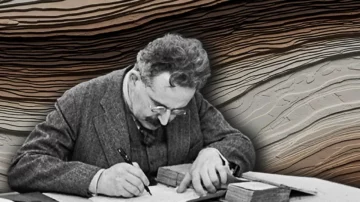 Sometime between 1914 and 1915, the German philosopher and cultural critic Walter Benjamin wrote an essay on two poems by the Romantic poet and misunderstood visionary Friedrich Hölderlin. It is a peculiar and little-known piece of writing. By the author’s own account, it should be a straightforward exercise in close reading. But by the time he draws his conclusions he has offered all of a circuitous metaphysics of poetry, an implicit contemplation of the nature of time, and an elegy for his childhood friend Fritz Heinle, a would-be poet who had killed himself earlier that year. It’s also unmistakably the work of a young writer still finding his voice: grandiose, purple, convoluted, banal, exciting, inconclusive, all impulse and little orientation.
Benjamin is celebrated today as one of the great stylists among theorists (especially compared to some of the others associated with the Frankfurt School), a master of prose as well as ideas. But this text, ironically, is as tortuous a read as Hölderlin’s notoriously intricate and impenetrable poems of which it tries to make sense.
More here.
Enjoying the content on 3QD? Help keep us going by donating now.