
Jessica George at JSTOR Daily:
 In Fritz Eichenberg’s Heathcliff Under the Tree (1943), Emily Brontë’s antihero leans against a broad tree and faces the sky. His long coat cuts against an opposite volley of wind, animated with an “inner life” by “the touch of the graver.” Described by the artist as a “dialogue” among human and natural elements, the print captures Heathcliff’s turmoil amidst the haunting moors of the English countryside and exemplifies Eichenberg’s ability to convey and elicit human emotion through wood engraving. It is a scene that “captured the imagination of millions of people,” Eichenberg recalled, “[I]t’s always Heathcliff Under the Tree that they say, ‘This is the one that I love most.’”
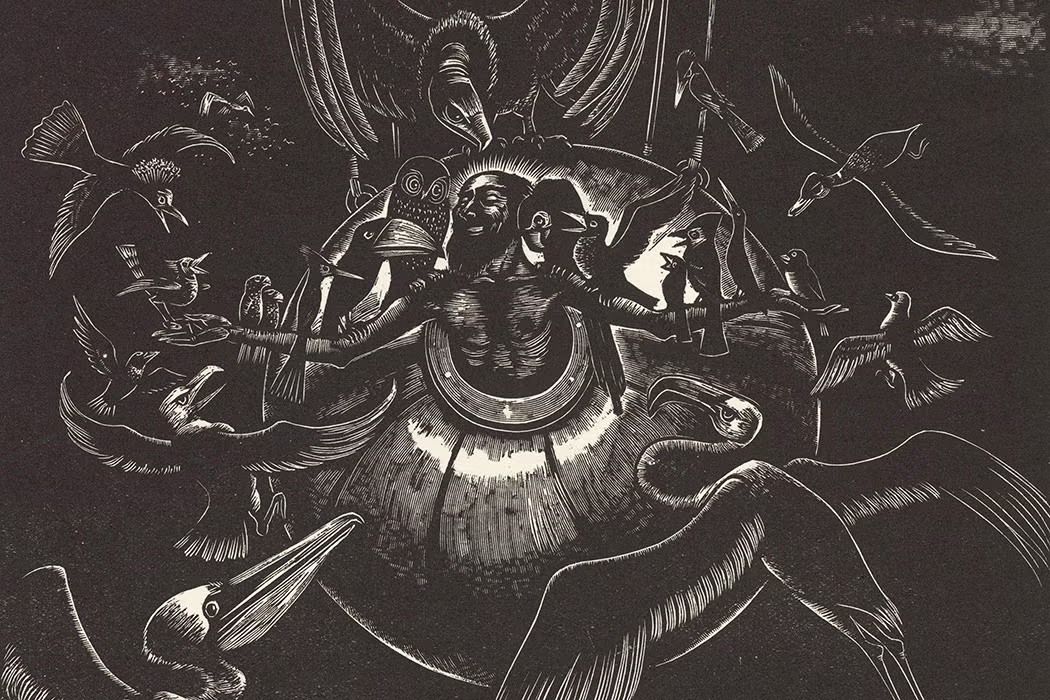
Eichenberg was a prolific artist, and Heathcliff Under the Tree is one among thousands of works of art created during his lifetime. His oeuvre spans the twentieth century, responding to oppression, war, and exploitation through what he believed was the divine work of creative expression. Today, amid growing anxieties about artificial intelligence and creativity, Eichenberg’s life and work offer new audiences an opportunity for revisiting what’s human about art.
more here.
Enjoying the content on 3QD? Help keep us going by donating now.