
Ewen Callaway in Nature:
 More than a century ago, embryologist Hilde Mangold conducted a strange experiment that transformed biology.
As a PhD student in the 1920s, she moved a lump of cells from embryos of one newt species into another. The transplanted cells caused a secondary ‘body axis’ to form in the host embryo, complete with a nervous system and a precursor to the spine. Mangold showed that much of the secondary body axis developed from the recipient embryo tissues. The discovery of an embryonic ‘organizer’ that orchestrates the formation of a body axis “established a whole new area of developmental biology”, says Stanislav Kremnyov, a developmental biologist at the Friedrich Schiller University Jena in Germany, who is now following in Mangold’s footsteps.
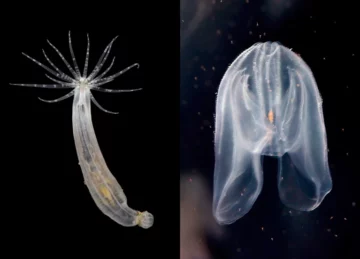
In a study published in Nature this week1, Kremnyov and his colleagues report the discovery of an embryonic organizer in marine predators called comb jellies (Ctenophora) and their successful transplantation into sea anemones (Cnidaria) — which belong to an entirely different phylum — forming extra mouths and pharynxes.
More here.
Enjoying the content on 3QD? Help keep us going by donating now.